16 years one-stop China custom CNC machining parts factory

Hey there I’m VMT Sam!
With 25 years of CNC machining experience we are committed to helping clients overcome 10000 complex part-processing challenges all to contribute to a better life through intelligent manufacturing. Contact us now
 480 |
Published by VMT at Jul 08 2026 | Reading Time:About 1 minutes
480 |
Published by VMT at Jul 08 2026 | Reading Time:About 1 minutes


Flashlight housing material affects more than appearance. If the material is too heavy, weak, hard to machine, poor at heat dissipation, or unsuitable for surface finishing, your flashlight may face assembly issues, overheating, poor durability, and low product value. Aluminum alloy solves many of these problems with a strong balance of weight, strength, CNC machinability, heat transfer, corrosion resistance, and premium anodized appearance.
Aluminum alloy is one of the most commonly used materials for flashlight housings because it is lightweight, strong, easy to CNC machine, suitable for threads and grooves, good for LED heat dissipation, and compatible with anodizing. For many portable, outdoor, tactical, and high-power LED flashlights, aluminum offers better overall value than plastic, stainless steel, or other materials.
This article explains why aluminum alloy is often the preferred material for flashlight housings, when it may not be the best choice, and how VMT helps customers choose the right aluminum alloy for custom CNC machined flashlight housing projects.
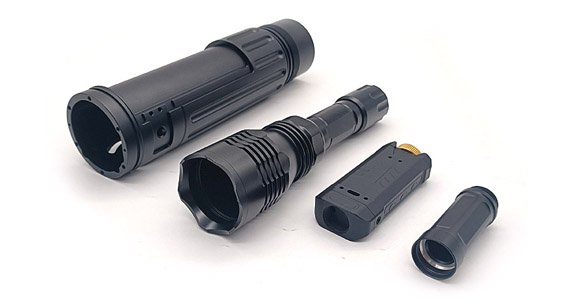
A good flashlight housing material must do more than protect the internal parts. It must support the full product function, including heat transfer, assembly, surface appearance, user comfort, and long-term reliability. For a simple low-cost flashlight, plastic may be enough. But for outdoor, tactical, industrial, inspection, and premium EDC flashlights, the housing material needs stronger overall performance.
When engineers and buyers choose a flashlight housing material, they usually need to consider several practical requirements:
Weight
The flashlight should be easy to carry, hold, mount, or use for long periods.
Strength
The housing should protect the LED module, battery, switch, lens, driver board, and internal assembly.
Heat dissipation
High-power LED flashlights need a housing that can help transfer heat away from the light source.
Corrosion resistance
Outdoor flashlights may contact rain, sweat, dust, humidity, oil, and changing temperatures.
CNC machinability
The material should be suitable for accurate threads, O-ring grooves, lens seats, battery tubes, tail caps, and grip features.
Surface finish compatibility
The housing should support anodizing, hard anodizing, sandblasting, polishing, laser engraving, or other finishes.
Cost and production stability
The material should be practical for prototypes, small batches, and mass production.
| Material Requirement |
Why It Matters for Flashlight Housings |
| Lightweight | Improves portability and user comfort |
| Strong structure | Protects internal components and improves durability |
| Good heat transfer | Helps high-power LEDs run more reliably |
| Corrosion resistance | Supports outdoor and long-term use |
| Easy CNC machining | Allows accurate threads, grooves, tubes, and assembly features |
| Surface finishing | Improves appearance, wear resistance, and brand value |
| Production cost control | Helps balance quality, price, and delivery |
Aluminum alloy is widely used for flashlight housings because it offers a balanced solution. It is not always the strongest material, not always the cheapest material, and not always the most luxurious material. However, it performs well across the key requirements that most flashlight projects need.
For flashlight brands and OEM manufacturers, aluminum alloy provides several practical advantages:
This is why aluminum alloy is often selected for custom CNC machined flashlight housings. It gives engineers enough performance, gives brand owners a premium appearance, and gives buyers a practical balance between quality and cost.
| Material |
Main Advantage |
Main Limitation |
Typical Flashlight Use |
| Aluminum Alloy |
Balanced weight, strength, heat dissipation, machining, and finish | Not as strong as titanium or some steels | Most outdoor, tactical, EDC, and LED flashlights |
| Plastic |
Low cost and light weight | Weak heat dissipation and lower product feel | Low-cost consumer flashlights |
| Stainless Steel |
Strong and premium feel | Heavy and slower to machine | Decorative or heavy-duty models |
| Titanium |
Lightweight, strong, and premium | High cost and more difficult machining | High-end or collectible flashlights |
A flashlight is a handheld product, so weight matters. If the housing is too heavy, users may feel tired when carrying or using it for long periods. This is especially important for EDC flashlights, outdoor flashlights, emergency lights, helmet-mounted lights, bicycle lights, inspection lights, and tactical flashlights.
Aluminum alloy gives the flashlight housing good strength without making the product too heavy. Compared with stainless steel, aluminum is much lighter and easier to carry. Compared with plastic, aluminum provides a stronger metal structure and a more reliable feel. This makes aluminum alloy a practical choice when the product needs both portability and durability.
For flashlight brands, lightweight strength also helps improve market positioning. A well-machined aluminum housing can make the product feel solid, reliable, and premium without creating unnecessary weight. For OEM projects, this balance can improve user experience while still keeping production cost under control.
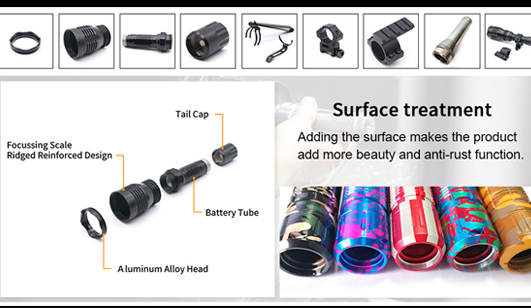
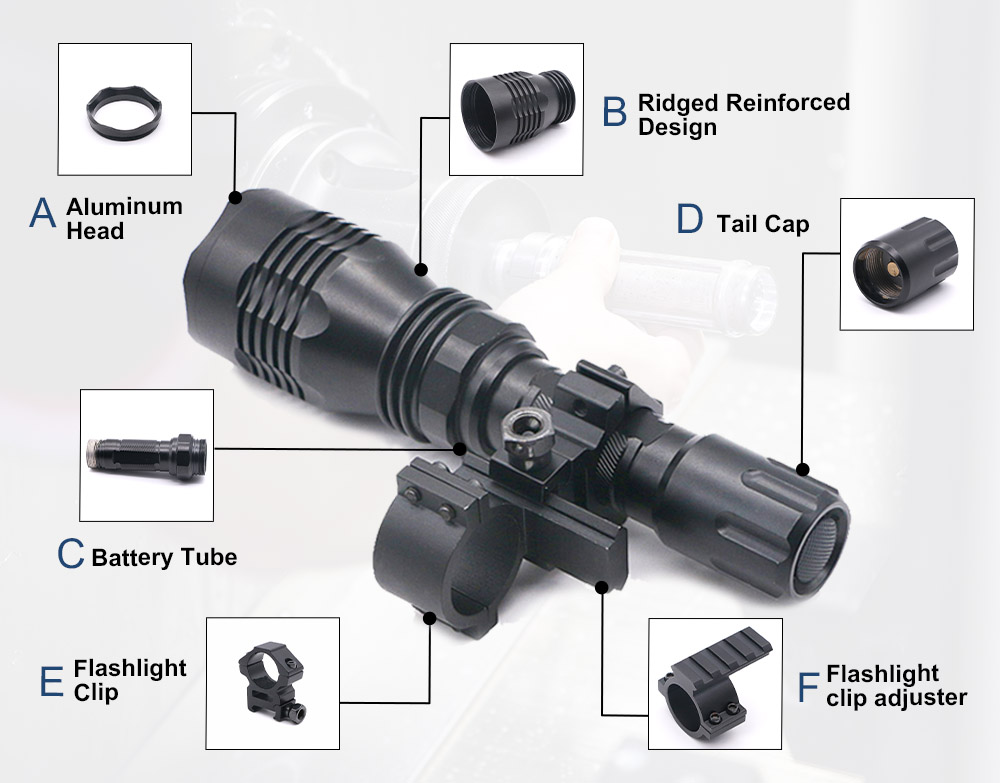
Common aluminum flashlight housing structures include:
Flashlight head
Holds the LED module, lens, reflector, and heat dissipation structure.
Battery tube
Protects the battery and connects the head and tail cap.
Tail cap
Supports switch assembly, thread connection, and sealing structure.
Lens ring or bezel
Holds the lens and affects appearance and assembly.
Clip slot and mounting features
Support carrying clips, brackets, or accessory assembly.
Heat dissipation is one of the biggest reasons aluminum alloy is used for flashlight housings. High-power LED flashlights generate heat during operation. If heat cannot be transferred away from the LED module, the flashlight may suffer from reduced brightness, unstable performance, shorter component life, or poor user experience.
The flashlight housing is often part of the heat dissipation system. Aluminum alloy can help transfer heat from the LED area to the external housing surface. CNC machining can also create heat dissipation fins, grooves, stepped structures, and larger surface areas to help improve cooling performance.
This is especially important for:
| Heat Dissipation Feature |
Function |
| Aluminum flashlight head | Helps transfer heat from the LED module |
| CNC machined fins | Increases surface area for heat release |
| Grooved housing structure | Improves external heat transfer design |
| Tight LED module seat | Supports better contact and assembly stability |
| Proper surface finishing | Helps protect the housing without blocking function |
For engineers, heat dissipation should be considered during the early design stage. Wall thickness, LED seat structure, contact area, internal cavity, surface area, and machining process can all affect final performance. VMT can review your 2D drawing or 3D file and provide practical DFM feedback before machining.
Many flashlights are used in outdoor, industrial, emergency, or harsh environments. The housing may contact rain, sweat, dust, oil, humidity, salt air, or temperature changes. If the material and surface finish are not suitable, the housing may corrode, discolor, scratch, or lose appearance quality over time.
Aluminum alloy has natural corrosion resistance, and this performance can be improved with proper surface finishing. Anodizing and hard anodizing are commonly used for aluminum flashlight housings because they help improve corrosion resistance, surface hardness, wear resistance, and appearance quality.
For outdoor flashlight projects, corrosion resistance is important for both function and brand value. A flashlight housing with scratches, stains, color fading, or surface corrosion may reduce customer trust, even if the internal electronics still work. This is why many flashlight brands choose anodized aluminum instead of unfinished metal or low-grade plastic.
Common outdoor risks include:
| Surface Condition |
Possible Risk |
Recommended Control |
| Unfinished aluminum | Easier to scratch or discolor | Use anodizing or protective finishing |
| Poor anodizing | Color difference or weak surface protection | Control material batch, pretreatment, and finishing process |
| Sharp edges | Coating damage and poor hand feel | Add chamfering, deburring, and edge breaking |
| Poor cleaning before finishing | Stains or uneven color | Improve cleaning and surface preparation |
| Rough exposed areas | Appearance rejection | Control machining marks and surface inspection |
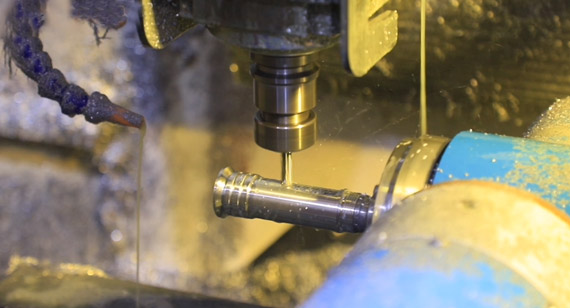
Aluminum alloy is easy to CNC machine compared with many harder metals. This makes it suitable for flashlight housings with complex structures, accurate threads, thin walls, grooves, holes, and decorative features. For custom flashlight projects, CNC machinability is not only about making the part. It directly affects assembly quality, user feel, and production consistency.
A flashlight housing often requires many precision features:
Used for the head, battery tube, tail cap, lens ring, and switch assembly.
Used for waterproof or dustproof flashlight designs.
Controls battery fit, roundness, and assembly smoothness.
Affects optical assembly and heat transfer.
Require accurate position, clean edges, and controlled burrs.
Improves hand feel and outdoor use.
Supports high-power LED cooling.
Supports laser engraving, model numbers, and brand identity.
| CNC Machined Feature |
Customer Value |
| Precision threads | Smooth assembly and reduced cross-threading risk |
| O-ring grooves | Better sealing support for waterproof designs |
| Battery tube | Stable battery fit and product structure |
| Lens seat | More reliable optical assembly |
| Charging port | Accurate fit for electronic components |
| Grip texture | Better hand feel and anti-slip performance |
| Heat dissipation fins | Improved thermal management |
| Chamfered edges | Safer handling and better appearance |
At VMT, aluminum flashlight housings can be produced by CNC turning, CNC milling, drilling, threading, boring, knurling, deburring, and surface finishing. For complex parts, 4-axis or 5-axis CNC machining may reduce repeated clamping and improve feature accuracy. For batch production, in-process inspection helps control thread fit, groove dimensions, burrs, and appearance consistency.
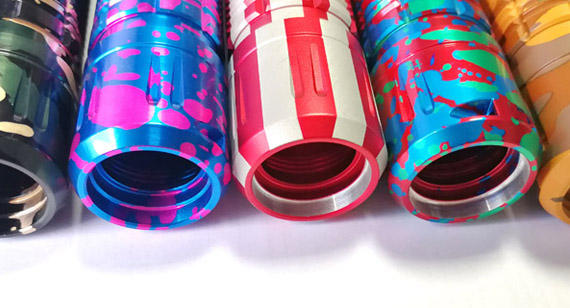
Surface appearance is very important for flashlight housings because the housing is one of the first parts users see and touch. A flashlight with a clean anodized finish, smooth edges, consistent color, and clear laser marking feels more professional and valuable. A flashlight with scratches, uneven color, burrs, or rough tool marks can reduce customer confidence.
Aluminum alloy is suitable for many surface finishes, especially anodizing and hard anodizing. This is one reason it is widely used for premium flashlight housings.
Common surface finishes for aluminum flashlight housings include:
Common for tactical, outdoor, and professional flashlights.
Used when better wear resistance and surface durability are needed.
Used for brand identity, consumer products, and product differentiation.
Creates a matte and premium texture.
Improves brightness and decorative appearance.
Creates a directional metal texture.
Adds logos, model numbers, serial numbers, arrows, and operation marks.
| Finish |
Main Benefit |
Suitable Use |
| Black anodizing | Clean appearance and corrosion resistance | Tactical and outdoor flashlights |
| Hard anodizing | Better wear resistance | High-use and rugged products |
| Color anodizing | Brand and product differentiation | Consumer and EDC flashlights |
| Sandblasting + anodizing | Matte premium texture | High-end appearance parts |
| Polishing | Bright decorative surface | Premium or special designs |
| Laser engraving | Permanent branding and markings | Logos, model names, serial numbers |
However, anodizing quality depends on both machining and finishing control. Sharp edges, inconsistent surface roughness, mixed material batches, poor cleaning, and uncontrolled deburring can cause color difference, coating defects, or visible marks. For tight threads and sealing grooves, anodizing thickness should also be considered during tolerance planning.
VMT reviews surface finishing requirements together with machining requirements, helping customers reduce the risk of color mismatch, thread tightness, visible scratches, and appearance rejection.
·
Aluminum alloy is a strong choice for most flashlight housings, but it is not always the best material for every project. A professional material decision should consider product positioning, use environment, budget, appearance requirement, strength requirement, and production quantity.
Aluminum may not be the best choice in the following situations:
Some luxury or special-edition flashlights may use stainless steel because customers prefer a heavier and more solid hand feel.
Titanium may be selected for premium positioning, corrosion resistance, and unique material appeal, although it is more expensive and harder to machine.
Plastic may be more suitable for low-cost consumer flashlights where heat, strength, and premium appearance are not major concerns.
Certain corrosive environments may require special materials or surface treatments beyond standard anodized aluminum.
Some industrial or military-related structures may require stainless steel or other high-strength materials.
| Situation |
Possible Better Material |
Reason |
| Low-cost basic flashlight | Plastic | Lower material and production cost |
| Heavy premium hand feel | Stainless steel | Stronger weight and metal texture |
| High-end collectible flashlight | Titanium | Premium positioning and unique material value |
| Special corrosion environment | Stainless steel or special alloy | Better chemical resistance in some applications |
| Extreme structural strength | Steel or titanium | Higher strength for special requirements |
For most portable LED flashlight housings, aluminum alloy is still the more balanced option. But if your design has special requirements, VMT can help review your drawing, application environment, material target, surface finish, and production budget before machining.
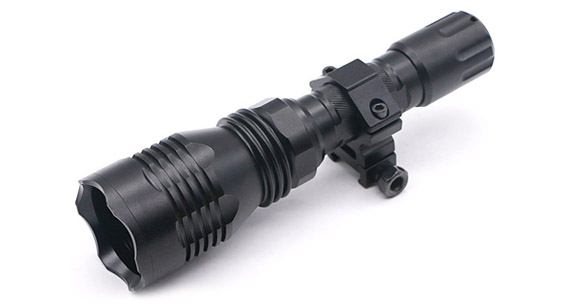
Project Background
A customer was developing a new outdoor flashlight for portable inspection and emergency use. In the first design stage, the customer considered using a plastic housing to reduce cost. The design looked simple, but the flashlight needed a brighter LED module, a rechargeable battery structure, a threaded tail cap, an O-ring sealing groove, and a better hand feel for outdoor users.
After prototype testing, the plastic housing did not meet the customer’s expectations. The product felt less premium, the thread area showed wear risk, and the heat around the LED section was difficult to control. The customer wanted a stronger housing material that could improve heat dissipation, appearance, assembly reliability, and brand value without making the product too heavy.
Project Challenge
The customer needed to solve several problems before moving to production:
The original plastic housing could not support the heat dissipation requirement of the high-power LED.
The tail cap connection needed repeated assembly, but plastic threads created long-term wear concerns.
The customer wanted a more premium outdoor product, but the plastic housing did not match the brand positioning.
The flashlight required an O-ring groove for outdoor use, and the groove needed stable dimensions.
The customer wanted a metal housing, but did not want the flashlight to become too heavy.
VMT Solution
VMT reviewed the customer’s 3D model, assembly structure, LED position, battery tube, thread connection, O-ring groove, and surface finish requirement. After comparing plastic, stainless steel, and aluminum alloy, VMT recommended a CNC machined aluminum alloy housing.
The final solution focused on:
The flashlight head was designed to help transfer heat from the LED module to the housing surface.
VMT controlled thread size, depth, burrs, and assembly feel for the tail cap connection.
Groove width, depth, and edge condition were controlled according to the drawing.
CNC machined grooves improved the hand feel for outdoor use.
The anodized surface helped improve appearance, corrosion resistance, and brand positioning.
VMT inspected thread fit, battery cavity, sealing groove, surface appearance, and anodizing quality.
Result
After switching from plastic to CNC machined aluminum alloy, the customer received a flashlight housing with better strength, improved heat dissipation, smoother thread assembly, more reliable sealing groove quality, and a more premium black anodized appearance.
The aluminum housing helped the customer improve product value while keeping the flashlight suitable for portable outdoor use. After prototype approval, the project moved into small-batch production with clearer inspection standards and better confidence for future volume manufacturing.
Aluminum alloy is a good choice for most flashlight housings because it provides a strong balance of light weight, strength, heat dissipation, corrosion resistance, CNC machinability, surface finishing, and production cost. It is especially suitable for portable LED flashlights, tactical flashlights, outdoor flashlights, industrial inspection lights, rechargeable flashlights, and premium EDC flashlights.
You should consider aluminum alloy if your flashlight project needs:
However, aluminum may not be the right choice if your product requires ultra-low cost, special chemical resistance, extremely heavy hand feel, or high-end titanium positioning. In these cases, stainless steel, titanium, plastic, or another material may be considered.
For most custom flashlight housing projects, aluminum alloy remains one of the most practical and reliable material choices. VMT can help review your drawing, material requirement, tolerance, surface finish, assembly structure, and production quantity before quoting.
Choosing aluminum alloy is only the first step. To make a reliable flashlight housing, the CNC machining process also needs to control threads, grooves, wall thickness, heat dissipation structures, burrs, surface roughness, anodizing allowance, and final inspection.
If you want to better understand how CNC machining affects custom metal flashlight parts, you can read VMT’s complete CNC machining flashlight housing guide. It explains machining methods, material selection, tolerance control, surface finishing, inspection, prototype validation, and mass production support.
For flashlight housing projects, this guide can help you understand:
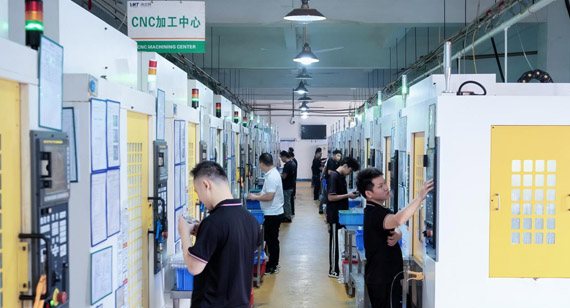
If your flashlight project requires lightweight strength, heat dissipation, accurate threads, O-ring grooves, grip features, anodized appearance, and stable production quality, aluminum alloy may be the right material choice.
VMT supports custom CNC machined aluminum flashlight housings from prototype to batch production. Upload your 2D drawings or 3D files, and our team can review your material, structure, tolerance, surface finish, and application requirements before quoting.

1. Why is aluminum alloy commonly used for flashlight housings?
Aluminum alloy is commonly used because it offers a practical balance of lightweight strength, heat dissipation, corrosion resistance, CNC machinability, anodizing performance, and cost control. For many flashlight brands, aluminum provides better durability and appearance than plastic while staying lighter and easier to machine than stainless steel.
2. Is aluminum better than plastic for flashlight housings?
For high-power, outdoor, tactical, and premium flashlights, aluminum is usually better than plastic. Aluminum provides better heat dissipation, stronger structure, more durable threads, better surface appearance, and a more premium hand feel. Plastic may still be suitable for low-cost basic flashlights where heat, strength, and appearance are less important.
3. Is aluminum better than stainless steel for flashlight housings?
Aluminum is usually better when the flashlight needs to be lightweight, easy to carry, cost-effective, and suitable for anodizing. Stainless steel is stronger and heavier, but it can increase product weight and machining cost. For most portable flashlights, aluminum offers a better balance of performance, weight, appearance, and cost.
4. Is 6061 aluminum good for flashlight housings?
Yes. 6061 aluminum is commonly used for CNC machined flashlight housings because it has good machinability, strength, corrosion resistance, and anodizing performance. It is suitable for flashlight heads, battery tubes, tail caps, lens rings, and many custom OEM flashlight housing parts.
5. When should I choose 7075 aluminum for a flashlight housing?
7075 aluminum may be selected when the flashlight housing requires higher strength or more rugged structural performance. It is often considered for tactical, outdoor, or high-strength applications. However, it usually costs more than 6061, and surface finishing requirements should be reviewed carefully before production.
6. Can aluminum flashlight housings be hard anodized?
Yes. Aluminum flashlight housings can be hard anodized to improve surface hardness, wear resistance, corrosion resistance, and long-term durability. Hard anodizing is often used for tactical flashlights, outdoor flashlights, industrial lights, and high-use products.
7. Does aluminum help with LED flashlight heat dissipation?
Yes. Aluminum can help transfer heat from the LED module to the flashlight housing surface. CNC machining can also create heat dissipation fins, grooves, and larger contact areas to improve thermal performance. This is one reason aluminum is widely used for high-power LED flashlight housings.
8. Can VMT CNC machine threads, O-ring grooves and grip features on aluminum flashlight housings?
Yes. VMT can CNC machine internal threads, external threads, O-ring grooves, sealing features, battery tubes, lens seats, switch holes, charging ports, heat dissipation fins, and anti-slip grip features according to your drawings. We also support DFM review, prototype machining, surface finishing, inspection, and batch production.
9. What surface finish is best for aluminum flashlight housings?
Black anodizing and hard anodizing are common choices. Black anodizing gives a clean and professional appearance, while hard anodizing improves wear resistance and durability. Sandblasting before anodizing can create a matte premium texture, and laser engraving can add logos, model numbers, and markings.
10. What files should I send for a custom aluminum flashlight housing quote?
You can send 2D drawings, 3D CAD files, STEP files, PDF drawings, samples, photos, material requirements, surface finish requirements, tolerance notes, and expected production quantity. VMT can review your files and provide practical DFM feedback before machining.


 +86 15099911516




 Read more