16 years one-stop China custom CNC machining parts factory

Hey there I’m VMT Sam!
With 25 years of CNC machining experience we are committed to helping clients overcome 10000 complex part-processing challenges all to contribute to a better life through intelligent manufacturing. Contact us now
 777 |
Published by VMT at Mar 17 2026
777 |
Published by VMT at Mar 17 2026


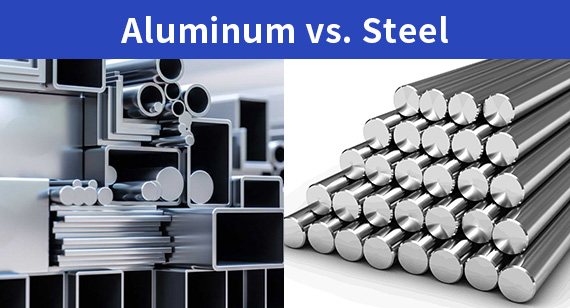
In parts processing or production projects, aluminum and carbon steel are the two most common materials you will choose from.
If you require lightweight components or demand better corrosion resistance and aesthetics than carbon steel, aluminum is likely the material you are looking for. Its strength, ductility, machinability, and heat-treatment potential depend heavily on the specific alloy grade.
On the other hand, certain carbon steels—particularly high-carbon steel (0.6–2.0% carbon)—can achieve a tensile strength of 1000+ MPa and high hardness through heat treatment. These are ideal for heavy machinery parts, gears, and sharp tools, provided they are used in mild, non-corrosive environments. Today, we will dive deep into the core differences between these two materials to help you make the most professional decision.
Aluminum is rarely used in its pure form for industrial parts; instead, it is alloyed with various elements to alter its properties—being made into various aluminum CNC machined components or shaped into various parts. The American Aluminum Association (AA) categorizes these into 1xxx to 7xxx series:
Carbon steel consists of 98–99% iron, with carbon (0.1% to 2.0%) as the primary hardening agent. Its application varies drastically based on carbon content:
Carbon steel is also likely to be made into various parts by CNC machining or by forming processes.
Density and Weight
Aluminum has a density of approximately 2.7 g/cm³, while carbon steel is roughly 7.85 g/cm³, which means aluminum is about one-third the weight of steel. For lightweight needs especially airspace or electronic housings, the aluminum is the best choice.
When considering budgets, while aluminum often costs more per kilogram, its low density means you need less raw material by weight for the same volume.
Thermal and Electrical Conductivity
In terms of thermal and electrical conductivity, aluminum alloys (approx. 130-230 W/m·K) are far superior to carbon steel (approx. 30-50 W/m·K). Although 1xxx series pure aluminum offers the highest conductivity, it is often too soft for many industrial applications. Consequently, the industry frequently selects 6xxx series aluminum alloys—which provide an ideal balance of strength and thermal performance—for heat sinks and electronic enclosures. Conversely, due to its lower thermal conductivity, carbon steel is more commonly used for heavy machinery components where thermal insulation is preferred or where the primary requirement is purely structural strength.
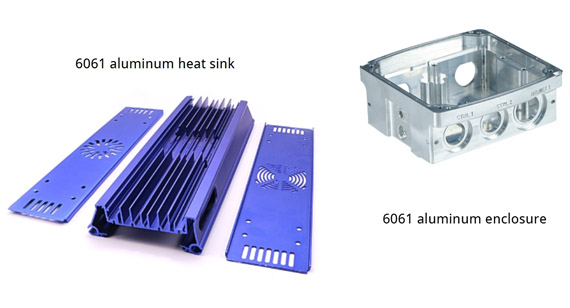
In terms of electrical conductivity, aluminum alloys typically range from 35% to 62% IACS, whereas carbon steel measures only about 10% IACS. Certain grades, such as aluminum alloy 1350, exhibit excellent conductivity (61% IACS) and can be utilized for the production of electrical conductors.
Appearance and Magnetism
Aluminum alloys naturally possess a bright, silver-white metallic luster and are non-magnetic, many decorative uses will need aluminum alloys like automotive trims or CNC machined electronic housings. Carbon steel typically appears darker or gray and is strongly magnetic (that why so many pans or woks for electromagnetic oven are made by carbon steel).
The following table provides a performance reference for representative grades for structural uses of carbon steel vs aluminium:
Table 1: Mechanical Comparison: Representative Grades of Aluminum vs Carbon Steel
| Property |
Aluminum 6061(The All-Rounder) |
Aluminum 7075 (The "Aircraft" Grade) |
1018 (Low Carbon/Mild) | 1045 (Medium Carbon) | 1095 (High Carbon) |
| Tensile Strength |
~310 MPa | ~570 MPa | ~440 MPa | ~600-700 MPa | ~1000+ MPa (Hardened) |
| Ductility (Elongation) |
Good (~12%) | Moderate (~11%) | Excellent (~15-25%) | Moderate (~12-15%) | Low (~2-5%) |
| Hardness (Brinell) |
95 (Moderate) | 150 (High for Aluminum) | 120 (Soft) | 160-200 (Medium) | 250-600+ (Very High) |
| Machinability |
Excellent | Good | Excellent | Good | Difficult (Tool wear) |
| Weldability |
Excellent | Poor (Crack prone) | Excellent | Moderate | Poor |
| Classic Application |
Bicycle frames, piping, structural frames | Aerospace components, high-stress gears | Bolts, pins, simple brackets | Shafts, axles, gears, crankshafts | Knives, springs, drill bits, saw |
Machinability Note: Aluminum (for structural uses) is generally easier to machine than most carbon steels, shortening production cycles and reducing tool wear. For carbon steel applications, 12L14 Free-Machining Steel is the most cost-effective choice for mass-produced fasteners due to added lead that improves chip breaking. While 1018 steel is a popular low-cost structural choice, it lacks these specific free-machining element lead but more environmental.
Aluminum
Most aluminum grades spontaneously form a dense, protective aluminum oxide layer when exposed to air. Specific grades, such as the 5xxx series, use magnesium to further enhance resistance to harsh environments.

Carbon Steel
Carbon steel has a relatively porous microstructure. Its primary components, iron and carbon, are chemically active, allowing moisture and air to penetrate the metal and cause oxidation (rust).
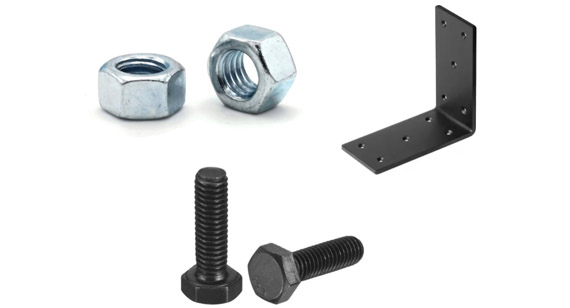
Aluminum Alloy Applications
For more on aluminum uses and properties, please refer to Here.
Carbon Steel Applications
For more on carbon steel properties, please refer to Here.
Choosing between aluminum and carbon steel is a balance of weight requirements, mechanical load, environmental exposure, and total processing cost. If your project demands lightweight parts and maintenance-less corrosion resistance, aluminum is the ideal choice. If your components must withstand high impact or wear in relatively dry conditions, carbon steel offers superior mechanical endurance.
At VMT, we understand that a quote is more than just a price—it is a commitment to engineering precision and cost-efficiency. Below is a practical example of how our engineering team helps clients transition from a concept to a finished part.
Case Study: High-Performance Robotic Arm Bracket
A client recently approached us to manufacture a structural bracket for a high-speed industrial robot. The initial design specified 4140 Carbon Steel due to its high strength (1000+ MPa after heat treatment). However, the client was concerned that the added weight would strain the robot's servo motors.
Our Analysis & Solution:
The Result:
The client received a comprehensive quote within 24 hours. The final aluminum parts improved the robot's cycle speed by 15% due to the reduced mass.
How to Get Your Custom Quote
To ensure the most accurate pricing and lead time, please include the following in your Request for Quote (RFQ) if you have decided:
Ready to start your project? Send your files directly to our engineering team at VMT CNC Machining Factory for a detailed DFM analysis and a competitive quote.

Is aluminum more expensive than carbon steel?
Yes, aluminum typically costs more per kilogram, but it saves money throughout machining and calls for less upkeep over the years.
Which material has better corrosion resistance?
Aluminum obviously resists corrosion, at the same time as carbon steel ought to be coated or painted to avoid rusting.
Can carbon steel resist rust without coating?
No, carbon metallic rusts effortlessly without safety. It requires coatings, which include zinc plating or paint to prevent corrosion.


 +86 15099911516




 Read more