16 years one-stop China custom CNC machining parts factory

Hey there I’m VMT Sam!
With 25 years of CNC machining experience we are committed to helping clients overcome 10000 complex part-processing challenges all to contribute to a better life through intelligent manufacturing. Contact us now
 180 |
Published by VMT at Apr 10 2026 | Reading Time:About 2 minutes
180 |
Published by VMT at Apr 10 2026 | Reading Time:About 2 minutes


If you’ve heard of AMS 6514—which belongs to aerospace material specification naming maraging steel 300— for modern aerospace and precision engineering. This ultra-high-strength, low-carbon iron-nickel alloy maraging 300 is what you shouldn't miss for your CNC machining steel parts project.
Despite maraging 300 is prized for its stability, its high Nickel and Cobalt content creates a "tough" profile that can lead to rapid tool wear and heat accumulation if not managed correctly. And if you want to further learn how our CNC machining factory overcomes these challenges by using carbide tooling and advanced high-pressure cooling strategies, we also share our successful case at the end.
Whether you are sourcing well-performed steel parts that balances the strength and toughness and has high/low temperature resistance (-50 to 450 ℃)or looking for how this steel applicated for the ultimate CNC machining, this guide explores why maraging 300 alloy steel remains your option.
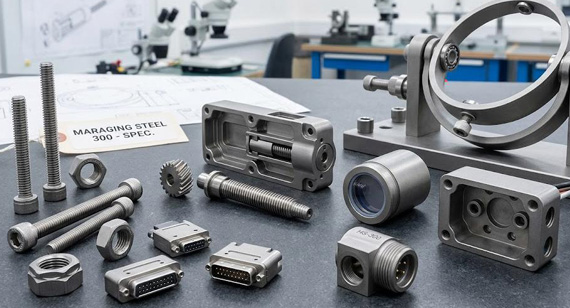
Maraging 300 is a "martensitic aging" steel. Unlike traditional tool steels or martensitic stainless steels that rely on carbon for hardness, maraging steels gain their incredible strength from the precipitation of intermetallic compounds.
This is simply to say,
The superior performance of maraging 300 is a direct result of its alloying elements, particularly the high content of Nickel and Cobalt. Nickel provides the toughness and the building blocks, while Cobalt accelerates and intensifies the hardening process to reach that 300 ksi (2,068 MPa) tensile strength. Table of its composition is as follows:
| Element |
Content (%) |
| Nickel (Ni) |
18.0 - 19.0% |
| Cobalt (Co) |
8.5 - 9.5% |
| Molybdenum (Mo) |
4.7 - 5.2% |
| Titanium (Ti) |
0.5 - 0.8% |
| Iron (Fe) |
Balance |
| Carbon (C) |
≤ 0.03% |
Maraging Steel 300 Properties
Physical Properties of 300 Maraging Steel
When you are designing for high-precision environments, you need to know exactly how the material behaves under thermal and physical stress. Maraging 300 properties include excellent dimensional stability and a predictable thermal expansion rate, which are critical for the "zero-distortion" advantage we’ll discuss later.
| Property |
Metric Units |
Imperial Units |
|
| Density |
8.00 g/cm³ | 0.289 lb/in³ | |
| Melting Point |
1413°C | 2575°F | |
| Modulus of Elasticity (E) |
190 GPa | 27.5 x 10⁶ psi | |
| Modulus of Rigidity (G) |
70 GPa | 10.2 x 10⁶ psi | |
| Poisson's Ratio |
0.30 | 0.30 | |
| Electrical Resistivity |
60 μΩ·cm | 23.6 μΩ·in | |
| Thermal Conductivity |
21.0 W/m·K | 145 BTU-in/ft²-hr-°F | |
| Specific Heat |
450 J/kg·K | 0.108 BTU/lb·°F | |
| Magnetic Permeability |
Magnetic | Magnetic | |
| Thermal Expansion (CTE) |
crucial for "zero-distortion" and high-precision fitting. | ||
| Temperature Range |
Coefficient (Metric) |
Coefficient (Imperial) |
|
| 20 – 100°C (68 – 212°F) | 10.3 x 10⁻⁶ /°C | 5.7 x 10⁻⁶ /°F | |
| 20 – 300°C (68 – 572°F) | 10.8 x 10⁻⁶ /°C | 6.0 x 10⁻⁶ /°F | |
| 20 – 500°C (68 – 932°F) | 11.7 x 10⁻⁶ /°C | 6.5 x 10⁻⁶ /°F | |
Mechanical Properties of 300 Maraging Steel
This is where maraging steel 300 (ams 6514) truly functions for your projects.
You are getting this maraging 300 alloy steel that offers one of the highest strength-to-weight ratios available in the steel family. Additionally, unlike other high-strength steels that become brittle, you’ll find that maraging 300 retains impressive fracture toughness even at maximum hardness.
| Property |
Annealed Condition |
Aged Condition (precipitation hardening) |
| Ultimate Tensile Strength |
1,034 MPa (150 ksi) | 2,068 MPa (300 ksi) |
| 0.2% Yield Strength |
724 – 827 MPa (105 – 120 ksi) | 1,999 MPa (290 ksi) |
| Hardness (Rockwell C) |
30 – 35 HRC | 50 – 55 HRC |
| Elongation (in 50mm) |
15 – 20% | 6 – 10% |
| Reduction of Area |
70 – 90% | 35 – 60% |
| Fracture Toughness |
— | 71 – 82 MPa√m (65 – 75 ksi√in) |
| Charpy V-Notch Impact |
— | 20 – 27 J (15 – 20 ft-lb) |
| Fatigue Endurance Limit |
— | 790 MPa (115 ksi) |
| Modulus of Elasticity |
190 GPa (27.5 x 10⁶ psi) | 190 GPa (27.5 x 10⁶ psi) |
Note: The "Aged Condition" values represent the material after a typical heat treatment cycle of 480°C (900°F) for 6 hours followed by air cooling
Machinability of Maraging Steel 300
If you've ever struggled to machine hardened tool steel, you'll appreciate the maraging 300 steel machinability. The machinability rating is 35% - 40% based on AISI 1212 steel as 100%, you can consider it relative to SS304 but not that gummy like 304. In its solution-annealed state (30-35 HRC), you can machine it using standard carbide tooling with ease.
Near-Zero Distortion Advantage of Maraging Steel 300
When you choose maraging 300, you are choosing near-zero distortion during the aging process. In traditional steel, the quenching process causes the metal to expand and contract violently, leading to warping. With maraging 300, the dimensional change during aging is a uniform and predictable shrinkage of only 0.05% to 0.1%( related to its physical property of thermal expansion in the above).
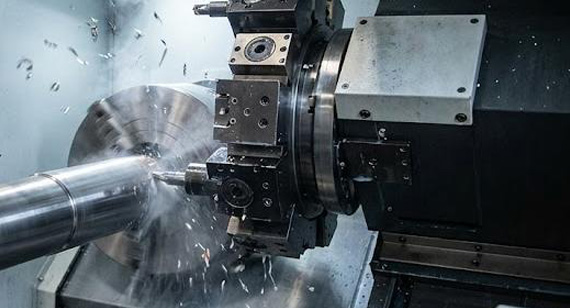
This means, if you CNC machining the annealed 300 steel into your wanted final parts, and then you harden the parts by aging, the precision of the part will not change (virtually no distortion) or effected by temperature changes in the aging process.
| Benefit |
How it helps your project when CNC machining |
| Finish Machining First |
You can machine your parts to final or near-final tolerances before hardening. |
| Complex Geometries |
You can design thin walls, deep pockets, or intricate features without worrying about them twisting in the furnace. |
| Cost Savings |
You save hours of labor and much in costs by avoiding the "machine-harden-grind" cycle. |
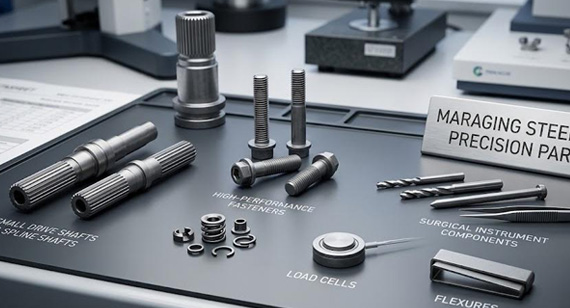
Due to its high strength, excellent machinability, superior toughness, and dimensional stability, Maraging Steel 300 is widely utilized in high-performance aerospace, automotive, and other specialized industries. Key applications include:
Tooling and Die Making
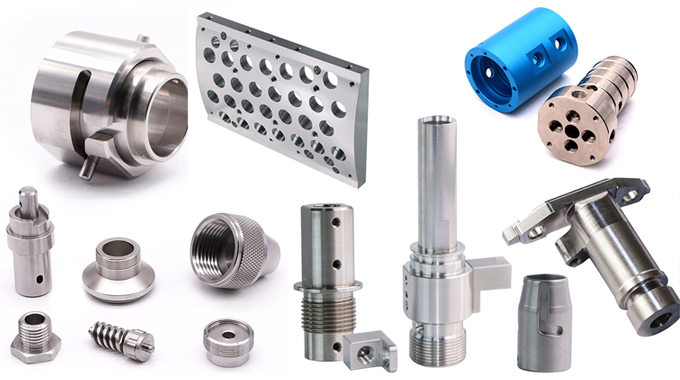
Maraging steel 300 out-performs in balancing its excellent tensile strength and remarkable fracture toughness for your demanding high-performance steel products. Its unique "near-zero distortion" aging process makes it better competitive for precision CNC parts and therefore benefits your next generation of aerospace actuators or high-stress automotive components. But for further consideration of your budget and products' performance, you should know this steel is relatively expensive for its high cobalt and nickel content. Or you can directly send your parts drawings to us for a free quote, and we bring the equipment, the experience, and the precision necessary to make your steel parts’ project a success.

Project: Precision Actuator Shafts for Aerospace
A long-term aerospace client required a batch of complex actuator shafts with deep internal features and a final hardness requirement of 52 HRC. The primary concern was the strict ±0.01mm dimensional tolerance; using traditional tool steels would have caused significant warping during the quenching process, requiring expensive and time-consuming post-hardening cylindrical grinding that risked compromising the thin-walled sections of the design.
When the client finds us, our engineering team recommends Maraging 300 (AMS 6514) to take advantage of its predictable 0.1% uniform shrinkage. We performed the bulk of the high-speed CNC turning and milling in the solution-annealed state (32 HRC) using specialized inserts to manage chip control. By precisely calculating the "near-zero" dimensional change into our initial CAM programming, we prepared the parts for a controlled vacuum aging cycle at 480°C.
The final actuator shafts emerged from the aging process within the exact tolerance specifications, saving the cost for post-hardening grinding. This streamlined approach reduced the total production lead time by 30% and lowered manufacturing costs for the client by 22%. The parts successfully passed all ultrasonic and stress-test inspections, providing the extreme fatigue resistance and structural integrity required for flight-critical applications.
Why is maraging steel so expensive?
It contains high concentrations of expensive alloying elements, particularly cobalt (around 9%) and nickel (18%), and requires complex, multi-stage vacuum melting and long-term heat treatment processes.
What is the difference between maraging 350 and 300?
Maraging 350 has higher cobalt and titanium content, providing a higher tensile strength (approx. 350 ksi vs 300 ksi), but it is slightly less tough and more difficult to machine than maraging 300.
Is maraging steel 300 corrosion resistant?
It offers better corrosion resistance than standard tool steels or low-alloy steels due to its high nickel content, but since it lacks sufficient chromium, it is not "stainless" and requires protective coatings or plating for better corrosion resistance.
What are maraging 300 global equivalents?
Common equivalents include UNS K93120 (USA), Werkstoff Nr. 1.6358 (Germany/Europe), and VascoMax 300 (Trade Name).
What is the difference between maraging 250 and 300?
The primary difference lies in their strength-to-toughness ratio: maraging 300 contains more cobalt and titanium than maraging 250, resulting in a higher yield strength (roughly 300 ksi vs. 250 ksi). Consequently, while maraging 300 is stronger, maraging 250 offers superior fracture toughness and is slightly easier to machine.


 +86 15099911516




 Read more