16 years one-stop China custom CNC machining parts factory

Hey there I’m VMT Sam!
With 25 years of CNC machining experience we are committed to helping clients overcome 10000 complex part-processing challenges all to contribute to a better life through intelligent manufacturing. Contact us now
 265 |
Published by VMT at Apr 09 2026 | Reading Time:About 2 minutes
265 |
Published by VMT at Apr 09 2026 | Reading Time:About 2 minutes


When it comes to producing stainless steel parts through CNC machining, would you prefer higher hardness or cost-effective due to machinability?
For these two characteristics, martensitic stainless steel 420J2 vs 440C are two of the most frequently specified grades. While they share the ability to be heat-treated to improve hardness and strength, their performance when put in production and their longevity in practical are quite different.
At VMT, we specialize in navigating these metallurgical trade-offs. As a dedicated CNC machining facility, we utilize custom-ground carbide tooling and optimized cooling strategies to overcome 440C’s toughness while maximizing the high-speed throughput of 420J2. We recommend 440C for "friction-heavy" applications and 420J2 for structural precision where budget and surface finish are paramount.
In this guide, we’ll compare 440C vs. 420J2 across four critical dimensions to help you determine which grade fits your project’s technical and budgetary requirements. Additionally, we will provide expert machining experience shares at the end.
Before diving into the technical details, here is a high-level comparison of how these two materials stack up in a production environment:
| Feature |
420J2 Stainless Steel |
440C Stainless Steel |
| Carbon Content |
0.26% - 0.40% (Moderate) | 0.95% - 1.20% (High) |
| Max Hardness |
50 - 54 HRC | 58 - 62 HRC |
| Wear Resistance |
Moderate | Exceptional |
| Machinability |
Excellent (Easy to cut) | Fair to Poor (Difficult) |
| Corrosion Resistance |
Good (Basic) | Moderate (Higher Cr, but High C) |
| Relative Cost |
Budget-friendly | Higher |
420J2 is a versatile martensitic steel with moderate carbon content. For a full breakdown of its technical specifications, read our guide on What is 420J2 Stainless Steel?. Additionally, if you want to further learn about 440C details of hardness or more, please refer to our guide on 440C Stainless Steel.
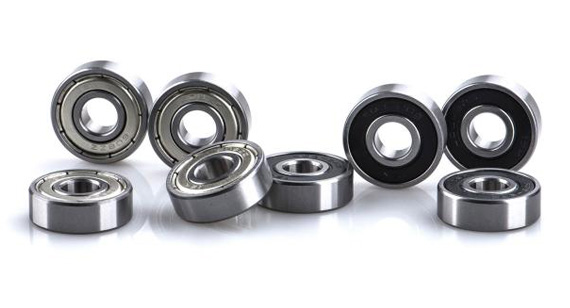
If your part's primary function is to resist abrasion or maintain a razor-sharp edge under heavy load, 440C is the clear winner.
Its not that you can’t choose 420J2, but 440C performs much better in hardness and wear resistance.
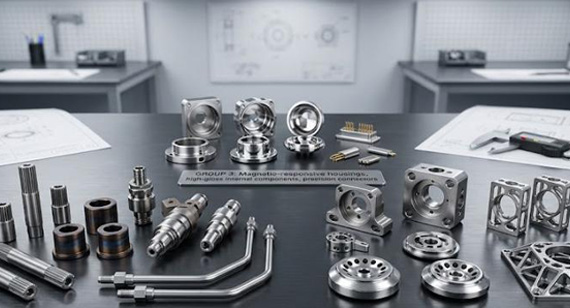
From our years of CNC machining services perspective, 420J2 stainless steel is definitely the one with higher machining speed and less cutting-tools damage than 440C, so as to cause less machining time and cost.
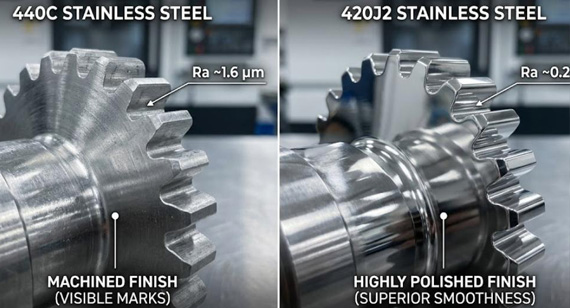
Surprisingly, despite 440C having more Chromium (16-18%) than 420J2(Chromium 12-14%), it doesn't always outperform 420J2 in corrosion resistance.
Decision between 440C and 420J2 stainless steel is quite clear as you have understood their key differences above. Here I list a breakdown for your quick decision:
Choose 420J2 if:
Choose 440C if:
| Element |
440C Stainless Steel |
420J2 Stainless Steel |
Role |
| Carbon (C) |
0.95 – 1.20% | 0.26 – 0.40% | Improves hardness and edge retention |
| Chromium (Cr) |
16.00 – 18.00% | 12.00 – 14.00% | Provide corrosion resistance |
| Manganese (Mn) |
1.00% (max) | 1.00% (max) | Deoxidizer; increases tensile strength and hardenability |
| Silicon (Si) |
1.00% (max) | 1.00% (max) | Deoxidizer; increases strength and heat resistance |
| Molybdenum (Mo) |
0.75% (max) | — | Increases toughness and resistance to"pitting" corrosion |
| Phosphorus (P) |
0.04% (max) | 0.04% (max) | Impurity |
| Sulfur (S) |
0.03% (max) | 0.03% (max) | Impurity |
| Iron (Fe) |
Balance | Balance | Base Metal |
| Property |
440C Stainless Steel |
420J2 Stainless Steel |
| Density |
7.80 g/cm³ | 7.75 g/cm³ |
| Melting Range |
1371 – 1482 °C | 1454 – 1510 °C |
| Specific Heat |
460 J/kg·K | 460 J/kg·K |
| Thermal Conductivity |
24.2 W/m·K | 24.9 W/m·K |
| Electrical Resistivity |
60.0 μΩ·cm | 56.0 μΩ·cm |
| Modulus of Elasticity |
200 GPa | 200 GPa |
| Coeff. of Thermal Expansion |
10.2 µm/m·°C | 11.0 µm/m·°C |
| Magnetic Property |
Magnetic | Magnetic |
| Property |
Condition |
440C Stainless Steel |
420J2 Stainless Steel |
| Hardness (Rockwell C) |
Annealed | ~20 - 25 HRC | ~15 - 20 HRC |
| Hardened & Tempered | 58 - 62 HRC(Better Wear Resistance) | 52 - 55 HRC | |
| Tensile Strength (MPa) |
Annealed | ~760 MPa | ~655 MPa |
| Hardened & Tempered | ~1790 - 1970 MPa | ~1400 - 1600 MPa | |
| Yield Strength (MPa) |
Annealed | ~450 MPa | ~345 MPa |
| Hardened & Tempered | ~1890 MPa | ~1000 - 1200 MPa | |
| Elongation (%) |
Annealed | ~14% | ~25% |
| Hardened & Tempered | ~2% | ~8 - 12% (Tougher) | |
| Reduction of Area (%) |
Annealed | ~25% | ~55% |
| Hardened & Tempered | ~10% | ~20 - 30%(Better ductility) | |
| Machinability Rating |
Annealed | 35% – 40% | 45% – 50%(Better) |
| Hardened & Tempered | Basically, it's not used for CNC machining because it's too hard. | ||
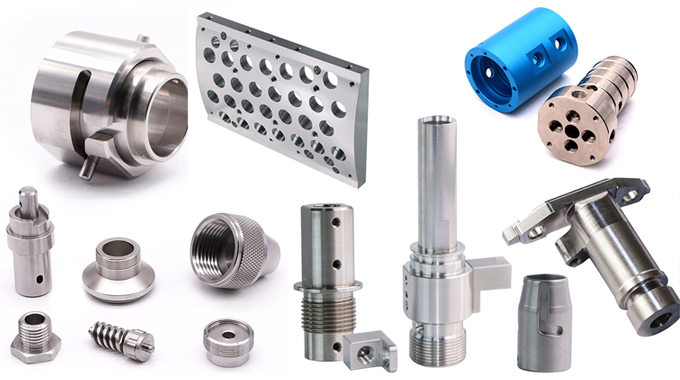
Choosing between 440C and 420J2 isn't just about picking the best performed steel, it's also closely connected to the cost, your usage environments, steels' adaptability when CNC machining. But for a conclusive saying, 440C is your best choice for wear and strength, while 420J2 is your suitable one for high-volume, cost-sensitive, or aesthetic components. At VMT, we help you make this choice by analyzing your part's environment and performance needs for your best stainless steel parts.

Project: High-Wear Needle Valves for Chemical Dosing
A client in the fluid handling industry was using 420J2 for high-pressure needle valves. While the parts were easy to machine and looked beautiful (mirror finish), the valve tips were eroding after only 200 hours of service. The moderate hardness of 52 HRC wasn't enough to withstand the abrasive particles in their chemical mix, leading to frequent system leaks and downtime.
VMT suggested a transition to 440C stainless steel when they find us. To keep costs manageable, we optimized the CNC turning profile to reduce "air-cut" time and used specialized TiAlN-coated inserts to handle the 440C's high carbon content. We also added a sub-zero treatment after the oil quench to transform retained austenite into martensite, ensuring the parts achieved a stable 60 HRC.
The new 440C valves lasted over 850 hours—a 4x improvement in service life. Although the initial machining cost increased by 30% due to slower cycle times and higher tooling wear, the client’s total cost of ownership plummeted because they saved thousands on replacement parts and emergency maintenance.
What are the common post-machining passivation standards for these grades?
To prevent "flash rust," both materials should undergo passivation according to ASTM A967. This chemical treatment removes free iron from the surface. Because 440C is more susceptible to pitting during the acid bath, you should use strictly controlled citric or nitric acid concentrations to ensure your parts are cleaned without surface etching.
What is the atmospheric corrosion resistance of 420J2 vs 440C?
While both are stainless steels, their oxidation rates differ. 420J2 actually has a slight edge in general atmospheric corrosion resistance because more of its Chromium remains in a "free" state to form a protective oxide layer. In 440C, a large portion of Chromium is tied up in carbides. If your part is for outdoor structural use rather than high-friction tools, 420J2 is often the more durable choice.
Which is better for edge retention, 440C or 420J2?
For applications requiring a long-lasting sharp edge, such as industrial cutting tools, 440C is the superior choice. Its high carbon content (up to 1.20%) forms hard chromium carbides that resist wear. 420J2 is tougher and more impact-resistant but will require more frequent sharpening due to its lower peak hardness.
Does 440C rust faster than 420J2?
Technically, yes, in some environments. Because 440C’s chromium is tied up in carbides, there is less "free chromium" to form a protective oxide layer. Proper passivation for stainless steel is essential for both to prevent surface pitting.
Can I achieve a mirror finish on 440C?
You can, but it is more difficult than 420J2. The large carbides in 440C can cause "orange peel" textures during polishing if not carefully operating it. The best way to get a good finish is to polish the 440C stainless steel parts as much as possible before heat treatment.
What is the role of 440C chromium carbides in wear resistance?
The high hardness of 440C (up to 62 HRC) is due to the formation of primary chromium carbides during the smelting and heat-treat process. These carbides can against abrasion.


 +86 15099911516




 Read more