16 years one-stop China custom CNC machining parts factory

Hey there I’m VMT Sam!
With 25 years of CNC machining experience we are committed to helping clients overcome 10000 complex part-processing challenges all to contribute to a better life through intelligent manufacturing. Contact us now
 281 |
Published by VMT at Mar 05 2026 | Reading Time:About 2 minutes
281 |
Published by VMT at Mar 05 2026 | Reading Time:About 2 minutes


Both 420 and 440 are martensitic stainless steels characterized by high hardness, excellent wear resistance, and good corrosion resistance. As martensitic grades, both can be strengthened through heat treatment to enhance their hardness and durability. However, their specific chemical compositions lead to distinct differences in performance—particularly in hardness and corrosion resistance—which in turn affects their cost and typical applications. Even though both 420 and 440 are widely used for precision bearings and machine components in CNC machining projects, as well as for blades and surgical instruments, they serve different needs. In this article, you can learn about how the composition of these two steels impacts their properties, compare their core characteristics, and analyze the differences in machining difficulty and cost.
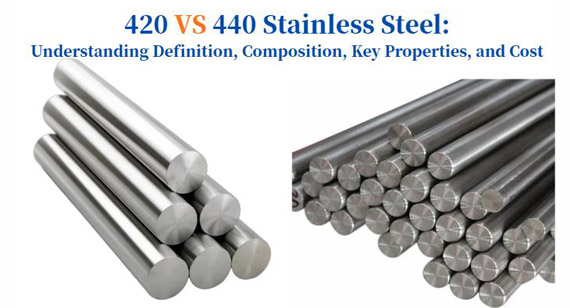
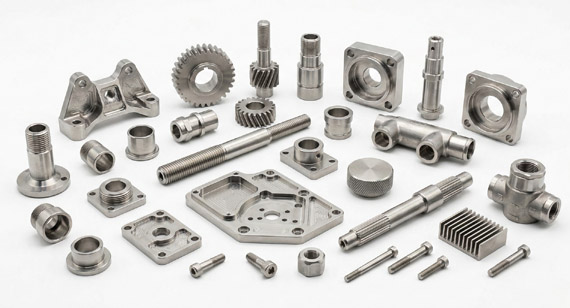
420 martensitic stainless steel contains 12.0% – 14.0% chromium and 0.15% – 0.40% carbon. It is a highly durable material known for its good corrosion resistance, ease of cleaning, and impressive hardness and wear resistance. You will commonly find 420 stainless steel used in bearings, surgical instruments, screwdrivers, wrenches, food processing equipment, and commercial kitchenware/cutlery.
This grade is known by other names internationally, and these equivalent grades include:
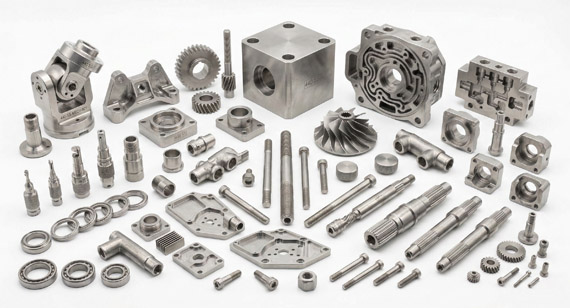
With a higher chromium content (16.0% – 18.0%) and increased carbon, 440 martensitic stainless steel offers better corrosion resistance and hardness compared to 420 SS. It is available in three sub-grades with varying carbon levels: 440A (0.60-0.75% carbon), 440B (0.75-0.95%), and 440C (0.95-1.20%). While the high carbon content provides 440 SS with its hardness,it also makes 440 more challenging to machine—especially in CNC machining, the most common manufacturing method. The higher carbon also makes 440 stainless steel less easy to clean than 420 SS.
You can find 440 stainless steel used to manufacture:
Table 1: Common Equivalent Grades of 440 Stainless Steel
| Standard |
440A sub grade |
440B sub grade |
440C sub grade |
| USA (AISI/ASTM) |
440A (S44002) | 440B (S44003) | 440C (S44004) |
| China (GB/T) |
7Cr17 | 8Cr17 | 95Cr18(Old: 9Cr18) |
| Japan (JIS) |
SUS440A | SUS440B | SUS440C |
| Europe (EN/DIN) |
1.4109 | 1.4112 | 1.4125 |
| Russia (GOST) |
65X13 (approx.) | 85X13 (approx.) | 95X18 |
| France (AFNOR) |
Z70CD15 | Z90CD18 | Z100CD17 |
The primary difference in chemical composition between 420 stainless steel vs 440 lies in their chromium and carbon content. Higher chromium levels result in a thicker protective oxide layer, which enhances corrosion resistance (typically, stainless steel must contain more than 10% chromium to naturally form this passive layer).
Carbon content, meanwhile, is the key factor influencing the hardness of these two martensitic stainless steels. During steel production, a blast furnace reaction is used to remove excess carbon; at this stage, its impact is minimal. However, as an alloying element, higher levels of retained carbon can make the steel harder. Another crucial point is that carbon enables components made from 440 and 420 to be strengthened through heat treatment. During quenching and tempering, higher carbon levels lead to a greater distribution of hard chromium carbide particles (formed by the combination of carbon and chromium) within the crystal structure, making the stainless steel both harder and more wear-resistant.
The table below provides a detailed breakdown of the chemical composition for 440 vs 420:
Table 2: Chemical Composition of Stainless Steel 440 vs 420
| Element | 420 SS | 440 SS |
| Carbon (C) | 0.15% – 0.40% |
0.60% – 0.75% (440A)
0.75% – 0.95% (440B) 0.95% – 1.20% (440C) |
| Chromium (Cr) | 12.0% – 14.0% | 16.0% – 18.0% |
| Molybdenum (Mo) | < 0.60% (Optional) | 0.75% |
| Manganese (Mn) | ≤ 1.0% | ≤ 1.0% |
| Silicon (Si) | ≤ 1.0% | ≤ 1.0% |
| Iron (Fe) | Balance | Balance |
Corrosion Resistance Differences
While both 440 and 420 are martensitic stainless steels, the corrosion resistance of 440 SS is generally superior to that of 420 SS. This is primarily attributed to its higher chromium content (16-18% for 440 SS, compared to 12-14% for 420 SS). In a highly polished state, both perform well in freshwater, atmospheric, and mild acid environments; however, 440 SS has a distinct advantage in resisting pitting and oxidative environments due to its higher chromium levels. It is important to note that both reach their peak corrosion resistance in a hardened (quenched) state, while their resistance is weaker in an annealed state.
But there is a distinct that 420 SS is easier to clean and maintain than 440 SS. This is because most of the chromium in 420 SS is utilized to form a protective passive layer. In contrast, more of the chromium in 440 SS reacts with its higher carbon content during heat treatment to form chromium carbide particles (stainless steel parts are heat-treated to maintain strength), resulting in a passive layer that is less meticulous and smooth than that of 420 SS. Therefore, when in contact with food acids (such as lemon juice or vinegar) or limescale, 420 SS is less likely to develop rust spots or pitting.
Hardness Differences
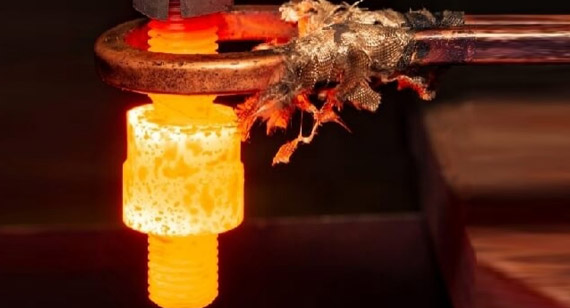
Hardness is the most significant difference between the two, primarily influenced by carbon content (440 contains approximately 0.6-1.2% carbon, while 420 contains 0.15-0.4%). Through heat treatment hardening, higher carbon content results in higher hardness, making 440 SS harder than 420 SS.
440 Stainless Steel
Strength Differences
Due to differences in carbon content and the degree of alloying, the tensile strength and yield strength of 440 SS are much higher than that of 420 SS.
440 Stainless Steel:
Toughness Differences
Toughness and hardness are often inversely proportional. Due to the high hardness and carbide content of 440 SS, it is more brittle, and its toughness is significantly lower than that of 420 SS.
440 Stainless Steel:
Machinability Differences and CNC Machining Recommendations
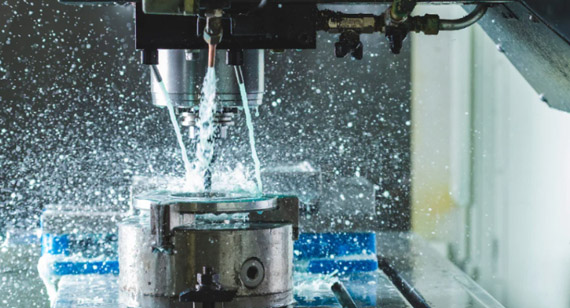
Using B1112 free-machining steel as a 100% baseline, the machinability of 420 stainless steel is approximately 45-50%, while 440 stainless steel is 35-45%. 440 stainless steel—especially sub-grade 440C—contains a much higher hardness and strength, which causes rapid wear on tools used in CNC machining projects; and the machining difficulty of 420 SS is moderate compared to 440 SS. The table below compares the machining difficulty and CNC recommendations for 420 vs 440:
Table 3: Machinability Differences and CNC Machining Recommendations for 420 vs 440
| Item |
420 SS |
440 SS |
| Machinability Rating |
45% – 50% (Baseline B1112) | 35% – 45% (440A: 40-45%, 440B: 38-42%, 440C: 35-40%) |
| Machining Difficulty |
Moderate (Similar to medium carbon steel) | High (High chromium carbides wear tools rapidly) |
| Tool Choice |
Standard Carbide | Coated Carbide (TiAlN) or Ceramic |
| Cutting Speed |
60 – 90 m/min | 40 – 60 m/min (Reduced by approx. 30%) |
| Feed Rate |
Standard feed; monitor chip breaking | Continuous feed; strictly no dwelling to prevent work hardening |
| Cooling/Lubrication |
Standard emulsion | High-pressure coolant (Poor thermal conductivity; prevents overheating) |
| Process Flow |
Machine in annealed state, then heat treat | Rough machine in annealed state, heat treat, then finish grind |
420 stainless steel is relatively economical. if you are working with a limited budget, 420 is more than sufficient for producing general cutlery or other industrial parts. 440 stainless steel has a higher cost because its high chromium and carbon content increase raw material production expenses. Furthermore, its lower machinability rating and higher processing difficulty lead to increased manufacturing costs. If you have an ample budget and require higher-end precision bearings or instrument components, you should consider 440 stainless steel based on your product's requirements for hardness, strength, and impact resistance.
Table 4: Cost Comparison of 420 vs 440 Stainless Steel
| Cost Factor | 420 Stainless Steel | 440A / 440B | 440C Stainless Steel |
| Raw Material Price | Base (1.0x) | ~1.3x – 1.5x | ~1.8x – 2.5x |
| Machining Cost | Low (Standard tools) | Moderate | High (Specialized tools) |
| Tooling Wear Cost | Minimum | Moderate | Very High (Abrasive carbides) |
| Heat Treat Cost |
Standard | Standard | Higher (Sub-zero often required) |
| Total Part Cost |
Lowest | Medium | Highest |
Through this article, you can see that 420 stainless steel is a more economical material that offers corrosion resistance, ease of cleaning, and the necessary strength, hardness, and impact resistance for general industrial tools. As for 440 stainless steel, the carbon content increases progressively from sub-grade 440A to 440B to 440C, resulting in higher hardness, strength, and corrosion resistance—along with higher material and machining costs. However, this comes at the expense of toughness (impact resistance) and increased difficulty in CNC machining. When choosing between 420 vs 440 for the production of blades, precision tools, surgical instruments, or bearings, your decision should ultimately depend on your product's performance requirements, operating environment, and budget, which require careful weighing.

Recently, a medical automation equipment manufacturer contacted VMT seeking to customize a batch of stainless steel precision bearings for their high-speed rotating components. The client hoped the bearings would achieve sufficient corrosion resistance and high hardness while remaining cost-effective. Since these bearings are used in high-frequency operating environments, the client set extremely high requirements for dimensional tolerances and surface roughness—particularly the concentricity between the inner diameter and the raceway—as this directly impacts the equipment's operational stability and service life. Based on these requirements, VMT suggested 420 stainless steel. After careful consideration, the client agreed that it was the ideal fit for both their budget and performance needs.
At the beginning of the project, our primary challenge was controlling the dimensional stability of the 420 stainless steel before and after heat treatment. Because martensitic stainless steel is prone to slight deformation during the quenching process, it is difficult to guarantee micron-level tolerances through direct finishing. To address this, the VMT technical team established a process flow of "Annealed Rough Machining — Vacuum Heat Treatment — Precision Grinding." During the CNC rough machining stage, we selected TiAlN-coated carbide tools and strictly controlled the cutting speed at 70m/min to prevent work hardening. After heat treatment, we utilized high-precision cylindrical and internal grinders for final finishing, paired with high-pressure coolant to suppress grinding heat, ensuring the geometric accuracy of the bearing raceways.
Following strict process control and full-dimension CMM (Coordinate Measuring Machine) inspections, the batch of 420 stainless steel bearings was successfully delivered. Final test data showed that the inner diameter tolerance was stably controlled within ±0.01mm, and the raceway surface roughness reached a smooth Ra 0.6μm, fully meeting the low-friction requirements for high-speed operation. With this optimized process, we increased the first-pass yield rate to 98.5%. The client reported a reduction in overall machine noise after installation, which has effectively extended the equipment's maintenance cycle.
440 vs 420 Stainless Steel: What is their density?
The density of 420 is approximately 7.75 g/cm³, while the 440 series is slightly denser at approximately 7.80 g/cm³ due to its higher alloy content.
440 vs 420 Stainless Steel: Are they easy to weld?
No; as high-carbon martensitic steels, both are highly susceptible to cold cracking during welding. They typically require strict preheating and post-weld annealing treatments.
440 vs 420 Stainless Steel: Are they magnetic?
Yes; the entire 420 and 440 series are strongly ferromagnetic in both annealed and hardened states.
What is the difference between 440A and 440C?
The main difference is the carbon content: 440C has a higher carbon content (approx. 1.1%), making its hardness and wear resistance far superior to 440A, though 440A offers slightly better toughness and impact resistance.
440 vs 420 Stainless Steel: How do their thermal properties compare?
Both have poor thermal conductivity (about 1/2 that of carbon steel), but 440 stainless steel has a slightly lower coefficient of thermal expansion and better high-temperature strength stability under high loads.
How can you manufacture parts from 420 and 440 stainless steel?
In the softer annealed state, you can use CNC machining to manufacture bearings and medical instruments, stamping to create tools or blades, and forging for high-end cutlery. Once these components are produced, they undergo heat treatment to enhance hardness, resulting in the final, usable 420 or 440 stainless steel product.


 +86 15099911516




 Read more