16 years one-stop China custom CNC machining parts factory

Hey there I’m VMT Sam!
With 25 years of CNC machining experience we are committed to helping clients overcome 10000 complex part-processing challenges all to contribute to a better life through intelligent manufacturing. Contact us now
 168 |
Published by VMT at Mar 06 2026 | Reading Time:About 2 minutes
168 |
Published by VMT at Mar 06 2026 | Reading Time:About 2 minutes


When you think of ferritic stainless steel, the first thing that comes to mind is likely its high cost-effectiveness, driven by its near-absence of nickel. Beyond its affordability, ferritic stainless steels offers excellent formability, thermal conductivity, and superior resistance to oxidation and corrosion. This makes it a preferred material for automotive exhaust systems, household appliances, and industrial components such as heat exchangers.
In this article, you will gain an in-depth look at the chemical composition, core properties, and cost factors of ferritic stainless steel. Specific common grades and their applications will also be discussed to help you make informed decisions when balancing performance and cost in your stainless steel products.
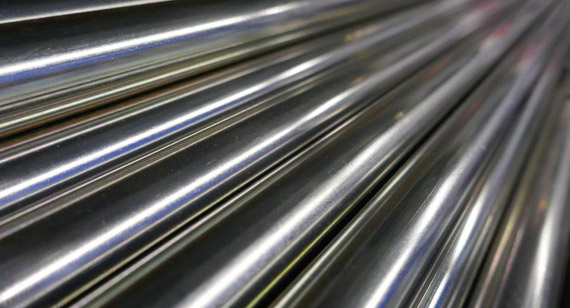
Visually, ferritic stainless steel exhibits a silver-white metallic luster and can achieve an exceptionally high brightness after polishing—making it nearly indistinguishable from other stainless steel types to the naked eye. Identifying ferritic stainless steel relies primarily on its chemical composition and microstructure.
As an iron-chromium alloy, this ferritic stainless steel typically contains between 10.5% and 30% chromium, with virtually no nickel and extremely low carbon content. Its ferritic structure is defined by a body-centered cubic (BCC) crystal lattice, which inherently renders the material ferromagnetic, meaning it is easily attracted to magnets. Furthermore, the unique microstructure of ferritic stainless steel means it cannot be hardened through heat treatment; its strength and hardness are primarily derived from its specific alloying elements or through cold working (such as bending, stamping, rolling).
The core chemical profile of ferritic stainless steel is characterized by "High Chromium, Extremely Low Nickel, and Low Carbon." While the high chromium content facilitates the formation of a superior passive film for enhanced corrosion resistance, the other elements serve the following strategic purposes:
Table 1: Primary Chemical Composition of Ferritic Stainless Steel
| Element |
Composition Range (%) |
| Chromium (Cr) | 10.5% – 30% |
| Nickel (Ni) | 0% – 0.6% |
| Carbon (C) | < 0.12% |
| Molybdenum (Mo) | < 2% |
| Silicon (Si) / Manganese (Mn) | < 1.0% |
| Nitrogen (N) | < 0.025% |
| Stabilizing Elements | May contain Titanium (Ti) or Niobium (Nb) to improve weldability |
| Iron (Fe) | Balance |
Good Corrosion Resistance
Ferritic stainless steel demonstrates good corrosion resistance in oxidizing environments (i.e., exposure to air and moisture). The chromium content facilitates the self-generation of a robust passive film to inhibit corrosion. Furthermore, in chloride-rich environments, the Body-Centered Cubic (BCC) structure of ferritic steel makes it highly resistant to Stress Corrosion Cracking (SCC).
Additionally, ferritic stainless steel performs exceptionally well under exposure to food acids without oxidizing. Consequently, grades such as AISI 430, ASTM 439, ASTM 441, and ASTM 444 are widely utilized in kitchen appliances, washing machines, and professional cookware.
Good Formability and Ductility
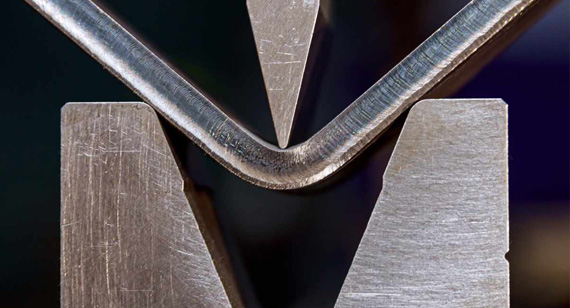
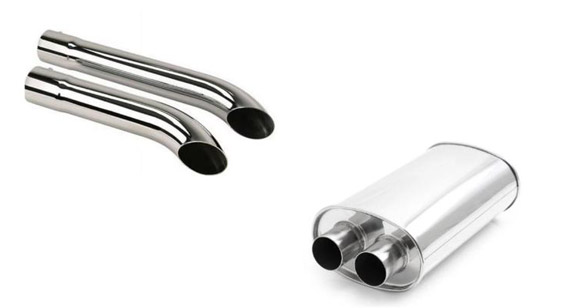
With an elongation rate (in 50mm) typically ranging between 20% and 30%, ferritic stainless steel offers moderate to good ductility and formability. In common industrial applications—such as automotive exhaust pipes and mufflers (particularly AISI 409, the highest-volume ferritic grade for industrial use)—it successfully accommodates various cold-working processes, including bending, deep drawing, and press forming.
However, this formability is relative. While it is softer and easier to form than martensitic stainless steels (which are extremely hard and brittle) or high-strength carbon steels due to its low carbon content, it lacks the superior formability of austenitic grades. The absence of nickel, characteristic of the austenitic series, limits its performance in highly complex designs or applications requiring extreme deep drawing.
Moderate Strength and Hardness
The strength and hardness of ferritic stainless steels occupy a middle ground. It is slightly harder and stronger than austenitic stainless steel (due to the different crystal structure and lower work-hardening rates resulting from the lack of nickel), yet far below the levels of heat-treatable martensitic stainless steel.
The following table provides a direct reference for the strength and hardness values of common ferritic grades:
Table 2: Strength and Hardness Comparison of Common Ferritic Stainless Steel Grades
| Grade |
Yield Strength (MPa) |
Tensile Strength (MPa) |
Hardness (Typical Values) |
| AISI 409 | 170 – 240 | 380 – 480 | 65 – 75 HRB |
| AISI 430 | 280 – 350 | 450 – 600 | 80 – 90 HRB |
| ASTM 439 | 205 – 300 | 415 – 550 | 75 – 85 HRB |
| ASTM 441 | 250 – 350 | 430 – 580 | 80 – 90 HRB |
| ASTM 444 | 275 – 415 | 415 – 600 | 85 – 95 HRB |
High Thermal Conductivity and Low Thermal Expansion
Ferritic stainless steel is characterized by high thermal conductivity and a low coefficient of thermal expansion. Its thermal conductivity typically ranges from 23 to 27 W/m·K, while its coefficient of thermal expansion stays between 10.0 and 11.5 (10⁻⁶/°C).
This profile indicates rapid heat transfer, making grades like ASTM 439 and 444 ideal for heat exchanger applications. Furthermore, the low thermal expansion—which is very close to that of carbon steel—provides excellent dimensional stability in CNC machining projects, ensuring high precision and tight tolerances for machined components.
Limited Low-Temperature Toughness
While ferritic stainless steel exhibits good impact resistance at room temperature (approximately 20-50J), it undergoes a sudden transition to brittleness when temperatures drop below 0°C to -20°C. This phenomenon is known as the Ductile-to-Brittle Transition Temperature (DBTT). Exposure to low temperatures can cause the material to lose its toughness, leading to risks of fracture or shattering. Consequently, ferritic stainless steel is not suitable for use in cryogenic pressure vessels.
Machinability
The machinability rating for ferritic stainless steels (including AISI 409, 430, ASTM 439, 441, and 444) is approximately 45-65% (based on B1112 steel at 100%). This performance exceeds that of common austenitic grades (e.g., AISI 304 at 40%, AISI 316 at 35%) and some martensitic grades (e.g., 440C at 35%), indicating superior ease of processing.
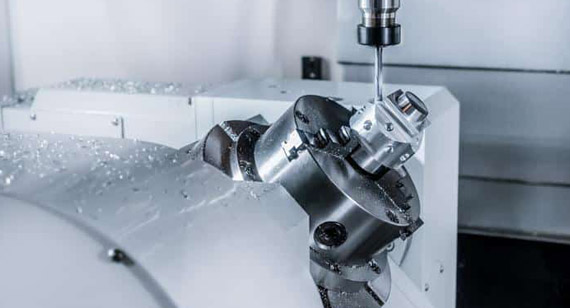
Because ferritic stainless steel does not experience the severe work hardening typical of austenitic grades, tool wear is relatively minimal. This makes it an excellent choice for CNC machining various stainless steel components, such as solenoid valve assemblies, fuel system fittings, and fasteners. However, despite its moderate-to-good machinability, it is essential to use sharp tools, maintain a consistent feed rate, and apply ample coolant to prevent grain coarsening caused by overheating.
Raw Material Costs
Because ferritic stainless steel contains no expensive nickel, its base price is typically only 50%–70% of austenitic grades (such as 304). The cost is primarily driven by ferrochromium prices. Compared to the highly volatile nickel market, the price trend for ferritic steel is significantly more stable and predictable.
Alloying Additives
High-performance ferritic grades that incorporate Molybdenum (Mo) or Titanium (Ti), such as ASTM 444 or ASTM 441, will command a slightly higher price point.
Machining and Fabrication Costs
While ferritic steel offers good formability, certain applications may require post-weld heat treatment (PWHT)—such as tempering to relieve stress—which can add to the total cost. The cost of CNC machining remains at a moderate level within the stainless steel family.
Maintenance Costs
Ferritic stainless steel possesses inherent corrosion resistance in indoor and atmospheric environments by forming its own protective passive film. Unless used in highly corrosive environments, it requires almost no specialized maintenance over a service life of several decades.
The following table summarizes the common ferritic grades discussed and their specific application examples:
Table 3: Common Ferritic Stainless Steel Grades and Applications
| Grade |
Core Characteristics |
Cost |
Typical Applications |
| AISI 409 | Lowest chromium content; excellent heat/corrosion resistance. | Lowest | Automotive exhaust pipes, mufflers, catalytic converter shells. |
| AISI 430 | Standard grade; excellent polishability and aesthetics. | Low | Washing machine drums, dishwasher panels, interior trim, cutlery. |
| AISI 430F | The "free-machining" variant of AISI 430. | Moderate | Solenoid valve components, fuel system fittings, and fasteners. |
| ASTM 439 | Titanium-stabilized; resistant to high-temperature oxidation. | Moderate | Residential heating systems, heat exchangers, exhaust manifolds. |
| ASTM 441 | Dual-stabilized (Ti+Nb); superior high-temperature strength. | Moderate | Commercial kitchen equipment, high-temperature exhaust components. |
| ASTM 444 | Molybdenum-bearing; exceptional resistance to pitting and SCC. | Higher | Solar water heater tanks, food processing piping, outdoor storage tanks. |
Advantages
Disadvantages
Ferritic stainless steel is an indispensable material in modern industry. While it has limitations in cryogenic applications and heavy-duty welded structures, it remains the ideal choice for household appliances, automotive exhaust systems, and heat exchange sectors. Its combination of economic efficiency, reliable formability, and superior thermophysical properties makes it a high-value solution for performance-critical projects.
A renowned automotive component supplier approached VMT CNC Machining Factory seeking mass production for precision fittings used in high-pressure fuel systems. The client’s initial technical specification called for AISI 304 austenitic stainless steel. However, preliminary cost analysis revealed that 304’s tendency toward severe work hardening led to low cutting efficiency and excessive tool wear, pushing the project significantly over budget. Upon evaluating the application, VMT’s engineering team noted that the fittings operate in a fuel environment and must interact with electromagnetic sensors. Consequently, we recommended AISI 430F ferritic stainless steel. As a "free-machining" variant of the 430 grade, it provides the necessary corrosion resistance, and its inherent ferromagnetism makes it ideal for electromagnetic components. Furthermore, the raw material cost of AISI 430F is approximately 30% lower than that of AISI 304.
During the manufacturing phase, VMT utilized high-precision Swiss CNC lathes for high-speed cutting of the AISI 430F. To mitigate potential grain coarsening often associated with high-speed machining of ferritic steels, we engineered a specific process route: by utilizing sulfur-optimized 430F bar stock, we ensured brittle chip breaking, which prevented surface scratches caused by chip entanglement. Simultaneously, we employed custom-coated carbide tools paired with high-pressure cooling systems to rapidly dissipate heat from the cutting zone. This "high-speed, low-feed, and ample cooling" strategy ensured the precision of complex internal bores and fine threads while maximizing 430F’s free-machining properties, successfully reducing the overall machining cycle by more than 20%.
Through the dual optimization of material selection and manufacturing processes, VMT delivered components that met the client’s most stringent requirements. Statistical data showed that the transition to the AISI 430F solution reduced the total cost per unit by 28%.In terms of precision performance, we successfully maintained critical dimensional tolerances within ±0.01mm. The surface roughness of the threaded sealing areas reached a high standard of Ra 0.8, effectively eliminating any risk of fuel leakage. Additionally, this production batch of 50,000 units achieved an exceptional factory pass rate of 99.8%.
Can ferritic stainless steel prevent Stress Corrosion Cracking (SCC)?
Yes. This is one of its primary advantages. In chloride-containing environments, its resistance to SCC is far superior to that of 304 or 316 austenitic stainless steels.
What is the history of ferritic stainless steel?
It originated in the early 20th century, discovered around the same time as martensitic stainless steel. It saw large-scale industrial adoption in the 1970s following advancements in refining technologies (such as AOD/VOD) that allowed for lower carbon and nitrogen content.
What is the density of ferritic stainless steel?
It is approximately 7.75 g/cm³, which is slightly lighter than austenitic stainless steel (approx. 8.0 g/cm³).
Does ferritic stainless steel have a high melting point?
Yes, it has a high melting range, typically between 1425°C and 1510°C, providing excellent fire resistance.
What is 430 Li stainless steel?
The "Li" stands for Low Interstitial elements, referring to extremely low levels of carbon and nitrogen. This significantly improves the ductility and weldability of the standard 430 grade.
Between 442 and 439, which is better for automotive exhaust systems?
439 is the superior choice. Because it is titanium-stabilized, its resistance to oxidation and corrosion under cyclic heating conditions better meets the rigorous demands of modern automotive exhaust systems.


 +86 15099911516




 Read more