16 years one-stop China custom CNC machining parts factory

Hey there I’m VMT Sam!
With 25 years of CNC machining experience we are committed to helping clients overcome 10000 complex part-processing challenges all to contribute to a better life through intelligent manufacturing. Contact us now
 159 |
Published by VMT at Mar 09 2026 | Reading Time:About 2 minutes
159 |
Published by VMT at Mar 09 2026 | Reading Time:About 2 minutes


Do you want to know which "alloy" elements are used in alloy steel? How do we distinguish between high-alloy and low-alloy steels? What are the specific roles of these alloy elements? Are you looking for common alloy steel grades, their characteristics, and their applications? Furthermore, which alloy steels are better suited for CNC machining, sheet metal fabrication, or forming applications?
These questions cover the fundamental composition, properties, and applications of alloy steel—all of which directly impact your steel parts' performance and costs. In this article, you will find the answers to these questions to help you grasp the basics of alloy steel and provide a reliable reference for your part processing and engineering applications.
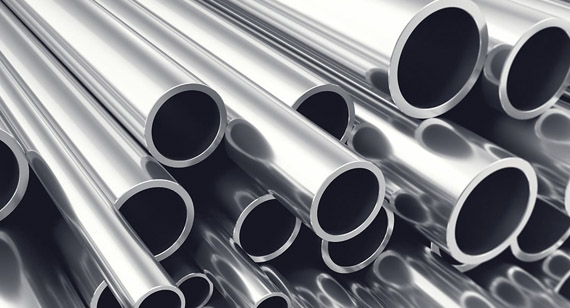
Whether it is low-carbon steel, high-carbon steel, or various types of stainless steel—such as austenitic, ferritic, or martensitic—alloy elements are essential whenever enhanced performance is required. This includes improvements in chemical corrosion resistance, mechanical strength, hardness, or toughness.
You can consider any steel with iron as the base element (more than 50%) to be alloy steel, as long as it has the alloy elements I’ve mentioned below. Steel is an alloy of iron and carbon, but alloy steel is steel that’s been further improved by introducing other metallic or non-metallic elements.
Table 1: Thresholds of Alloy Steel Elements(based on AISI/SAE )
| Alloy Element |
Weight % |
Primary Core Role |
| Manganese (Mn) |
> 1.65% | Increases hardness and hardenability; enhances wear resistance. |
| Silicon (Si) |
> 0.60% | Improves elastic limit, strength, and oxidation resistance. |
| Chromium (Cr) |
> 0.30% | Increases hardness and wear resistance; provides "stainless" properties at >10.5%. |
| Nickel (Ni) |
> 0.30% | Improves toughness (especially at low temperatures), corrosion resistance, and ductility. |
| Molybdenum (Mo) |
> 0.08% | Enhances high-temperature strength, creep resistance, and pitting corrosion resistance. |
| Vanadium (V) |
> 0.10% | Refines grain structure; significantly improves strength and fatigue resistance. |
| Tungsten (W) |
> 0.30% | Provides extremely high "red hardness" (heat resistance) for high-speed cutting tools. |
| Cobalt (Co) |
> 0.05% | Increases red hardness; commonly used in super-hard and magnetic steels. |
| Boron (B) |
> 0.0008% | Even in trace amounts, it significantly boosts hardenability for large cross-section parts. |
| Titanium (Ti) |
> 0.05% | Stabilizes carbon to prevent intergranular corrosion during stainless steel welding. |
| Lead (Pb) |
> 0.10% | Increases self-lubricity to create free-machining (easy-cutting) steel. |
| Aluminum (Al) |
> 0.10% | Acts as a powerful deoxidizer and is the primary strengthening element for nitriding steel. |
Iron serves as the balance (base metal) and the primary component of steel. Carbon, meanwhile, is present in all steel to some degree. This is inherent to the steelmaking process—such as in blast furnace reactions—where carbon is systematically reduced from iron ore to reach a specific target. Carbon is always retained in the final product: low-carbon steels stay below 0.3%, while medium-to-high carbon steels range from 0.35% to 1.5%.
Furthermore, sulfur (S) and phosphorus (P) are treated as impurities. Since they are inherent in almost all steel, they are not categorized as intentional alloying elements.
Naturally, the weight percentage of these elements dictates the material’s properties. Generally speaking, the higher the concentration—within a reasonable range—the more pronounced the specific effect will be.
However, it’s important to note that "more" doesn't always mean "better." Beyond certain thresholds, the material can become excessively brittle (making it difficult to machine) or cause costs to skyrocket. For example, excessive manganese can lead to cracking during welding, while too much chromium—though excellent for corrosion resistance—can compromise the steel's impact toughness.
Additionally, alloying elements define the specific types of alloy steel:
High alloy steels are generally better suited for harsh environments, though they typically come with higher procurement costs and lower machinability.
Low-Alloy Low-Carbon Steel
This category of steel offers excellent toughness and weldability, making it ideal for structural components. For example,
Table 1: Examples of Low-Alloy Mild Steel
| Grade |
Characteristics |
Typical Applications |
| AISI 4130 |
Contains Chromium and Molybdenum; high strength and easy to weld. | Bicycle frames, aircraft tubing. |
| ASTM A572 |
High-Strength Low-Alloy (HSLA) steel. | Bridges, structural building components, heavy truck chassis. |
Low-Alloy High-Carbon Steel
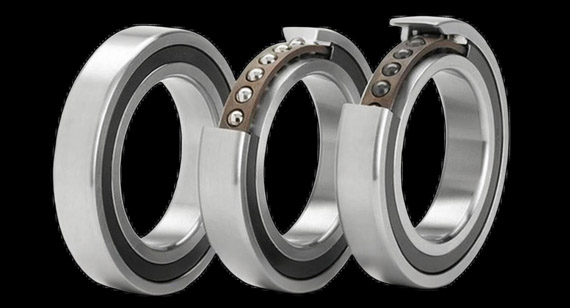
High carbon content provides exceptional hardness and wear resistance, while alloying elements are added to enhance hardenability.For example,
Table 2: Examples of Low-Alloy High-Carbon Steel
| Grade |
Characteristics |
Typical Applications |
| AISI 52100 |
Extreme hardness and high fatigue life. | Ball bearings, machine tool spindles. |
| AISI 6150 |
Chromium-Vanadium steel with superior impact and fatigue resistance. | Heavy-duty springs, gears, hand tools. |
High Alloy Steel (>8% Alloying Elements)
High-Alloy Low-Carbon Steel
These steels are typically engineered for extreme corrosion resistance or specialized performance in high or low-temperature environments. For example,
Table 3: Examples of High-Alloy Mild Steel
| Grade |
Characteristics |
Typical Applications |
| Monel/Inconel (Analogue) | Though often classified as Nickel-based alloys, they share similarities with high-alloy steel definitions. | Chemical vessels, components for extreme marine environments. |
High-Alloy Tool Steel
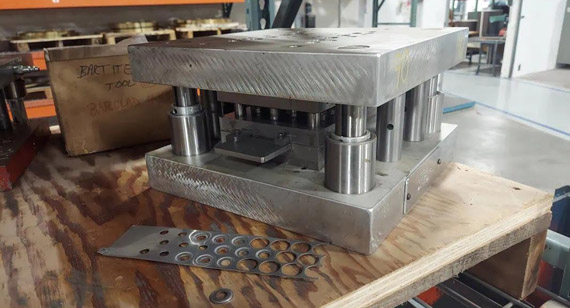
These steels—such as High-Speed Steel (HSS)—contain significant amounts of Tungsten, Molybdenum, and Vanadium. For example,
Table 4: Examples of High-Alloy Tool Steel
|
Grade |
Characteristics |
Typical Applications |
| D2 |
High carbon and high chromium; extremely wear-resistant with minimal heat-treatment distortion. | Stamping dies, shear blades. |
| M2 |
Tungsten-Molybdenum high-speed steel with outstanding red hardness. | Drill bits, milling cutters, broaches. |
Stainless Steel
Stainless steel must contain more than 10.5% Chromium to form a natural passive film that prevents oxidation and corrosion—this is the defining factor of stainless steel. Consequently, all stainless steels can be classified as high-alloy steels (due to Chromium >10.5%).
Table 5: Examples of Stainless Steel
| Grade |
Characteristics |
Typical Applications |
| AISI 304 |
The most versatile austenitic stainless steel with good corrosion resistance. | Kitchenware, food processing equipment. |
| AISI 316 |
Enhanced with Molybdenum for superior resistance to chloride-ion corrosion. | Medical devices, chemical piping. |
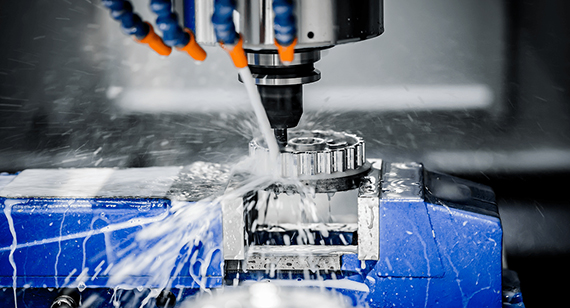
CNC machining utilizes computer-controlled cutting tools to remove material, offering high precision and repeatability. The "machinability" of an alloy steel is primarily determined by its hardness and its chip-breaking capacity during the cutting process. A standard practice to enhance these properties is the addition of lead, which makes the steel significantly easier to machine.
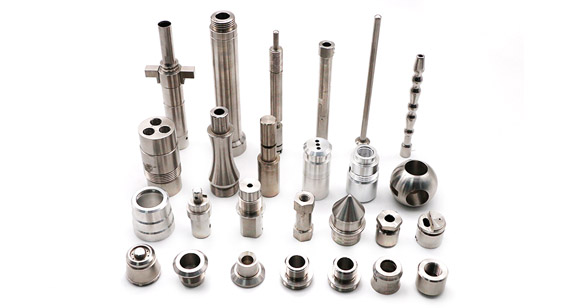
Alloy Steels Suited for CNC Machining:
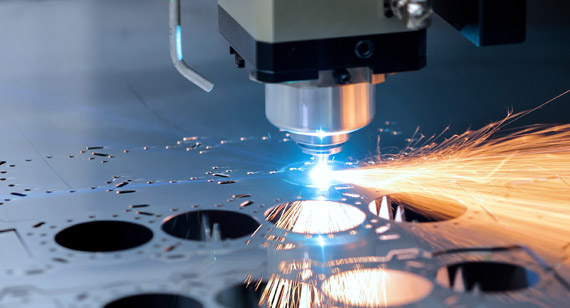
Sheet metal fabrication typically involves cutting (laser or waterjet) and welding. Generally, a lower carbon content reduces the risk of quench cracking during welding, thereby improving weldability. Additionally:
Forming processes are divided into cold and hot forming, with the primary considerations being the material's ductility and plasticity.
Cold Forming (including Bending, Stamping, and Cold Heading,ect):
Nickel (Ni) is a critical alloying element in this category, as it significantly enhances toughness and ductility, preventing the steel from cracking during cold work. For example, AISI 4340 (containing Ni, Cr, and Mo) offers sufficient ductility in its annealed state for deep forming and can be subsequently heat-treated to achieve high mechanical strength.
Hot Forming (including Hot Rolling and Forging, ect):
Molybdenum (Mo) is frequently added to improve creep resistance (resistance to deformation) at elevated temperatures.
Tungsten (W) and Vanadium (V) form highly stable carbides at high temperatures, which prevents grain coarsening during hot forging and maintains "red hardness" (the ability to retain hardness at high temperatures).
H13 Tool Steel, which contains high concentrations of Chromium, Molybdenum, and Vanadium, is a representative hot-work steel that resists cracking during hot forming processes.
By precisely adjusting the proportions of alloying elements, alloy steel can be engineered to meet a vast range of industrial demands—from the high strength and stress-corrosion resistance required in aerospace to the ductility needed for kitchenware and the machinability essential for structural components. Understanding alloy steel allows for a quicker grasp of the specific roles these elements play. This knowledge is critical not only for achieving the desired performance of a part but also for optimizing your manufacturing efficiency and controlling overall costs.

An industrial automation manufacturer approached VMT to produce a batch of custom AISI 4140 (Quenched & Tempered) shafts for a high-load transmission system. The client’s requirements were stringent: the components needed to maintain high structural strength while meeting a tight dimensional tolerance of ±0.01mm and a superior surface finish to ensure long-term fatigue resistance under high pressure. Their previous supplier had struggled with dimensional drifting and excessive tool wear due to the material’s high hardness and internal stresses, leading to inconsistent quality and high scrap rates.
To address the high cutting forces and thermal deformation characteristic of 4140 Q&T steel, the VMT engineering team optimized the machining strategy. We selected high-performance PVD-coated carbide tools specifically designed for hardened materials to extend tool life and maintain edge sharpness. To eliminate "chatter" or vibration during the turning of the long shafts, we implemented specialized hydraulic steady rests for support. Furthermore, we utilized a multi-pass roughing and finishing cycle to effectively relieve residual stresses, combined with high-pressure coolant delivery to stabilize the cutting zone temperature and ensure thermal dimensional stability throughout the run.
Through these precise technical interventions, VMT achieved a high-quality delivery that exceeded the client’s expectations. Final inspection data confirmed that radial runout was strictly controlled within 0.01mm, and surface roughness was consistently maintained at Ra 0.8. Our first-pass yield (FPY) reached 99.5%, significantly higher than the client’s previous experience. Additionally, by optimizing cutting parameters, the overall production cycle was shortened by 12%, resulting in a 15% reduction in total procurement costs for the client. These shafts are now successfully integrated into the client’s assembly lines, and VMT has since been established as their long-term strategic partner for precision components.
Which alloying elements are considered expensive?
Cobalt (Co) is generally regarded as the most expensive alloying element, followed by Nickel (Ni), Molybdenum (Mo), Tungsten (W), and Vanadium (V). These metals experience significant price volatility due to limited reserves, high extraction costs, and heavy demand from the aerospace and battery industries. For instance, the price of stainless steel often fluctuates with the market price of nickel, while the high cost of high-speed tool steels is primarily driven by their substantial tungsten and cobalt content.
Which alloying elements are basic and relatively inexpensive?
Manganese (Mn) and Silicon (Si) are the most fundamental and economical alloying elements, as they are abundant in natural ore. Aluminum (Al) is also highly cost-effective. These three are often considered residuals from the steelmaking process unless they are intentionally added in specific quantities. Additionally, while Boron (B) is not inherently cheap as a raw material, it is considered economical because even trace amounts (as low as 0.001%) can significantly enhance the steel's hardenability.
In carbon steel, what else is typically not classified as an "alloying element"?
In carbon steel, Manganese and Silicon are often excluded from being classified as alloying elements because small amounts are necessary during the refining process to remove oxygen from the molten steel (deoxidization). They are only recognized as intentional alloy additions when Manganese (Mn) exceeds 1.65% or Silicon (Si) exceeds 0.60%. Furthermore, Copper (Cu) frequently appears as a residual in steel produced via electric arc furnaces; it is only officially categorized as an alloying element when its content exceeds 0.40%.
In stainless steel, what else is typically not classified as an "alloying element"?
In stainless steel, Silicon (Si) is usually not viewed as a primary alloying element if its content remains below 1.0%, where it mainly serves to improve melt fluidity and deoxidization. Additionally, elements such as Aluminum (Al), Copper (Cu), and low levels of Manganese (Mn) are generally regarded as residual elements unless specifically added for specialized properties, such as precipitation hardening or enhanced corrosion resistance.
Are there any specialized types of alloy steel?
Yes. For example, Maraging Steel utilizes high levels of Nickel (Ni) along with Cobalt, Molybdenum, and Titanium. Its combination of ultra-high strength and toughness makes it ideal for rocket motor cases, uranium enrichment centrifuges, and high-performance fencing blades. Another example is Advanced High-Strength Steel (AHSS), which incorporates Niobium and Titanium for grain refinement. These steels provide extreme impact resistance and superior ductility, making them essential for automotive structural frames and safety crash components.
What is the maximum temperature for most alloy steel chains?
Alloy steel is commonly used for industrial chains, such as crane lifting chains. Martensitic alloy steels like 4140 or 8620 are standard choices; however, exposing them to excessive temperatures can "bake" the steel, causing it to lose its tempered hardness. Generally, if an alloy chain is heated above 315°C (600°F) and then cooled, it must be thoroughly inspected for loss of integrity to prevent material failure.


 +86 15099911516




 Read more