16 years one-stop China custom CNC machining parts factory

Hey there I’m VMT Sam!
With 25 years of CNC machining experience we are committed to helping clients overcome 10000 complex part-processing challenges all to contribute to a better life through intelligent manufacturing. Contact us now
 415 |
Published by VMT at Feb 24 2026 | Reading Time:About 2 minutes
415 |
Published by VMT at Feb 24 2026 | Reading Time:About 2 minutes


401 stainless steel is a high-strength, cost-effective martensitic grade. Its unique combination of high tensile strength, wear resistance through heat treatment, and excellent thermal stability makes it a preferred choice for demanding automotive and aerospace applications, such as exhaust manifolds, gears, and turbine blades.
Thanks to its low nickel content, 401 is significantly more affordable than 304 austenitic stainless steel. Furthermore, its magnetic properties, reliable weldability, and superior machinability in the annealed state ensure minimal industrial limitations. In this guide, we will explore the chemical composition, heat treatment and its mechanical property changes, and cost-efficiency of 401 stainless steel to provide a valuable reference for your engineering and manufacturing needs.
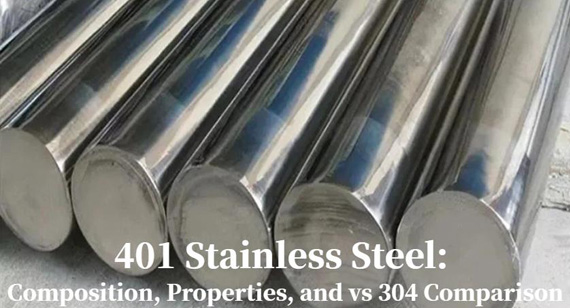
What is 401 Stainless Steel?
401 stainless steel is a low-nickel martensitic stainless steel belonging to the 400-series family. Unlike the more common 300-series austenitic steels, 401 is specifically engineered for applications that require a combination of high mechanical strength, significant hardness, and moderate corrosion resistance at a competitive price point. The defining characteristic of 401 steel is its martensitic crystalline structure, which allows the material to be hardened through quenching and tempering—a process that makes it significantly stronger than ferritic or austenitic grades.
Here highlights key characteristics of SS401 that :
The performance of 401 is driven by its precise chemical balance of primarily Chromium, Carbon , and Nickel content. Chromium provides the essential oxidation resistance as the stainless steel( stainless steel basically has chromium over 10% to form a protective layer from mild corrosion ). Nickel helps to improve toughness and corrosion resistance while Carbon is the key element that allows SS401 for high hardness levels after heat treatment. Below table showcases chemical composition of 401 stainless steel:
Table 1: 401 Stainless Steel Chemical Composition
| Element |
Content (%) |
| Chromium (Cr) |
11.5% – 13.5% |
| Carbon (C) |
0.15% – 0.45% |
| Nickel (Ni) |
0.5% – 1.5% |
| Manganese (Mn) |
1.0% – 1.5% |
| Silicon (Si) |
≤ 1.0% |
| Phosphorus (P) |
≤ 0.04% |
| Sulfur (S) |
≤ 0.03% |
Is 401 Economical Among All Martensitic or Only Cheaper than Austenitic?
When evaluating the cost of 401 stainless steel, it is truly cheaper than the austenitic 300-series(such as SS304, SS316) due to low Nickel content but it is not the absolute cheapest steel in the martensitic family. The typical cheaper martensitic grade than SS401 is SS 410 with nearly zero nickel which is also hardenable but less well-performed than SS401.
As a martensitic grade, 401 stainless steel is magnetic and, most importantly, heat-treatable. You can choose between Through Hardening ( heat-treatment process of quenching and tempering throughout metal entire cross-section) for high-strength bolts and shafts or Surface Hardening (only on the metal surface to keep tough core with good impact resistance)for gears and bearings that need wear resistance without becoming brittle. Below is the mechanical data for 401 stainless steel after being Oil Quenched from 1000°C (1832°F) and tempered:
Table 2: SS 401 Mechanical Properties Enhanced by Heat Treatment
| Tempering (°C) |
Hardness (HRC) |
Tensile Strength (MPa) | Yield Strength (MPa) |
Elongation (%) |
| Annealed (Soft) |
82 - 95 (HRB) | 480 - 520 | 275 - 310 | 20 - 25% |
| As Quenched |
50 - 55 | 1700+ | 1450+ | < 2% |
| 300°C |
45 - 50 | 1550 | 1250 | 8 - 10% |
| 450°C |
40 - 45 | 1350 | 1100 | 12 - 15% |
| 600°C (Optimal) |
25 - 32 | 950 | 750 | 18 - 22% |
(Noted: You must avoid tempering between 400°C and 550°C. This specific range leads to "temper embrittlement," where the material loses its impact toughness. For the best balance of strength and durability, tempering at 600°C–650°C is highly recommended.)
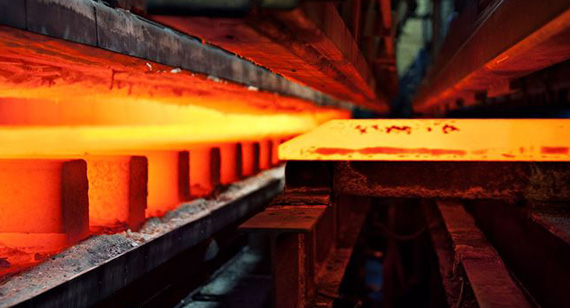
The machinability rating of 401 stainless steel is approximately 45%–55% of free-machining B1112 carbon steel. While it is tougher than standard carbon steels, it does not work-harden as rapidly as 304 or 316, allowing for higher feed rates and longer tool life during the primary shaping phase. Furthermore, in its annealed condition, 401 stainless steel exhibits good mechanical processing characteristics is because the martensitic structure is "softened" during annealing (typically resulting in a hardness below 200 HB), the material offers a much cleaner cut compared to the "gummy" nature of 300-series austenitic steels like SS304.
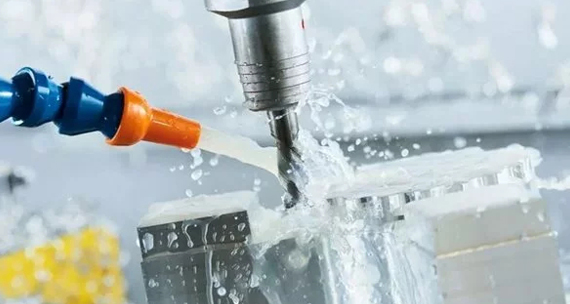
Good machinability of SS401 makes it quite suitable for manufacturing process of CNC Machining that cutting, drilling, milling a piece of material into the needed shape and the machine tool paths are controlled by computer programs to make all kinds of parts like pump shafts, gears, or high-pressure fittings. If you plan to manufacture SS401 parts, you can choose CNC Machining for its benefits that:
SS401 stainless steel is engineered to provide reliable oxidation resistance and structural stability at elevated temperatures. It can effectively resist scaling during continuous service up to approximately 600°C (1112°F). This heat resistance is primarily due to its chromium content, which forms a protective oxide scale that prevents further atmospheric deep-corrosion. However, it is important to note that prolonged exposure to temperatures near or above its original tempering point will result in a gradual reduction in hardness and tensile strength, making it ideal for moderate-heat applications like exhaust components rather than ultra-high-temp furnace cores.
Welding SS401 requires a strictly controlled thermal cycle because its martensitic structure is prone to "air-hardening," which creates a brittle zone and increases the risk of cold cracking. To ensure a successful join, the material must be pre-heated to a range of 200°C–300°C to slow down the cooling rate of the weld pool. After the welding is complete, a post-weld heat treatment (PWHT)—specifically annealing or tempering—is mandatory to transform the brittle martensite back into a tougher, more ductile state. This process relieves the internal stresses generated during welding and prevents premature failure of the joint under mechanical load.
The most common methods for joining SS401 are GTAW (TIG) and GMAW (MIG), for more guidelines you can check from the American Welding Society (AWS). For applications requiring maximum strength and a uniform response to heat treatment, using 410 filler wire combined with a full post-weld heat treatment (PWHT) is the best solution. Alternatively, for improved weldability and crack resistance, 309L stainless steel filler is often used; while this creates a tougher, more ductile joint that resists cracking, the weld bead itself will not harden like the base metal during subsequent heat treatment.
Maintaining the surface of SS401 is essential for it corrosion resistance is only valid in mild environment and even in daily uses , you may need to use industrial anti-rust oil to the SS401 gears or shafts to delay its corrosion. Common surface treatments of ensuring SS401 long-term durability and corrosion resistance is passivation. This surface treatment uses acid solutions to remove surface contaminants and promote the formation of a protective chromium oxide layer of stainless steel. It is highly recommended to "refresh" the chromium oxide layer, especially after the parts have undergone heavy CNC machining or grinding. Keeping the surface clean and passivated ensures that the 401 alloy retains its professional aesthetic and corrosion-resistant properties throughout its entire service life.
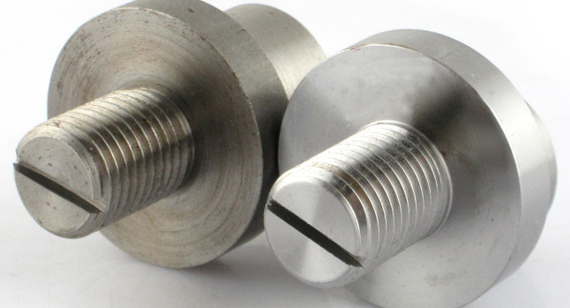
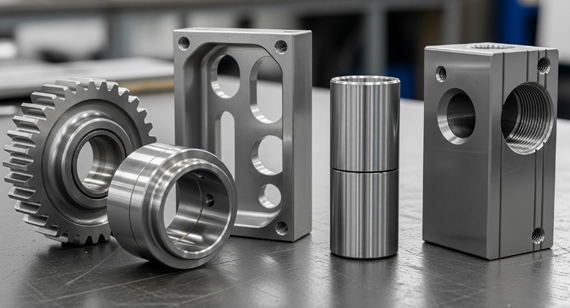
In the automotive sector, 401 stainless steel is extensively used for components that face high temperatures and mechanical stress. Common examples include exhaust manifolds, fasteners, and muffler parts. Its ability to maintain structural integrity up to 650°C makes it a reliable choice for the "hot end" of exhaust systems where cost-efficiency and heat resistance are both priorities.
Industrial Machinery and Tooling
For heavy-duty industrial equipment, this grade is preferred for manufacturing high-strength gears, pump shafts, and valve components. Because it can be hardened to high levels of wear resistance, it is ideal for moving parts that undergo constant friction. It is also frequently used for structural pins and bushings that require more strength than standard carbon steel can provide.
Aerospace and Power Generation
Within the aerospace and energy sectors, 401 is utilized for turbine blades and compressor parts operating in moderate-temperature environments. Its magnetic properties and reliable response to heat treatment allow engineers to fine-tune the material's hardness to withstand the high centrifugal forces found in rotating machinery.
Hardware and Cutlery
Due to its hardenability and keen edge retention, 401 is often chosen for industrial-grade cutlery, hand tools, and surgical instruments where better corrosion resistance (like that of 316) is less critical than the need for a sharp, durable cutting edge. It also provides a good-looking finish that resists staining in mild environments.
This article introduced the essential characteristics, composition, and manufacturing advantages of 401 stainless steel. As a high-strength, cost-effective martensitic grade, it offers a unique middle ground for engineers who require the hardness of heat-treated steel without the high price tag of nickel-heavy austenitic alloys. By understanding its unique for CNC machining, welding, and heat treatment, you can produce durable, high-performance components that excel in many automotive and industrial uses.

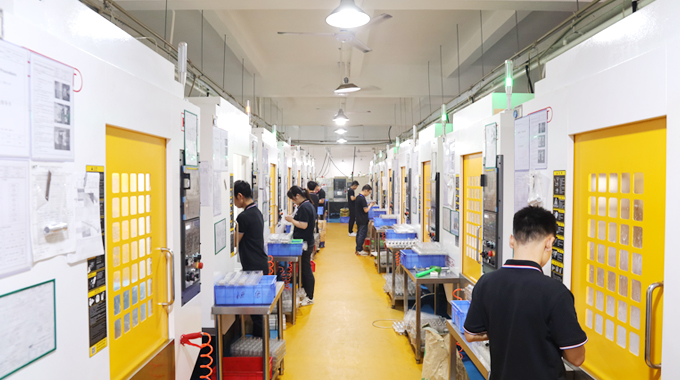
A client in the precision hydraulics industry find us VMT CNC Machining Factory required a batch of miniature SS401 high-pressure connectors with a wall thickness of only 0.8mm and a critical internal thread tolerance of 0.01mm. The primary technical challenge was the material's tendency to undergo dimensional distortion during the mandatory through-hardening process to 42-45 HRC. For such thin-walled components, standard quenching often leads to elliptical warping or "out-of-round" errors, which would compromise the high-pressure seal and lead to hydraulic failure.
To address these challenges, VMT’s engineering team implemented a multi-stage machining and thermal stabilization protocol. We performed the initial CNC turning and threading in the soft annealed state, intentionally leaving a precise 0.02mm finishing allowance on the critical sealing faces to compensate for volumetric expansion. Instead of standard air quenching, we utilized vacuum oil quenching to ensure uniform cooling rates across the thin sections, followed by a double-tempering cycle at 600°C to relieve internal stresses while reaching the target hardness. This controlled environment prevented surface decarburization and minimized the risk of micro-cracking in the delicate thread roots.
The final inspection confirmed that 100% of the parts met the 0.01mm tolerance requirements without any measurable warping in the thin-walled sections. By performing a final high-speed precision grinding on the seating surfaces post-hardening, we achieved a surface roughness of Ra 0.4, ensuring a leak-proof metal-to-metal interface, and clients' subsequent pressure tests at 3000 PSI showed zero failures.
What is the main difference between SS401 vs SS304?
401 is a magnetic martensitic steel that can be hardened by heat treatment, whereas 304 is non-magnetic and cannot be hardened, though it offers better corrosion resistance.
Is 401 stainless steel magnetic?
Yes, 401 is magnetic in all conditions (annealed or hardened) due to its martensitic crystalline structure.
Can 401 be used for food-grade applications?
While it has moderate corrosion resistance, it is generally not the first choice for food contact compared to 304 or 316, unless high hardness for a cutting edge is required.
Why is 401 cheaper than 304 stainless steel?
It is more affordable primarily because it has a significantly lower nickel content, which is one of the most expensive alloying elements in stainless steel.
How do you prevent cracking when welding SS401?
You must pre-heat the material to 200°C–300°C and perform a post-weld heat treatment (annealing or tempering) to toughen the brittle "air-hardened" zones.
What is the best surface treatment for SS401?
Passivation is highly recommended after CNC machining to restore the protective chromium oxide layer and ensure the best possible corrosion resistance in mild environments.


 +86 15099911516




 Read more