16 years one-stop China custom CNC machining parts factory

Hey there I’m VMT Sam!
With 25 years of CNC machining experience we are committed to helping clients overcome 10000 complex part-processing challenges all to contribute to a better life through intelligent manufacturing. Contact us now
 255 |
Published by VMT at Feb 08 2026 | Reading Time:About 2 minutes
255 |
Published by VMT at Feb 08 2026 | Reading Time:About 2 minutes


Stainless steel is performed actively among many industrial uses like the most daily cookware, decorative trims, industrial fasteners, and electronic metallic housings. For these applications, all of them can be manufactured by 430 stainless steel, as a more cost-effective material alternative to 304 stainless steels; while SS 430 shows other properties that SS304 doesn't have: like magnetism, good electromagnetic induction and temperature resistance. This article demonstrates key characteristics and uses of 430 grade stainless steel, analyzing its properties and manufacturing features as well as comparing it to SS304 to explain why and when you may choose SS430 as a better alternative to SS304.
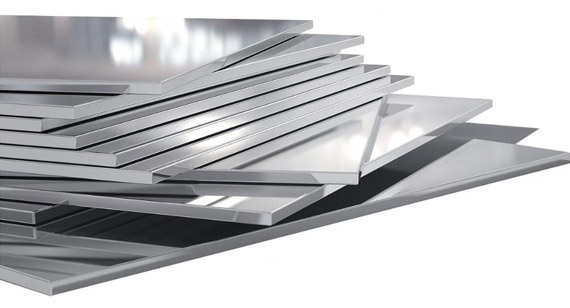
430 stainless steel is a ferritic chromium stainless steel known for its excellent cost efficiency, good corrosion resistance, formability and machinability. It belongs to the "400-series" of steel, which is characterized by its magnetic nature (ferritic) and lower nickel content (16.0–18.0%). Below is a breakdown of the core characteristics that make 430 grade a preferred choice in modern manufacturing:
Table 1: Key Characteristics of Stainless Steel 430
| Characteristic |
Technical Detail |
Manufacturing Advantage |
| Corrosion Resistance |
Excellent in mild environments (fresh water, mild acids, atmosphere). | Ideal for indoor appliances and decorative parts. |
| Cost Efficiency |
Low Nickel content (0–0.75%). | Economical alternative to 304 or 316 grades(~8-14%). |
| Heat Resistance |
Resistant up to 815°C (1500°F). | Performed well in intermittent or continuous high-heat environments. |
| Magnetism |
Inherently Magnetic (Ferritic structure). | Suitable for electromagnetic applications and sensor components. |
| Formability |
High ductility in the annealed state. | Easily undergoes bending, deep drawing, and complex stamping. |
| Machinability |
Rating: Approx. 54% (relative to B1112). | In precision CNC machining, this provides better tool life and faster processing compared to SS304(45%), or SS316(36%). |
Corrosion Resistance and Cost Optimization
One of the most defining characteristics of 430 stainless steel is its ability to provide a "premium" look and sufficient protection at a fraction of the cost of nickel-based alloys. Because it contains minimal nickel, it costs less than nickel-based alloys like SS304, SS316, and acts as a stable buffer against cost fluctuations in the nickel market. While it is not recommended for harsh chemical or marine environments, it excels in mild corrosion conditions like indoor appliances and decorative parts and requirements of aesthetics and cost-saving can also be met.
Formability and Weldability
In its annealed state, 430 stainless steel exhibits excellent formability. It can be easily bent, stretched, or drawn into intricate shapes without cracking. However, its weldability is considered "average." During welding, the heat-affected zone (HAZ) can become brittle or susceptible to intergranular corrosion. You’d best to complete post-weld annealing (700°C–815°C ;1300°F–1500°F) to restore the material's ductility and maximize its structural integrity after any welding process.
Magnetic and Thermal Properties
SS 430 is inherently magnetic as a ferritic steel, which makes it apply for components in the electronics and automotive industries where magnetism is required for functionality (such as in solenoid valves or magnetic fasteners). Furthermore, its low expansion helps maintain precision in electronics; its thermal conductivity(~26.1 W/m·K at 100°C) and low expansion(~10.4 µm/m·°C) prevent the cracking in automotive exhaust systems or cookware uses.
To transform 430 stainless steel into needed components, you can utilize three primary categories of processes: CNC machining, forming, and surface treatment. Each method leverages the material's specific properties to achieve different functional goals.
CNC Machining 430 Stainless Steel
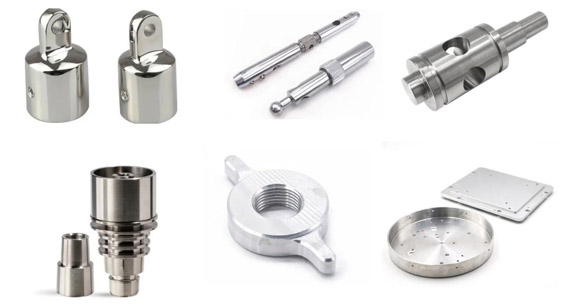
CNC machining involves using computer-controlled cutting tools to remove material from a solid block or 430 stainless steel round bar. This includes CNC milling, CNC turning, and drilling, etc.
Compared to austenitic stainless steels such as 304 or 316, CNC machining of 430 stainless steel is generally more straightforward and efficient. Its primary advantage lies in its lower nickel content, which significantly reduces the material's tendency to work-harden during the cutting process. Although it holds a machinability rating of approximately 54% (relative to 1212 free-machining steel), specific strategies are required to manage its unique physical properties. For instance, 430 stainless steel tends to produce long, "stringy" chips that can lead to "bird’s nesting" if not managed properly, potentially entangling the tool and damaging the surface finish. Additionally, while easier to cut than 304, it remains prone to galling—where material sticks to the tool edge—making sharp cutting edges and specialized chip breakers essential.
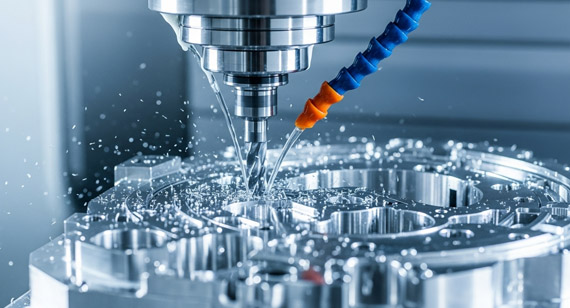
Machining Suggestions
Achieving maximum precision when machining 430 stainless steel round bars or plates requires strict control over cutting parameters. For turning operations, surface speeds should be maintained between 660 – 890 SFM. In milling applications, speeds should range from 150 – 350 SFM, with a chip load of 0.0005" – 0.006" per tooth depending on the tool diameter. VMT experts recommend utilizing solid carbide tools with AlTiN coatings, paired with high-pressure, water-soluble coolant to ensure efficient chip evacuation and prevent material from welding to the insert. Key Tip: Never allow the tool to "dwell" or rub against the workpiece; continuous, steady cutting is mandatory to prevent localized hardening. For high-volume production of precision parts where welding is not required, 430F (Free-machining grade) is the superior choice, as its machinability rating increases to 65%.
Forming Processes of 430 Stainless Steel
Forming processes change the shape of the metal without removing material. Simply put, this is achieved by applying mechanical force to 430 stainless steel plates or strips to deform them into the desired geometry. For SS430, this typically involves techniques such as bending, deep drawing, and stamping. The ferritic structure of 430 stainless steel provides unique advantages during the forming stage. In its annealed state, the material exhibits excellent ductility, allowing it to be stretched and shaped into complex forms without fracturing. Because it does not work-harden as aggressively as the 300-series (austenitic) steels, it requires lower forming pressures and causes less wear on the dies. This makes it a highly cost-effective solution for mass production, where high-speed stamping or drawing is necessary to keep per-unit costs low while maintaining high structural integrity.
Surface Treatment Processes
Surface treatments are applied after the part is shaped to improve its appearance, cleanliness, or environmental resistance. Common treatments for SS430 include mechanical polishing, passivation, and electropolishing. These can achieve benefits for SS430 that:
SS 304 vs SS430: Chemical Composition Comparison
The primary difference lies in the Nickel (Ni) content of these two. Grade 304 is an Austenitic steel containing significant nickel, which provides superior corrosion resistance. Grade 430 is a Ferritic steel with little to no nickel, making it magnetic and more budget-friendly. Below table details their chemical composition:
Table 2: Chemical Composition of 304 vs 430 Stainless Steel
| Element |
Grade 304 (%) |
Grade 430 (%) |
| Chromium (Cr) |
18.0 – 20.0 | 16.0 – 18.0 |
| Nickel (Ni) |
8.0 – 10.5 | ≤ 0.75 |
| Carbon (C) |
≤ 0.08 | ≤ 0.12 |
| Manganese (Mn) |
≤ 2.0 | ≤ 1.0 |
| Iron (Fe) |
Balance | Balance |
SS 304 vs SS430: Physical and Mechanical Properties
Because of their different crystal structures (Austenitic vs. Ferritic), these materials respond differently to mechanical stress and thermal changes. Below table shows SS 304 vs SS430 key physical and mechanical properties:
Table 3: Physical and Mechanical Properties of 304 vs 430 Stainless Steel
| Property |
Grade 304 (Austenitic) |
Grade 430 (Ferritic) |
Why it matters |
| Magnetism |
Non-Magnetic (Annealed) | Magnetic | 430 works for sensors/solenoids. |
| Tensile Strength |
515 MPa (High) | 450 MPa (Moderate) | 304 is stronger under heavy loads. |
| Yield Strength |
205 MPa | 240 MPa | 430 resists permanent deformation better initially. |
| Elongation |
40% (Excellent) | 22% (Moderate) | 304 is superior for deep-drawing (e.g., sinks). |
| Work Hardening |
Severe | Low | 430 is easier on CNC tools during long runs. |
| Density |
8.00 g/cm³ | 7.75 g/cm³ | 430 is ~3% lighter (saves cost/weight). |
| Hardness (Brinell) |
170 Max | 183 Max | 430 is slightly harder in annealed state. |
| Specific Heat |
500 J/kg·K | 460 J/kg·K | 430 heats up faster (energy efficient). |
(Noted:Cold working causes the non-magnetic austenite structure in 304 to transform into magnetic strain-induced martensite. So, SS304 can become partially magnetic through cold working. But this magnetism is unpredicable and unmeasurable, even it can be an interference for uses like medical imaging (MRI) or precision electronics.)
Food Grade SS 304 vs SS430: Material Selection
While Grade 304 offers higher overall strength and exceptional corrosion resistance in harsh environments (like marine or chemical exposure), Grade 430 provides a distinct advantage in machining efficiency. Due to its lower alloying content, 430 is less prone to work hardening, allowing for faster cycle times and reduced tool wear in high-volume CNC production. This selection of SS 304 vs SS430 depends on your actural parts’ performance and your budget. Here I just mention when they are called “304 vs 430 stainless steel food grade” :
Most of the situation 430 stainless steel can be as a cost-effective alternative to 304 and 316 stainless steel, as SS430 can provide sufficient strength and corrosion resistance for daily used products/components; Also, it has its unique magnetic and high-temperature-resistance properties. For top applications of 430 stainless steel, here I lists few of its examples:
In summary, this article has provided a comprehensive guide of 430 stainless steel, exploring its key characteristics, its performance across various manufacturing processes - CNC machining, forming, welding, and suface treatments—and its critical differences compared to the 304 grade. By balancing the requirements for corrosion resistance against production budget and machining efficiency, 430 stainless steel emerges as a good choice for high-volume precision parts like domestic appliances, decorative automotive components, or other general use parts.

Project: Precision Automotive Magnetic Fuel Injector Housing
A Tier-1 automotive supplier find us (VMT CNC Machining Factory) to manufacture precision magnetic fuel injector housings; The material we suggested was 430 stainless steel to replace 304 stainless steel.
The Challenge: Managing Ductility and Deep-Hole Precision
The primary difficulty lay in the component’s internal architecture—a deep bore requiring a ±0.01mm tolerance. 430 Stainless Steel, while magnetic, is relatively ductile. In initial trials, this ductility led to "galling" (material smearing) and poor chip evacuation. These factors caused irregular surface finishes and dimensional drift, resulting in high rejection rates.
To overcome these obstacles, VMT’s engineering team developed a specialized manufacturing protocol:
The implementation of these technical solutions delivered exceptional project outcomes:
What are Equivalent Grades of SS430?
The equivalent grades of SS 430 across major international standards are UNS S43000 (USA), EN 1.4016 / X6Cr17 (Europe), JIS SUS430 (Japan), GB 10Cr17 / 1Cr17 (China), BS 430S17 (UK), and AFNOR Z8C17 (France).
What are common forms of 430 Stainless Steel?
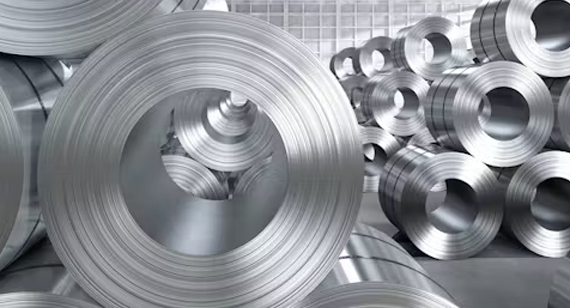
It is widely available in standard industrial formats, including cold-rolled coils, precision-cut plates, wire, and round bars. For high-speed CNC machining, the 430F (Free-machining) variant is often supplied in bar form to improve cutting efficiency.
Is 430 Stainless Steel Magnetic?
Yes. Due to its ferritic crystal structure, 430 is inherently magnetic in all conditions (annealed or cold-worked). This makes it ideal for [magnetic induction-compatible cookware and electronic sensor components.
How Is 430 Stainless Steel Made?
It is produced in electric arc furnaces by melting iron ore and chromium, then refined via AOD (Argon Oxygen Decarburization).
How To Heat Treat 430 Stainless Steel?
430 cannot be hardened by heat treatment. It is usually "Annealed" at 815°C and air-cooled to restore ductility after cold working.
What Is the Difference Between Stainless Steel 430 and 201?
Grade 201 is an austenitic alloy that uses Manganese and Nitrogen to replace nickel, making it harder and stronger than 430. However, 430 offers superior corrosion resistance in outdoor and mildly acidic environments compared to 201, which is prone to pitting and "tea staining" when exposed to moisture.


 +86 15099911516




 Read more