16 years one-stop China custom CNC machining parts factory

Hey there I’m VMT Sam!
With 25 years of CNC machining experience we are committed to helping clients overcome 10000 complex part-processing challenges all to contribute to a better life through intelligent manufacturing. Contact us now
 238 |
Published by VMT at Feb 25 2026 | Reading Time:About 2 minutes
238 |
Published by VMT at Feb 25 2026 | Reading Time:About 2 minutes


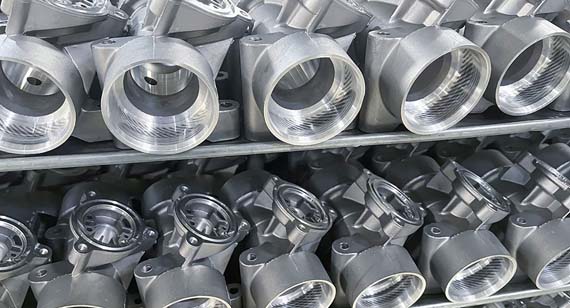
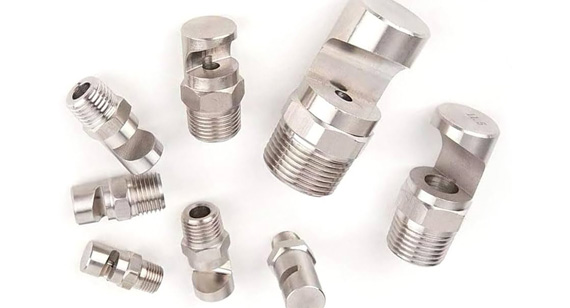
304 stainless steel as the most commonly used material among food facilities(food grade; easy to clean), piping and container(easy to shape and good weldability), custom nozzles, gear, and fasteners( can be CNC-machined although bad machinability), low-temperature liquid nitrogen storage tank high-temperature kitchenware(stable austenitic structure and strength under high and low temperature), building railings and stair accessories(good impact resistance). But for this SS304 , there are still some questions like cost, property details, alternative materials, and other advantages or disadvantages to figure out; and in this ultimate guide, you will get 19 of the most common—and often confusing—questions about 304 stainless steel to help you make informed decisions.
304 Stainless Steel Basics
1. What exactly is 304 stainless steel?
304 stainless steel is an austenitic alloy, meaning it possesses a specific crystalline structure (Face-Centered Cubic) that makes it highly ductile and non-magnetic in its annealed state. It is defined by its high chromium and nickel content, which provides good corrosion resistance for daily uses.
2. Why is it often called "18/8" or "18/10" stainless steel?
These numbers refer to the percentages of chromium and nickel:
You might be confused that why 18/10 can also be called SS304 since there is a difference in the composition. This is because according to the ASTM A240 standard, 304 must contain 17.5% to 19.5% chromium and 8% to 10.5% nickel (18/10 is at this range). Therefore, 18/10 is simply a little better version of 304 (you can consider they are the same) for the extra nickel gives it a more "silvery" luster and slightly better resistance to organic acids and harsh detergents.
3. What role does "Passivation" play in its durability?
While 304 is naturally corrosion-resistant, a "passivation" surface treatment can further enhance its lifespan. This process involves a mild oxidant (like nitric acid) that removes free iron from the surface and strengthens the protective chromium oxide layer. This makes the steel even more durable against food acids and oxidation in daily use.
4. Is 304 stainless steel considered "Food Grade"?
Yes. Because it is easy to clean, resistant to organic acids found in meats and vegetables, and does not harbor bacteria easily, it is good material for commercial kitchens and food processing facilities.
5. What does "Excellent Formability" actually mean for 304?
For 304, it primarily refers to cold working (cold processing like deep drawing, bending and rolling and cold drawing are quite suitable) as 304 typically has an elongation at break of over 40%. This good toughness allows it to be deep-drawn (into sinks), bent (into pipes), or spun without cracking. If there need heavy sections or large forgings, hot working processes such as forging and hot rolling can also be employed (usually few to use as it's not like cold working which can make the SS304 strain hardening).
6. Is 304 really easy to weld?
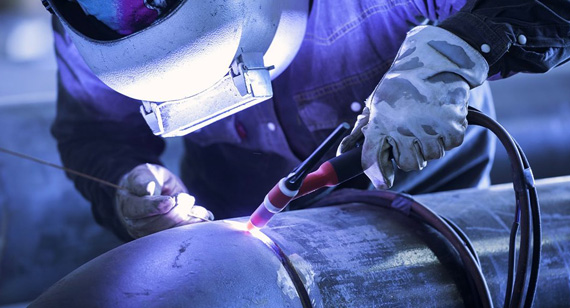
Yes, 304 is widely regarded as having excellent weldability. Unlike many other steels, it usually requires no pre-heating before welding. It works exceptionally well with TIG (GTAW) and MIG (GMAW) processes, resulting in clean, strong, and reliable joints. And you may noted that 304L —— the lower carbon version of SS304 —— weldability is even better for lower carbon of SS304L make it less prone to form chromium carbide (a phenomenon called sensitization or carbide precipitation)
7. Why is 304 "Non-Heat Treatable"?
You can't harden SS304 by quenching it like carbon steel. SS 304 is austenitic. In carbon steels, quenching transforms austenite into hard martensite. However, because 304 has a high amount of Nickel (a strong austenite stabilizer), the austenite structure remains stable from high temperatures all the way down to room temperature. It does not transform into martensite upon cooling, so you cannot "heat and quench" it to increase hardness.
8. How do you harden 304 if heat treatment doesn't work?
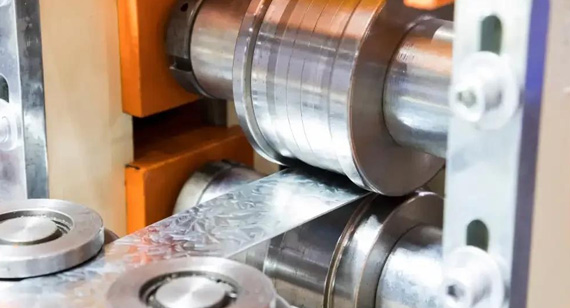
The only way to harden 304 is through Cold Working (Work Hardening). Processes like cold rolling, drawing, or hammering change the grain structure and increase its strength and hardness.
9. What is the actual hardness of 304 stainless steel?
In its annealed state, 304 is relatively soft compared to other steels. However, after cold working, it can reach 25 to 40 HRC. For its hardness vs other steels, it is much softer than 400 series martensitic steels (like 420 or 440C used in knives), which can reach 55-60 HRC; And standard carbon steel used in machinery is often 3 to 5 times harder than SS304.
10. Is 304 difficult to machine?
Yes, it is considered "difficult" compared to carbon steel. It has a machinability rating of about 45% (relative to 1212 steel). The difficulty comes from two factors:
11.How do you successfully CNC machining 304?
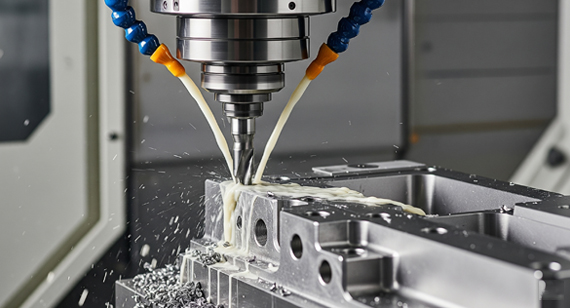
To overcome its "difficult" machinability, you can use these strategies when SS304 is under CNC machining:
12. How does 304 handle extreme temperatures?
SS304 performed well under high or low temperature is because its FCC (Face-Centered Cubic) crystal structure which also the stable austenitic structure. Unlike ferritic steels that become brittle in the cold, SS304 maintains its toughness even at Absolute Zero (-273°C) and this makes it good for liquid nitrogen (-196°C) storage tanks. For high heat environment, it can operate continuously at 870°C (1600°F) and intermittently up to 925°C (1700°F), making it suitable for high-end cookware and exhaust components.
13. Is 304 suitable for coastal or marine environments?
No, it is not ideal. In coastal areas, SS304 is prone to "tea staining" (brown surface rust) and "pitting" (tiny deep holes) caused by chlorides (salt) in the air. For coastal architecture or docks, you can use 316 or 316L; These contain Molybdenum, which specifically fights chloride corrosion.
14. Is 304 really non-magnetic?
In its annealed (soft) state, 304 is non-magnetic. However, cold working can induce magnetism. If you take a 304 sheet and deep-draw it into a sink, the corners may become slightly magnetic. This property can be its disadvantage for its limited uses in high-precision electronics, MRI equipment, or premium audio instrument; 316L or Titanium would be more stable for these cases.
15. Can 304 be used for heavy-duty chemical tanks?
No. While SS304 handles organic acids well for daily used tanks and containers or light chemical uses, it struggles with high-pressure, high-temperature industrial chemicals. For chemical storage tank, pressure vessel with strict conditions, you must choose steel like duplex 2205, which has twice the strength of 304 and much higher resistance to stress corrosion cracking. For even more extreme environments, Super Duplex 2507 (which has even better strength and corrosion resistance) is used.
16. Is there a cheaper alternative for kitchen appliances?
Yes. 430 stainless steel is often used for refrigerator doors or oven panels. It is cheaper and handles high heat well but harder to weld and less corrosion-resistant than 304.
17. What about 304 for architectural trim?
While 304 is used for railings, 6063 aluminum alloy is often a better choice for decorative moldings and frames. It is lighter, cheaper per volume, and can be anodized into many colors or powder-coated. 6063 is also much easier to extrude into complex decorative shapes. 304 is mostly limited to its natural brushed or mirror finish.
18.How does the price of 304 compare to other grades?
The price is primarily driven by its 8-10.5% Nickel content, as nickel is an expensive commodity; so SS304 price cannot be considered economical actually. You can check below table for some common stainless steels price comparison:
Table 1: Price of SS304 Compared to Other Steels
| Stainless Grade |
Relative Cost |
Primary Reason for Price Difference |
| 201 |
Low | Uses cheap Manganese instead of expensive Nickel. |
| 430 |
Mid-Low | Contains no Nickel; price is driven by Chromium. |
| 304 |
Baseline | Contains 8-10.5% Nickel (the main cost driver). |
| 316 |
High | Adds 2-3% Molybdenum and higher Nickel content. |
| 2205 (Duplex) |
Very High | High alloy content and complex manufacturing process. |
19. What are the international equivalents of 304?
If you are sourcing globally, 304 goes by many names that:
Table 2: Stainless Steel Global Equivalents
| Region |
Equivalent Standard Name |
| USA (ASTM/AISI) |
304 / S30400 |
| European Union (EN) |
1.4301 / X5CrNi18-10 |
| Germany (DIN) |
1.4301 |
| Japan (JIS) |
SUS304 |
| China (GB) |
06Cr19Ni10 (formerly 0Cr18Ni9) |
| Russia (GOST) |
08Kh18N10 |
304 stainless steel remains its versatility thank to its high ductility (40%+ elongation), extreme temperature stability (from -273°C to 870°C), and excellent welding properties makes it the go-to choice for uses from kitchen sinks to liquid nitrogen pipes. However, if your project involves:
By understanding detailed performance of SS304, you can make a decision whether use SS304 or not, and ensure your next project is both durable and cost-effective.

A leading manufacturer of medical diagnostic equipment approached VMT CNC Machining Factory with a critical challenge: they required a batch of complex sensor manifolds fabricated from 304 stainless steel. The design was intricate, featuring deep-drilled internal channels and a stringent surface finish requirement of Ra 0.8 μm. The primary hurdle for the client was the material's inherent "stickiness" and rapid work-hardening, which had caused previous suppliers to suffer from frequent tool breakage, inconsistent dimensions, and poor surface quality during the prototyping phase.
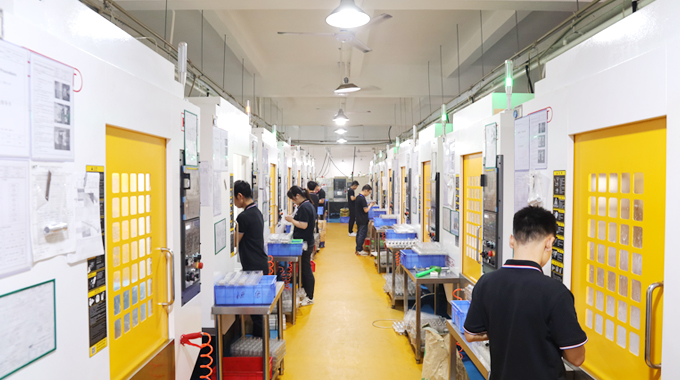
To overcome these obstacles, our engineering team at VMT implemented a specialized CNC strategy tailored to the unique properties of 304. We transitioned to high-performance AlTiN-coated carbide tooling to manage the intense thermal loads and employed a "constant engagement" toolpath strategy. By maintaining a strict positive feed rate of 0.12mm per revolution, we ensured the cutting edge remained beneath the work-hardened surface layer at all times. Furthermore, we utilized a 70-bar high-pressure through-spindle coolant system to effectively flush out "gummy" chips, preventing them from being re-cut and damaging the manifold’s critical internal walls.
The result was a triumph of precision engineering and process optimization. We achieved a consistent dimensional tolerance of ±0.01mm across the entire production run, successfully meeting the client's rigorous medical-grade specifications. By refining the tool geometry and cooling parameters, we reduced the scrap rate from an initial 12% down to a remarkable 0.8%, while simultaneously improving overall production efficiency by 30%. The client was so impressed with the structural integrity and mirror-like finish of the components that VMT has since been designated as their exclusive Tier-1 supplier for all 304 stainless steel high-precision parts.


 +86 15099911516




 Read more