16 years one-stop China custom CNC machining parts factory

Hey there I’m VMT Sam!
With 25 years of CNC machining experience we are committed to helping clients overcome 10000 complex part-processing challenges all to contribute to a better life through intelligent manufacturing. Contact us now
 166 |
Published by VMT at Mar 16 2026 | Reading Time:About 1 minutes
166 |
Published by VMT at Mar 16 2026 | Reading Time:About 1 minutes


If you are looking for key information about 303 Stainless Steel, here is a summary of its core characteristics:
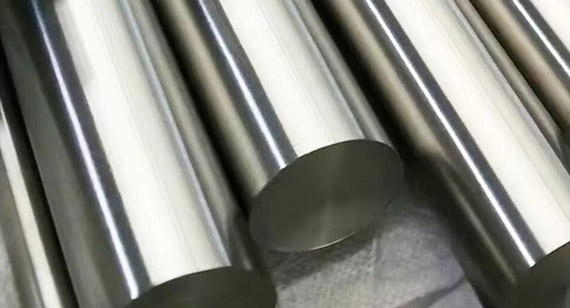
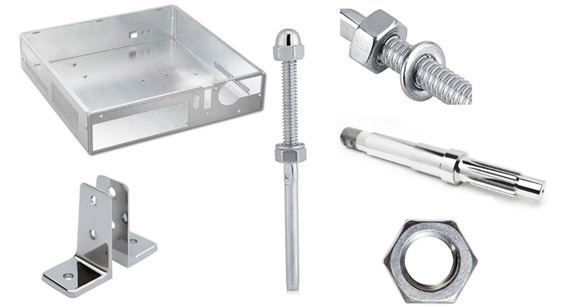
Its best advantage is 303 SS’ high machinability. Thus, 303 stainless steel is quite suitable for being CNC machined to parts like fastener, small gears, brackets, connectors that need high precision and used in mild environment.
To achieve the best results, the depth of cut should be moderate to prevent the tool from sliding on the metal surface, which can cause work hardening. Coolants and lubricants must be used generously throughout the process.
Welding
While welding is generally not recommended, if necessary, use 308L and 309 stainless steel welding wires or rods. To achieve optimal corrosion resistance, the welds must undergo an annealing treatment.
1.Equivalent Grades of 303 SS
For these equivalent grades, you can think they are the same as 303 stainless steel, just in different names:
| Standard |
Grade |
| UNS(Unified Numbering System) |
S30300 |
| AISI / ASTM(North American) |
303 |
| DIN (Germany) |
1.4305 |
| EN (Europe) |
X8CrNiS18-9 |
| JIS (Japan) |
SUS303 |
| GB (China) |
Y12Cr18Ni9 |
| ISO(International) |
X10CrNiS18-9 |
| BS (UK) |
303S31 |
| AFNOR (France) |
Z10CNF18-09 |
| GOST (Russia) |
12Kh18N9E |
| AMS(Aerospace Material Specification) |
5640 |
2.Chemical Composition (%) of 303 SS
| Element |
Cr |
Ni |
S |
Mn |
P |
C |
Si |
| Content % | 17.0-19.0 | 8.0-10.0 | ≥ 0.15 | ≤ 2.0 | ≤ 0.20 | ≤ 0.15 | ≤ 1.0 |
3.Mechanical & Physical Properties of 303 SS
You can improve strength of stainless steel 303 by cold working processes like drawing , rolling, but not through heat treatment.
Like tensile strength ( can up to 700+ MPa), yield strength( up to 450 - 600 MPa), hardness( up to ~250 HB ), but elongation ( down to 10 - 20% ) and slightly magnetic by cold working.
| Mechanical |
Property |
Value (Metric) |
Value (Imperial) |
| Tensile Strength |
515 MPa (min) | 75,000 psi (min) | |
| Yield Strength (0.2% Offset) |
205 MPa (min) | 30,000 psi (min) | |
| Elongation (in 50mm) |
40% | 40% | |
| Hardness (Brinell) |
160 - 205 HB | 160 - 205 HB | |
| Hardness (Rockwell B) |
85 - 95 HRB | 85 - 95 HRB | |
| Elastic Modulus |
193 GPa | 28 x 10⁶ psi | |
| Machinability Rating |
78% | 78% (Ref: B1112 Steel) | |
| Physical |
Density |
8.00 g/cm³ | 0.289 lb/in³ |
| Melting Range |
1400 - 1420 °C | 2550 - 2590 °F | |
| Specific Heat |
500 J/kg·K (0-100°C) | 0.12 BTU/lb·°F | |
| Thermal Conductivity |
16.2 W/m·K (at 100°C) | 112 BTU·in/hr·ft²·°F | |
| Thermal Expansion (Coeff.) |
17.3 µm/m·°C (0-100°C) | 9.6 µin/in·°F | |
| Electrical Resistivity |
720 nΩ·m | 43.3 µΩ·in | |
| Magnetic Permeability |
(Non-magnetic) | (Non-magnetic) |
Which Is Better, 303 Or 304 Stainless Steel?
If you need better corrosion resistance in mild environment, better weldability, better performance in formality such as bending, rolling, pressing, forging for your project, you may choose the food-grade 304 stainless steel, and prices for raw material is cheaper. If you need large volume or high speed machining(eg. CNC machining), 303 stainless steel is much easier to be machined and lower machining cost can cover the premium of raw material cost.
Which Is Better, 303 Or 316 Stainless Steel?
You may choose 316 stainless steel if your components will be used in coastal or outdoor environment for long term because of 316 SS’ much beter corrosion resistance. But for 303 stainless steel, it is relatively easier to be shaped or machined, and cheaper whether for material or processing.
Is 303 Stainless Steel Medical Grade?
Kind of no. Only handles, structural spacers, housing, and some high-precision fittings for medical machines or lab equipment—which mustn’t contact human bodies or skins—can use 303 stainless steel. It is not biocompatible like the 304 and it has sulfur content which is not easy to resist bacteria stick in stainless surface than that of 304 or 316 stainless steel.
Will a Magnet Stick To 303 Stainless Steel?
Nope. 303 stainless steel is austenite structure(the FCC structure), it is naturally non-magnetism. Only heavily cold working (Ilike bending, rolling) may cause 303 stainless steel very weak and unstable magnetism.
Can 303 Stainless Steel Rust?
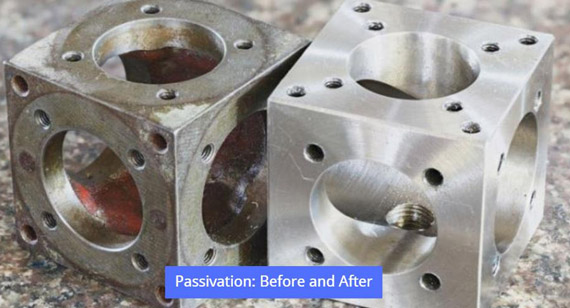
Of course, especially when exposure to chemical and humid environment, 303 is prone to rust quickly. If stainless 303 is keep in dry, mild environment and has surface protected with passivation, it can keep well for decades.
Project: High-Precision Sensor Connectors for Medical Equipment
We bring the results that:
Get Your Custom 303 SS Quote Today
At VMT CNC Machining Factory, we don't just factory for manufacturing—we optimize your production. Whether you need complex fasteners, small gears, or custom connectors, our 17+ years of expertise ensures you get the best price and the highest precision.
[Request a Free Quote Now] Typical response time: Within 24 hours.



 +86 15099911516




 Read more