16 years one-stop China custom CNC machining parts factory

Hey there I’m VMT Sam!
With 25 years of CNC machining experience we are committed to helping clients overcome 10000 complex part-processing challenges all to contribute to a better life through intelligent manufacturing. Contact us now
 242 |
Published by VMT at Mar 15 2026 | Reading Time:About 2 minutes
242 |
Published by VMT at Mar 15 2026 | Reading Time:About 2 minutes


2014 aluminum is a staple for aerospace and high-strength industrial applications. As a 2000-series alloy(American Aluminum Association), it is defined by its extreme hardness and superior machinability—heat-treatable for maximum strength, though its copper content trades off some corrosion resistance.
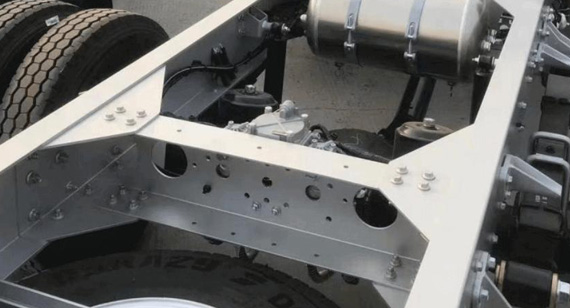
Still, it remains a standard for aerospace structures and heavy vehicles—frequently extruded, forged, and CNC machined into wing spars, ribs, truck chassis, and heavy-duty wheels.
This guide helps you break down the mechanical properties, heat treatment tempers, and machining performance of 2014 aluminum. By comparing it with structural alternatives like 2024, 7075, and 6061, you can clearly pinpoint the specific advantages that define this alloy for your engineering and manufacturing needs.
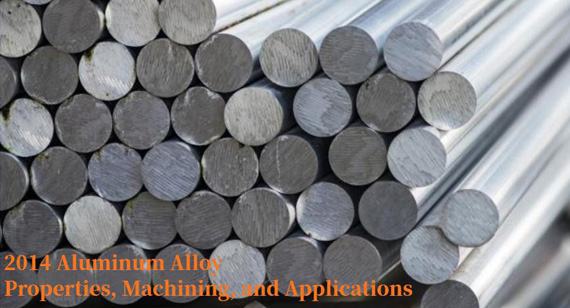
2014 Aluminum is a precipitation-hardened alloy with copper (Cu) as its primary alloying element. Historically recognized as a variant of "Duralumin" due to its exceptional strength-to-weight ratio, it is ideal for structural components that must handle high loads while remaining lightweight. Notably, the modulus of elasticity for 2014-T6 aluminum reaches 72.4 GPa—providing you with excellent resistance to deformation under stress.
A key design constraint for 2014 aluminum is its coefficient of thermal expansion (23.0 µm/m·°C). When you are designing components for aerospace environments with significant temperature fluctuations, you must account for thermal compensation to prevent excessive structural stress. Additionally, while the alloy offers high yield strength, you should note its limited weldability and lower corrosion resistance, which typically requires Alclad protection or specialized coatings.
Key Characteristics
Common “T” Tempers
2014-T6 is the definitive temper for high-performance structural design. In this state, the alloy reaches its peak strength and exhibits superior resistance to elastic deformation. The high hardness levels provide the wear resistance and durability you need for demanding mechanical components like gears and cylinders.
However, a critical consideration for your design is the relatively high Coefficient of Thermal Expansion (CTE). You must account for thermal expansion in your calculations, as it can significantly impact part tolerances and structural fit during temperature shifts.
Table 1: 2014-T6 Aluminum Mechanical Properties
| Property |
Typical Value |
Units (SI / Imperial) |
| Young's Modulus |
72.4 GPa | 10.5 ksi |
| Shear Modulus |
28 GPa | 4.06 ksi |
| Tensile Strength |
483 MPa | 70 ksi |
| Yield Strength |
414 MPa | 60 ksi |
| Coefficient of Thermal Expansion (CTE) |
23.0 µm/m·°C | 12.8 µin/in·°F |
| Brinell Hardness |
135 | 500 kg load, 10 mm ball |
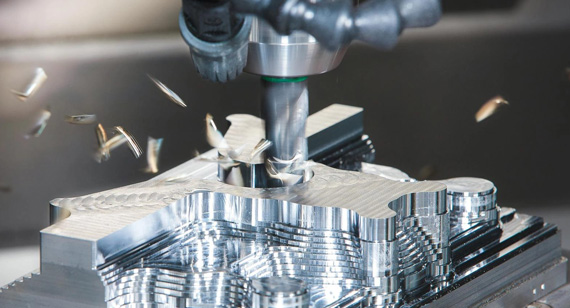
2014 aluminum offers excellent machinability—boasting a typical rating of 70% compared to the 2011-T3 baseline. When you CNC machine this alloy, you can expect short, well-broken chips that won't tangle around your tooling. This characteristic is vital for high-efficiency cutting, drilling, and grinding.
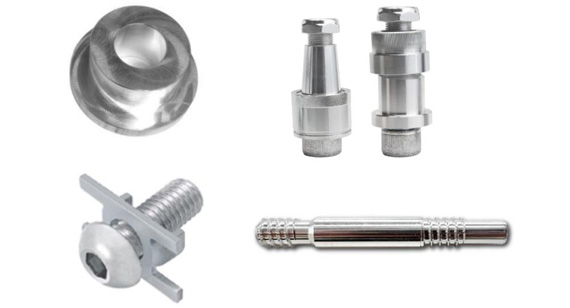
For heavy-duty structural parts like wing spars and heavy truck chassis, you can rely on extrusion and forging processes to leverage the alloy's full strength.
2014 Aluminum Forging

2014 is one of the most forgeable alloys in the 2000 series. At forging temperatures between 370°C and 450°C (700°F - 850°F), the alloy exhibits high plasticity and flowability because the primary alloying elements—specifically copper—are mostly in a solid solution state.
2014 Aluminum Extrusion
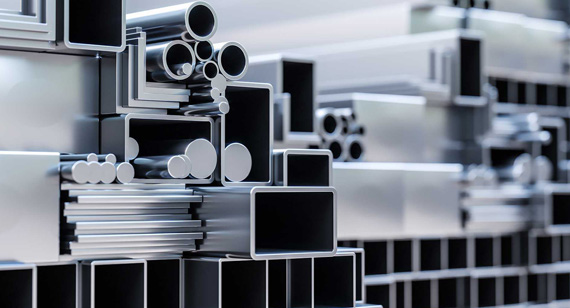
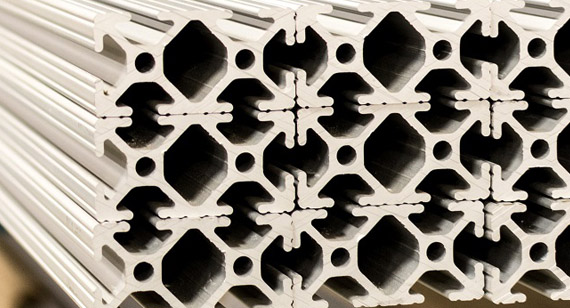
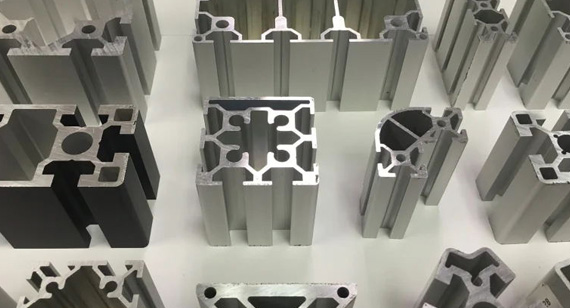
The extrusion process allows you to create 2014 aluminum extrusions with complex cross-sectional profiles. After extrusion, these profiles are typically solution-treated and aged (such as to the T6 temper) immediately.
2014 vs. 2024
While 2024 aluminum typically contains more magnesium—offering slightly better fracture toughness for applications like aircraft skins—2014 aluminum features a higher silicon content. This silicon boost provides superior stability during the forging process, making 2014 your preferred choice for complex structural frames.
2014 vs. 6061
The strength of 2014 aluminum is roughly 60% higher than that of 6061. However, 6061 offers exceptional corrosion resistance, weldability, and a lower price point. If your project does not demand extreme strength and involves extensive welding or exposure to moisture, aluminum 6061 is the more cost-effective solution. You will often see 6061 used for non-primary structural components in aerospace and automotive designs to manage costs.
2014 vs. 7075
7075 aluminum stands as one of the highest-strength alloys available, with 2014 reaching about 85-90% of its strength. While 7075 is stronger, it is less suited for manufacturing complex geometries and is primarily used for simpler shapes like fuselage skins or upper wing panels. For intricate forgings, such as complex engine mounts, 2014 offers a lower risk of processing cracks and is generally more budget-friendly than 7075.
Table 2: Aluminum Alloy Comparison (2014 vs 2024 vs 6061 vs 7075)
| Property |
2014-T6 |
2024-T4 |
6061-T6 |
7075-T6 |
| Tensile Strength |
483 MPa | 469 MPa | 310 MPa | 572 MPa |
| Yield Strength |
414 MPa | 324 MPa | 276 MPa | 503 MPa |
| Hardness (HB) |
135 | 120 | 95 | 150 |
| Machinability |
Excellent | Excellent | Good | Fair |
| Weldability |
Very Poor | Very Poor | Excellent | Poor |
| Corrosion Resistance |
Poor | Poor | Excellent | Poor |
Due to its high copper content, 2014 aluminum is naturally susceptible to pitting and intergranular corrosion. To protect your components, you should consider the following surface treatments:
Here taking for a few typical examples for 2014 aluminum uses:
Aerospace
Wing spars, ribs, and primary fuselage frames. Its stability under specific stress environments makes it indispensable.
High-performance bearings, heavy-duty truck chassis structures, and heavy-load wheels.
Precision Manufacturing
High-pressure hydraulic components and military-grade connectors.
High-End Cycling
Cranksets, stems, and suspension components that require extreme hardness.
Climbing Gear
Carabiners, pulleys, and safety locks where high tensile strength is critical for safety.
High-strength bolts and rivets used in structural assemblies.
With its 70% machinability rating and superior forging flowability, 2014 aluminum offers you a compelling balance of strength, high-load capacity, and lightweight advantages. Whether you are CNC machining precision fittings and bushings or forging heavy-duty airframes and truck chassis, this alloy delivers where performance is critical. However, if your application demands extensive welding or high-level corrosion resistance without secondary treatments, 2014 aluminum may not be the ideal fit.

An aerospace equipment manufacturer approached us while developing a high-performance hydraulic system. They selected 2014-T6 aluminum for core precision fittings, requiring the components to withstand extreme operating pressures with dimensional tolerances strictly held within ±0.01mm.
The Challenge
The client’s previous supplier struggled with the alloy’s 135 HB hardness. Frequent tool wear led to dimensional drift, and the surface finish at the sealing interface failed to meet the rigorous requirements for O-ring performance, resulting in leaks during high-pressure testing.
Our Specialized Machining Strategy
Our VMT technical team implemented a custom strategy tailored to the specific characteristics of 2014-T6:
The Result
The delivered 2014 aluminum fittings passed the client’s 3,000 psi high-pressure pulse seal test on the first attempt. By eliminating the need for secondary manual polishing, we reduced the total production cost per part by 15% and shortened the lead time by one full week.
What is the difference between 2014 and 2014A aluminum?
2014A is an improved version found in European standards (such as the BS EN series). It features stricter limits on impurity elements, particularly iron. This tighter control provides you with slightly better fracture toughness and enhanced resistance to stress corrosion cracking (SCC) compared to the standard 2014 alloy.
Can you weld 2014 aluminum?
Generally, 2014 aluminum has poor weldability. It is highly susceptible to hot cracking during the arc welding process. If your design requires joining components, the industry standard is to use mechanical fasteners like rivets or bolts. For advanced industrial applications, Friction Stir Welding (FSW) is a viable solid-state joining alternative.
How does the cost of 2014 aluminum compare to other alloys?
The price of 2014 aluminum is typically higher than 6061 due to its superior performance characteristics. However, thanks to its high performance and a mature, established supply chain, its cost usually remains lower than 7075 or specialized powder metallurgy aluminum alloys.
What are the equivalent grades for 2014 aluminum?
Depending on your region or project specifications, you may encounter 2014 under several different designations: UNS A92014 (US), 2A14 (China), EN AW-2014 (Europe), AlCuSiMn (Germany), L93/H15 (UK), A-U4SG (France), AK8 (Russia), and ISO AlCu4SiMg.
Why choose 2014 over the stronger 7075 for aerospace structures?
Although 7075 offers higher tensile strength, 2014 aluminum provides significantly better process stability for large-scale, complex forgings. When you are manufacturing massive components like wing spars, 2014 presents a much lower risk of cracking during formation. Furthermore, it offers a superior balance of fatigue strength in specific stress environments and comes with a lower raw material cost, making it a strategic choice that balances high performance with economic efficiency.
What is the hardness of 2014 aluminum alloy?
The hardness of 2014 aluminum depends entirely on its heat treatment temper. For 2014-T6, you can expect a typical Brinell hardness (HB) of approximately 135, while the T4 state sits around 105 HB. In comparison, standard 6061-T6 only reaches about 95 HB. This elevated hardness is the direct reason why 2014 aluminum delivers such exceptional machinability and wear resistance in your mechanical assemblies.


 +86 15099911516




 Read more