16 years one-stop China custom CNC machining parts factory

Hey there I’m VMT Sam!
With 25 years of CNC machining experience we are committed to helping clients overcome 10000 complex part-processing challenges all to contribute to a better life through intelligent manufacturing. Contact us now
 618 |
Published by VMT at Mar 14 2026 | Reading Time:About 2 minutes
618 |
Published by VMT at Mar 14 2026 | Reading Time:About 2 minutes


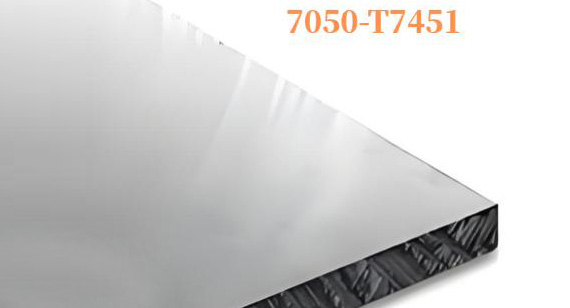
For aerospace engineering and high-stress industrial manufacturing, if you are looking forward to thick-section components manufacturing—— 3 to 6 inches thickness——then 7050-T7451 aluminum alloy is the one must applicable for your engineering purpose.
Then, what exactly makes the T7451 temper for 7050 aluminum so indispensable? Why does the standard AMS 4050 matter? And how does it perform under the grueling conditions of CNC machining? This comprehensive guide provides an exhaustive analysis of 7050-T7451, designed for engineering, procuring, and parts manufacturing needs.
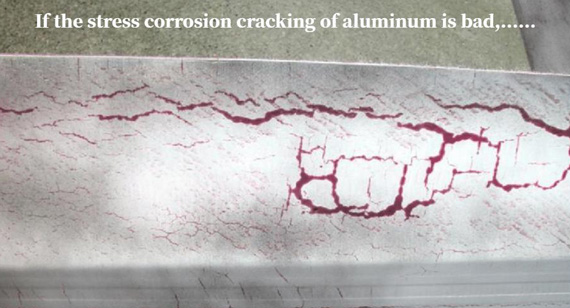
Aluminum 7051-T7451 is the outstanding material for thick aerospace structures——its quite excellent stress corrosion cracking resistance indeed mainly due to the 74 overaging. But 7050’s composition actually specifically engineered to support “the T74 overaging” process. There, you can check below how 7050’s composition enables t7451 performance:
Step 1: Solution Heat Treatment & Quenching
The process begins by heating the 7050 plate to a precise temperature range—typically between 465°C and 480°C (870°F - 900°F).
Step 2: The '51' – Stress Relieving by Stretching
After quenching but before the final aging, the material is in a highly unstable state with massive internal residual stresses. This is where the "51" designation comes in.
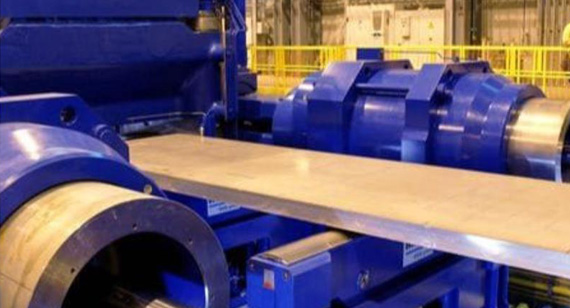
The plate is placed in a massive hydraulic stretcher and pulled to achieve a permanent set of 1.5% to 3%.
Step 3: The 'T74' – The Two-Stage Overaging Process
The "T74" (formerly known as T736) involves Two-Stage Precipitation Hardening:
Table 1: The 'T74' Processes in 7050-T7451 Aluminum Alloy
| Aging Stage |
Parameters (Typical) |
Purpose |
| Stage 1: Nucleation |
~120°C (250°F) for 8-12 hours | Precipitates form to provide the alloy's high static strength. |
| Stage 2: Stabilization |
~175°C (350°F) for 8-12 hours | This is the "Overaging" step. It coarsens the grain boundary precipitates, which interrupts the path for Stress Corrosion Cracking (SCC). |
When searching for 7050 T7451 properties, engineers need hard data. Below is the typical performance profile for 7050-T7451 plate (per AMS 4050).
Table 2: 7050-T7451 Mechanical and Physical Properties
| Physical |
Property |
Metric Value |
Imperial Value |
| Density | 2.83 g/cm³ | 0.102 lb/in³ | |
| Melting Range | 490°C – 630°C | 915°F – 1165°F | |
| Electrical Conductivity | 40% IACS | 40% IACS | |
| Mechanical |
Ultimate Tensile Strength | 510 MPa | 74 ksi |
| Yield Strength (0.2% Offset) | 441 MPa | 64 ksi | |
| Elongation at Break | 10 - 12% | 10 - 12% | |
| Modulus of Elasticity | 71 GPa | 10.3 x 10³ ksi | |
| Hardness (Brinell) | 150 HB | 150 HB |
You must specify the AMS (Aerospace Material Specification) for 7050-T7451 Plate if you are going to use it for aerospace purpose.
AMS 4050 specifically covers 7050-T7451 aluminum alloy in the form of rolled plate. It dictates:
Choosing between these three good metals of aerospace can be difficult. Here is how they stack up:
7050-T7451 vs. 7075-T6
7050-T7451 vs. 2024-T3
Table 3: Comparison of 7050-T7451 vs. 7075-T6 vs. 2024-T3
| Alloy & Temper |
Section Thickness Performance |
Corrosion Resistance |
Machining Stability |
| 7050-T7451 |
Excellent | High (SCC Resistant) | Excellent (Stretched) |
| 7075-T6 |
Poor | Low | Moderate |
| 2024-T3 |
Moderate | Very Low | Moderate |
As a specialist in Machining-Custom, we vmt cnc machining factory is expertized at machining various aluminum into need parts, 7050-T7451 aluminum machining also count in.
Dimensional Stability
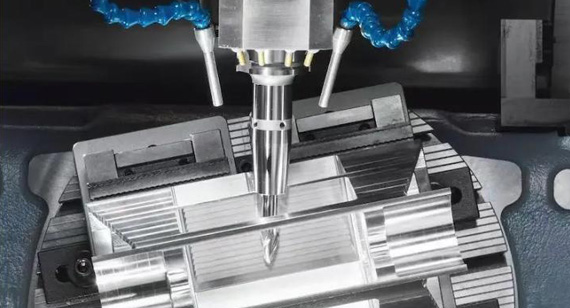
Because of the '51' stretch, 7050-T7451 plates exhibit nearly zero "spring-back." This allows for the machining of thin-walled pockets and complex monolithic structures without the risk of the part warping out of tolerance.
Recommended Tooling & Parameters
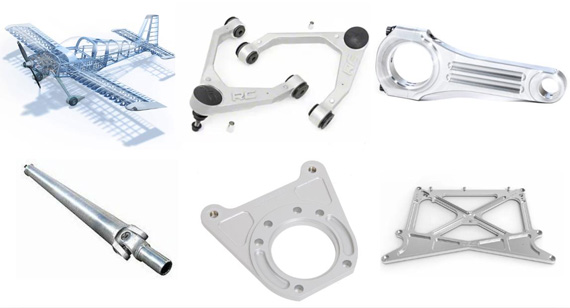
Where do you find 7050-T7451? Anywhere that requires high reliability and thick-section integrity. Examples includes:
Basically for the same above purposes for more examples like:
Automotive purpose can also include many high performance 7050-T7451 components :
Whether you are designing the next aluminum parts of commercial aircraft or a high-performance defense, or high-end automotive purpose, Aluminum Alloy 7050-T7451 provides a SCC-resistant edge that other alloys cannot match. Its combination of AMS 4050 compliance, dimensional stability, and stress corrosion resistance makes it an engineering high end material.
Need a partner for your next 7050-T7451 project? At VMT CNC Machining Facory, we specialize in the high-precision CNC machining of aluminum alloys. Our expertise ensures that your 7050 components are delivered with perfect tolerances and full components reliability.
Get a Quote for Aluminum Parts Machining.

For a high-performance automotive drivetrain project, the client required Drive Shaft Yokes that could withstand massive torsional loads and high-frequency vibrations without the weight penalty of traditional steel. 7050-T7451 aluminum was selected for its superior fracture toughness and its ability to maintain high mechanical strength in thick-section components. The primary engineering challenge was ensuring that the yoke’s "ears" could handle extreme stress cycles without developing fatigue cracks, a common failure point in lower-grade aluminum alloys.
At VMT CNC Machining Factory, we leveraged the T7451 temper’s exceptional dimensional stability to execute complex 5-axis milling. Since 7050-T7451 is stress-relieved by stretching, it allowed our machinists to remove heavy amounts of material from the internal bores and external profiles without the part warping or "springing" out of tolerance. We utilized sub-micron grain carbide tooling and high-speed machining (HSM) strategies to maintain a critical tolerance of ±0.01mm on the bearing press-fit diameters, ensuring perfect rotational balance for the drive assembly.
The final 7050-T7451 components delivered a 35% weight reduction compared to the original steel design while exceeding the required service life in stress-corrosion testing. By optimizing our cutting parameters, VMT achieved a mirror-like surface finish of Ra 0.8, which minimized stress concentration points and eliminated the need for secondary grinding.
What is the density of aluminum 7050 T7451?
The density is approximately 2.83 g/cm³ (0.102 lb/in³). This is used by engineers to calculate the weight of aircraft components during the design phase.
How does the hardness of 7050-T7451 compare to 6061-T6?
Aluminum 7050-T7451 is significantly harder. With a Brinell hardness of 150 HB, it is nearly 60% harder than aluminum 6061-T6 (95 HB), providing better wear resistance and a cleaner surface finish.
Why is 7050-T7451 considered "expensive"?
The cost reflects the complex alloying (Zinc/Magnesium/Copper), the multi-stage aging process, and the mechanical stretching required. Furthermore, the mandatory AMS 4050 certifications and ultrasonic testing add to the premium price point.
Is 7050-T7451 aluminum for sale in small quantities?
While typically an industrial material sold in large plates, distributors usually can offer cut-to-size 7050 aluminum plates.
What is the difference between 7050-T7451 and 7050-T6?
Aluminum 7050-T6 is aged to peak strength but is susceptible to Stress Corrosion Cracking (SCC), making it rare in the industrial uses. 7050-T7451 is "overaged" to trade a small amount of strength for a massive increase in corrosion resistance and dimensional stability during machining.
What is the difference between 7050-T7451 and 7050-T6?
Aluminum 7050-T6 is aged to peak strength but is highly susceptible to Stress Corrosion Cracking (SCC), making it rare in critical aerospace parts. 7050-T7451 is "overaged" to trade a small amount of strength for a massive increase in corrosion resistance and dimensional stability during machining.


 +86 15099911516




 Read more