1. What Is a CNC Machined Pill Case?
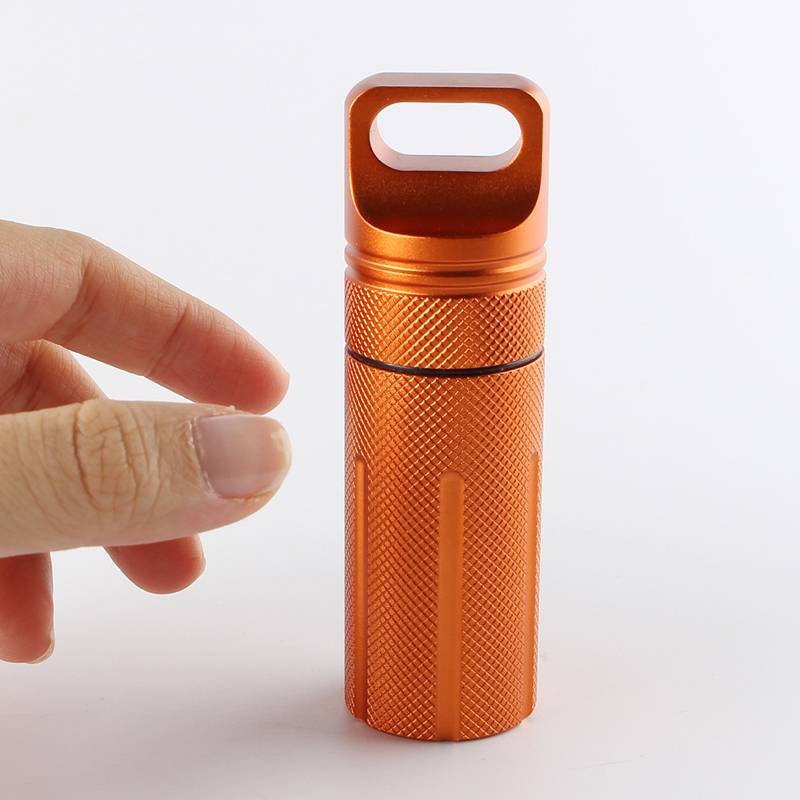
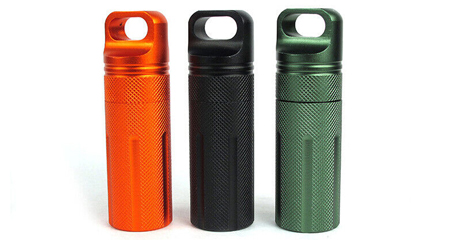
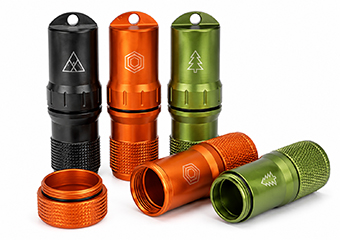
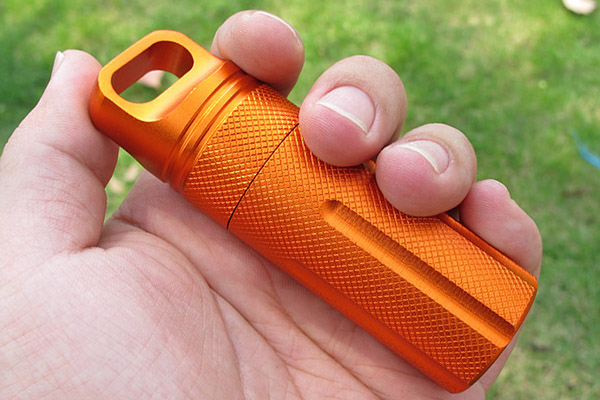
A CNC machined pill case is a compact container whose body, lid and functional interfaces are cut from metal or another machinable material using computer-controlled equipment. Unlike a fixed off-the-shelf pill box, a custom CNC pill case can be made around a specific outside shape, cavity size, thread, O-ring groove, attachment feature, logo area and surface finish defined by the customer's design.
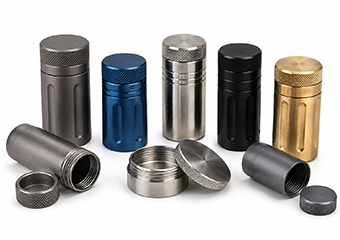
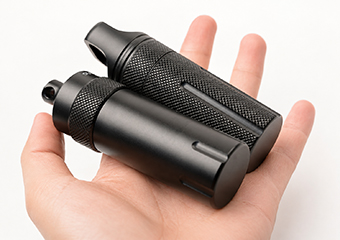
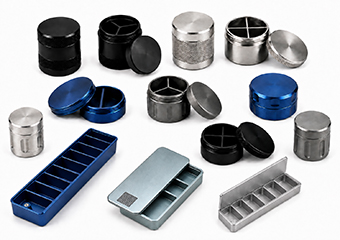
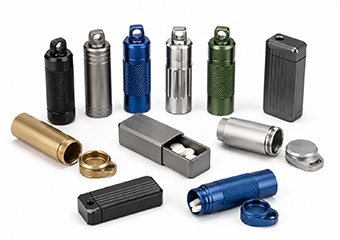
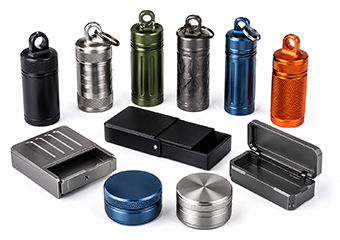
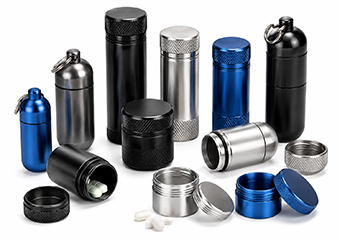
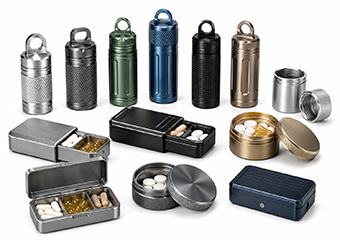
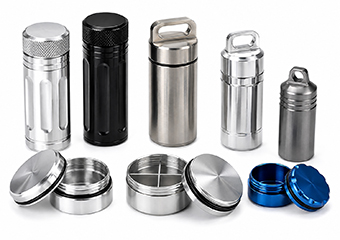
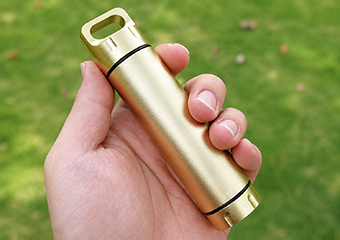
The term can cover threaded pill capsules, keychain containers, deep-cavity EDC cases, sliding-lid cases, multi-compartment containers and other small protective enclosures. The important manufacturing point is that the body and lid usually function as one assembly, so mating dimensions, finish allowance and final fit matter more than the appearance of either component by itself.
2. Why Use CNC Machining for Pill Cases?
CNC machining is useful when a product needs custom dimensions, a precise lid interface, deep internal features, controlled threads, visible metal surfaces or low-to-medium production flexibility. It allows developers to test a real metal product without first committing to dedicated molding or forming tooling, and the same drawing can be refined after prototype feedback.
Typical reasons to choose CNC machining include:
- Custom threads, grooves and internal cavities that must match a specific design.
- Premium aluminum, stainless steel or titanium product positioning.
- Prototype validation before repeat production.
- Frequent design revisions or multiple branded versions.
- Cosmetic requirements such as anodizing, brushing, polishing, PVD or engraving.
3. How Are CNC Pill Cases Manufactured?
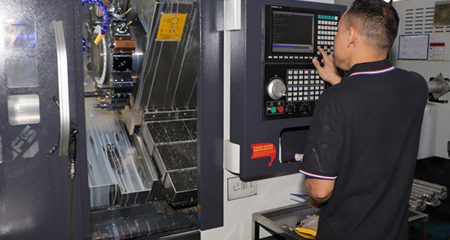
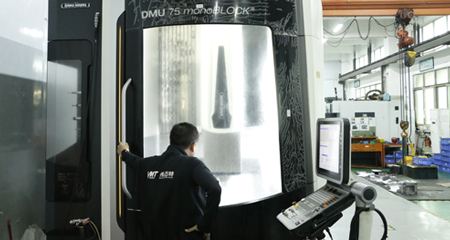
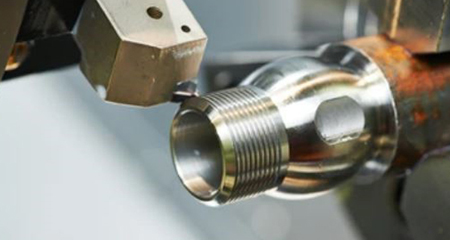
Manufacturing normally begins with the customer's 2D drawing and 3D model. The machining route is then selected according to the part geometry. Round bodies and lids are commonly produced by CNC turning, while side holes, flats, attachment slots or logos may require milling or turn-mill machining. Rectangular, multi-compartment or sliding structures rely more heavily on CNC milling, and complex multi-face designs may justify 5-axis machining.
A typical production route is: drawing and DFM review → material preparation → rough machining → critical finishing → thread and groove machining → in-process inspection → surface finishing → post-finish dimensional verification → body-and-lid assembly check → final inspection and protective packaging. The exact sequence changes with material, geometry and finish.
4. Which Materials Are Commonly Used for CNC Pill Cases?
Material selection affects weight, machining behavior, corrosion resistance, finish options, product feel and cost. There is no single best material for every EDC container.
Aluminum
6061 and 6063 are commonly considered for lightweight consumer and EDC products because they machine well and support anodizing, bead blasting and engraving. 7075 can be considered when higher material strength is useful, although the final alloy should be selected around the actual geometry and finish.
Stainless Steel
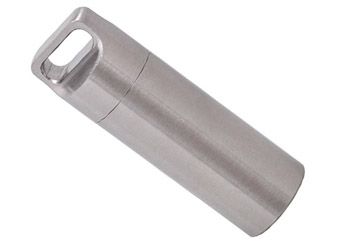
303, 304 and 316 stainless steels can provide a heavier premium feel, wear resistance and corrosion resistance. They are suitable for brushed, polished or passivated products, but machining time and cutting conditions differ from aluminum.
Titanium
Titanium supports premium lightweight EDC products with high corrosion resistance and a distinctive metallic appearance. Its lower machinability compared with aluminum means toolpath strategy, heat control and thread quality require more attention.
5. What Pill Case Structures Can Be CNC Machined?
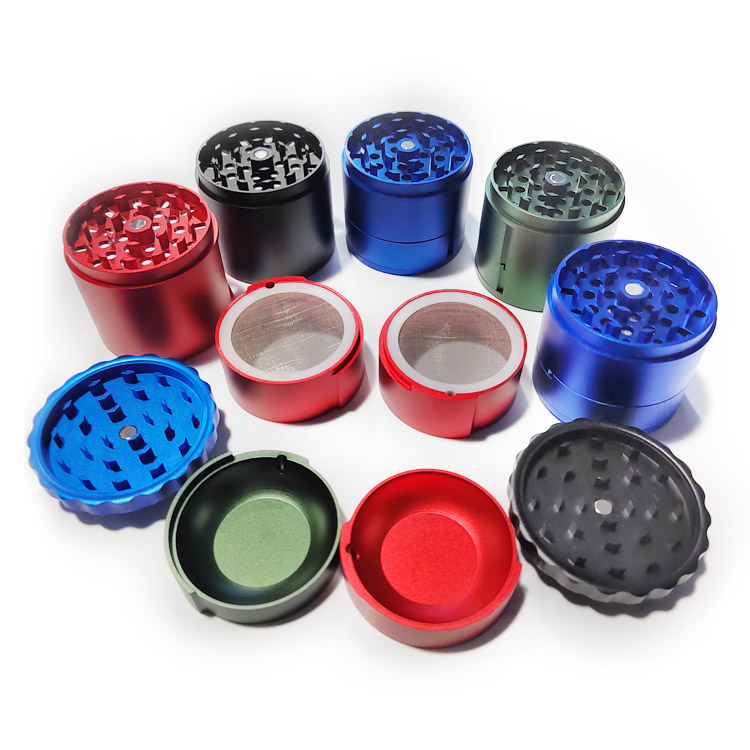
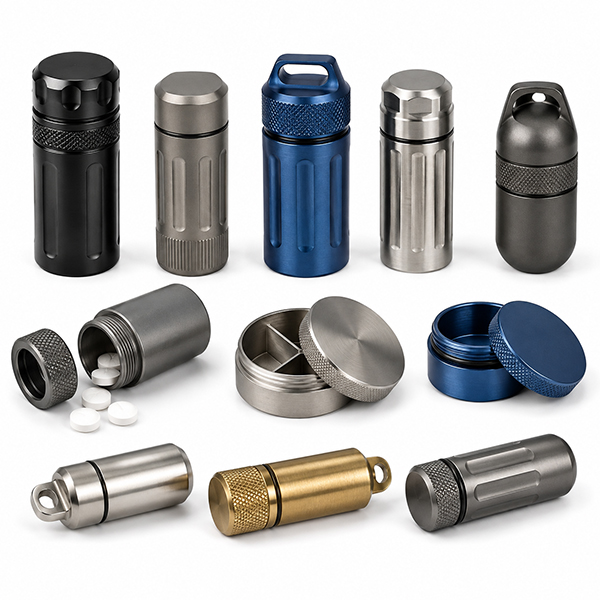
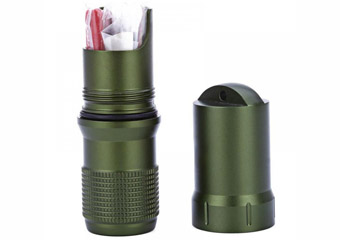
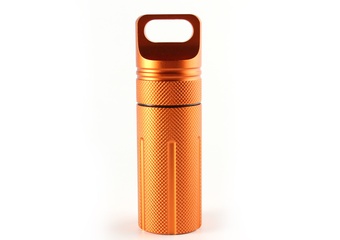
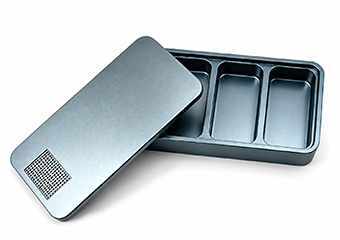
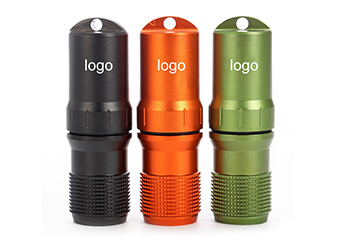
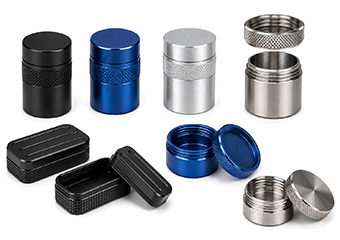
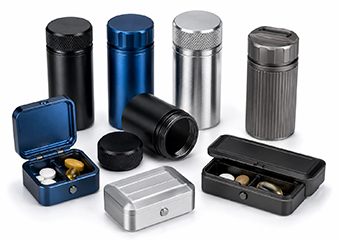
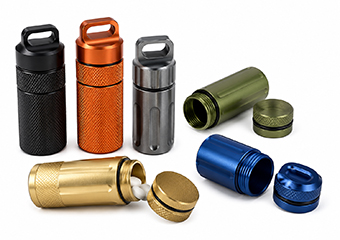
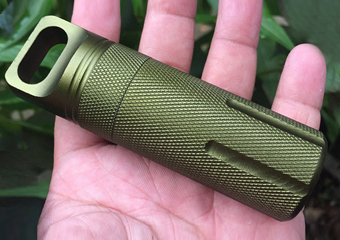
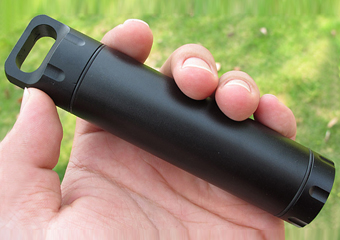
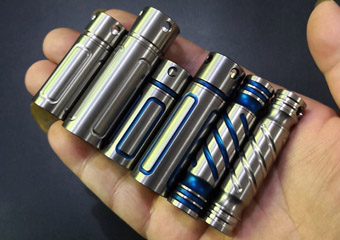
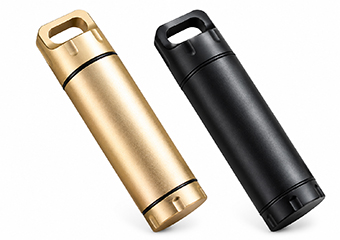
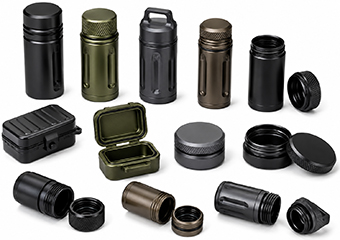
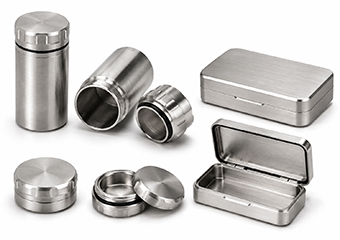
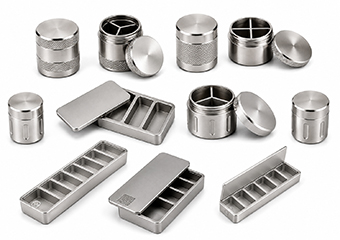
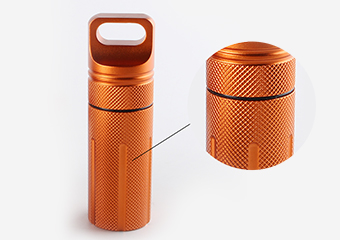
Custom pill cases are better classified by structure than by color. Common designs include threaded two-piece containers, O-ring sealed cases, keychain capsules, deep-cavity containers, sliding lids, multi-compartment cases and custom lid-and-body assemblies. Each structure changes the manufacturing risks.
For example, a threaded round case depends heavily on concentric relationships and thread engagement, while a sliding case depends more on rail clearance, flatness and smooth movement. A keychain capsule adds local attachment features that may require secondary milling, and a multi-compartment case creates more pocket-depth, wall-thickness and tool-access challenges.
6. How Do Threads and O-Ring Sealing Work?
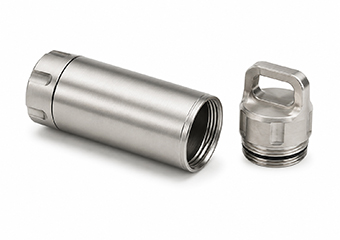
A threaded lid provides closure, but it does not automatically make a container waterproof. A sealing design may also need an O-ring, a correctly sized groove, a defined sealing land and sufficient compression after the lid is assembled. The thread, groove and mating surfaces therefore need to be reviewed as one functional system.
Surface finishing also matters. Anodizing or plating can change the final condition of threaded and mating areas, so the manufacturing plan may need allowance, masking or post-finish verification. Where a specific waterproof or leakage performance is required, the customer should define the test method and acceptance criteria; CNC machining alone should not be used as proof of a waterproof rating.
7. What Machining Problems Are Common?
Although pill cases are small, they combine several manufacturing risks in one assembly. Deep cavities can leave thin walls that are sensitive to clamping and material removal. Threads may fit correctly before finishing but become tight after coating. A lid and body can both pass isolated dimensions yet still feel inconsistent if their datum relationships are not controlled. Cosmetic surfaces can also reveal tool marks or scratches after bead blasting, anodizing or polishing.
Common risks include:
- Thin-wall distortion after deep internal machining.
- Thread fit changes after anodizing or plating.
- O-ring groove geometry that does not match the intended compression.
- Lid-to-body misalignment or uneven visible gaps.
- Machining marks becoming more obvious after finishing.
- Prototype fit that is not reproduced consistently in later batches.
8. Which Surface Finishes Are Used on CNC Pill Cases?
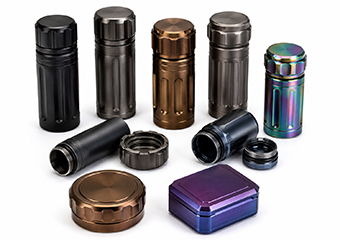
Surface finishing is part of both product appearance and manufacturing control. Aluminum pill cases commonly use bead blasting plus anodizing, color anodizing or hard anodizing. Stainless steel can use brushing, polishing, passivation, PVD or selected plating processes. Titanium may be used in its machined or polished condition or with appropriate decorative finishes depending on the project.
The best finish should be selected with the material, thread interfaces, sealing surfaces and brand appearance in mind. A cosmetic finish should not be treated as a final decoration step only; areas that must remain dimensionally stable may need masking, allowance or post-finish inspection.
9. How Are CNC Pill Cases Inspected?
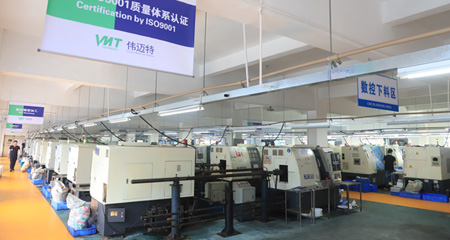
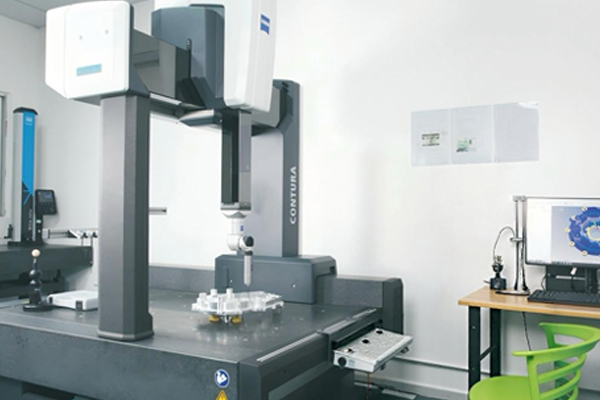
Inspection should follow product function. Depending on the drawing, VMT may use CMM inspection, dimensional measurement, thread gauges, groove measurement, visual inspection and functional assembly checks. The most important dimensions are the ones that affect the final interface, not simply the dimensions that are easiest to measure.
For a threaded sealed container, this can include body and lid diameters, thread condition, O-ring groove dimensions, shoulders, sealing lands, post-finish dimensions and final opening/closing fit. VMT applies a 12-step quality-control workflow, and identified critical dimensions can be included in a 100% inspection plan when required by the project.
10. What Affects the Cost of a Custom CNC Pill Case?
Cost is determined by the complete manufacturing route rather than outside size alone. Two containers with similar dimensions can have very different costs if one has deeper cavities, thinner walls, complex threads, multiple secondary features or a demanding cosmetic finish.
Main cost factors include:
- Material grade and raw-stock size.
- Amount of material removed from the internal cavity.
- Number of setups and machining directions.
- Thread, groove and attachment-feature complexity.
- Surface finish, masking and cosmetic inspection requirements.
- Tolerances and the number of critical dimensions requiring full inspection.
- Prototype quantity and expected repeat-production volume.
The most accurate quotation therefore comes from a complete drawing and project specification rather than a diameter-and-height estimate.
11. How Do Prototypes Move Into Production?
The first CNC prototype should be used to validate more than basic dimensions. It allows the customer to review lid feel, assembly, internal capacity, weight, surface finish, engraving and other product-facing details. If changes are required, the drawing can be revised before the production route is standardized.
After approval, VMT can stabilize machining sequence, fixtures, inspection points, finishing instructions and packaging requirements so later batches follow the approved manufacturing condition. This is especially important for matching body-and-lid components where fit and cosmetic consistency need to remain stable over repeat orders.
12. What Should You Send for a CNC Pill Case RFQ?
For an accurate engineering review and quotation, provide as much of the final product information as possible. A complete RFQ reduces assumptions and helps identify process risks before pricing and production.
- 2D drawing with dimensions, tolerances and thread specifications.
- 3D model in STEP, STP, IGES or another usable CAD format.
- Required material and alloy grade.
- Surface finish, color and cosmetic requirements.
- Prototype quantity and expected production quantity.
- Critical dimensions, sealing requirements and assembly expectations.
- Required inspection report, material documentation or packaging needs.
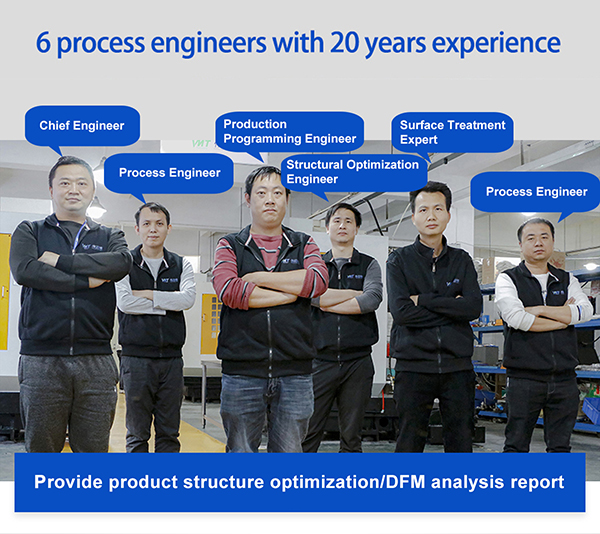
If some requirements are still open, VMT can review them during DFM rather than assuming a standard pill-case specification.
 +86 15099911516
  inquiry@vimetal.com.cn




 Related suggestion