16 years one-stop China custom CNC machining parts factory

Hey there I’m VMT Sam!
With 25 years of CNC machining experience we are committed to helping clients overcome 10000 complex part-processing challenges all to contribute to a better life through intelligent manufacturing. Contact us now
 201 |
Published by VMT at Feb 11 2026 | Reading Time:About 2 minutes
201 |
Published by VMT at Feb 11 2026 | Reading Time:About 2 minutes


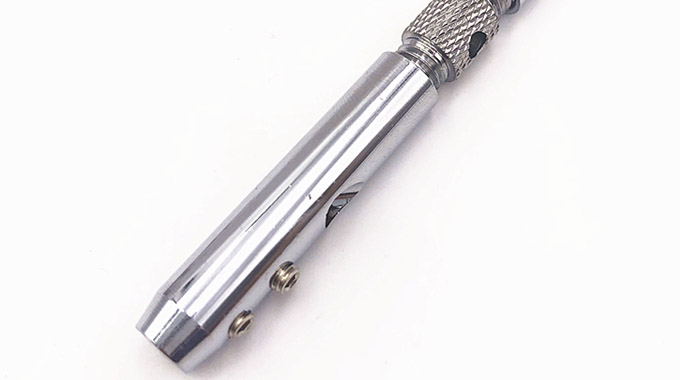
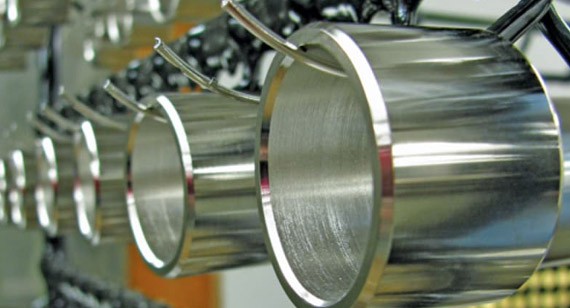
Bright nickel plating serves as decorative coatings or primer for nickel-chromium plating surface treatment and is extensively utilized for stainless steel CNC machined parts, brass CNC machined parts, and more. From automotive components and hardware to high-precision electronic elements, a bright nickel finish enhances the aesthetic luster of these parts, fills microscopic depressions or flaws, and also contributes to corrosion and wear resistance. Furthermore, this coating offers good electrical conductivity. In this article, we will explore the applications of bright nickel plating in CNC machined parts, detailing how this surface treatment process is applied and its ultimate impact on the quality of your finished products.
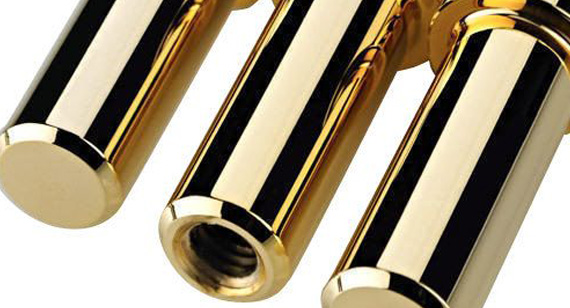
Bright nickel plating is an electrolytic process used to deposit a smooth, mirror-like, and corrosion-resistant layer of nickel onto a metal surface. It produces a high-gloss, hard, and conductive coating on substrates like steel, brass, and copper. In the industry, this process is often governed by standards such as ASTM B689 and QQ-N-290 . The result is a signature bright nickel color—a brilliant, reflective silver with a very slight yellowish undertone—that can serve as either a final decorative coating or a base layer for bright nickel chrome plating.
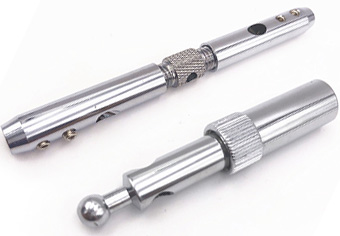
For CNC machined parts, choosing bright nickel electroplating over semi-bright nickel (this finish has a satin or "half-shiny" appearance) or dull nickel(this produces a non-reflective, gray finish) offers below specific advantages:
Below table shows a clear difference of bright nickel vs. semi-bright and dull nickel:
Table 1: Bright Nickel vs. Semi-Bright and Dull Nickel
| Feature |
Bright Nickel |
Semi-Bright Nickel |
Dull Nickel |
| Appearance |
Mirror-like, highly reflective, hides surface imperfections (high luster). | Smooth, but a matte or satiny/“half-shiny” appearance. | Matte, non-reflective, gray/white finish. |
| Surface Leveling |
High; organic additives "fill" microscopic scratches/tool marks left by CNC machining. | Moderate; offers some smoothing action. | Low; duplicates the exact finish of the substrate (requires extensive polishing beforehand for smoothness). |
| Surface Hardness |
Highest; offers superior scratch and wear resistance. | Medium; balances hardness with ductility. | Lowest; soft and highly ductile. |
| Corrosion Protection |
Good (standard decorative); effective barrier against rust and oxidation. | Excellent as a barrier layer; superior electrochemical stability (sulfur-free). | Good functional protection. |
| Sulfur Content |
High (0.04% – 0.15%); essential for the bright finish. | None / Sulfur-Free; ensures high chemical stability. | None; highest purity of nickel deposit. |
| Layer |
Thinner layers (e.g., 15µm) are recommended to avoid peeling. | Allows for very thick coating build-up. | Ideal for heavy engineering builds or thick electroforming. |
| Electrical Contact |
Good, but a passive surface film can increase resistance over time. | Very Good; stable contact resistance over time. | Best; lowest contact resistance for electronic terminals and connections. |
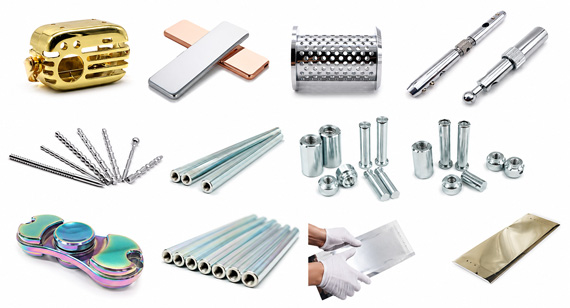
CNC machining is a process where various metal or non-metal materials are cut into desired shapes from a solid block using computer-programmed tools. It is one of the most efficient and common production methods in the modern industry. Bright nickel plating is the ideal post-processing treatment for parts produced from various materials. The following materials are suitable for bright nickel plating:
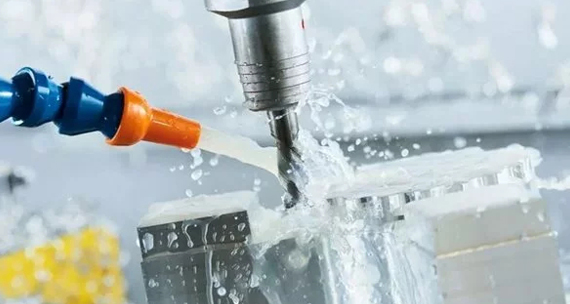
Table 2: Suitable Materials for Bright Nickel Plating CNC Machined Parts
| Material Category |
Why it is Suitable |
Common CNC Machined Parts |
| Steel & Iron |
Most common; nickel provides a vital anti-rust barrier. | Shafts, fasteners, gears, and structural brackets. |
| Copper & Brass |
Excellent adhesion; nickel prevents tarnish and enhances look. | Electrical connectors, plumbing valves, and decorative trim. |
| Aluminum Alloys |
Requires a pre-treatment but results in a lightweight, shiny part. | Heat sinks, aerospace housings, and consumer electronics. |
| Stainless Steel |
Needs a "Nickel " for adhesion; adds extra chemical resistance. | Medical instruments and marine hardware. |
| Zinc Alloys |
Frequently used in die-casting and precision CNC finishing. | Door handles, automotive emblems, and knobs. |
Applying a bright nickel plate involves several trade-offs between functionality and aesthetics:
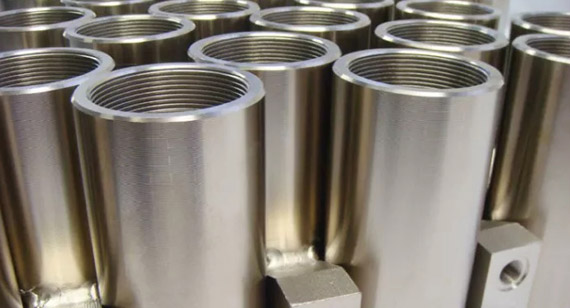
Specific bright nickel plated parts are manufactured from many industries due to its aesthetics and performance of corrosion resistance, wear resistance, conductivity, for example:
A European medical device manufacturer required a batch of complex 304 stainless steel housings with a mirror-like, premium aesthetic. The project presented two major technical hurdles: the inherent difficulty of getting plating to adhere to the passive oxide layer of stainless steel, and the need to maintain strict dimensional integrity on a complex geometry where "over-plating" could ruin the assembly fit.
VMT implemented a synchronized "Machining-to-Plating" workflow. We CNC-machined the housings with a strategic 15-micron undersize allowance to compensate for the plating build-up. To ensure a permanent bond, we utilized a specialized Nickel Strike activation step to bite into the stainless steel surface. This was followed by immersion in a high-performance bright nickel bath with optimized agitation and racking to ensure uniform "leveling" across all intricate contours.
The Result: Superior Quality with 15% Cost Savings
The final components delivered a flawless, defect-free mirror finish that exceeded the client's aesthetic expectations. The plating was so lustrous and durable that the client was able to eliminate the secondary decorative chrome-plating step, reducing total production costs by 15%.
This guide has explored how bright nickel plating suitable for CNC machined parts. Focusing on bright nickel plating, you’ve learnt that this finish can contribute to the parts with a more corrosion-resistant, wear-resistant properties as undercoat, or a bright surface finishing by itself. Whether you are looking for the durability or the iconic look of a bright nickel finish, this process is a versatile and cost-effective choice.

What is the standard for military-grade bright nickel?
The most common standard is QQ-N-290 bright nickel plating, which specifies different classes and grades based on the thickness and intended environment.
Can I use Cerakote instead of plating?
Yes, bright nickel Cerakote(a ceramic coating) is a great option if you want the "look" of nickel on materials that are hard to plate or if you require the specific thermal properties of ceramic coatings.
What is in a bright nickel plating solution formula?
A typical "Watts Bath" contains nickel sulfate (for nickel ions), nickel chloride (for anode corrosion), and boric acid (as a buffer), plus organic "brighteners" to create the mirror effect.
Does bright nickel plating cause hydrogen embrittlement?
Yes, high-strength steel CNC parts are at risk. We recommend a post-plating baking process to relieve hydrogen stress and prevent part failure.
What is the difference between bright nickel and bright nickel chrome?
Bright nickel is the actual layer. "Chrome" is usually a very thin, bluish layer applied over the nickel to provide even higher scratch resistance and a cooler silver tone.
Beyond decorative chrome (e.g. Nickel-Chromium), what other surface treatments use Bright Nickel as an undercoat?
Bright nickel can also be a critical primer for gold, silver, and rhodium plating to prevent base metal migration and enhance mirror-like brilliance. It is also used as a leveling base for black chrome and tinted e-coats to ensure a consistent, high-gloss metallic appearance.


 +86 15099911516




 Read more