16 years one-stop China custom CNC machining parts factory

Hey there I’m VMT Sam!
With 25 years of CNC machining experience we are committed to helping clients overcome 10000 complex part-processing challenges all to contribute to a better life through intelligent manufacturing. Contact us now
 205 |
Published by VMT at Jun 08 2026 | Reading Time:About 3 minutes
205 |
Published by VMT at Jun 08 2026 | Reading Time:About 3 minutes


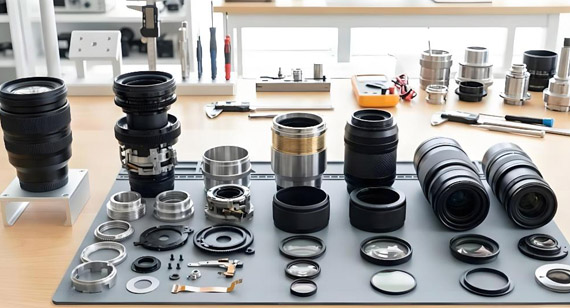
When an optics team needs a lens barrel prototype, the standard lead time from most CNC machining suppliers is four to eight weeks. And that timeline assumes best-case scenarios: zero DFM issues, no outsourcing delays, and no rework. In reality, it often takes much longer. For startups racing toward a funding demo, product teams approaching a design freeze, or R&D groups validating an optical path, this delay could be an inconvenience, or a miss for best new launch time.
VMT CNC machining factory delivers precision lens barrel prototypes in just 1 to 2 weeks. Not by cutting corners but by avoiding the idle time that plagues conventional manufacturing. We've redesigned the workflow to stop delays before they happen—whether it's engineering reviews lagging behind programming, surface finishing stuck in a third-party queue, or quality inspection catching defects that should have been prevented at the fixture design stage.
This article breaks down the process architecture that makes 1-2 week rapid prototyping for optical hardware possible: front-loaded DFM, multi-axis single-setup machining, in-house black anodizing, and in-process metrology. Each step is engineered to avoid the bottlenecks found in traditional prototyping workflows.
Before looking at how VMT accelerates the process, it is essential to understand where time is lost in a conventional lens barrel manufacturing cycle. The conventional prototyping workflows are plagued by three hidden bottlenecks.
1.The Programming Bottleneck and DFM Delays
Precision lens barrel manufacturing typically combines complex internal threads (for retaining rings and focusing helicoids), high-precision bores requiring concentricity under 10 µm, stray-light suppression features, and external mounting flanges. Programming a 5-axis CNC toolpath for this intricate geometry takes hours of dedicated engineering. This issue may happen in a conventional shop: the programming only begins after the purchase order is finalized. If the programmer flags a manufacturability issue—such as an unreachable undercut or a thread relief that violates the minor diameter—the design must go back to the client. Days pass in back-and-forth emails, and the project clock resets before the parts' machining starts.
2. The Outsourcing Gap (Logistics Bottlenecks)
Some CNC machining shops lack specialized in-house surface finishing. Once machining is complete, the raw parts must be packed and shipped to an external anodizing vendor which has its own production queue.
This round trip—shipping, waiting in queue, processing the anodizing, and return logistics—adds 3 to 7 working days to the schedule. For an optical hardware prototype that only took 3 days to machine, more than half of the total lead time is swallowed by logistics between facilities.
3. The Rework Loop from Catching Issues Too Late
When a first-article lens barrel fails inspection (bores out of tolerance, threads too tight after anodizing, or surface roughness failing to meet specifications), the parts must be reworked or scrapped. The root cause is almost always an incorrect machining strategy used during production: a fixture that concentrated too much clamping force, a toolpath that induced vibration on a thin wall, or a failure to calculate pre-anodize dimensional compensation. Catching these issues only at the final inspection stage wastes time and heavily delays lead times.
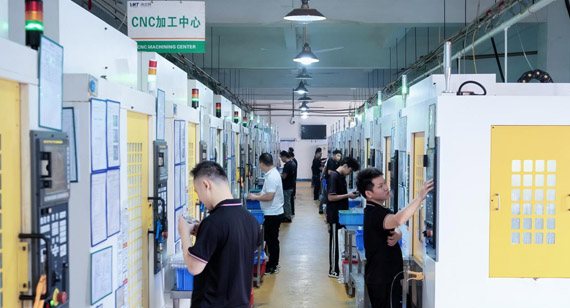
VMT’s 1-2 week turnaround for optical hardware is about a customer-centric workflow engineered to protect your launch milestones and prevent unexpected project bottlenecks before they happen.
We know that design revisions mid-production can derail your entire schedule. That’s why VMT engineering reviews your lens barrel drawings within 24 hours of receipt—ensuring your design is fully optimized for manufacturing before programming even begins. We proactively check for:
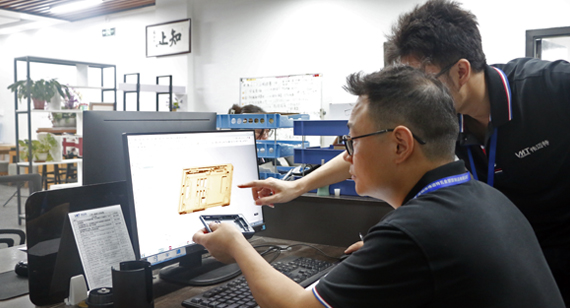
2. 5-Axis CNC Machining: Guaranteeing Optical Alignment in One Setup
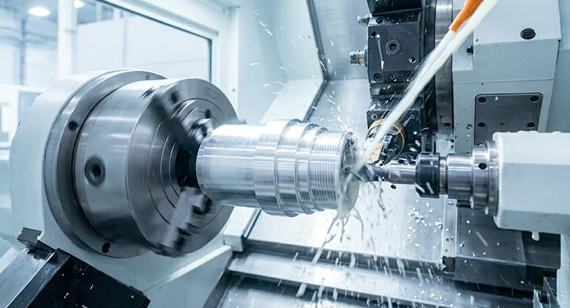
A 5-axis CNC machining center for optics can access five sides of a component in a single clamping. For a lens barrel, this means the OD, internal bore, internal threads, mounting flange, and any side ports or slots are all machined without ever re-chucking the part.
Traditional shops machine lens barrels in multiple setups, meaning the part is unclamped and flipped. This variation can cause your bore-to-OD concentricity to drift by 15–25 µm, leading to costly optical misalignment during your assembly phase.
VMT utilizes 5-axis CNC machining to access five sides of your lens barrel in a single clamping. By machining the OD, internal bore, threads, and flanges simultaneously, we avoids fixturing errors. This means guaranteed mechanical coaxiality, zero post-process manual sanding, and a prototype that performs exactly as your optical simulation predicted.
3. In-House Black Anodizing(Surface Treatment)
To give you complete schedule predictability, VMT integrates a dedicated anodizing line under the same roof. Your parts move from machining to surface treatment on the same day. More importantly, our team manages the exact bath chemistry and pre-anodize bead blasting required for maximum stray-light suppression and uniform emissivity inside the bore—giving you premium optical finishing without the logistical delay.
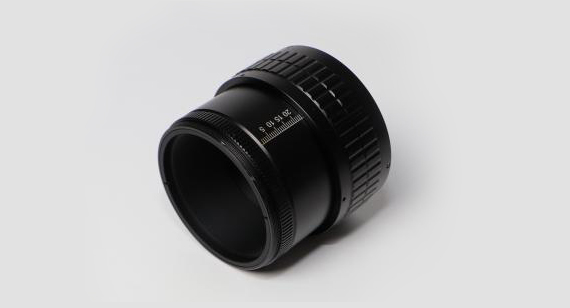
4. In-Process Metrology: Real-Time Verification for Zero-Defect Delivery
VMT protects your deadline by verifying critical dimensions during the machining cycle. Our operators use precision air gauges and micrometers while the lens barrel is still on the machine, making real-time adjustments. When your prototypes reach final CMM inspection, it is purely to confirm compliance and generate your QC reports, never to discover surprises. The received parts are assured to be ready for immediate assembly.
Fast-track manufacturing isn’t about rushing the work; it’s about having the right engineering infrastructure in place before production begins. Here is the technical foundation that eliminates structural risks and keeps development schedules on track.
Proactive Fixture Design: Eliminating Thin-Wall Distortion
For high-precision optical mechanics, the work holding strategy is fully engineered before writing a single line of code.
A thin-walled lens barrel clamped in a standard three-jaw chuck will inevitably distort; the bore may measure perfectly round while clamped, but it will spring out-of-round the moment it is released, ruining optical alignment. To protect tight tolerances, VMT deploys full-circumference split collets, vacuum fixtures for thin-flange components, or custom soft jaws tailored to the specific part geometry. This ensures the component remains stress-free during aggressive milling and reliably meets 10 µm concentricity specifications in a single setup.
Immediate Material Readiness: Stocked, Not Ordered
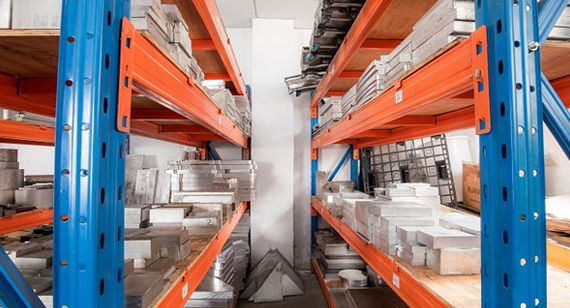
Prototype timelines should not be held hostage by raw material supply chains. VMT maintains a permanent, on-site inventory of the aluminum grades most frequently specified in optical hardware—including 6061-T6 and 7075-T6 in standard diameters from 25 mm to 120 mm.
For custom lens housing fabrication, material is pulled from stock on day one, completely bypassing the typical 1-to-3-week mill lead times. Immediate stock is also maintained for specialized materials like stainless steel (303, 304, 316L) and titanium (e.g. Grade 5 / Ti-6Al-4V) to ensure production begins without a single day of logistics delay.
1. Camera Lens Parts Prototypes
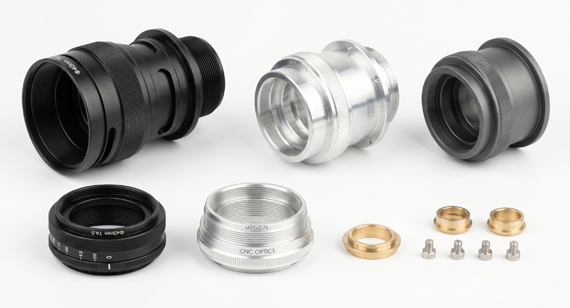
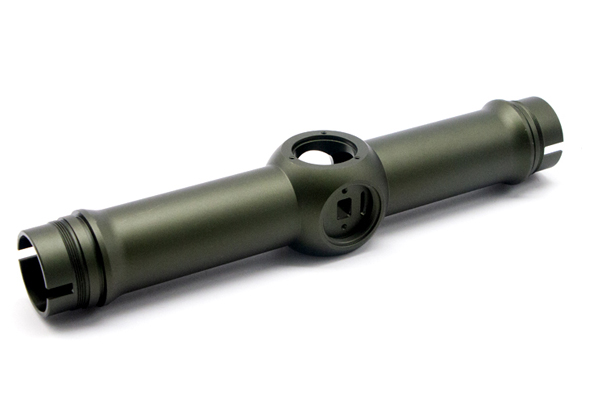
A high-performance camera lens barrel features complex internal threads (for retaining rings, helicoid focusing, and filters) alongside an internal surface optimized for stray light suppression. VMT machines all threads within the same 5-axis setup that finishes the bore and OD, maintaining strict concentricity across every threaded feature. In-house black anodizing with controlled Ra values ensures a consistent anti-reflective surface finish from the first prototype through to full production.
2. LiDAR Sensor Hardware
LiDAR housings often integrate a precision optical window seat, internal baffle geometries, and threaded mounting interfaces into a single aluminum component. To prevent beam distortion, the optical window seat requires flatness and parallelism within 5–10 µm. VMT's single-setup 5-axis approach machines the window seat and the bore reference surface in the same clamping, preserving critical geometric relationships without stacking setup errors.
3. Aerospace and Defense Optical Components
Aerospace optical components demand meticulous material certifications, comprehensive dimensional reports, and first-article inspection (FAI) documentation. Because VMT integrates in-process metrology and in-house anodizing under one roof, the complete documentation package is compiled seamlessly, eliminating gaps in the paper trail. For commercial aerospace applications, this end-to-end traceability significantly accelerates the qualification timeline.
4. Medical Imaging Device Housings
Housings for endoscopes, surgical cameras, and diagnostic optics require both micron-level precision and clean-room-compatible finishes. VMT’s in-house anodizing produces surfaces free of particulate contamination, backed by batch-level cleanliness verification. This accelerated 1-2 week timeline allows product teams to conduct rapid, iterative prototyping with clinicians, ensuring design revisions are tested and refined without delay.
5. Automotive Vision System Hardware
Automotive vision systems must withstand harsh thermal and vibration environments, requiring ADAS camera lens barrels and sensor housings to maintain bore concentricity across a −40°C to +85°C temperature range. VMT's strict material traceability and process consistency ensure that prototypes machined from 6061-T6 behave identically to subsequent production units. This tight-tolerance CNC machining, paired with documented Cpk data, smoothly supports the PPAP requirements essential for automotive compliance.
A LiDAR developer needed an aluminum receiver housing for a 905 nm pulsed laser system. The design combined a precision 32 mm H7 bore for the detector assembly, M28×0.75 internal threads for the focusing mechanism, anti-reflective internal baffles, and a 4-hole mounting flange. The internal bore required Ra 0.8 µm post-anodize finish for stray light control at 905 nm.
Timeline Breakdown
| Day 1 |
Drawing was received. The DFM review was completed. Client approved fixture strategy. Material pulled from stock (6061-T6, 80 mm OD). |
| Day 2 |
CAM programming was completed. 5-axis setup prepared with custom soft jaws. |
| Day 3 |
First-article machined: OD, bore, internal threads, baffles, and flange in single 5-axis setup. In-process air gauge verification of bore diameter. |
| Day 4 |
Part transferred to in-house anodizing. Bead-blasted for diffuse texture. Type II black anodized to 15 ±3 µm. |
| Day 5 |
Post-anodize CMM inspection. Bore Ra verified at 0.9 µm. Thread GO/NO-GO passed. Dimensional report compiled. |
| Day 6 | Parts were shipped. Total: 5 working days from drawing receipt to shipment. |
Subsequent repeat orders for the same housing were delivered in 3 days, with the validated program and fixture already in place.
Fast-track delivery is a process of capability, not a compromise on quality. But it has boundaries:
For optical teams that need fast-track CNC machining services for lens barrel prototypes, LiDAR sensor hardware, camera lens components, and custom optical housings, VMT delivers 1-2 week rapid turnaround, and welcome to explore VMT's optical component machining capabilities.
【For learning about more comprehensive information about camera lens parts manufacturing, welcome to click and read our technical white paper: The Ultimate Guide to High-Precision Camera Lens Parts Manufacturing. 】

Q1: What is the typical lead time for a lens barrel prototype?
With conventional CNC machining services, 4 to 8 weeks is common. VMT's fast-track optical prototyping workflow delivers lens barrel prototypes in 1 to 2 weeks. The difference comes from front-loaded DFM, single-setup 5-axis machining, and in-house anodizing.
Q2: Can VMT do threaded lens barrel manufacturing for helicoid focus mechanisms?
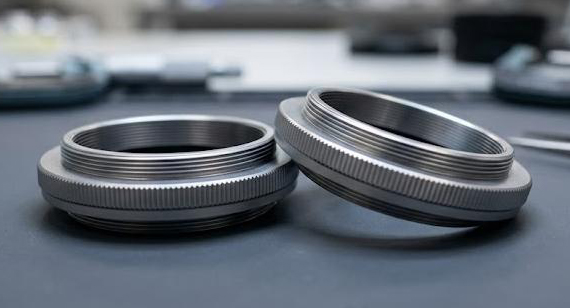
Yes. Internal and external threads for focusing helicoids, retaining rings, and filter mounts are machined in the same 5-axis setup as the bore and OD. This ensures thread-to-bore concentricity within 10 µm. Pre-anodize pitch diameter compensation is applied for all threads that receive surface treatment.
Q3: What materials are available for rapid lens barrel prototypes?
6061-T6 and 7075-T6 aluminum are stocked in standard diameters and are the fastest options. 303, 304, and 316L stainless steel and Grade 5 titanium (Ti-6Al-4V) are also available with slightly longer timelines. Specialty alloys can be sourced but add material lead time.
Q4: Does fast-track prototyping support black anodized lens barrels?
Yes. VMT's in-house anodizing line provides Type II and Type III black anodizing for optical black coating on aluminum. The process is controlled for consistent color, emissivity, and anti-reflective surface treatment performance. Bead blasting before anodizing creates the diffuse surface texture needed for stray light suppression.
Q5: What aerospace optical components can VMT prototype?
VMT supports aerospace optical components including lens barrels, sensor housings, mounting brackets, and detector assemblies. Material certifications, full dimensional reports with Cpk data, and first-article inspection documentation are included. VMT is ISO 9001:2015 and IATF 16949 certified.
Q6: How does VMT handle LiDAR sensor hardware machining with anti-reflective requirements?
LiDAR sensor hardware typically requires precision bore concentricity for the optical bench, internal baffle geometry for stray light control at specific wavelengths (commonly 905 nm or 1550 nm), and black anodizing with verified low reflectance. VMT machines all feature in a single 5-axis setup and applies in-house black anodizing with batch-level reflectance verification.
The technical information and manufacturing advice shared on the VMT website are for general guidance only. While we strive for accuracy, VMT does not guarantee that the processes, tolerances, or material properties mentioned are applicable to every specific project. Any reliance you place on such information is strictly at your own risk. It is the buyer's responsibility to provide definitive engineering specifications for any production orders. Final specifications and service terms shall be subject to the formal contract or quotation confirmed by both parties.


 +86 15099911516




 Read more