Adjustable Threaded Speaker Spikes
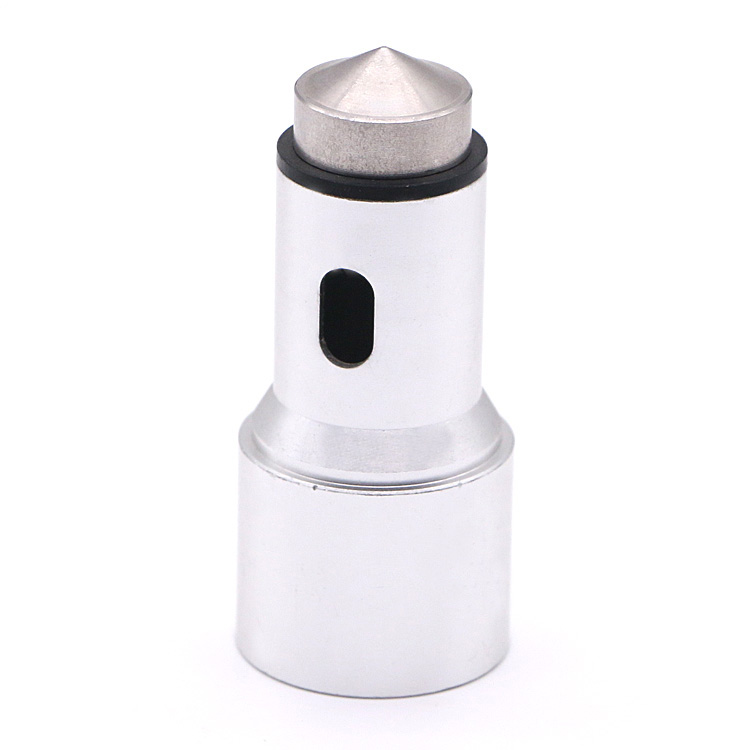
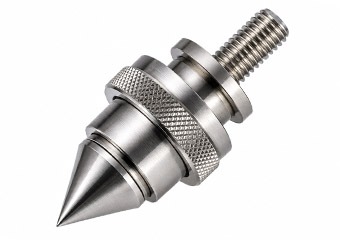
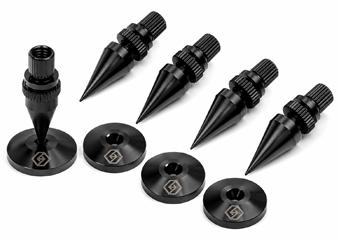
Adjustable threaded speaker spikes support speakers and subwoofers; CNC turning forms the cone, shoulder and thread, while height, thread fit and tip alignment are inspected for stable installation.

Home / Product / Electronic Industry /
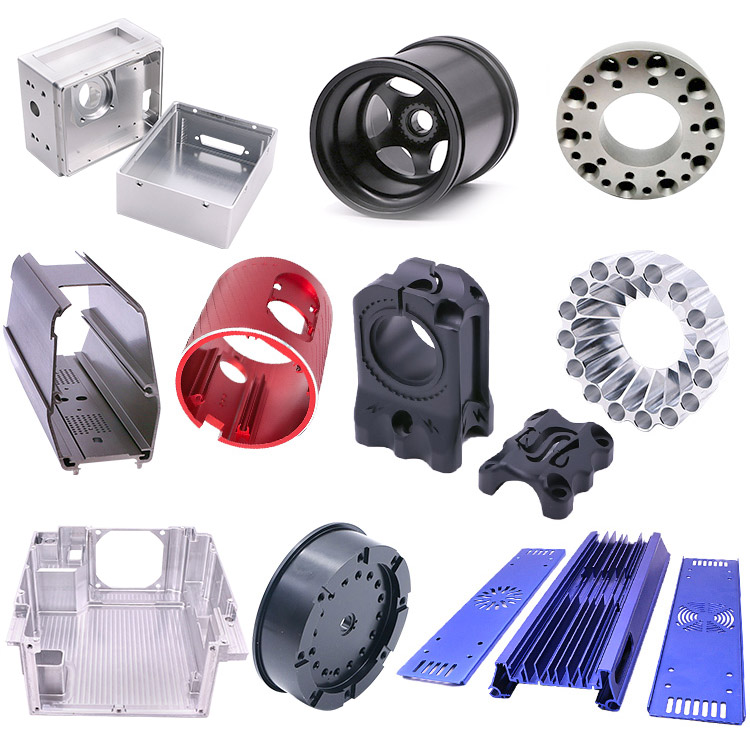
VMT is a CNC machining and manufacturing factory for various electronic equipment casings. With 13 years of experience in CNC machining electronic housings and various types of CNC electronic housing samples, you can send pictures to view and view the factory online, contact us immediately to obtain samples. We can provide you with various types of electronic product casing machining services to meet your customized CNC machining needs.
Product Specification:


Drawing-Based Audio Component Manufacturing
VMT manufactures custom CNC speaker spikes, isolation cones, adjustable speaker feet and floor-protection cups from your 2D/3D drawings. We help audio brands and OEM teams control thread fit, cone-tip alignment, surface appearance and paired-part assembly from prototype validation through repeat production.
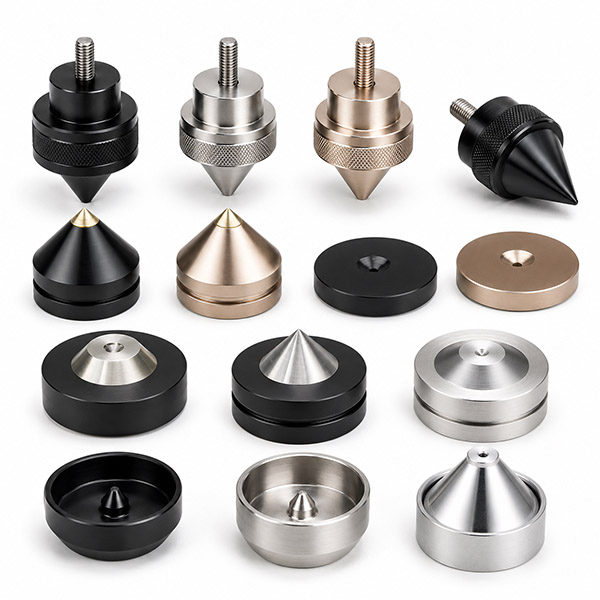
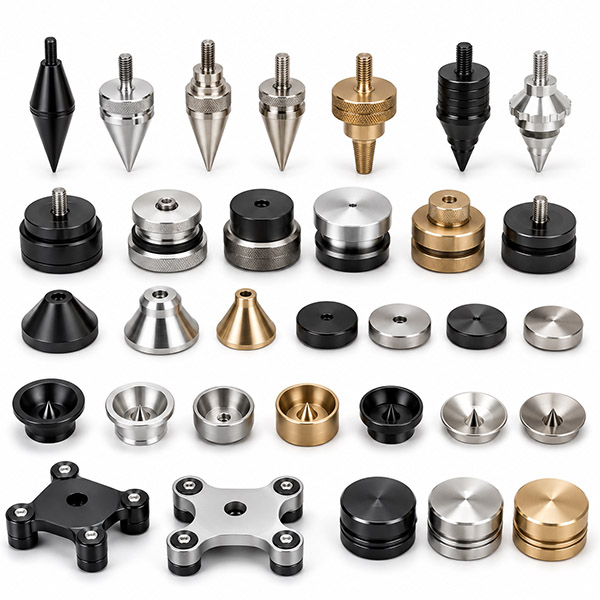
Parts We Machine
Backed by 100+ CNC machines and a 12-step quality process, VMT manufactures custom speaker support components for prototypes, matched sets and repeat production, helping audio brands control assembly fit, appearance and batch consistency. All displayed part images should be customer-authorized for promotional use.
Adjustable threaded speaker spikes support speakers and subwoofers; CNC turning forms the cone, shoulder and thread, while height, thread fit and tip alignment are inspected for stable installation.
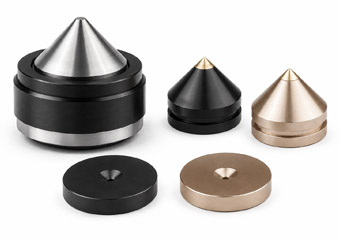
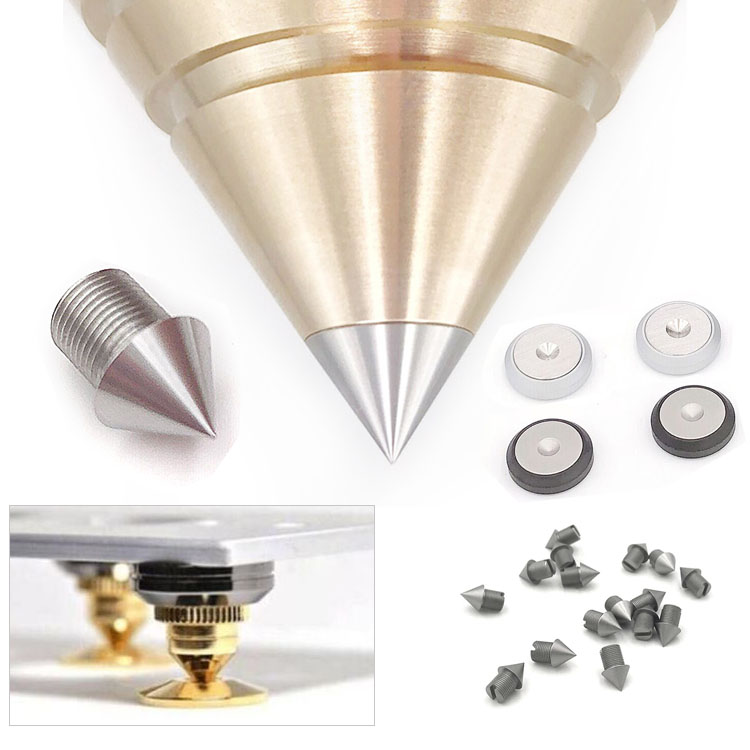
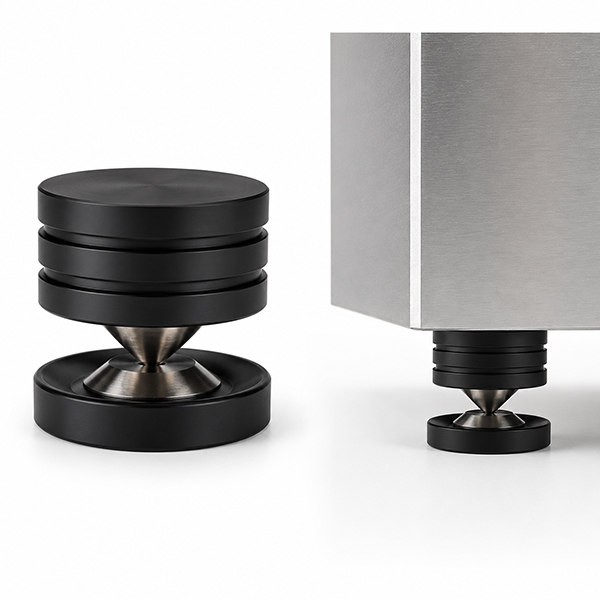
Speaker isolation cones support cabinets and audio bases; CNC turning produces tapered profiles and contact points, while concentricity, support faces and surface appearance are inspected against approved drawings.
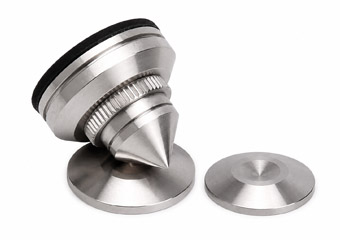
Adjustable speaker feet level speakers and Hi-Fi equipment; CNC turning, drilling and knurling form the body, while thread engagement, adjustment range and base flatness are verified before shipment.
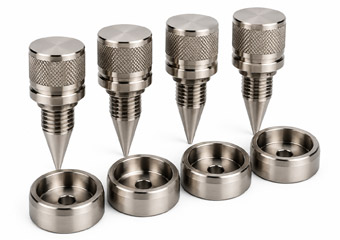
Subwoofer and stand spikes provide rigid support interfaces; CNC turning machines long cone profiles, threads and shoulders, while overall height, tip geometry and cosmetic finish are inspected.
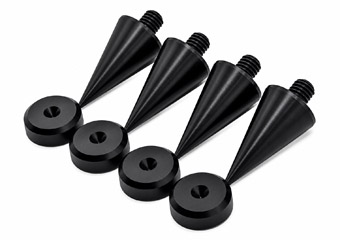
One-piece speaker spikes reduce multi-part assembly; CNC turning completes the body, thread and tip from one blank, while datum alignment, edge condition and final dimensions are checked.
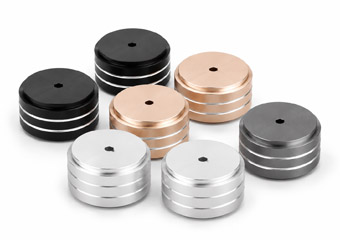
Speaker spike floor protectors shield finished surfaces; CNC turning forms the cup recess and base, while spike-to-cup contact, bottom flatness and cosmetic condition are inspected as matched parts.
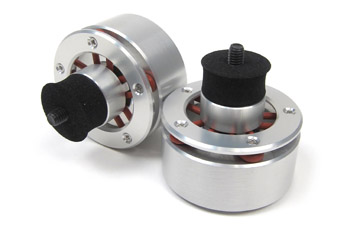
Turntable isolation feet support record-player assemblies; CNC turning and milling create metal housings and interfaces, while load-related dimensions, leveling features and elastomer fit are verified from drawings.
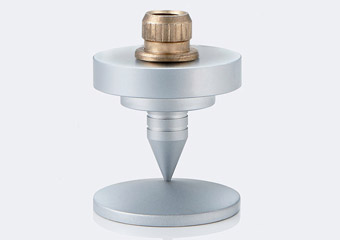
Amplifier and audio rack feet support premium equipment enclosures; CNC turning forms bodies, bases and threads, while matched height, contact faces and finish consistency are inspected before packing.
Manufacturing Risks and VMT Controls
The manufacturing challenge is not simply running a CNC lathe. Customers need threads that assemble correctly, matched sets that install evenly, cosmetic finishes that remain consistent and production standards that repeat after prototype approval.
| Customer Problem | VMT Control Method | Customer Result |
|---|---|---|
| Thread Fit Problems | Review pitch, tolerance, effective thread depth, finish build-up and mating method; use thread gauges or approved mating parts after finishing when required. | Lower risk of jamming, looseness and thread-related rework. |
| Inconsistent Matched-Set Height | Use a unified machining datum and inspect overall height, shoulder position and key dimensions across each four-piece or multi-piece set. | More stable, level and repeatable installation. |
| Off-Center or Blunt Tips | Plan the turning sequence around a concentric datum, control tip geometry and monitor tool condition to keep the cone, point and thread aligned. | Consistent contact position and appearance. |
| Surface Finish Variation | Confirm an approved finish sample, control pre-polish preparation, finishing batches, color or gloss standards and final visual inspection. | Improved color, gloss and texture consistency across repeat orders. |
| Poor Assembly Between Components | Review the complete assembly stack, combined tolerances, thread engagement, spike-to-cup contact and trial fitting before production approval. | Shorter assembly time and fewer fit-related returns. |
| Prototype-to-Batch Inconsistency or Excess Cost | Freeze the approved drawing revision, machining datum, toolpath, inspection plan and finish standard while using DFM to remove unnecessary tolerances or features. | More repeatable production with lower avoidable machining cost. |
Applications
VMT manufactures the mechanical support components required by each customer’s enclosure, thread, load, leveling and vibration-control design. We do not replace the customer’s final acoustic validation.
Engineering Support Before Production
VMT reviews the design before production so thread, assembly, tool access, surface finishing, inspection and cost risks can be addressed before they become prototype or batch-production problems.
Review 2D drawings, 3D models, physical samples, key dimensions, datums and design intent before process planning.
Check metric or imperial threads, engagement length, mating tolerances, multi-part stack-up and required assembly clearance.
Evaluate deep grooves, thin walls, long cone profiles, internal holes, chamfers, tool access and multi-part structures for stable production.
Review tolerance allocation, thread standardization, fixture strategy, duplicate setups and non-critical cosmetic requirements to reduce unnecessary machining cost.
Select anodizing, electroplating, PVD, polishing, brushing or other finishes according to material, appearance, wear, masking and thread-fit requirements.
Material Selection
Material selection should be based on structure, weight, thread strength, corrosion environment, surface finish, machining requirements, appearance and project cost—not unsupported acoustic claims.
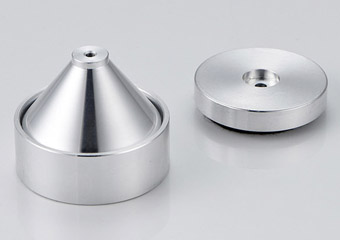
Aluminum 6061, 6063 and 7075 suit lightweight speaker spikes and protection cups; their machinability and strength support anodizing, brushing or polishing, helping customers balance appearance, weight and production cost.
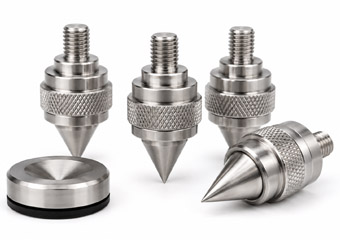
Stainless steel 303, 304 and 316 suit durable threaded spikes and audio feet; corrosion resistance and strength support polishing, brushing or electroplating, improving service life and premium appearance.
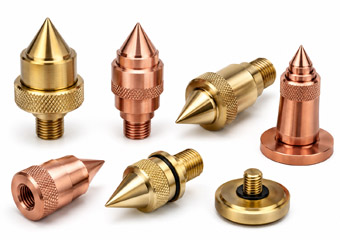
Brass C360/C260 and copper C110 suit premium speaker spikes, cones and cups; their machinability, mass and warm metallic tone support polishing, electroplating or PVD, increasing visual differentiation.
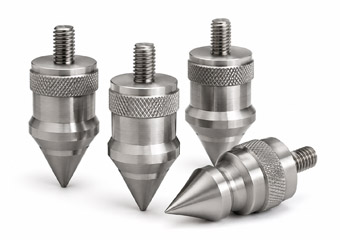
Titanium Grade 2 and Grade 5 suit lightweight premium spikes and support feet; high strength and corrosion resistance support brushing, polishing or PVD, delivering durability and product differentiation.
Surface Finishing
The selected finish affects appearance, wear resistance, thread fit and inspection. Critical threads, mating surfaces and cosmetic zones should be identified before finishing.
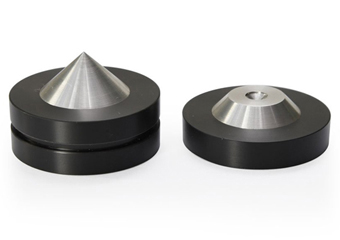
Aluminum speaker spikes and floor-protection cups for premium audio equipment receive controlled sandblasting and anodizing, creating uniform matte colors that help customers achieve consistent appearance and improved surface protection.
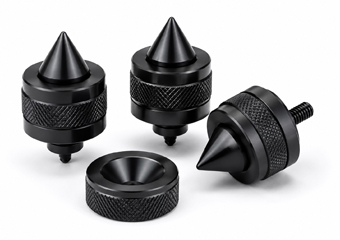
Aluminum speaker spikes for wear-resistant support applications use hard anodizing with protected threads and controlled build-up, producing harder surfaces that help customers improve durability without sacrificing assembly fit.
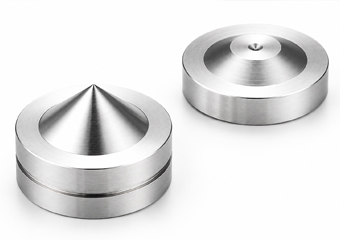
Stainless steel or aluminum speaker cones for visible audio assemblies receive directional brushing with controlled grain and edges, creating refined textures that help customers maintain a consistent premium appearance.
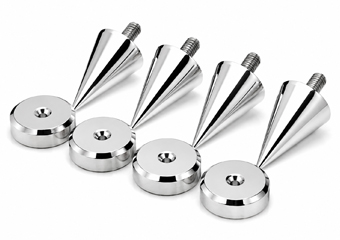
Stainless steel, brass or aluminum speaker spikes for luxury audio products receive controlled polishing after surface preparation, creating reflective finishes that help customers enhance visual quality and product positioning.
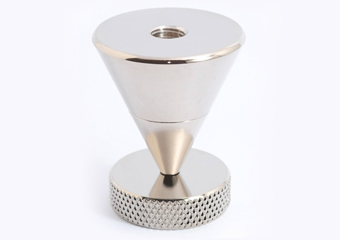
Steel, stainless steel or brass speaker spikes for decorative audio assemblies receive nickel or chrome electroplating with thickness control, creating bright metallic surfaces that improve appearance and corrosion protection.
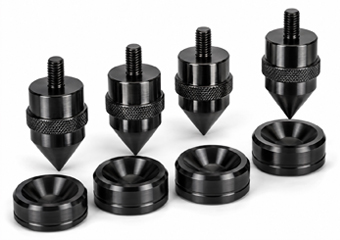
Stainless steel or titanium speaker spikes for premium audio equipment receive PVD coating after controlled surface preparation, creating durable metallic colors that help customers differentiate products and maintain finish consistency.
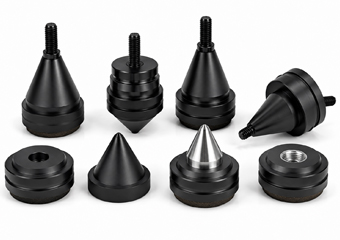
Aluminum or steel audio equipment feet for larger support assemblies receive masked powder coating with controlled edges, creating durable color coverage that helps customers protect surfaces and standardize batch appearance.
Anodized aluminum or stainless steel speaker spikes for branded audio products receive precisely positioned laser engraving, creating permanent logos and identifiers that help customers strengthen branding and part traceability.
Prototype to Production
The approved prototype becomes the reference for thread fit, assembly, appearance, dimensions and inspection so repeat orders can follow a controlled manufacturing standard.
Confirm design intent, critical dimensions, thread, mating parts and cosmetic requirements.
Confirm grade, color, texture, masking, plating build-up and approved visual standard.
Review feasibility, tool access, tolerance allocation, cost risks and production quantity.
Machine the first parts using the planned datum, process sequence and inspection controls.
Check thread engagement, matched height, cup contact, finish, engraving and packaging.
Freeze the approved drawing revision, surface sample and functional acceptance criteria.
Use the confirmed datum, tooling, inspection plan and finishing standard for repeatability.
Inspect critical features, matched sets and cosmetic surfaces before protected shipment.
Quality Control
Inspection is selected according to the approved drawing and project risk. VMT combines dimensional, thread, concentricity, surface and assembly checks so the equipment used is connected to the customer problem it must prevent.
Case Study
How VMT Controlled Thread Fit and Black Anodizing for Conical Speaker Spikes?
A premium audio equipment OEM required one-piece aluminum conical speaker spikes with matched height, reliable thread engagement, centered tips and a uniform matte-black anodized finish for prototype approval and repeat production.
The long cone and sharp tip created risks of runout and tool marks, while anodizing build-up could tighten the threads. The customer also required consistent color without scratches, exposed aluminum or tip damage.
VMT machined all related features from one turning datum, reserved anodizing allowance and protected critical threads. After finishing, thread fit and specified critical dimensions received 100% inspection against the approved drawing and surface sample.
The prototype assembled correctly and met the approved matte-black appearance standard. The confirmed process reduced thread rework, matched-set height variation, anodizing inconsistency and shipping damage during repeat production.
Why VMT
VMT focuses on the engineering, process control and production continuity required to move custom audio support components from design review to repeat orders.
Threads, structure, tolerances, surface finishing and assembly risks are reviewed before machining to reduce later design changes.
Prototypes and batch orders follow the same approved drawing revision, inspection standards and manufacturing requirements.
VMT supports stainless steel, aluminum, brass, copper, titanium and engineering plastics with coordinated surface finishing.
Inspection covers dimensions, color differences, scratches, gloss, handling damage and matched-set consistency.
Support is available for product development, prototype validation, pilot quantities and stable repeat production.
Your can discuss drawings, materials, finishes, cost and delivery requirements with dedicated engineering and project support.
FAQ
These questions focus on quotation, customization, production control and purchasing decisions rather than repeating basic product information already covered above.
Custom Speaker Spike Manufacturing Guide
Custom speaker spikes are not selected from a standard catalog when the enclosure, thread, height, finish and mating components are unique. A successful project begins with a clear mechanical design and continues through DFM, prototype validation, finishing, inspection and protected packaging.
A custom CNC speaker spike is a machined support component produced for a specific speaker, subwoofer, stand, amplifier, rack or audio platform. The part may include an external or internal thread, cone, pointed or radiused tip, shoulder, knurl, wrench feature, locking nut or matched floor protector. Unlike standard retail products, the dimensions and assembly interfaces are manufactured from the customer’s drawing or approved sample.
The purpose of precision machining is to support the customer’s intended mechanical installation: secure thread engagement, repeatable height, controlled contact geometry, consistent appearance and compatibility with the surrounding audio product design.
Thread specification, cone angle, tip radius, shoulder location, total height and mating-cup geometry should be defined before machining. A drawing that only shows the outside shape but omits thread class, engagement length, finish and cosmetic zones leaves the supplier to make assumptions that may cause assembly problems later.
| Design Item | Why It Matters | Recommended RFQ Information |
|---|---|---|
| Thread | Controls assembly, adjustment and locking. | Full designation, internal or external, engagement length and mating part. |
| Cone and Tip | Controls contact position and visible symmetry. | Cone angle, tip radius, contact point and protective-cup interface. |
| Matched Height | Affects stable installation across multi-piece sets. | Overall height tolerance, shoulder datum and set-matching requirements. |
| Cosmetic Zones | Determines machining preparation and visual inspection. | Visible surfaces, gloss, texture, color sample and acceptable appearance. |
Aluminum is widely used when low weight, machinability and anodized color options are important. Stainless steel supports durable threads, polished appearance and corrosion resistance. Brass and copper alloys provide a warm metallic appearance and additional mass, while titanium is selected for premium lightweight designs requiring strength and corrosion resistance.
Material should be chosen according to the customer’s mechanical requirements, product weight, appearance, finish, corrosion environment, production quantity and budget. Final acoustic performance must be validated by the customer in the complete audio assembly.
Anodizing, hard anodizing, electroplating, PVD and powder coating add material to the surface and may affect threads or tight mating features. Polishing and brushing remove or alter the original machined surface and may soften edges if the pre-finish process is not controlled. For this reason, finish type, color, gloss, masking and post-finish inspection should be reviewed before the machining allowance is finalized.
When appearance is critical, an approved surface sample should define the target color, texture and gloss. Batch control, protected handling and separated packaging then help reduce scratches, shade differences and contact damage.
A set of four speaker spikes should not be treated as four unrelated parts when matched height and appearance are important. The machining datum, overall height, shoulder position, thread engagement and surface finish should be inspected across the set. Protection cups, lock nuts and mating parts can also be assembled during inspection when required.
Cost depends on material, blank size, thread, part length, number of machining setups, tolerance, quantity, surface finish, inspection and packaging. Premium finishes can also increase cost because they require better pre-finish machining, polishing, masking, sample approval and post-finish inspection.
DFM can reduce cost by standardizing threads, avoiding unnecessary tight tolerances, combining features into one setup, simplifying multi-part assemblies and selecting a material or finish that meets the actual product requirement.
Send the 2D drawing and 3D model when available. Include the material, finish, color, quantity, thread, mating component, critical dimensions, inspection requirements and packaging method. A physical sample can also be reviewed when the original drawing is unavailable.
The more clearly the quotation package defines assembly and cosmetic requirements, the easier it is to review feasibility, avoid hidden assumptions and create a prototype that can become the basis for stable production.
Include the thread, cone geometry, mating cup, material, finish, quantity and cosmetic requirements. VMT will review the project as a custom CNC machining solution rather than a standard off-the-shelf product.
 Related suggestion
Give us a call or send an inquiry to our emailbox, we will answer your doubts according to your customers' requirements, and quote you immediately.


 +86 15099911516