16 years one-stop China custom CNC machining parts factory

Hey there I’m VMT Sam!
With 25 years of CNC machining experience we are committed to helping clients overcome 10000 complex part-processing challenges all to contribute to a better life through intelligent manufacturing. Contact us now
 416 |
Published by VMT at Apr 30 2026 | Reading Time:About 2 minutes
416 |
Published by VMT at Apr 30 2026 | Reading Time:About 2 minutes


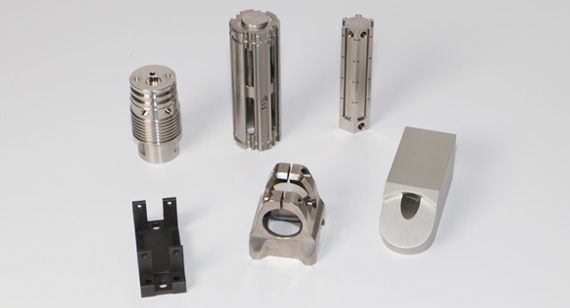
If you are seeking the best steel for custom CNC-machined parts—which can directly determine the parts’ performance and your product’s overall profit margin—12L14 steel stands out for its combination of machinability, surface finish quality, and cost efficiency. How does its lead, sulfur, and phosphorus content enhance machinability and help reduce production costs? How does it compare to another common carbon steel, 1018, in mass-production scenarios? Are there any environmental or safety considerations to watch out for if you plan to use 12L14 for your parts?
This blog provides a practical guide to 12L14, covering its composition, mechanical properties, applications, and limitations, so that you can clearly understand the answers to the questions above. In the final part, we will also share a case study: how our CNC machining factory solved the "scratch problem" in precision thread machining and leveraged high-speed machining to help customers reduce total production costs.
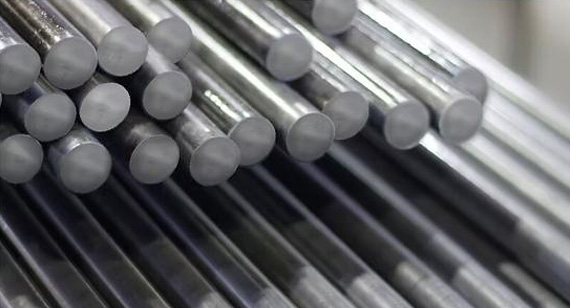
Just from the surface, it’s hard to tell 12L14(or the Ledloy) from other steels because they look so similar. But from its simple composition, you can tell it is a cost-effective material for parts’ production:
While one of the key elements is the Lead (Pb)—promote excellent lubrication and short chip when your partner factory CNC machining 12L14 steel into the needed parts. Easy to machine means high-speed machining and less production time— This can save much machining cost if you plan to use large bulk of 12L14 steel parts.
Corrosion Resistance of 12L14 Steel
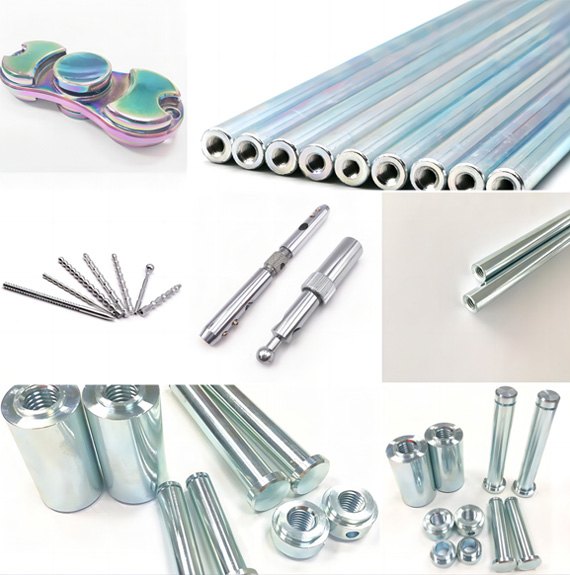
However, 12l14 is not corrosion-resistant because of its balanced iron content and above composition—those even have negative effects on it. Thus, if you want the 12L14 steel parts to be daily corrosion-resistant, please choose one of the surface protection (oil, plating, or paint, etc..).
Key mechanical properties relevant for your requirements to the needed steel parts:
One reason you might choose 12L14 steel for CNC-machined parts is its exceptional machinability, which helps you reduce production costs while maintaining part quality. Its lead, sulfur, and phosphorus content work together to lower cutting resistance, create short chips, and extend tool life.
12L14 has a machinability rating of around 193% compared to B1112 steel, meaning you can cut it much faster than standard mild steel. Faster cutting speeds shorten the cycle time for each part, so producing large batches becomes more cost-effective.
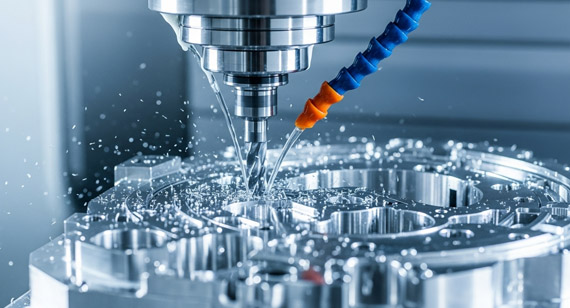
The lead in 12L14 acts like a built-in lubricant, reducing tool wear and limiting the need for frequent tool replacements. This directly lowers tooling costs and minimizes downtime, saving money in high-volume production.
Even at high speeds, 12L14 delivers a clean surface finish, which often lets you skip additional polishing or grinding. Avoiding these extra steps reduces labor and post-processing costs.
While 12L14 may cost slightly more per kilogram than 1018 steel, the reduced machining time and lower tool consumption usually offset the material price difference. For high-volume runs, 12L14 allows you to produce precise, high-quality parts faster, lowering your total production costs.
In short, 12L14 steel helps you make more parts in less time, with less tool wear, and lower overall costs, making it an efficient choice for large-scale CNC machining projects.
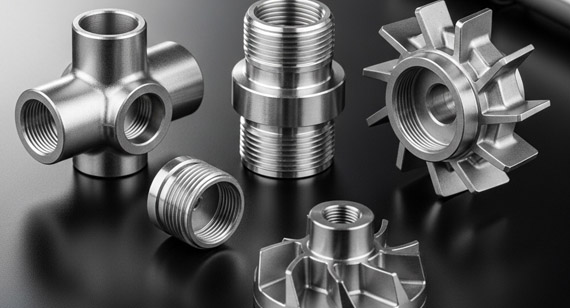
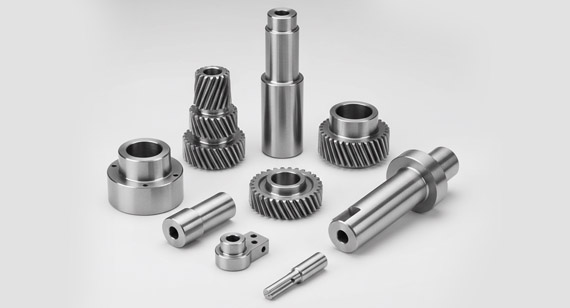
For those parts with moderate load and mild corrosive environment, the 12L14’s high machinability and excellent surface finish allow you to make complex shapes with tight tolerances. This also means you can produce large batches of parts faster while keeping machining costs under control. Here are a few examples of 12L14 steel applications:
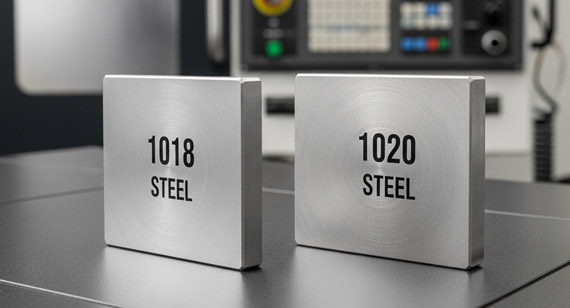
But for a more careful decision which steel to use for your CNC-machined parts, it helps to compare both performance and cost implications side by side. The table below highlights key differences between 12L14 and 1018, so you can quickly see which material fits your project's needs.
| Property |
12L14 Steel |
1018 Steel |
What It Means To You? |
| Carbon Content |
0.12% | 0.18% | Lower carbon in 12L14 improves machinability but slightly lower strength. |
| Lead Content |
0.15–0.35% | 0% | Lead improves chip breaking and tool life — faster machining and lower cost. |
| Machinability |
~193% (relative to B1112) | ~100% | 12L14 can be machined much faster, reducing cycle time for high-volume parts. |
| Tensile Strength |
~410–550 MPa | ~440–550 MPa | Similar |
| Yield Strength |
~205 MPa | ~370 MPa | 1018 is tougher |
| Surface Finish |
Excellent | Good | 12L14 often doesn’t need secondary finishing, saving cost. |
| Weldability |
Poor | Good | 12L14 not suitable for welding; 1018 can be welded for assemblies. |
| Corrosion Resistance |
Low | Low | Both need surface protection for a longer usage life. |
| Cost for Mass Production |
Slightly higher raw material cost, but lower machining cost | Lower raw material cost, higher machining cost | 12L14 is usually more cost-efficient in large batches for the total cost. |
It’s important for you to assess the intended application and market before choosing 12L14. While lead improves machinability and reduces costs, it limits where the parts can be sold or used, particularly in industries that demand strict environmental standards.
If your parts are destined for consumer electronics, medical devices, or products exported to RoHS or REACH regulated markets, excessive lead content may restrict or prohibit their use.
In these cases, alternatives like 1018 steel or lead-free machinable alloys may be necessary to meet both production efficiency and regulatory compliance.
How we solved the “scratch problem” in precision threaded parts and used high-speed machining to reduce costs for our client.
A U.S. printer manufacturer approached us looking to custom-produce a batch of micro shafts with fine precision threads. They reported that previous suppliers delivered parts with scratches, and the overall cost was also higher than expected.
After a careful review, our engineers found that the client had previously used 1018 steel for the shafts. Upon analysis, we recommended switching to 12L14 free-cutting steel. Although the raw material cost was slightly higher, 12L14 could be machined twice as fast as 1018, dramatically reducing machining time and overall cost. Moreover, this change solved the problem of long chips produced during 1018 machining, which tend to tangle with tools and scratch the thread surfaces, resulting in high scrap rates.
During production, our team utilized a Swiss CNC (Swiss-type lathe) to perform high-speed cutting, combined with a special thread finishing process, achieving high-precision, smooth threads in a single pass without the need for secondary polishing.
As a result, we delivered parts to the client with zero scratches, almost zero scrap rate, and a 20% cost reduction. The client was extremely satisfied and expressed interest in maintaining a long-term partnership with our factory.
12L14 steel proves to be a smart choice for CNC-machined custom parts when your priority is high machinability, excellent surface finish, and cost efficiency. By understanding its composition, mechanical properties, and environmental considerations, you can make informed decisions that balance performance with production cost. Whether you’re producing micro shafts, hydraulic fittings, or precision components for robotics and electronics, 12L14 can be one of your options.
Ready to optimize your custom parts production with 12L14 steel? Contact our CNC machining team for a feasibility assessment and quote, and see how high-speed machining can cut costs while ensuring precision and quality for your parts.

Can 12L14 steel be welded?
No, 12L14 is generally not suitable for welding due to its lead and sulfur content. Welding can cause cracks or weak joints. If your design requires welded assemblies, consider 1018 steel or other weldable alloys.
Can 12L14 steel be used in high-speed CNC machining?
Yes, this is actually one of its main advantages. 12L14 is rated at ~193% machinability relative to B1112 steel, meaning you can run higher cutting speeds with less tool wear, reducing cycle time and lowering production cost for large batches.
What are the international equivalents of 12L14?
Some commonly referenced equivalents include:
9SMnPb36 (Europe, EN), SUM24L (Japan, JIS), C12L14 (China, GB), M12L14 (US, ASTM), EN CW614N (Europe), AISI 12L14 (US), SAE 12L14 (US), UNI 3627 (Italy), NF C22-206 (France), BS 970 230M07 (UK). This helps when sourcing material internationally or comparing supplier specifications.
Is 12L14 suitable for heat treatment?
12L14 is not ideal for hardening or traditional heat treatment. Its strength comes mainly from its composition for machinability, so it’s better for parts that don’t require surface hardening. For surface hardness needs, consider carburizing or plating after machining.
How does lead content affect recycling?
Lead in 12L14 can complicate standard recycling processes and may require specialized handling. If sustainability or recycling compliance is important, discuss material recovery options with your supplier.
Is 12L14 suitable for high-volume production?
Absolutely. Thanks to its excellent machinability and surface finish, 12L14 is ideal for producing large quantities of precision parts quickly. This helps you keep per-piece costs down while maintaining consistent quality.
The technical information and manufacturing advice shared on the VMT website are for general guidance only. While we strive for accuracy, VMT does not guarantee that the processes, tolerances, or material properties mentioned are applicable to every specific project. Any reliance you place on such information is strictly at your own risk. It is the buyer's responsibility to provide definitive engineering specifications for any production orders. Final specifications and service terms shall be subject to the formal contract or quotation confirmed by both parties.


 +86 15099911516




 Read more