16 years one-stop China custom CNC machining parts factory

Hey there I’m VMT Sam!
With 25 years of CNC machining experience we are committed to helping clients overcome 10000 complex part-processing challenges all to contribute to a better life through intelligent manufacturing. Contact us now
 150 |
Published by VMT at Apr 14 2026 | Reading Time:About 2 minutes
150 |
Published by VMT at Apr 14 2026 | Reading Time:About 2 minutes


High carbon steel material properties are important to be familiar with, if you are designing precision tools, high-strength springs, and wear-resistant components. But for properties of high carbon steel, even famous for excellence in hardness and strength, high carbon steel still has requirements for machining and maintenance.
Also, it presents significant challenges like rapid tool wear, susceptibility to thermal cracking, and strict requirements for stress relief when CNC machining. Optimized tool paths, custom cooling strategies, and integrated heat treatment management are what our CNC machining factory has taken to solve the parts machining difficulties.
This blog will take you through properties of high carbon steel in depth, from composition, physical and mechanical property, cost and insights of its heat treatment, and also share how we solve difficulties that our clients face in the end.
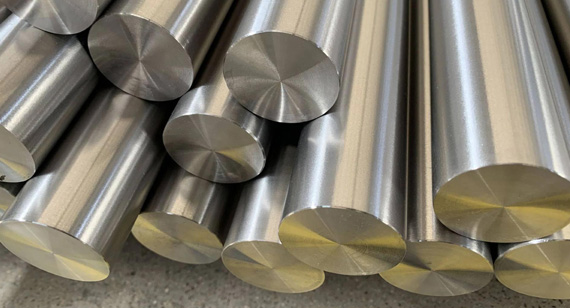
Generally, high-carbon steel refers to steel materials with carbon content exceeding 0.6% but typically below 1.2% (sometimes defined as below 2.0%). When the carbon content exceeds 1.0%, it is commonly classified as ultra high carbon steel.
If you want to learn about the properties of high carbon steel, first important factor is its chemical composition:
| Element |
Percentage |
Remarks |
| Iron (Fe) |
98 - 99% | Base Metal |
| Carbon (C) |
0.6 - 1.2% (Max 2.0%) | It determines the final hardness levels. If you don’t consider alloying elements, higher carbon content means higher hardness after heat treatment strengthening. |
| Manganese (Mn) |
0.3 - 0.9% | It increases strength and improves hardenability (higher hardenability allows steel components to achieve uniform hardening from the surface to the core). |
| Other Alloying Elements(optional) |
Depending on specific grade | If elements like Cr (Chromium), Mo (Molybdenum), or W (Tungsten) are added, it becomes a specialized alloy high-carbon steel with further increased hardenability. |
Depending on the alloy content, high carbon steel properties exhibit distinct differences:
High-Carbon Alloy Steel:
Table: High Carbon Steel Mechanical Properties of Different Grades
In general, the core mechanical property of high-carbon steel is that its tensile strength and hardness can be significantly increased through heat treatment. Whether it remains impact-resistant, however, depends on its hardenability.
| Steel Grade |
Condition |
Hardness (Typical) |
Tensile Strength (MPa) |
Yield Strength (MPa) |
Elongation (%) |
|
1075 Plain High Carbon |
Annealed | 180 HBW | 650 | 380 | 15-20% |
| Post-HT (Q&T) | 45-50 HRC | 1400-1600 | 1100-1300 | ~8% | |
|
1095 Spring Steel |
Annealed | 190 HBW | 680 | 400 | 12-15% |
| Post-HT (Q&T) | 55-60 HRC | 1800-2100 | 1400-1600 | <5% | |
|
W1 Tool Steel |
Annealed | 200 HBW | 700 | 420 | 15% |
| Post-HT (Q) | 60-64 HRC | ~2200 | Variable (basically the same as YS) | <2% | |
|
M2 HSS (Moly-based) |
Annealed | 230 HBW | 850 | 500 | 10% |
| Post-HT (Q&T) | 62-65 HRC | ~2500 | ~2200 | <1% | |
|
T1 HSS (Tungsten) |
Annealed | 240 HBW | 900 | 550 | 8% |
| Post-HT (Q&T) | 63-66 HRC | ~2600 | ~2350 | <1% | |
|
52100 Bearing Steel |
Annealed | 195 HBW | 720 | 450 | 15% |
| Post-HT (Q&T) | 60-64 HRC | 2000-2300 | 1800-2000 | ~3% | |
|
D2 Cold-Work Die |
Annealed | 250 HBW | 800 | 480 | 12% |
| Post-HT (Q&T) | 58-62 HRC | ~2100 | ~1800 | <2% |
For different types or grades of high carbon steel, their physical properties are quite similar:
| Physical Property |
Data |
| Density |
Approx. 7.85 g/cm³ |
| Thermal Conductivity |
Low (Approx. 45-50 W/m·K) |
| Coefficient of Thermal Expansion |
11.0 - 13.0 (10⁻⁶/K) |
| Magnetic Properties |
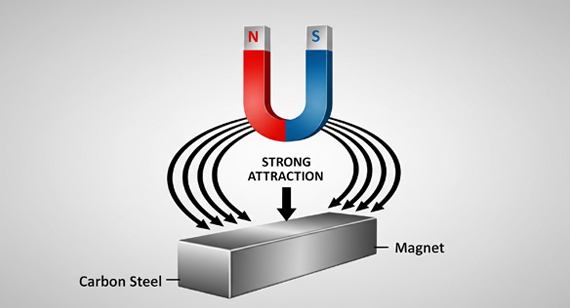
Strongly Ferromagnetic |
Regarding the heat treatment of high carbon steel, there is a very critical logic that needs to be clarified:
The higher the carbon content of high carbon steel, the higher the final hardness achieved through quenching and tempering. However, high carbon does not mean better hardenability. In fact, for a standard high carbon steel like 1095, only the surface achieves high hardness after quenching and tempering; the core is not fully hardened, resulting in a part that is "hard on the outside and tough on the inside." If you want high carbon steel with high hardenability, only alloying elements such as Chromium (Cr), Nickel (Ni), and Molybdenum (Mo) can promote it. High carbon alloy steels like H13 or D2 can achieve very uniform hardness from the surface to the center.
Reflecting on your application: with standard high carbon steel (without alloying elements), a higher carbon content will give you a part with a harder exterior and a flexible core, making it wear-resistant and shock-resistant. With high carbon alloy steel, the higher the carbon content after heat treatment, the more you will obtain a part that is fully hardened throughout—wear-resistant and strong—but it may become brittle and crack if the impact is too great.
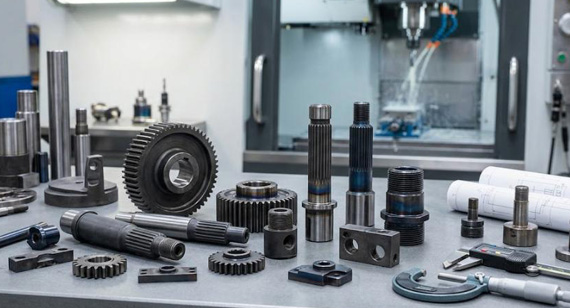
When performing CNC machining, the mechanical properties (annealed) of high carbon steel dictate its level of processing difficulty.
CNC Machining Tips:
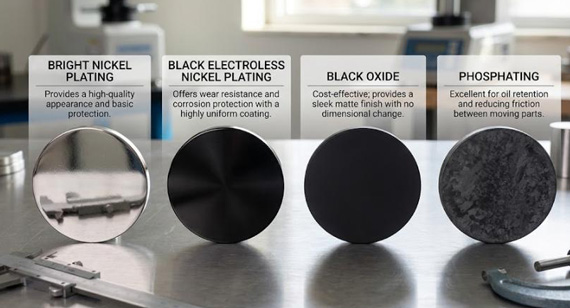
A notable property of high carbon steel is its poor corrosion resistance (high iron and high carbon). Additionally, its cost is generally considered moderate.
Recommended Surface Treatments to Improve Corrosion Resistance:
High carbon steel is the outstanding metal for high-performance engineering, offering quite high hardness and durability. With a deep understanding of its grades and mechanical properties with its heat treatment performance, you will further know whether high carbon steel can be CNC machined into the most reliable components in your assembly.

A client approached us to manufacture a batch of complex punch inserts made from D2 high-carbon, high-chromium tool steel. The requirements were punishing: a tolerance of ±0.01mm and a final hardness of 60-62 HRC.
The main difficulty lies in the material's tendency to warp during heat treatment and its extreme abrasiveness, which often leads to micro-cracking and tool failure during the finishing stages.
Our engineering team implemented a multi-stage approach. First, we performed high-precision roughing in the annealed state, leaving a specific "grinding allowance" to account for potential heat-treat distortion. We utilized TiAlN-coated carbide tools and a high-pressure mist cooling system to manage heat. After vacuum heat treatment, we used hard milling and slow-feed Wire EDM to achieve the final dimensions, ensuring the high carbon structure remained stable and free of surface stress.
The final inserts passed 100% of the ultra-precision inspections with zero micro-cracks. More importantly, the client reported a large increase in service life compared to their previous supplier, reducing their downtime and long-term maintenance costs. They are willing to keep in catch with us VMT CNC machining factory in the future long run.
What are the Differences Between High Carbon Steel and Low Carbon Steel?
High carbon steel has extremely high hardness and strength, but poor ductility and weldability; low carbon steel (carbon content less than 0.3%) is easy to weld and shape but has low strength.
What are the Differences Between High Carbon Steel and Medium Carbon Steel?
Medium carbon steel (0.3-0.6% C) provides a balance of strength and toughness, commonly used for shafts; high carbon steel pursues extreme hardness and wear resistance, used for cutting tools, more wear-resistant bearings, or molds.
Carbon Steel vs Aluminum: What’s the Difference?
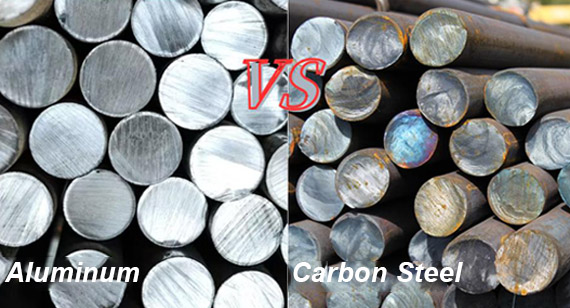
Carbon steel is approximately three times heavier than aluminum and has much higher hardness and strength, but aluminum offers better corrosion resistance and thermal conductivity and excels at lightweight design.
How is High Carbon Steel Produced?
It is produced by refining pig iron, precisely controlling the decarburization process in a converter or electric arc furnace, and adding alloying elements like manganese as needed. Because the decarburization process requires high temperatures, it is more energy-intensive, which pushes the price of high carbon steel (compared to low and medium carbon steel).
High Carbon Steel vs Stainless Steel: What You Need to Know?
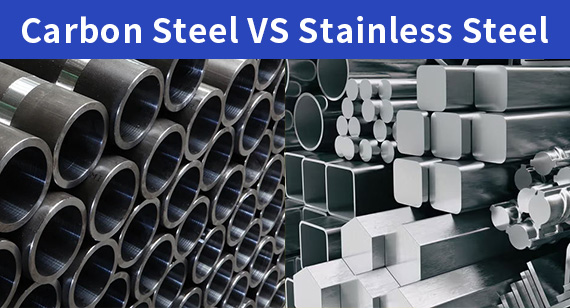
Stainless steel contains a large amount of chromium (10.5%+), which naturally forms a protective film for corrosion resistance; high carbon steel is primarily strengthened by carbon and is not corrosion-resistant, but its maximum hardness after heat treatment is higher than that of ordinary stainless steel.
Is High Carbon Steel Easy to Weld?
No. During the welding process, high carbon steel is extremely prone to cold cracks, hot cracks, and the formation of hard, brittle martensite structures. If you are working on structural components that require welding, it is recommended to change materials.


 +86 15099911516




 Read more