16 years one-stop China custom CNC machining parts factory

Hey there I’m VMT Sam!
With 25 years of CNC machining experience we are committed to helping clients overcome 10000 complex part-processing challenges all to contribute to a better life through intelligent manufacturing. Contact us now
 707 |
Published by VMT at Apr 13 2026 | Reading Time:About 2 minutes
707 |
Published by VMT at Apr 13 2026 | Reading Time:About 2 minutes


Annealing brass is a heat treatment process where you heat brass up and then cool it down—something surprisingly happens you just find the brass more ductile, and you can achieve a much easier processing and machining on it!
This magic can date back to 2000 BC when blacksmiths find out by heating the iron and then cooling it down; they can make their favorite ironware much easier, and later time annealing can apply to other metal including brass to achieve this benefit.
This blog will take you through brass annealing process, equipment, advantages, and most importantly, the annealed brass CNC machining—how gummy nature of annealed brass affects CNC machining, and how we solve this challenges for our clients when ask for perfect mirror-like precision brass parts in the end.
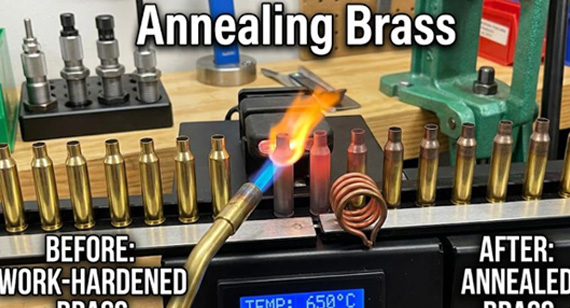
Usually, brass annealing happens in cases that:
You want to relieve the internal stress of brass metal that has gone cold working (like cold rolling, drawing, etc.) and become working hardened—brass may be too hard and prone to brittle after cold-worked.
You want to operate the CNC machining process to the annealed brass with quite fast speed to save machining cost (as the cost counts on machining minutes).
Key Advantages of Brass Annealing:
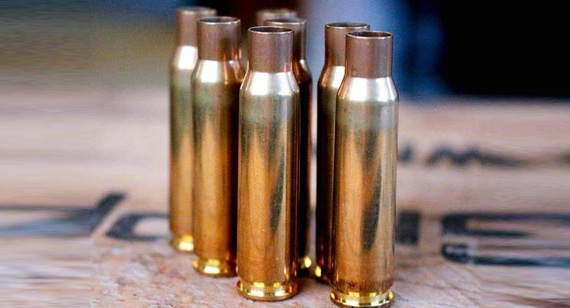
As you have learnt, you just heat brass and then cool it down, and then you complete the annealing. But it can be not that simple for not only the heating and cooling temperature you should master but also brass / brass parts’ thickness affects the anneal.
Here you can follow the standard flows breakdown:
| Key Phase |
Details |
| Target Temperature |
Generally controlled between 250°C and 650°C, depending on the specific brass alloy and your purpose. |
| Soaking Time |
Once the target temperature is reached, hold for 30 minutes to 2 hours to ensure uniform internal molecular restructuring. |
| Rule of Thumb |
For every 25mm (1 inch) of material thickness, increase the soaking time by approximately 30 minutes. |
| Total Cycle Time |
Including the ramp-up (heating) and cool-down phases, industrial batch processing typically takes 3 to 6 hours. |
| Cooling Methods |
Water Quenching: Common in high-volume industry to quickly strip oxide scale. Air Cooling: Preferred for precision CNC parts to achieve maximum dimensional stability. |
You can choose from several devices to anneal brass, and this depends on your needs:
| Annealing Brass |
What’s Your Purpose? |
Recommended Equipment |
| Stress Relieving |
Conducted at lower temperatures (250°C - 350°C). It removes internal stress without significantly altering the material's hardness. | Industrial Electric Furnace / Vacuum Furnace |
| Full Annealing |
Conducted at higher temperatures (500°C - 650°C). Aimed at completely softening the material for maximum ductility. | Vacuum Furnace (Best for preventing surface oxidation) |
| Intermediate Annealing |
Performed between two cold-working stages (e.g., between two draws) to restore plasticity and prevent cracking. | Mesh Belt Continuous Furnace (Ideal for high-volume production) |
| Rapid Annealing |
Suitable for localized treatment or specific sections of a part. Offers extremely high thermal efficiency. | Induction Heating Equipment |
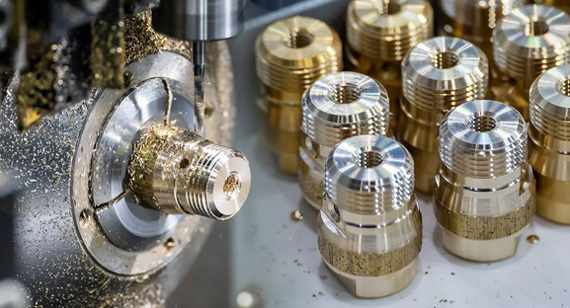
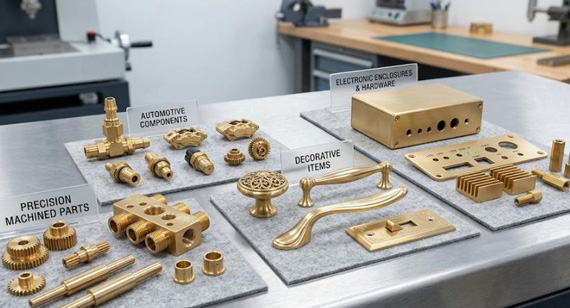
Given the variety of brass alloys—such as corrosion-resistant Naval Brass, lustrous Commercial Brass, and wear-resistant Architectural Brass—this material is highly suitable for CNC machining processes like cutting, drilling, turning, and milling. It can be crafted into automotive components or decorative items, electronic enclosures or precision parts.
Regardless of the specific alloy being machined, brass is available in both annealed (softer) and hard (stiffer) states, both of which can be selected as raw materials for CNC machining.
So, is annealed brass 100% suitable for CNC machining? That depends on the specific requirements:
| Dimension |
Performance |
| Machining Stability |
Excellent. The parts no longer contain internal stresses, meaning they will not warp or deform after being removed from the fixtures. |
| Cutting Challenges |
Risk of Tool Sticking. Annealed brass (especially high-purity brass) becomes very soft, which can produce long, stringy chips that may wrap around the cutting tools. |
| Surface Quality |
Difficult to achieve a mirror finish. Compared to hard brass, extremely soft materials make it harder to reach a high level of surface smoothness during cutting. |
| Annealing Recommendation |
If the primary goal is dimensional stability, it is recommended to use low-temperature stress-relief annealing rather than full annealing. |
Table: Characteristics of Different Brass After Annealing
| Feature |
Common Brass (C2600/C2800) |
Free-Cutting Brass (C3604/HPb59-1) |
Tin/Aluminum Brass (High Strength) |
| Mechanical Properties After Annealing |
Peak Ductility. Hardness drops significantly; cold-work stresses are fully released, making the material "soft." | Excellent Stability. Internal residual stresses are largely eliminated while maintaining moderate hardness. | Strength-Toughness Balance. Maintains high tensile strength while significantly improving toughness and reducing brittleness. |
| CNC Machining Performance |
High Risk of Sticking. Very sensitive to cutting forces; requires high speeds and sharp coated tools (e.g., DLC). | Industry Standard. Excellent chip breaking, highest machining efficiency, and minimal tool wear. | Reduced Resistance. Uniform cutting forces, lower tool wear, and enhanced corrosion resistance. |
| Chip Morphology |
Long, ribbon-like chips; prone to tangling. | Tiny, brittle chips; smooth evacuation. | Short spiral chips; moderate chip-breaking performance. |
| Low-Temp Annealing (Stress Relief) |
230°C - 260°C Soak for 1-2 hours. Prevents warping in precision parts due to stress release. |
200°C - 230°C Soak for 1 hour. Mainly used to eliminate extrusion stress for precise thread dimensions. |
280°C - 330°C Soak for 2-3 hours. Prevents stress corrosion cracking without losing tensile strength. |
The annealing process in brass machining is very much a "two sides of the same coin" scenario. It can facilitate faster processing and cost savings, or it can result in batch scrapping and production delays due to excessive "gumminess" after annealing, which prevents the production of satisfactory mirror-finish parts.
Furthermore, there is a specific art to mastering the temperature and timing of the "heating followed by cooling" sequence in the brass annealing process: you must make the correct choice between low-temperature stress relief annealing and full annealing based on your specific requirements.
If you need your brass part production project to achieve excellent mechanical properties alongside superior production efficiency in complex, high-precision machining, you’re welcomed to send your part drawings to us for rapid, professional consultation and a free quote.
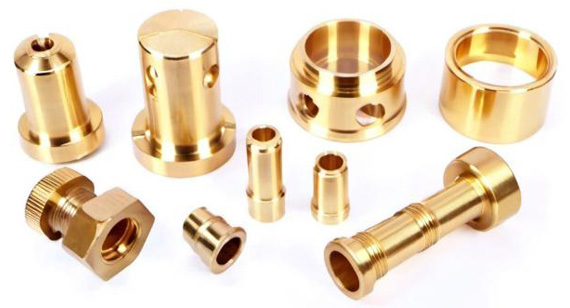
A medical device client required the machining of a batch of C2600 brass high-precision sensor housings.
Because the part had a wall thickness of only 0.8mm and a complex structure, residual stress in the raw material caused immediate deformation after removal from the fixtures during initial trials, resulting in a yield rate of less than 70%.
Additionally, for subsequent assembly toughness, the client required the parts to be in an annealed state. This made the material exceptionally "gummy," leading to long, tangled chips during cutting that caused fine scratches on the surface, making it impossible to achieve the required mirror finish.
After the VMT technical team intervened, a new process flow was developed. First, We moved away from full annealing and instead implemented a precision low-temperature stress relief anneal at 250°C for 2 hours. This maximized the material's cutting hardness while maintaining the necessary toughness. During the CNC machining phase, we utilized Polycrystalline Diamond (PCD) tools paired with ultra-high spindle speeds (above 20,000 RPM). Next, we adjusted the pressure and angle of the cooling system. This high-pressure coolant was able to instantaneously break and flush away the "soft and tangled" chips, preventing them from scratching the finished surface.
Ultimately, we successfully controlled the dimensional tolerances within an ultra-high precision of 0.01mm and resolved the deformation issues of the sensor housing. The surface finish reached Ra 0.4 (mirror grade), directly eliminating the need—and the cost—for subsequent mechanical polishing. The products were delivered on schedule and received high praise from the client.
Q: Is annealed brass harder to CNC machining?
A: Yes, in a way. It becomes "gummy" and soft. This makes it harder to get a smooth finish and easier for the metal to stick to your tools.
Q: CuZn39Pb3 vs. HPb59-1: Which is better after annealing?
A: They are nearly the same. Both have lead, which helps break the chips into small pieces, making them much easier to be machined than "lead-free" brass even after annealing.
Q: Silicon Bronze vs. Regular Brass: What’s the difference?
A: Silicon Bronze is much "tougher." Even when annealed, it produces long, bird-nest-like chips that can tangle around the machine, while leaded brass chips just crumble.
Q: Should I use a full anneal or a "low-temp" stress relief?
A: Always choose low-temp (230°C). It stops the part from warping (bending) after machining but keeps the metal hard enough to get a clean, shiny surface.
Q: What is the biggest problem with annealed brass?
A: Long chips. Because the metal is soft and stretchy, the chips don't break easily. You need very sharp tools and high speeds to keep the cut clean.
Q: Can I use CuZn39Pb2 instead of CuZn39Pb3 for annealed parts?
A: Yes, but be careful. CuZn39Pb2 has less lead, so it becomes even "stickier" than CuZn39Pb3 after annealing. It is great if you need to bend the part, but it is slightly harder to get a perfect surface during CNC milling.


 +86 15099911516




 Read more