16 years one-stop China custom CNC machining parts factory

Hey there I’m VMT Sam!
With 25 years of CNC machining experience we are committed to helping clients overcome 10000 complex part-processing challenges all to contribute to a better life through intelligent manufacturing. Contact us now
 223 |
Published by VMT at Feb 06 2026 | Reading Time:About 2 minutes
223 |
Published by VMT at Feb 06 2026 | Reading Time:About 2 minutes


CuZn39Pb2 (European standard CW612N), commonly known as "Forging Brass" or "Hot Stamping Brass," is a prominent alloy celebrated for its exceptional balance between hot formability and machinability. Its unique properties make it the premier choice for the "precision hot forging followed by high-speed precision machining" to manufacture lots of precision parts.
This alloy is widely utilized in the manufacturing of industrial components such as gears, bushings, and high-precision mechanical parts due to its good machinability and cost-effectiveness; Its moderate electrical conductivity makes it sufficient for many electrical connector uses; But as the evolving environmental regulations in recent days, higher-cost lead-free alternatives are replacing CuZn39Pb2 (which contains approximately 2% lead) in applications involving potable water systems and plumbing fixtures.
This guide will provide a comprehensive understanding of CuZn39Pb2 brass, exploring its chemical composition, key characteristics and properties, applications and cost, environmental considerations, equivalents, and alternative materials.
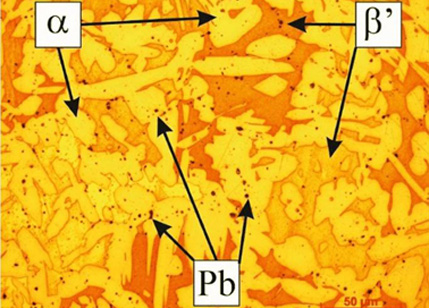
CuZn39Pb2 is a leaded brass alloy characterized by its duplex α+β structure. This heterogeneous biphasic microstructure(The internal structure of the metal is not uniform; instead, it is a blend of two different microstructures) is the reason behind its versatility: the α-phase ensures stability, toughness, and corrosion resistance, while the β-phase provides excellent plasticity at high temperatures for forging; the finely dispersed lead particles throughout the α+β structure serve as a lubricant to ensure excellent performance during secondary machining operations.
Here Highlighting Key Characteristics of CuZn39Pb2 Brass:
CuZn39Pb2 brass composition is simple and primarily composed of copper, 39% zinc, approximately 2% lead as its name suggests. Below table shows CuZn39Pb2 brass chemical composition and each elements’ role:
Table 1: Chemical Composition of CuZn39Pb2 Brass
| Element |
Content (Weight %) |
Role |
| Copper (Cu) |
59.0 – 60.0% | Ensures base corrosion resistance and conductivity |
| Zinc (Zn) |
Remainder (~39%) | Provides strength |
| Lead (Pb) |
1.6% – 2.5% | Internal lubricant for easier cutting or machining |
| Iron (Fe) |
≤ 0.3% | Controlled impurity |
| Aluminum (Al) |
≤ 0.05% | Controlled impurity |
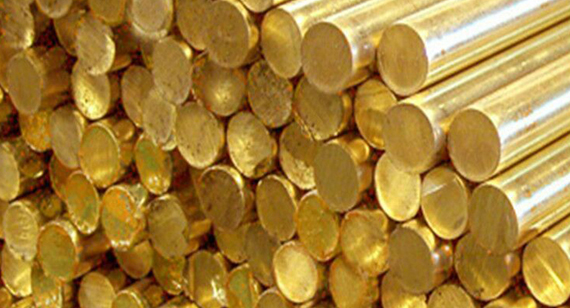
CuZn39Pb2 has a typical dark yellow or golden yellow color with good thermal conductivity, moderate electrical conductivity, and a relatively high expansion coefficient (dimensional stability may be considered when designing the parts). You can find its specific physical properties in below table:
Table 2: Physical Properties of CuZn39Pb2 Brass
| Property |
Value |
Unit |
| Density |
8.44 | g/cm³ |
| Melting Range |
880 – 910 | °C |
| Thermal Conductivity (20°C) |
113 | W/(m·K) |
| Electrical Conductivity |
~15 MS/m | (Approx. 24–28% IACS) |
| Coefficient of Expansion |
20.9 | 10⁻⁶/K (20-200°C) |
| Magnetism |
Non-magnetic | - |
The mechanical properties of CuZn39Pb2 brass primarily depend on its temper (delivery state), which is determined by whether the material has undergone extrusion, cold drawing, or forging. For CuZn39Pb2 brass’ mechanical properties, you can check in the following:
Strength and Ductility
The mechanical strength of CuZn39Pb2 is positioned at the medium-to-high level among brass alloys. Its performance varies according to the degree of work hardening, categorized by temper designations such as R360, R430, and R500. In procurement or design, the following suffixes are commonly specified:
High-Temperature Mechanical Properties (Hot Forging Performance)
The most outstanding mechanical characteristic of CuZn39Pb2 occurs within the 650°C to 750°C temperature range:
Fatigue and Impact Properties
Shear Strength
The shear strength typically ranges from 60% to 70% of the tensile strength, roughly 220 - 320 MPa. This serves as a critical reference index for designing threads, fasteners, and shear pins.
A critical point for CuZn39Pb2 uses in recent days is the restriction of lead in drinking water systems. Under US regulations (SDWA & NSF/ANSI 372), the weighted average lead content for pipes and fittings must be < 0.25% (In this range can be called lead-free).
Cost of CuZn39Pb2 includes the material price and manufacturing cost. The price of CuZn39Pb2 fluctuates in real-time based on the market prices of its base metals, copper and zinc. It is also influenced by the supply form (rods, plates, etc.) and order volume. Generally, it is categorized as a medium-cost brass alloy.
Compared to Lead-Free Brass:
CuZn39Pb2 is typically more economical than lead-free alternatives (such as silicon brass CW724R). Furthermore, due to its lead content, CuZn39Pb2 offers superior machinability. When considering the total processing cost—which includes significantly reduced tool wear and shorter cycle times—CuZn39Pb2 holds a clear competitive advantage in high-volume production.
Compared to Pure Copper:
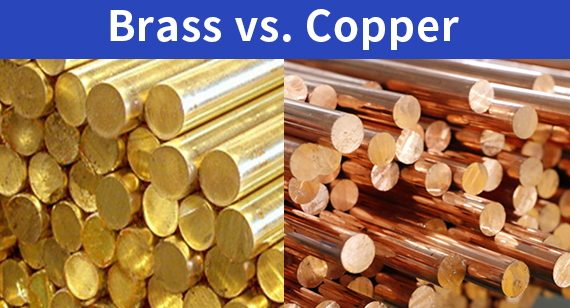
CuZn39Pb2 is considerably cheaper than pure copper. This is primarily because zinc is much less expensive than copper, and CuZn39Pb2 contains a substantial amount of zinc (approximately 39%).
Compared to Other Complex Brass Alloys:
The chemical composition of CuZn39Pb2 is relatively straightforward. Unlike specialized alloys, it does not contain expensive alloying elements (such as tin, nickel, or high amounts of silicon), making its market price more accessible and predictable.
While CuZn39Pb2 is a non-heat-treatable alloy—meaning its hardness cannot be increased through traditional "quenching and tempering"— but other specific thermal treatments are essential to manage material stability and formability. These processes are suggested for specific manufacturing stages:
Forging Preheat (650°C–750°C) for Pre-Forming Stage
This is required specifically before hot forging or hot stamping operations. At this temperature, the CuZn39Pb2 brass becomes highly plastic, which allows the material to flow into intricate mold cavities, achieving complex shapes without the risk of cracking.
Soft Annealing (450°C–550°C) for Inter-Processing Stage
This is used when the material has become too hard or brittle due to heavy cold working (such as deep drawing or severe bending). The process reduces the CuZn39Pb2 hardness and restores its ductility, allowing for further deformation without structural failure.
Stress Relieving (250°C–350°C) for Post-Processing Stage
It belongs to a final step performed after machining or light cold forming. This is a safety measure to eliminate residual internal stresses. It is highly recommended for precision parts to prevent Stress Corrosion Cracking (SCC), which can occur unexpectedly when the brass is exposed to humid or ammonia-rich environments.
Forming
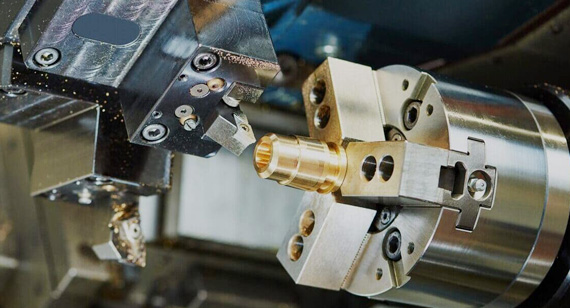
Thanks to its good corrosion resistance, thermal conductivity, surface finish, excellent machinability and hot forming ablity, CuZn39Pb2 brass is widely used across many applications such as:
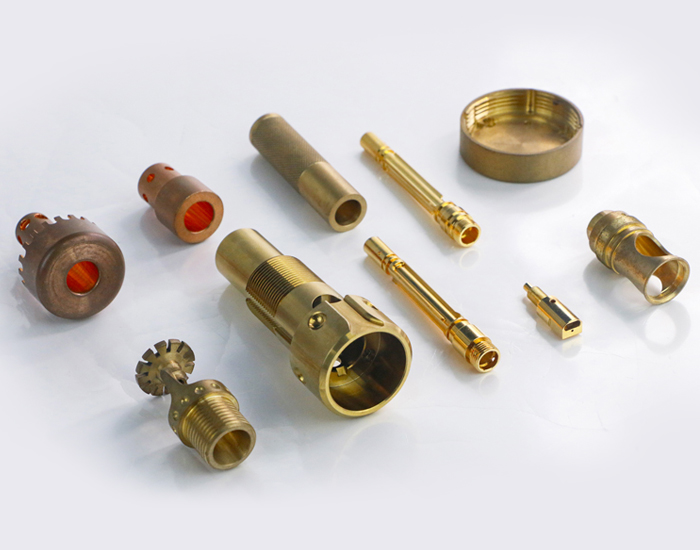
Terminals, high-current connectors, and AC motor components.
Switchgear components and electrical bracketry where non-magnetism and moderate conductivity are required.
Fuel system sensors, fuel injection rails, and air conditioning manifold blocks.
Brake system hose endings and pneumatic connectors for commercial vehicles.
Precision Instruments
Clock and watch internal gears, lock cylinders, and high-quality hardware.
Industrial & Fluid Control
HVAC & Refrigeration
Depending on your regions , you may find the following equivalents of CuZn39Pb2 brass:
Table 3: Equivalents of CuZn39Pb2 Brass
| Standard |
Designation |
| European (EN) |
CW612N |
| USA (ASTM) |
C37700 |
| Japanese (JIS) |
C3771 |
| British (BS) |
CZ129 |
| Chinese (GB) |
HPb59-1 / HPb59-2 |
| International (ISO) |
CuZn39Pb2 |
| German (DIN) |
2.0380 |
| French (AFNOR) |
CuZn39Pb2 / Uz39Pb2 |
While environmental regulations of CuZn39Pb2 brass have narrowed its use in the drinking water sector, its outstanding forging plasticity and high-speed machining efficiency make it irreplaceable for industrial, automotive, and electrical engineering. By applying proper stress-relief annealing, you can ensure the long-term reliability of these high-performance brass components.

A client approached VMT CNC Machining Factory with a high-precision hydraulic manifold project that was originally designed using 316 Stainless Steel. The production faced two major bottlenecks: extremely slow cycle times and frequent tool failures due to the material's toughness. These factors led to high unit costs.
The VMT Solution:
The Result:
What is the difference between CuZn39Pb2 and CuZn39Pb3?
The primary difference lies in lead content and processing focus: CuZn39Pb3 (CW614N) has higher lead for peak high-speed machining efficiency, while CuZn39Pb2 (CW612N) has slightly less lead to provide superior hot-forging and stamping properties. CW612N is the preferred choice when complex shapes must be forged before machining.
Is CuZn39Pb2 magnetic?
No, CuZn39Pb2 is essentially non-magnetic.This makes it an ideal material for electrical connectors and precision instruments that must operate without magnetic interference.
Can I weld this CuZn39Pb2 alloy?
Welding is generally not recommended for CuZn39Pb2 due to its high lead and zinc content, which can cause porosity and toxic fumes. If joining is required, brazing or soldering are the preferred methods as they operate at lower temperatures and maintain the structural integrity of the brass.
Does CuZn39Pb2 brass meet RoHS requirements?
CuZn39Pb2 contains approximately 2% lead, which exceeds the general 0.1% limit. However, it currently falls under specific RoHS exemptions (such as Exemption 6c for copper alloys containing up to 4% lead), though you must monitor ongoing regulatory updates as these exemptions are periodically reviewed.
How do I prevent my CuZn39Pb2 brass parts from cracking over time?
To prevent Stress Corrosion Cracking (SCC), parts should undergo a stress-relieving heat treatment (250°C - 350°C) after machining or cold forming. This process eliminates residual internal stresses that would otherwise lead to spontaneous cracking when exposed to moisture or ammonia.
What is its machinability rating?
CuZn39Pb2 has an excellent machinability rating of approximately 85% to 90% relative to the industry-standard Free-Cutting Brass (CW614N). The lead content acts as a chip-breaker, ensuring short, brittle chips and a high-quality surface finish with minimal tool wear.


 +86 15099911516




 Read more