16 years one-stop China custom CNC machining parts factory

Hey there I’m VMT Sam!
With 25 years of CNC machining experience we are committed to helping clients overcome 10000 complex part-processing challenges all to contribute to a better life through intelligent manufacturing. Contact us now
 251 |
Published by VMT at Apr 15 2026 | Reading Time:About 3 minutes
251 |
Published by VMT at Apr 15 2026 | Reading Time:About 3 minutes


For critical alloy components in aerospace, marine engineering, and chemical processing, Inconel 625 and 718 are the two primary high-performance, premium nickel superalloys.
Although both share an FCC crystal structure and a base of over 50% nickel and 15% chromium, they are far from interchangeable. Navigating the nuances in their strength, corrosion resistance, and machinability is essential for making project decisions that align performance requirements with budget and manufacturing feasibility.
This article delivers a deep dive into their chemical compositions, mechanical properties, and CNC machining complexities. We will also break down the key technical differences and share a case study on how our facility successfully transforms these "difficult-to-machine" alloys into precision-engineered parts for our clients.
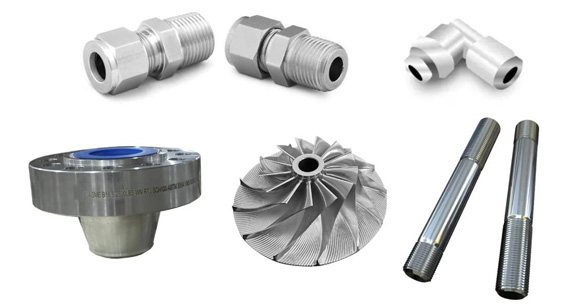
Inconel 625 is a high-performance alloy defined by its exceptional corrosion resistance, superior weldability, and ease of forming.
The greatest advantage of Inconel 718 lies in its ability to achieve ultra-high strength through precipitation hardening, coupled with exceptional high-temperature fatigue resistance and strength retention.
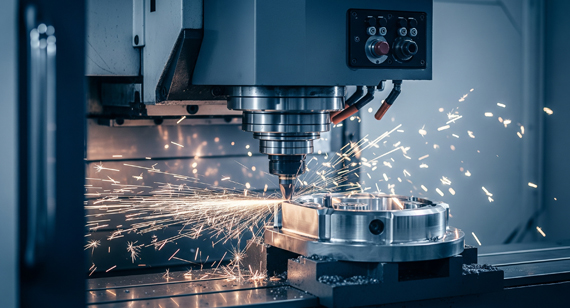
CNC machining is your most effective process for producing high-precision brackets, bolts, gears, and other custom components. It allows your engineers to program and control machinery based on technical drawings for rapid, small-batch production—ideal for cost-effective and high-accuracy prototype validation.
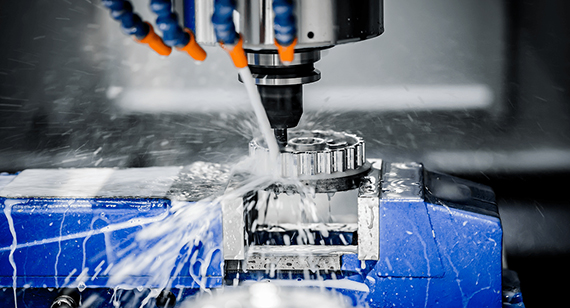
Regarding machinability ratings (relative to 1212 steel), Inconel 625 (Annealed) sits at 10%–15%, while Inconel 718 (Annealed) is even lower at 8%–12%. Both are difficult to machine, but 718 is significantly more taxing; it requires greater cutting forces, and you will notice tool wear occurring much faster than with 625.
If you plan to use CNC machining for your Inconel parts, here are our recommendations for ensuring success while controlling costs:
Typical Applications for Inconel 625
Inconel 625 is primarily used in scenarios requiring superior corrosion resistance, excellent weldability, and ease of forming. Here are a few typical examples:
Typical Applications for Inconel 718
You can use Inconel 718 to manufacture high-strength components, particularly those required to resist fatigue under high temperature and high pressure. Here I list a few the most typical examples:
Inconel 625 and 718 share a similar metallurgical foundation, as both utilize an austenitic matrix with a Face-Centered Cubic (FCC) structure. However, their response to heat treatment differs fundamentally: while 718 can be precipitation-hardened, 625 cannot.
This functional difference is driven by the specific synergy of Nb, Al, and Ti. In Inconel 718, these elements combine with Nickel (Ni) to form discrete, microscopic hardening phases (precipitates) throughout the alloy. To visualize this, imagine hard aggregate dispersed within concrete—these particles provide the structural reinforcement known as "precipitation hardening."
In contrast, while Inconel 625 contains Nb, it lacks the necessary concentrations of Al and Ti (very low content or none) to trigger this strengthening reaction. Consequently, if your application requires a higher hardness level for 625, it must be achieved through cold working (such as mechanical pressing or drawing) rather than thermal processing.
Chemical Composition Table of Inconel 625 Vs Inconel 718
| Element |
Symbol |
Inconel 625 (UNS N06625) |
Inconel 718 (UNS N07718) |
Key Role |
| Nickel |
Ni | 58.0 min (Base) | 50.0 - 55.0 | High-temperature and corrosion resistance. |
| Chromium |
Cr | 20.0 - 23.0 | 17.0 - 21.0 | Oxidation and corrosion resistance. |
| Iron |
Fe | 5.0 max | Balance (Approx. 17%) | 718 has much higher iron content, which lowers cost but slightly affects corrosion resistance. |
| Molybdenum |
Mo | 8.0 - 10.0 | 2.8 - 3.3 | 625 relies on high Mo for matrix strengthening and pitting resistance. |
| Niobium (+Ta) |
Nb (+Ta) | 3.15 - 4.15 | 4.75 - 5.50 | 718 uses high Nb to form strengthening phases for extreme strength (625 cannot). |
| Titanium |
Ti | 0.40 max | 0.65 - 1.15 | Strengthening element for 718. |
| Aluminum |
Al | 0.40 max | 0.20 - 0.80 | Strengthening element for 718; works with Ti to form precipitates. |
| Cobalt |
Co | 1.0 max | 1.0 max | Trace |
| Carbon |
C | 0.10 max | 0.08 max | Trace |
| Manganese/Silicon |
Mn/Si | 0.50 max | 0.35 max | Trace |
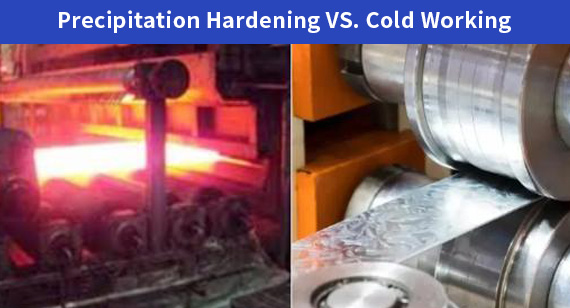
Regarding the mechanical properties of Inconel 625 vs. 718, you should focus on their performance in the annealed state (the stage most suitable for forming and CNC machining) versus their final values once they reach your required strength or hardness—whether that is achieved via cold working (625) or precipitation hardening (718).
| Property (Typical) |
Inconel 625 (Annealed) |
Inconel 625 (Cold Worked) |
Inconel 718 (Annealed) |
Inconel 718 (Precipitation Aged) |
| Tensile Strength |
~830–930 MPa | ~1100–1400 MPa | ~930–1100 MPa | ~1240–1500+ MPa |
| Yield Strength |
~410–510 MPa | ~800–1100 MPa | ~480–600 MPa | ~1030–1200+ MPa |
| Elongation (%) |
~45% – 60% | ~5% – 20% | ~45% | ~12% – 25% |
| Hardness |
~150–220 HB | ~30–40 HRC | ~20–25 HRC | ~36–48 HRC |
| Fatigue Strength |
Excellent (for low stress) | High | Moderate | Superior (High Cycles) |
| Ductility |
Very High | Low | High | Moderate |
The physical properties of Inconel 625 and 718 are quite similar. But it is worth noting that 718 is slightly lighter, offers better thermal conductivity, and possesses marginally higher rigidity (meaning it is more resistant to elastic deformation).
| Property |
Inconel 625 (UNS N06625) |
Inconel 718 (UNS N07718) |
| Density |
8.44 g/cm³ | 8.19 g/cm³ |
| Melting Range |
1290°C – 1350°C | 1260°C – 1336°C |
| Thermal Conductivity (at 20°C) |
9.8 W/m·°C | 11.4 W/m·°C |
| Specific Heat |
410 J/kg·°C | 435 J/kg·°C |
| Electrical Resistivity |
1.29 μΩ·m | 1.25 μΩ·m |
| Thermal Expansion |
12.8 µm/m·°C | 13.0 µm/m·°C |
| Modulus of Elasticity |
207 GPa | 211 GPa |
| Magnetic Permeability |
< 1.001 (Non-magnetic) | < 1.001 (Non-magnetic) |
In the choice between Inconel 625 vs. 718, your decision must be based on your specific application requirements—weighing factors such as budget, strength, corrosion resistance, weldability, physical weight, and thermal conductivity.
To put it most directly: If your application prioritizes extreme corrosion resistance (such as seawater or chemical processing) or requires complex cold forming and frequent welding, Inconel 625 is the recommended choice.
If your application demands ultra-high strength, high-temperature creep resistance, and fatigue performance under high-pressure conditions (such as aero-engines or high-pressure valves), Inconel 718 is the superior option.

In a recent project, VMT CNC Machining Factory was tasked by an aerospace client to produce a custom batch of Inconel 718 high-precision sensor bases. The core requirements involved complex internal deep holes and a strict 0.01mm tolerance. The primary challenge lay in Inconel 718’s extreme hardness and rapid work-hardening rate—any slight dwell in tool movement would cause the workpiece surface to harden instantly, leading to catastrophic tool wear.
To overcome these obstacles, VMT engineers utilized 5-axis simultaneous CNC machining to ensure multi-sided processing in a single setup, minimizing cumulative tolerances. To address the intense cutting heat, we deployed a 1000 psi high-pressure through-spindle cooling system to flush the cutting point directly, ensuring effective chip breaking and instantaneous cooling.
Furthermore, we implemented a proprietary "Constant Cutting Load" programming algorithm. This ensured the tool maintained a steady feed rate throughout the entire toolpath, strictly eliminating any "idling" or "pausing" to prevent the formation of work-hardened layers at the source.
As a result, we successfully delivered 200 sets of zero-defect finished parts. We consistently maintained a surface roughness within Ra 0.8, eliminating the need for secondary grinding and saving the client significant post-processing time and cost. Additionally, by optimizing the manufacturing workflow, VMT reduced the cycle time per unit by 15%, further lowering overall production costs for our client.
Inconel 625 vs. 718: Are they expensive? Which one costs more?
Both are premium materials, typically costing 3 to 5 times more than 316L stainless steel (good trength and good for marine corrosion resistance). Their high price is driven by a base of over 50% nickel—a costly metal with high market volatility—combined with high chromium and other rare elements. Relatively speaking, Inconel 718 is slightly cheaper at the raw material level because inexpensive iron accounts for about 17% of its composition, and its content of pricey Molybdenum is much lower (only ~3%, compared to ~9% in Inconel 625).
Inconel 625 vs. 718: Is the CNC machining cost high for these parts?
If you are using CNC machining to manufacture precision or complex parts, Inconel 718 will ultimately drive your costs higher than 625. Even in its annealed state (the softest condition), 718 has a higher hardness and will wear down expensive cutting tools much faster. You will spend more on both machining time and replacement inserts—meaning a higher total cost (calculated by machine runtime per minute plus the cost of damaged tooling).
Inconel 625 vs. Inconel 718: Can I still use 718 if my project requires welding?
Inconel 625 offers excellent weldability, but Inconel 718 is difficult to weld, highly taxing on the process, and very expensive. 718 is prone to forming strengthening phases during welding, which leads to cracking. If you must weld 718, it should only be done in the Annealed state with strictly controlled heat input. A full Solution Treatment + Aging cycle must be performed as soon as possible after welding (simply doing the aging is not enough, as the risk of cracking remains high). A more economical and practical method is dissimilar metal welding: using 625 filler wire to weld the 718 base metal (suitable for joints where strength requirements are significant but not extreme).
Inconel 625 vs. Inconel 718: In what scenarios does 625's superior corrosion resistance outperform 718?
625 performs significantly better when handling highly oxidizing acids (such as nitric acid) and chloride-rich environments (such as long-term immersion in deep seawater or salt spray). Because 718 has a higher iron content and lower molybdenum, it is more susceptible to Pitting in these extreme acidic or high-salinity conditions. Simply put, if the part will be in contact with "chemical cocktails" or seawater, 625 is the more reliable choice.
Inconel 718 vs. 625: What can I do to make Inconel 718 more corrosion-resistant?
If you must utilize the high strength of 718 but are concerned about corrosion, you can implement the following surface treatment measures:
Inconel 718 vs. Inconel 625: What are their other common industry names?
In the industry, you may hear them referred to by the following equivalent names:


 +86 15099911516




 Read more