16 years one-stop China custom CNC machining parts factory

Hey there I’m VMT Sam!
With 25 years of CNC machining experience we are committed to helping clients overcome 10000 complex part-processing challenges all to contribute to a better life through intelligent manufacturing. Contact us now
 179 |
Published by VMT at Apr 22 2026 | Reading Time:About 2 minutes
179 |
Published by VMT at Apr 22 2026 | Reading Time:About 2 minutes


2014 aluminum is a high-strength aerospace alloy renowned for its exceptional fatigue resistance, with the T6 temper representing its peak strength achieved through rigorous heat treatment. However, precision components—such as gyroscope brackets, sensor housings, micro-pump bodies, and heat sink assemblies—you can’t rely solely on tensile strength for the needed parts.
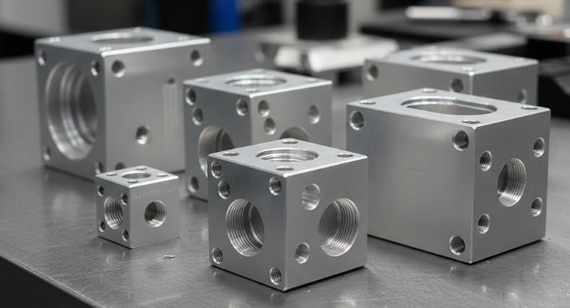
Integrating the modulus of elasticity into your parts’ design process is essential for accurately controlling structural rigidity, resonance, and assembly tolerances. It also plays a pivotal role in managing material spring-back and chatter during CNC machining.
So, what is the modulus of elasticity of 2014-T6 aluminum? The Young's modulus of 2014-T6 aluminum is 73.1 GPa (10,600 ksi). This value defines the material's inherent stiffness and is a critical parameter for calculating deflection and resonance in aerospace applications. Now, we will explore how this modulus of elasticity impacts your part design and CNC machining processes, also providing actionable engineering insights with our factory experiences.
It's not only the 2014-t6 aluminum modulus of elasticity impact the parts design in isolation, but several other parameters are also often involved:
| Property |
Metric (SI) |
Imperial (US) |
| Ultimate Tensile Strength (UTS) |
≥ 483 MPa |
70 ksi |
| Yield Strength (0.2% Offset) |
≥ 414 MPa |
60 ksi |
| Modulus of Elasticity (E) |
73.1 GPa |
10.6Msi |
| Elongation at Break |
10%-13% |
10%-13% |
| Shear Strength |
290 MPa |
42 ksi |
| Fatigue Strength|(at 5x10² cycles) |
124 MPa |
18 ksi |
| Poisson's Ratio |
0.33 | 0.33 |
| Density |
2.80 g/cm3 |
0.101 Ib/in3 |
The Relationship Between Elastic Constants
In precision design, the Young’s Modulus (73.1 GPa) doesn't work alone. To ensure your part functions reliably, one important thing is: you should analyze the relationship between linear stiffness and torsional rigidity.
While 2014-T6's shear modulus is higher than 6061, it is still significantly lower than stainless steel. If your component is subject to high torque, we recommend increasing wall thickness in torsion zones rather than just relying on the material's yield strength. This "stiffness-led" approach prevents micro misalignments that can damage precision parts.
Strength prevents the part from breaking, but the modulus of elasticity (stiffness) prevents it from failing its functional requirements. For 2014-T6 aluminum, managing its 73.1 GPa modulus correctly can prevent a high-performance component from becoming a rejected part.
1.Controlling Structural Rigidity
Precision aluminum components like sensor housings (various accelerometers, gyroscopes, pressure sensors, etc., fixed on the aircraft) are extremely sensitive to microscopic movements.
Because 2014-T6 has about one-third the stiffness of steel (modulus of elasticity)—a part designed with the exact same dimensions as a steel version will bend three times as much under the same load. Even if the part doesn't break, a deflection of just a few microns can cause laser misalignment or mechanical interference.
You need to prioritize stiffness-limited design.
To compensate for the lower modulus, you should increase the part's "Moment of Inertia"—essentially making the geometry thicker or adding structural ribs. This allows you to maintain the lightweight benefits of 2014-T6 while achieving the rigidity required for precision instruments.
2.Managing Vibration and Resonance
In aerospace or high-speed rotating machinery, every part has a "natural frequency" at which it likes to vibrate. If the environment’s vibration matches this frequency, the part will resonate, leading to noise, inaccuracy, or fatigue failure.
You need to intelligently shape the material, pushing the part's natural frequency safely away from the vibration "danger zone" of the engine or environment. This ensures the component remains stable even in high-vibration aerospace settings.
3.Precision Assembly and Preload
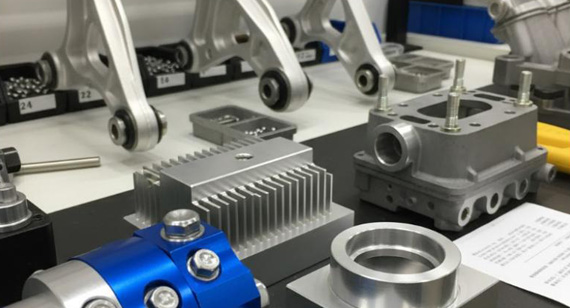
In assemblies that use bolts or press-fits, the material must act like a very stiff spring to maintain "preload" (clamping force). The modulus determines how much the material compresses or stretches when you tighten a fastener.
The lower modulus of 2014-T6 is actually a hidden advantage here. Because it is more "compliant" than steel, it can absorb more thermal expansion or mechanical shifting without losing its grip. You can use 2014-T6 for components that need to maintain a steady clamping force across varying temperatures.
4.Thermal Stability and Internal Stress
This is an advantage that 2014-T6’ lower modulus keeps parts like sensor enclosures maintaining good thermal stability.
Aluminum expands more than steel when it gets hot. However, the stress caused by this expansion depends on both the expansion rate and the material's stiffness (modulus). Since 2014-T6 has a lower modulus, it generates less internal stress when its expansion is physically restricted (for example, a part fitted tightly inside a slot). This reduces the risk of the part permanently warping or "taking a set" after a few heat cycles, ensuring long-term dimensional stability for sensor enclosures.
When machining 2014-T6 in our VMT CNC Machining Factory, we often face issues that its elasticity leads to two primary issues: Deflection (Spring-back) and Chatter (Vibration). These are what we expertise for our clients.
Spring-back Issue When CNC Machining 2014-T6
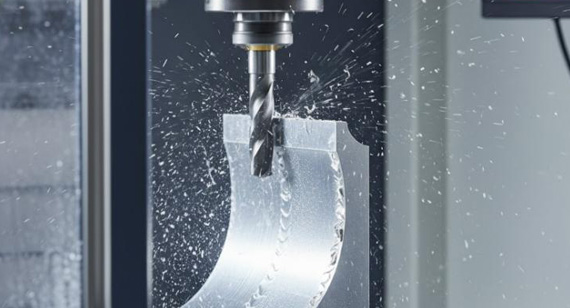
When a cutting tool pushes against a 2014-T6 workpiece, the material tends to "push away" or flex rather than stay rigid. Once the tool passes, the material "springs back" to its original position.
This often leads to parts being slightly oversized or having poor dimensional accuracy, especially in thin-walled sections or long, slender parts.
To solve this issue, we suggest you:
Vibration and Chatter When CNC Machining 2014-T6
Because of the modulus of 2014-T6 (insufficient modulus to withstand heavy cutting loads), it is prone to chatter—a high-pitched vibration during heavy or deep cuts. Chatter leaves a wavy "scalloped" finish on the surface, and then causes rejected products.
If you want to successful machining it, you need to:
Stress Relief and Final Precision
During heavy roughing, the 2014-T6 material stores "elastic energy." When you release the clamps (the vise) after machining, the part relaxes and can change shape—a round hole might suddenly become slightly oval.
You must use high-pressure coolant for "Rough-Relax-Finish" the 2014-T6 parts. This isn't just for heat; it ensures the material's elastic behavior remains consistent throughout the entire cutting process.
Understanding the 73.1 GPa modulus is just the theory. The most important thing is that your partner CNC machining factory can apply it for parts’ manufacturing.
Last year, an aerospace client approached us with a 2014-T6 sensor housing design. The original part suffered significant "spring-back" during milling, resulting in a flatness error of 0.05mm—unacceptable for their high-precision optical alignment.
What have we done for our clients?
In the end, we successfully reduced the flatness error to 0.015mm, meeting the aerospace grade requirements and reducing the client's assembly rejection rate by 92%.
Before finalizing your 2014-T6 design, run through this quick "Stiffness-First" checklist to ensure machinability:
Designing for aerospace is high-stakes. Don't let material elasticity compromise your project's precision.
Ready to move from design to prototype? Submit your 3D files (STEP/IGS) today. Our engineering team will provide a Free DFM & Rigidity Evaluation Report within 24 hours, identifying potential vibration risks and optimization opportunities for your 2014-T6 components.
[Submit Your RFQ for a Free DFM Review]
What are the changes for 2014 aluminum young's modulus at temperature?
The modulus of 2014-T6 decreases as temperature rises, typically dropping from 73.1 GPa at room temperature to approximately 65 GPa at 200°C (390°F).
What is 2014-t6 aluminum modulus of elasticity GPa to psi?
The modulus of elasticity of 2014-T6 is 73.1 GPa, which converts to approximately 10,600 ksi (or 10.6 million psi).
Aluminum stiffness vs strength: are they the same?
No; stiffness(Modulus)measures resistance to elastic bending while strength (Yield/Ultimate) measures the force required to permanently deform or break the material.
What is 2014-T6 vs 6061-T6 modulus of elasticity?
Aluminum 2014-T6 is slightly stiffer at 73.1 GPa compared to 68.9 GPa for aluminum 6061-T6, providing better structural rigidity for precision components.
What are key differences between 2014-t6 aluminum vs 7075-t6 properties?
While 7075-T6 aluminum is generally stronger, 2014-T6 aluminum offers superior fatigue resistance and better performance in specific high-temperature forged aerospace applications.
What is the difference between 2014 and 2014a aluminium?
2014A aluminum is an improved version of 2014 aluminum, meeting specific European/British (BS) aerospace standards. It has been slightly adjusted in terms of iron and silicon content compared to 2014, resulting in slightly better fatigue performance and toughness( Fe: from 0.7% max to 0.5% max; Si: from 0.5% - 1.2% to 0.5% - 0.9%).


 +86 15099911516




 Read more