16 years one-stop China custom CNC machining parts factory

Hey there I’m VMT Sam!
With 25 years of CNC machining experience we are committed to helping clients overcome 10000 complex part-processing challenges all to contribute to a better life through intelligent manufacturing. Contact us now
 280 |
Published by VMT at Mar 22 2026 | Reading Time:About 2 minutes
280 |
Published by VMT at Mar 22 2026 | Reading Time:About 2 minutes


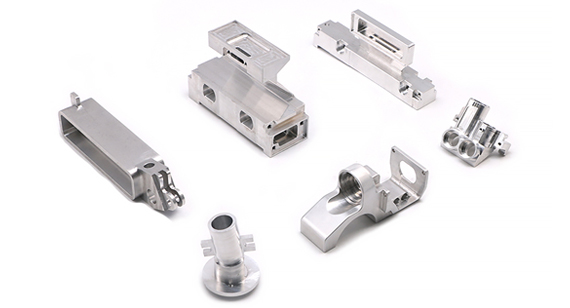
If you are a purchaser or a part manufacturer, you likely know that aluminum alloy stock is not always the same—even for the same aluminum alloy with the identical chemical composition.
To take advantage of aluminum’s low density for lightweight applications, you choose specific variations:
These variations are not random. How do tempers like "T" and "H" fit into the aluminum alloy designation system? What do the suffix numbers represent? How do they affect machinability and determine material properties? This article provides the most comprehensive guide to aluminum temper designations, their effects on manufacturing, and the most popular applications for tempered aluminum.
Aluminum Tempers: A Quick Overview
| O | Annealed |
Softest |
| F | As Fabricated |
After casting, rolling, or extrusion |
| W | Solution Heat-Treated |
None for use |
| H | Strain hardening —— the non-heat-treatable aluminum series —— by cold working like bending, rolling,etc. |
|
| T | Heat treating —— the heat-treatable aluminum series —— to largely enhance the machanical strength. |
|
As a core part of the aluminum alloy designation system, the temper significantly impacts the mechanical properties of aluminum alloys, which in turn dictates how they are processed and used——
The temper suffix determines the success or failure of a part. It directly alters the material's hardness, tensile strength, and stability, influencing its performance during CNC machining, sheet metal fabrication, and other manufacturing processes.
We categorize aluminum tempers into several basic groups, with a primary focus on H tempers and T tempers:
1. Basic Tempers
| Temper Symbol |
Definition |
Machining & Application Advice |
| O |
Annealed (Soft) |
The softest state of aluminum. It has excellent ductility, making it ideal for deep drawing or complex bending. However, it is very "gummy" during CNC machining and is not recommended for high-precision structural parts. |
| F |
As Fabricated |
Material as it comes from casting, rolling, or extrusion without special thermal treatment. Mechanical properties are not guaranteed; usually used for raw blanks or parts with no strength requirements. |
| W |
Solution Heat-Treated |
An unstable state. The material naturally ages (hardens) after solution treatment. It is usually only a middle step in the manufacturing process. |
2. H Tempers: Strain-Hardened (Non-Heat-Treatable Alloys)
Applicable to the 3xxx and 5xxx series non-heat-treatable aluminum alloys. Strength is basically increased through cold working such as cold rolling or cold bending.
| Temper |
Description |
CNC & Manufacturing Insights |
| H1 (H112/H14/H18) |
Strain-Hardened Only. The higher the suffix, the harder the material. | H18 is full-hard (high strength but brittle); H14 is half-hard and the most common choice for sheet metal parts. |
| H2 (H22/H24/H28) |
Strain-Hardened and Partially Annealed. | Offers better elongation than H1, making it less likely to crack during stamping applications. |
| H3 (H32/H34/H38) |
Strain-Hardened and Stabilized. | Prevents aluminum from softening naturally over time. Common in 5052-H32, used widely for sheet metal fabrication and stamped parts. |
| H4 |
Strain-Hardened and Lacquered/Painted. | Typically found in pre-painted aluminum sheets. |
Note: You can refer to the Aluminum Association standards to distinguish between heat-treatable and non-heat-treatable aluminum alloys.
3. T Tempers: Thermally Treated (Heat-Treatable Alloys)
Applicable to the 2xxx, 6xxx, and 7xxx series of heat-treatable aluminum.
| Temper |
Core Process |
Typical Application & Machining Advantages |
| T1 / T2 |
Cooled from fabrication and naturally aged / Annealed. | Often used for simple extrusions. |
| T3 / T351 |
Solution treated + Cold worked + Naturally aged. | T351 is common in 2024 aerospace aluminum. The "51" indicates stress relief by stretching, ensuring almost no deformation after machining. |
| T4 / T451 |
Solution treated + Naturally aged. | Moderate strength and good ductility; suitable for parts requiring subsequent forming. |
| T5 |
Cooled from extrusion + Artificially aged. | Common for 6063 architectural profiles with moderate hardness. |
| T6 / T651 |
Solution treated + Artificially aged. | T6 provides maximum strength. T651 eliminates internal residual stress via stretching, making it the best aluminum temper for precision CNC machining. |
| T7 (T73/T76/T7451) |
Overaged. | T7451 provides excellent Stress Corrosion Cracking (SCC) resistance, a hard requirement for thick-walled 7050 aerospace components. |
| T8 / T851 |
Solution + Cold worked + Artificially aged. | Extremely high strength, found in high-performance alloys like 2219. |
| T9 / T913 |
Solution + Artificially aged + Cold worked. | Maximum hardness achieved through final cold working. |
| T10 |
Cooled + Artificially aged + Cold worked. | Custom tempers for specific mechanical requirements. |
In your lightweight projects, selecting the right alloy and the correct aluminum temper determines if the part can survive its operating environment. Here are the most searched combinations by global buyers and engineers:
| Alloy & Temper |
Industry |
Key Feature (Why choose this?) |
| 7075-T6 |
Aerospace & Defense | Ultimate Strength. Provides the highest strength among common 7075 aluminum tempers for gears and aircraft structures. |
| 7075-T7351 |
Aerospace | Corrosion Resistance. Sacrifices some strength for superior resistance to Stress Corrosion Cracking (SCC). |
| 7050-T7451 |
Aircraft Structures | Thick Sections. Designed for thick-walled parts to balance stress relief and Stress Corrosion Cracking (SCC). |
| 6061-T6/ T651 |
Precision Machining | The All-Rounder. Excellent strength, weldability, and machinability. 6061-T651 is even better for CNC machined parts. |
| 6063-T5 |
Architectural | Extrusion Ease. Best for architectural window frames and heat sinks due to its excellent surface finish (6063 aluminum itself). |
| 5052-H32 |
Marine & Electronics | Corrosion & Formability. Offer great salt-water resistance and can be bent without cracking (due to 5052 aluminum itself). |
| 3003-H14 |
Packaging | Workability. 3003 aluminum tempers like H14 are easy to form into foil or battery shells. |
Understanding aluminum tempers is not only for select the right aluminum, it is also essential for optimizing production costs and ensuring part quality. For non-heat-treatable series (3xxx/5xxx), the H temper determines formability. For heat-treatable series (6xxx/7xxx), the T temper (especially T6, T651, and T73) is about the trade-off between "maximum strength" and "optimum dimensional stability" for the aluminum CNC machining.
If you are unsure which state to choose during product development or have questions about the manufacturing effects on aluminum parts, Contact VMT CNC Machining Factory for more of aluminum CNC machining parts. Our engineering team will provide the most professional advice based on your application (aerospace, automotive, electronics), manufacturing needs (bending, welding, or precision cutting), and budget.

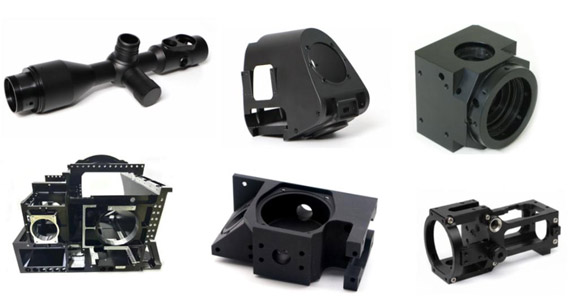
As a factory specializing in CNC Machining Services, we once received a project for high-precision optical instrument parts (optical mounts). This case perfectly illustrates the importance of choosing the correct temper.
Customer Requirement: The customer required the parts to be made of 6061 aluminum alloy and must reach T6 level strength. At the same time, tolerances were strictly controlled within ±0.01mm, and the requirements for flatness were extremely high.
VMT’s Professional Solution: During initial communication, the customer asked if they could first machine the parts in the "Annealed (O state)" and then reach T6 strength through heat treatment. Due to the specificity of optical parts, it was obvious that precision requirements were more important than high strength requirements. We re-confirmed the details with the customer (precision ±0.01mm, surface roughness Ra 0.6). Regarding this, our engineers suggested: directly performing precision CNC machining on 6061-T651 pre-stretched plates.
Final Result: By directly cutting the T651 state material, VMT successfully delivered this batch of optical parts. Not only did the strength meet the standard, but the dimensional stability was excellent, avoiding the risk of scrapping due to secondary heat treatment.
Q1: What is the temper for aluminum?
A: It represents the condition or hardness of the aluminum alloy. It indicates whether the material has been cold-worked, heat-treated, or naturally aged to achieve its final mechanical properties.
Q2: Does aluminum need to be tempered?
A: Yes. Raw aluminum (F or O state) is usually too soft for structural use. Tempering aluminum significantly increases its hardness, yield strength, and fatigue resistance.
Q3: What does a 6061 T6 temper indicate?
A: 6061-T6 indicates the alloy has been solution heat-treated and then artificially aged. It is the "sweet spot" for 6061, balancing high strength with excellent machinability.
Q4: What is H18 temper aluminum?
A: H18 stands for "Full Hard." It is the state where the highest strength is achieved through strain hardening, typically used for foils or sheets where high strength is needed but bending is minimal.
Q5: What is the difference between H19 and H18 aluminum?
A: H19 is "Extra Hard," with a tensile strength even higher than H18. It is typically used for extremely thin, high-strength aluminum foil production.
Q6: What is 6063 T6 aluminum used for?
A: Compared to T5, 6063-T6 has higher strength. it is commonly used for precision extrusions that must bear loads, such as automation equipment frames and sports equipment components.


 +86 15099911516




 Read more