16 years one-stop China custom CNC machining parts factory

Hey there I’m VMT Sam!
With 25 years of CNC machining experience we are committed to helping clients overcome 10000 complex part-processing challenges all to contribute to a better life through intelligent manufacturing. Contact us now
 184 |
Published by VMT at Mar 12 2026 | Reading Time:About 2 minutes
184 |
Published by VMT at Mar 12 2026 | Reading Time:About 2 minutes


2007 aluminum offers excellent machinability and high strength after heat treatment(but it isn't very corrosion-resistant and can be quite brittle under impact), making it a perfect fit for CNC machining parts—like bolts, nuts, screws, and threaded parts—or mechanical components, automatic lathe work, and high-stress parts (static stress) in the automotive and aerospace industries.
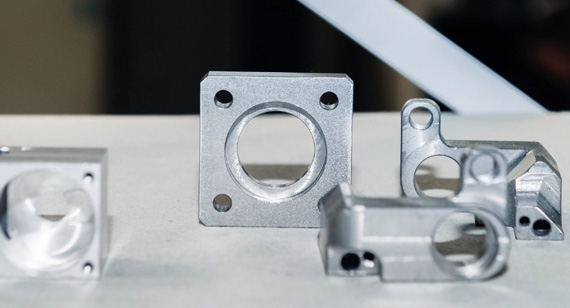
So, you might be wondering—when does 2007 aluminum actually make sense as your engineering choice for these applications?
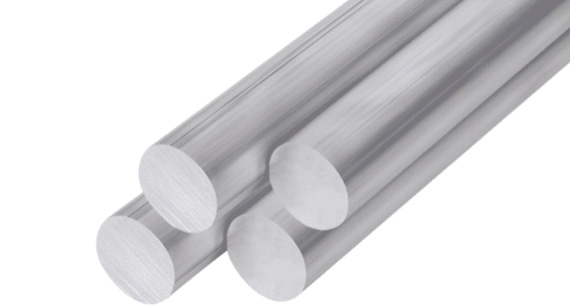
2007 aluminum is one of the alloys under the 2xxx series as named by the Aluminum Association. It goes by several different names depending on the standard system. If you’re looking for AlCu4PbMgMn, Wnr. 3.1645, or UNS A92007, they are actually all the exact same material:
As a 2xxx series (copper-based) duralumin alloy, the main alloying elements of 2007 include:
Key Characteristics of 2007 Aluminum
High Strength: After heat treatment (such as T3, T4, or T4511), its tensile strength far exceeds 6061 and even gets close to some 7xxx series alloys.
(Here You Can Check a Full Datasheet including 2007 Aluminum Composition, Properties, and Heat Treatment States.)
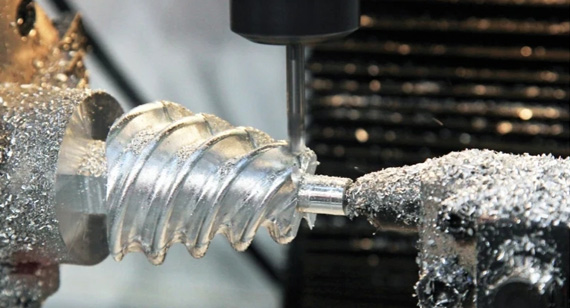
Why would a factory recommend using 2007 aa—which has a higher raw material cost than 6061 aa—when you’re manufacturing tens of thousands of ordinary bolts, nuts, screws, and threaded parts? The answer lies in 2007 aa superior machinability and its ability to achieve "Short-chipping."
In addition, 2007 aluminum has a clear edge in post-processing:
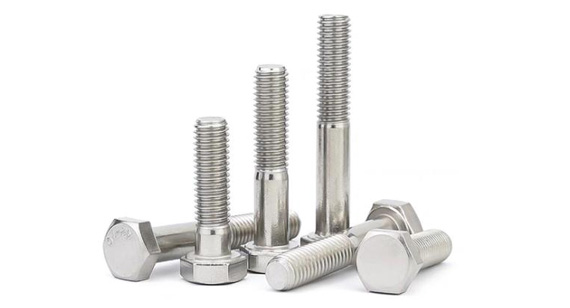
Therefore, when you calculate the "final cost per part" in high-volume production, 2007 aluminum often ends up being cheaper than 6061.
Table 1: Mass Production Cost Comparison: 2007 Aluminum vs. 6061 Aluminum
| Comparison |
6061 Aluminum |
2007 Aluminum |
| Raw Material Cost |
Lower | Higher (approx. 20% more) |
| Machining Speed (RPM/Feed) |
Medium | Extremely High (2-3x faster) |
| Chip Morphology |
Long/Stringy (requires manual clearing) |
Short chips (fully automated) |
| Tool Life |
Average (requires frequent changes) | Long (lead acts as a lubricant) |
| Surface Finish |
Requires post-polishing | Mirror-like finish |
| Final Cost Per Part |
Higher | Lower |
Why would you choose 2007 aluminum when high-performance aerospace alloys like 7075 or 7050 are available for "high-stress parts"? Actually, "high-stress parts" are categorized differently:
7075 / 7050 Aluminum: Handling "Dynamic Stress"
In components like aircraft spars, landing gear brackets, or racing suspension systems, parts are subjected to high dynamic stress and high-frequency vibrations. These situations demand materials with extreme fatigue strength and fracture toughness. In these cases, the brittleness of 2007 would make the part prone to snapping, so 7075 aluminum is a must. (For thicker cross-sections, 7050 aluminum is more recommended).
2007 Aluminum: Handling "Static High Stress"
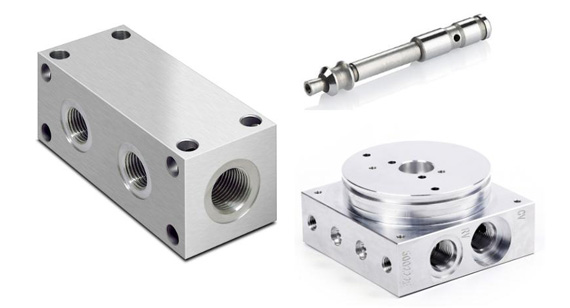
Because of its brittleness, 2007 aluminum is best suited for applications involving static stress when no need to use more expensive 7xxx aluminum:
Anti-Corrosion Protection
2007 aluminum has relatively poor corrosion resistance due to its copper and lead content. For automotive chassis or exposed aerospace parts, sulfuric acid anodizing or chemical conversion coating is a must. If the environment is more strict, you might even need hard-coat anodizing.
Avoid High-Vibration Environments
If your part needs to withstand long-term periodic vibration (like an engine mount), stick with aluminum 2024, 7050, or 7075. The lower fatigue life of 2007 can lead to sudden brittle fractures.
Environmental Restrictions
Since 2007 contains lead (Pb), some industries with strict RoHS compliance (like high-end electronics or certain medical devices) may require "lead-free" free-machining alternatives (like aluminum 2011 is the substitute).
The main reason to choose 2007 aluminum is its ability to produce short chips during high-speed machining. This makes it far more cost-effective than the commonly used aluminum 6061 when CNC machining mass-produced bolts, nuts, screws, and threaded parts. Additionally, aluminum 2007 excels in surface finish and precision for complex threaded structures, and its ability to handle static stress makes it a great, more affordable alternative to aerospace-grade alloys like 7075 aluminum for hydraulic manifolds and valves.

An industrial automation equipment supplier approached VMT CNC Machining Factory to produce 50,000 sensor housings featuring deep holes and precision fine-pitch threads. The customer initially specified 6061-T6 aluminum. During initial small-batch trials, even with high-performance chip-breaking tools and high-pressure cooling, the toughness of 6061 caused occasional "bird-nest" long chips to tangle. This led to scratches on the fine-pitch thread surfaces, causing a defect rate fluctuation between 3% and 5%. To maintain yield, our technical team had to compromise by reducing the feed rate by 20%, which exceeded the target labor time per unit and failed to meet the delivery and cost requirements.
After auditing the part's stress model, VMT's engineering department confirmed that the housing served only as a static protector and seal, involving no dynamic fatigue conditions like high-frequency vibration. We proposed switching the material to 2007 aluminum (AlCu4PbMgMn). By leveraging the 0.8% - 1.5% lead content, the lead particles acted as natural chip breakers during high-speed cutting. This turned the chips into "short powder-like" fragments, solving the chip removal issue and eliminating scratches. For a 50,000-piece order, the cost savings from increased machining efficiency far outweighed the 12% price gap in raw materials.
After re-optimizing the cutting parameters: the cycle time per unit was slashed from 115 seconds to 72 seconds—a 37% boost in production efficiency. Tool change frequency dropped by 55% due to the self-lubricating properties of 2007. Despite higher material costs, the final comprehensive cost per unit fell by 18%, with the defect rate dropping to a near-perfect 99.8%. Plus, the customer received their goods 10 days early.
Q: What is the difference between 2007 and 2024 aluminum?
A: 2024 is also a duralumin, but it contains no (or very little) lead. This gives 2024 better fatigue strength and toughness, making it common for aircraft structural parts. 2007, however, is born for "free-machining" and is much faster to process than 2024.
Q: What is Aluminum 2007-T3?
A: T3 is a common heat-treated state: solution heat-treated, cold-worked, and then naturally aged. In this state, 2007 offers an excellent balance of strength and machinability.
Q: Can 2007 aluminum be welded?
A: Generally, welding is not recommended. 2007 is highly prone to cracking during welding, and the heat-affected zone significantly weakens its mechanical properties. It’s better suited for threaded or mechanical press-fit connections.
Q: Does 2007 aluminum comply with RoHS and REACH standards?
A: Because it contains 0.8% - 1.5% lead (Pb), it often exceeds the general RoHS limit of 0.1%. While there are exemptions for lead in aluminum alloys (up to 0.4%) in some industrial standards, 2007 often sits on the edge. If your product is for the medical or high-end electronics industries, always verify the latest exemption policies. If you must avoid lead, consider 6026 or 2011 (Lead-Free version) as alternatives.
Q: Is the anodizing effect of 2007 the same as 6061?
A: There is a noticeable difference. 6061 produces a very clean, transparent finish after anodizing, perfect for bright decorative colors. 2007, due to its high copper content, results in a lower quality and less transparent oxide film. Anodizing for 2007 is primarily for corrosion protection rather than aesthetics. If you need high visual appeal, you might need painting or special electroless nickel plating.
Q: Can I cold-bend or stamp 2007 aluminum?
A: Highly unrecommended. 2007 is a classic "free-machining duralumin" with very low ductility. If you try to bend a 2007 sheet or bar at a sharp angle, it will likely crack or snap. If you need a part that is both heat-treatable and cold-formable, look into 6061-T4 (manually aged to T6 after forming) or 5052 (medium strength but excellent formability).


 +86 15099911516




 Read more