16 years one-stop China custom CNC machining parts factory

Hey there I’m VMT Sam!
With 25 years of CNC machining experience we are committed to helping clients overcome 10000 complex part-processing challenges all to contribute to a better life through intelligent manufacturing. Contact us now
 135 |
Published by VMT at May 06 2026 | Reading Time:About 3 minutes
135 |
Published by VMT at May 06 2026 | Reading Time:About 3 minutes


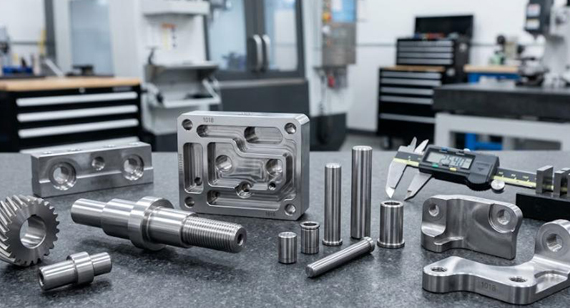
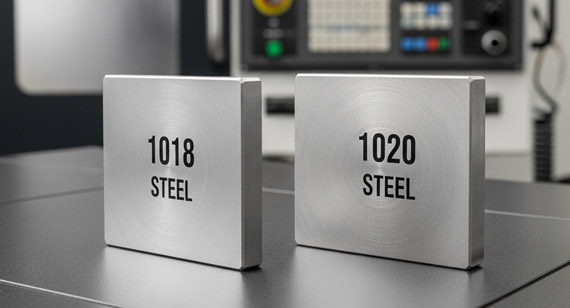
Have you ever faced delivered steel parts being uneven on the surface? Or was delivery time delayed due to choosing inappropriate machining steel to pursue a more cost-saving solution? These issues are closely related to what you will learn about 1018 steel vs A36 steel in this article: 1018 steel can give your precision custom parts a much better surface texture and dimensional accuracy, while A36 steel is cheaper and better for welding and cold forming to make large structural components, but not ideal for CNC machining.
You will understand the key differences between 1018 steel vs A36 steel from the comprehensive cost, whether properties are suitable for the parts or not, and application examples for reference before decision-making. At the very end, we will also share a case of how our factory solved the surface and tolerance requirements of custom spline shafts within an optimal budget for our clients.
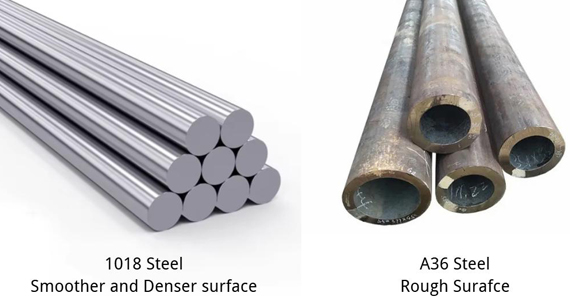
Usually, 1018 steel is supplied in cold rolled form, resulting in a smoother and denser surface. This means if you want your custom parts (e.g., a small actuator housing) to achieve a high-quality electroplated finish or fine spray coating, 1018 steel is the ideal choice for superior surface texture.
(1018 is an AISI standard that specifies chemical compositions to meet specific machining requirements. It is designed for parts that demand precise dimensions and smooth surfaces—qualities that hot-rolled steel cannot provide. Therefore, 1018 is typically further processed through cold rolling after the initial hot rolling stage.)
On the other hand, A36 steel is often supplied in hot rolled form, resulting in a slightly rougher surface. Consequently, A36 steel is not intended for your precision components, but rather for large structural support frames or components used in architecture and bridges.
(A36 is an ASTM standard classified as structural steel. For applications like buildings and bridges, the primary requirements are simply a yield strength of 36,000 psi and a carbon content of no more than 0.26% to ensure weldability. Because of these requirements, hot-rolled A36 is utilized as it offers the most cost-effective and fastest supply solution.)
You may see 1018 steel or A36 steel with their other names in different regions, and here lists these equivalents for your quick check:
| Region |
1018 Steel Equivalent (Precision/Machining) |
A36 Steel Equivalent (Structural/Welding) |
| United States (AISI / SAE / ASTM) |
AISI 1018 / UNS G10180 |
ASTM A36 / UNS K02600 |
| China (GB/T) |
15# / 20# |
Q235B / Q235 |
| Europe (EN / W.-Nr.) |
C15 (1.0401) / C18 (1.0403) |
S235JR (1.0038) |
| Germany (DIN) |
C15 / Ck15 (1.1141) |
St37-2 / St37-3 |
| Japan (JIS) |
S15C / S20C |
SS400 |
| Canada (CSA) |
G40.21 100W / 150W |
CSA G40.21 300W (or 260W) |
| Australia / NZ (AS/NZS) |
AS 1442/1018 |
AS/NZS 3678 Grade 250 |
| South Korea (KS) |
SM15C / SM20C |
SD275 / SS400 |
| Russia (GOST) |
15 / 20 |
St3sp (Ст3сп) |
| United Kingdom (BS) |
080M15 / EN3B |
40B |
1018 Steel vs A36 Steel: Which is More Cost Effective for Your Parts?
Firstly, you can at chemical composition of 1018 steel vs A36 steel:
| Element (Symbol) | AISI 1018 Steel (%) (Precision/Machining) |
ASTM A36 Steel (%) (Structural/Welding) |
| Carbon (C) |
0.15% – 0.20% |
≤ 0.25% – 0.29% (Depending on thickness) |
| Manganese (Mn) |
0.60% – 0.90% |
0.80% – 1.20% (Or up to 1.03% on plates) |
| Phosphorus (P) |
≤ 0.040% (Max) |
≤ 0.040% (Max) |
| Sulfur (S) |
≤ 0.050% (Max) |
≤ 0.050% (Max) |
| Silicon (Si) |
Not specified (Trace) |
≤ 0.40% (Max) (Typically 0.15% - 0.40%) |
| Copper (Cu) |
Not specified |
0.20% (Min) (Optional add-on) |
| Iron (Fe) |
98.81% – 99.26% |
~ 98.0% (Balance) |
It seems that both 1018 steel and A36 steel don’t have expensive alloying elements; therefore, both 1018 steel and A36 steel can be seen as cost-saving steels among steel families.
However, since the actual supply form of 1018 is cold rolled while A36 is the cheaper hot rolled (as we’ve discussed in the first section), the cost of raw material for 1018 steel is obviously higher than for A36 steel.
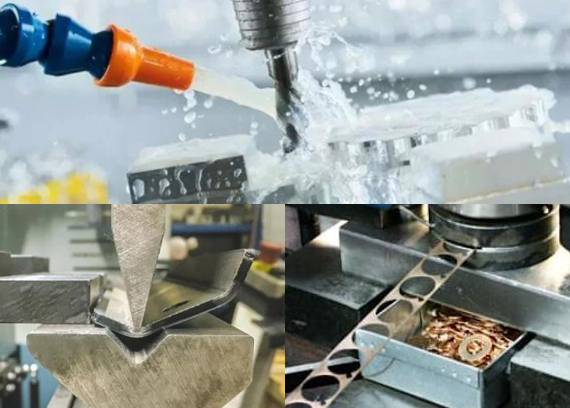
As you have learned, 1018 steel is more suitable for precision and high-tolerance parts, which you can think of as precision CNC machining in your mind.
While A36 steel can be CNC machined into parts theoretically, it is not recommended even though it is more affordable. Because A36 steel has a relatively rough surface, it can’t achieve the smooth surface and precise tolerances needed to meet assembly requirements.
Therefore, you can choose cold forming (such as bending or stamping) to make large structural components. The focus is just on A36’s higher yield strength for heavy loads and good weldability. Because there is no strict precision requirement for A36 components, the manufacturing cost of A36 is consequently lower than that of 1018 steel.
Maintenance Cost of 1018 vs A36 Steel Parts
Both are carbon steels (carbon, iron, and other simple components) with poor corrosion resistance. Therefore, if you want custom steel parts made of 1018 or A36 not to rust easily, you should choose surface protection for them:
But there is no need to worry about a very high cost for the surface protection; they are just simple and common surface protections for 1018 and A36 steel parts. And these are necessary for lower maintenance costs—well-protected ones can last decades if they are not exposed to heavy chemicals, long-term humidity, or marine conditions.
For mechanical strength, hardness, or physical density, etc., you can check the comparison table below; there is not a very big difference between the two structural steels. It is worth mentioning that both 1018 and A36 steel need proper surface finishes for longer longevity of your steel components, because they don’t have corrosion-resistant elements like other alloy steels (e.g., stainless steel has high chromium to form a protective film).
| Property |
AISI 1018 Steel (Cold--Rolled) |
ASTM A36 Steel (Hot-Rolled ) |
| Yield Strength |
53,700 psi (370 MPa) |
36,000 psi (250 MPa) |
| Ultimate Tensile Strength |
63,800 psi (440 MPa) |
58,000 – 80,000 psi (400 – 550 MPa) |
| Elongation at Break |
15.0% |
20.0% – 23.0% |
| Reduction of Area |
40.0% |
~40-50% |
| Brinell Hardness |
126 HB |
119 – 159 HB |
| Modulus of Elasticity |
29,000 ksi (200 GPa) |
29,000 ksi (200 GPa) |
| Density |
7.87 g/cm2 |
7.85 g/cm2 |
| Machinability Rating |
78% (Based on AISI 1212) |
72% (Based on AISI 1212) |
| Corrosion Resistance |
Low (Requires oiling, plating, or painting) |
Low (Requires painting, galvanizing, or primer) |
| Weldability |
Good |
Excellent |
| Relative Cost |
Higher |
Low |
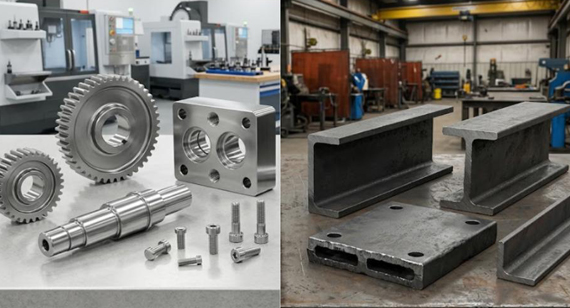
It’s very clear from the previous content that 1018 steel is suitable if you need high precision and a good surface finish (for accurate assembly or a good appearance). A36 steel is suitable if you need large structural components without strict surface or precision requirements, but which may require welding. Here are a few examples for a quick check:
Automation and Heavy Machinery
You should choose 1018 steel rather than A36 steel for robotic arm connection pins, drive shafts, splines, and small actuator housings—as robotic components impose stringent requirements on dimensional stability and surface treatment.
Architecture and Infrastructure
This is when you can choose A36 steel for beam connection plates, embedded components, guardrail supports, and stair tread frames, which is more cost-effective than 1018 steel. (A complete range of A36 section steels, I-beams, and thick plates is available; such components are typically assembled by welding and subjected to heavy-duty spraying or hot-dip galvanizing. The surface roughness of A36 does not affect its final performance under heavy loads).
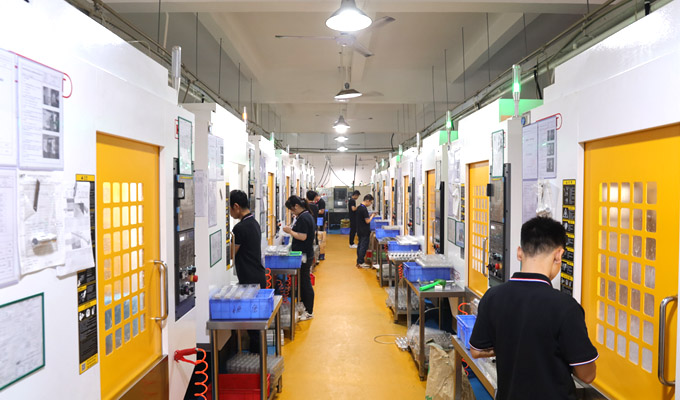
One of our clients in the automation industry recently required 500 custom spline shafts for a high-speed sorting conveyor. To keep initial project costs at a minimum, the client originally planned to use ASTM A36 steel.
However, our engineering team stepped in and suggested a pivot to AISI 1018 cold-rolled steel.
We explained that using hot-rolled A36 would be counterproductive; its "gummy" nature often leads to heavy burrs in spline grooves and a surface roughness that would exceed the required Ra 3.2 limit. Furthermore, the loose tolerances of A36 could prevent the shafts from fitting perfectly with mating gears. We explained that while the raw material cost per kilogram for 1018 is slightly higher, its superior machinability and uniform grain structure would eliminate the need for expensive secondary grinding processes.
The client accepted our recommendation, and we proceeded to optimize the CNC milling parameters specifically for 1018 to ensure every spline was cut cleanly. To finish, we applied a thin black oxide coating to provide essential corrosion resistance without affecting the tight dimensional tolerances.
By switching to 1018 steel, the client achieved an excellent surface texture and a zero-rejection rate during the assembly phase. The shafts fit perfectly, and the conveyor operated smoothly from day one. The client was highly satisfied with our factory’s one-stop solution, leading to a long-term manufacturing partnership.
If your project is all about heavy-duty structures and welding, and there is no need for precision assembly or a smooth surface finish, A36 is your budget-friendly choice. However, if you are designing custom components that require an excellent surface finish and "press-fit" accuracy, 1018 steel is the one that can meet your requirements.
Still not sure which grade is right for your next project? Contact VMT CNC Machining Factory. Our engineers are ready to review your drawings and help you optimize your material selection and part design for the best performance, surface quality, and price for your steel parts.

1008 Steel vs. A36 Steel: What are the Key Differences?
1008 steel has much lower carbon content (around 0.08%) than A36. While A36 is a structural grade meant for strength and welding, 1008 is extremely ductile and is primarily used for deep-drawing or cold-heading applications (like wire or simple brackets)
Can A36 steel be case hardened like 1018?
As you have learned, 1018 is under AISI with stricter chemical composition, so it is predictable for 1018 to be case hardened into a part with hard case but tough core. A36 is a "structural" grade under ASTM standard and its chemical composition (like manganese and silicon levels) can vary between batches, so the case hardening process of A36 is not predictable and stable like 1018.
Why is A36 steel described as "gummy" during CNC machining?
A36 is hot-rolled, meaning it hasn't been "work-hardened" like cold-rolled 1018. During cutting, the soft metal tends to tear and stick to the tool rather than forming clean chips. This also leads to poor surface finishes.
Is 1018 steel weldable if my design requires it?
Yes. 1018 is a low-carbon steel with excellent weldability. You can weld 1018 easily, making it perfect for precision parts that need to be integrated into a larger welded assembly.
How much more expensive is 1018 than A36?
Generally, 1018 cold-rolled steel can cost 20% to 40% more than hot-rolled A36 raw material. But if you consider "total cost"—a smooth finish or tight tolerance is considered; the manufacturing cost often makes 1018 the cost-effective choice.
When should I absolutely choose A36 over 1018?
You can choose A36 for mass and structural support. For example, if you are building a heavy machine base, a large mounting plate that doesn't require precision milling, or building-frame components, choose A36 steel rather than 1018 for a more affordable solution.
The technical information and manufacturing advice shared on the VMT website are for general guidance only. While we strive for accuracy, VMT does not guarantee that the processes, tolerances, or material properties mentioned are applicable to every specific project. Any reliance you place on such information is strictly at your own risk. It is the buyer's responsibility to provide definitive engineering specifications for any production orders. Final specifications and service terms shall be subject to the formal contract or quotation confirmed by both parties.


 +86 15099911516




 Read more