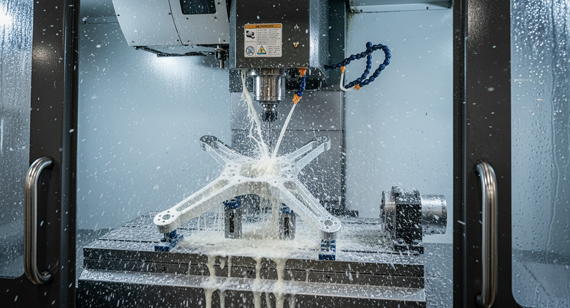
16 years one-stop China custom CNC machining parts factory
Hey there I’m VMT Sam!
With 25 years of CNC machining experience we are committed to helping clients overcome 10000 complex part-processing challenges all to contribute to a better life through intelligent manufacturing. Contact us now
 1501 |
Published by VMT at Jun 03 2026 | Reading Time:About 4 minutes
1501 |
Published by VMT at Jun 03 2026 | Reading Time:About 4 minutes


Many buyers choose China because of its competitive pricing, mature manufacturing ecosystem, and strong CNC machining capabilities. However, finding the right CNC machining parts manufacturer can be challenging.
Some suppliers offer low prices but fail to maintain dimensional consistency. Others may provide quality samples but struggle with mass production. Delayed deliveries, poor communication, and unstable quality control can create significant risks for your project.
This guide explains the key factors engineers, sourcing managers, and OEM brands should evaluate before selecting a CNC machining partner in China.
When choosing a CNC machining parts manufacturer in China, buyers should evaluate eight critical factors: company experience, machining capabilities, quality control systems, engineering support, production capacity, sample consistency, communication efficiency, and industry expertise. A qualified supplier should provide stable quality, fast lead times, DFM support, and scalable manufacturing solutions.
China has become one of the world's largest CNC machining production centers. Modern Chinese CNC machining factories can provide:
For international buyers, this means shorter supply chains, lower manufacturing costs, and access to advanced machining technologies without sacrificing quality.
However, not all suppliers offer the same level of capability. Understanding how to evaluate suppliers is essential.
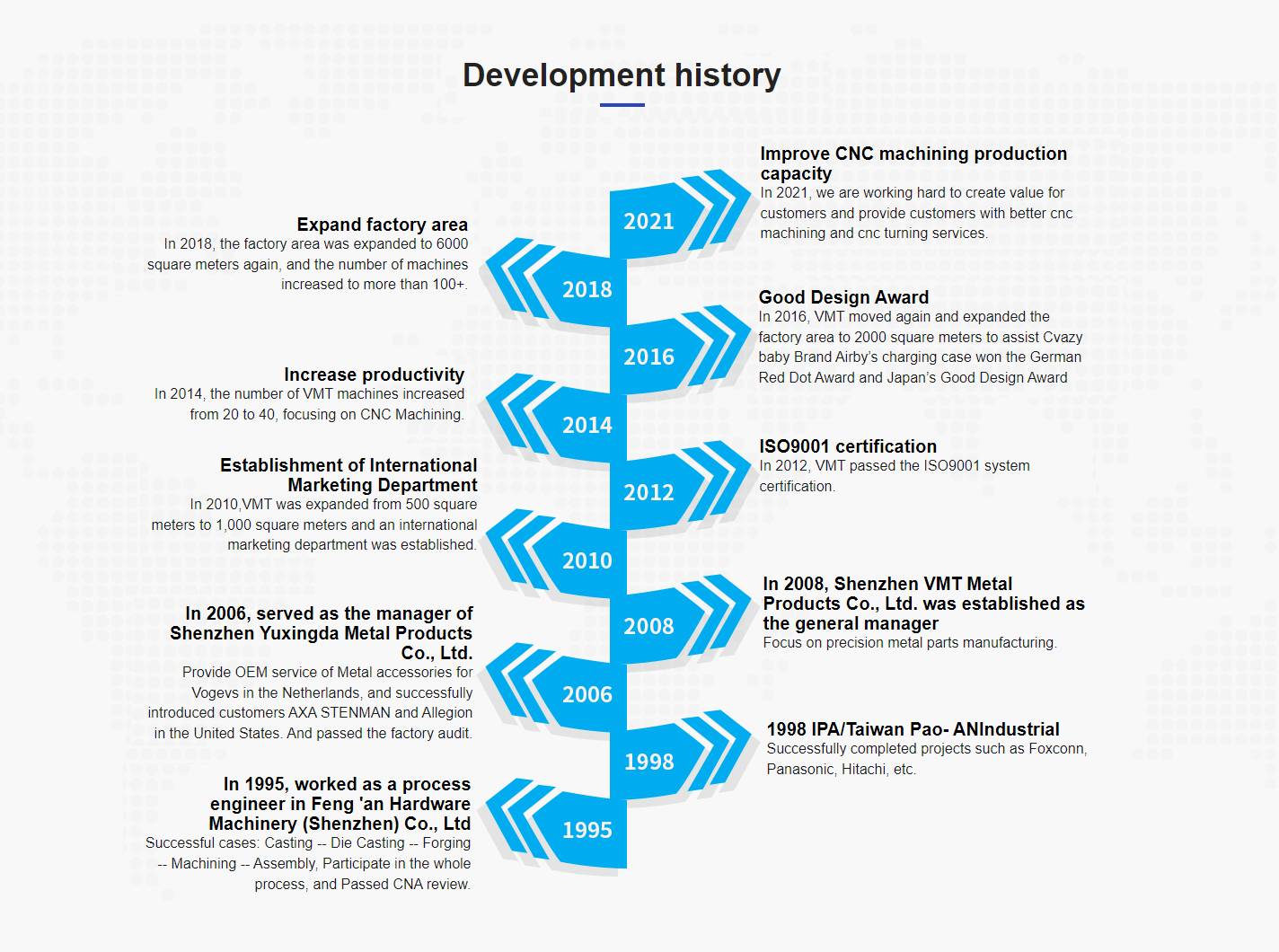
1. Evaluate Company Experience and Industry History
A supplier's years of experience often reflect its ability to solve manufacturing challenges.
A CNC machining manufacturer with more than 10 years of experience has likely handled thousands of projects across various industries, including:
Experienced manufacturers can identify potential production risks early and provide practical solutions before manufacturing begins.
What to Check
2. Assess CNC Machining Capabilities
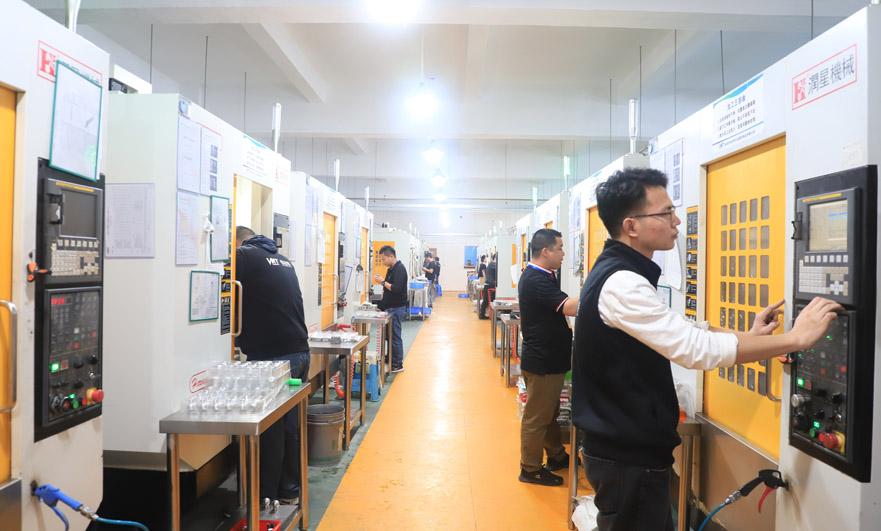
The most important factor is whether the supplier has the equipment required for your project.
Different parts require different manufacturing technologies.
Essential Equipment
A supplier with diverse equipment can manufacture complex parts more efficiently while maintaining tighter tolerances.
Questions to Ask
3. Review the Quality Control System
Quality control directly affects product performance, assembly accuracy, and customer satisfaction.
A reliable CNC machining factory should have a complete inspection process covering every manufacturing stage.
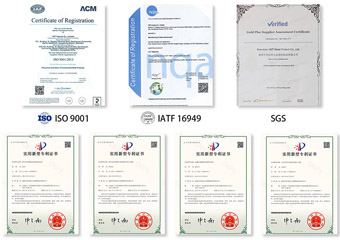
Inspection Equipment
Without a robust quality system, production consistency becomes difficult to maintain.
4. Evaluate Engineering and DFM Support
Many projects fail because the design is difficult or expensive to manufacture.
Professional CNC machining manufacturers provide DFM (Design for Manufacturing) feedback before production begins.
Engineering support is often the difference between a successful project and costly redesigns.
5. Verify Production Capacity
Many suppliers can produce prototypes, but not all can handle large-scale production.
Buyers should understand whether the supplier can support future growth.
Capacity Evaluation Checklist
A scalable manufacturing partner can support projects from prototype to mass production without changing suppliers.
6. Request Samples and Small-Batch Production
Before placing a large order, always start with prototypes or pilot production.
Sample parts reveal a supplier's true manufacturing capabilities.
Key Evaluation Points
Consistent sample quality usually indicates a stable manufacturing process.
7. Assess Communication and Project Management
Communication problems are among the most common reasons for project delays.
A professional supplier should provide:
Strong communication helps reduce misunderstandings and improves project efficiency.
Good Suppliers Typically Provide
8. Review Industry Experience and Customer Cases
A supplier familiar with your industry can significantly reduce project risk.
For example:
Reviewing customer cases helps determine whether the supplier has successfully completed projects similar to yours.
Red Flags When Selecting a CNC Machining Supplier
Avoid suppliers that:
These warning signs often lead to quality issues and delivery delays.
Conclusion
Choosing the right CNC machining parts manufacturer in China requires more than comparing prices.
Buyers should evaluate manufacturing experience, machining capabilities, quality systems, engineering support, production capacity, communication efficiency, and industry expertise.
A reliable CNC machining partner can improve product quality, shorten lead times, and support long-term business growth.
If you are looking for a trusted CNC machining manufacturer in China, working with an experienced supplier that offers complete engineering and manufacturing support can help ensure project success from prototype to production.
China produces over $2 trillion in manufactured goods annually, and CNC machining sits at the core of that output. The challenge in sourcing is not finding a shop — it is finding one that delivers the exact tolerance, finish, and consistency the engineering drawing demands.
This CNC machining company list profiles ten top-rated precision machine shops in China worth shortlisting. Each entry includes location, scale, core capabilities, and what distinguishes the company from the dozens of other B2B CNC machining parts suppliers claiming the same technical specifications.
| Rank |
Company |
City |
Founded |
Employees |
| 1 | VMT CNC Machining Factory |
Shenzhen | 2010 | 51–200 |
| 2 | WayKen |
Shenzhen | 2002 | 51–200 |
| 3 | Yijin Hardware |
Shenzhen | 2003 | 51–200 |
| 4 | PARTMFG |
Shenzhen | 2010 | 51–200 |
| 5 | RapidDirect |
Shenzhen | 2009 | 51–200 |
| 6 | AT-Machining |
Shenzhen | 2007 | 10–49 |
| 7 | Gensun Precision |
Dongguan | 2006 | 51–200 |
| 8 | Beijing Jingdiao |
Beijing | 1994 | 1,000+ |
| 9 | 3ERP |
Zhongshan | 2010 | 11–50 |
| 10 | Star Rapid |
Zhongshan | 2005 | 51–100 |
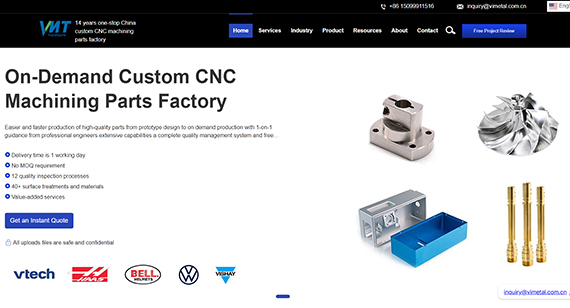
City: Shenzhen | Founded: 2010 | Employees: 51–200
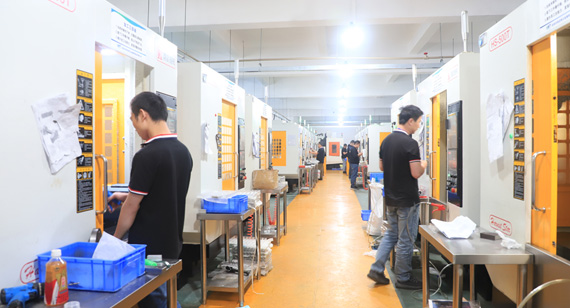
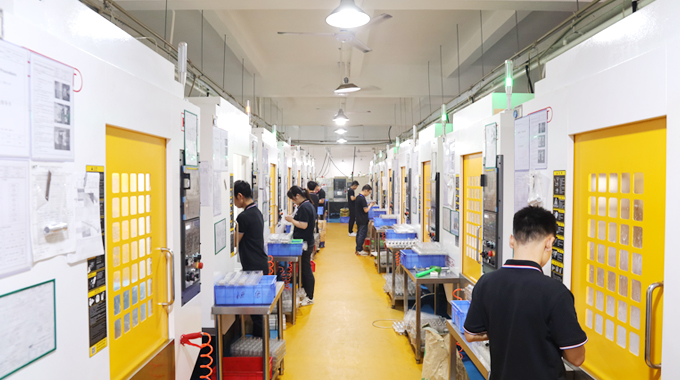
VMT CNC Machining Factory is a Shenzhen-based direct-factory CNC machining supplier with 100+ machines and both IATF 16949 and ISO 13485 certifications. Operating on a strict single-responsibility manufacturing model, the company eliminates all subcontractors and trading intermediaries. Every component is machined, finished, and rigorously inspected under one roof, ensuring total quality control and accountability from start to finish.
Over 16 years, VMT has built technical depth across four industry verticals where precision requirements intersect with demanding surface treatment specifications:
Core Services:
Key Advantages:
Why VMT ranks first
Most CNC shops on this list excel at a single vector—be it digital speed, volume capacity, or exotic materials. VMT stands out by integrating multi-industry compliance, in-house surface treatment, and direct-factory accountability under one roof. For procurement teams previously plagued by quality drift between separate machining and finishing vendors, this unified single-roof model eliminates the accountability gaps that frequently cause project delays.
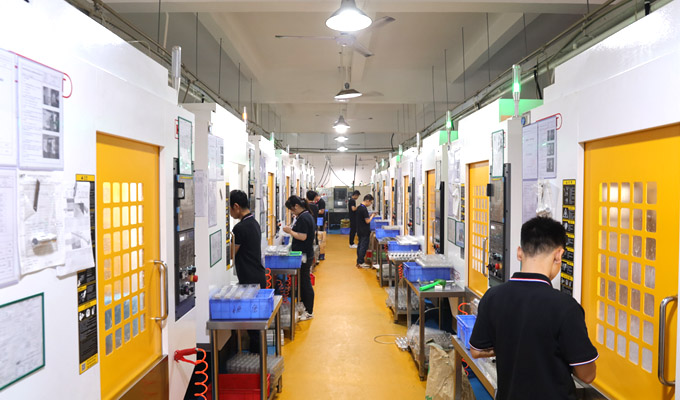
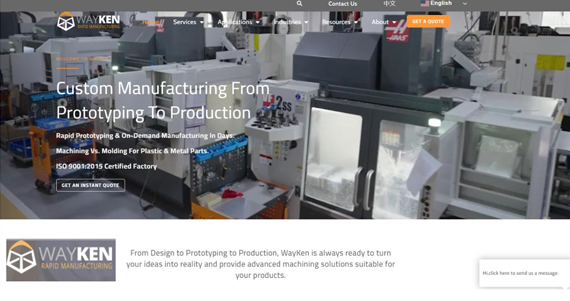
City: Shenzhen | Founded: 2002 | Employees: 51–200
WayKen is a well-established rapid prototyping and low-volume manufacturing specialist. With over two decades of experience, they excel at managing the full pipeline from initial design review through functional prototyping to pilot production runs.
Core Services
Key Advantages
Best For
City: Shenzhen | Founded: 2003 | Employees: 51–200
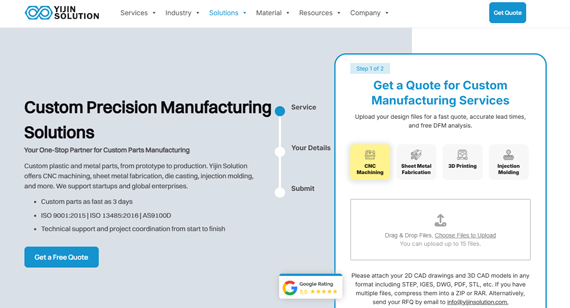
Yijin Hardware operates a large-scale Shenzhen facility spanning over 25,000 square meters. Equipped with over 880 CNC milling, turning, and multi-axis machines, they specialize in transitioning parts seamlessly from prototyping stages into heavy mass production.
Core Services
Key Advantages
Best For
City: Shenzhen | Founded: 2010 | Employees: 51–200
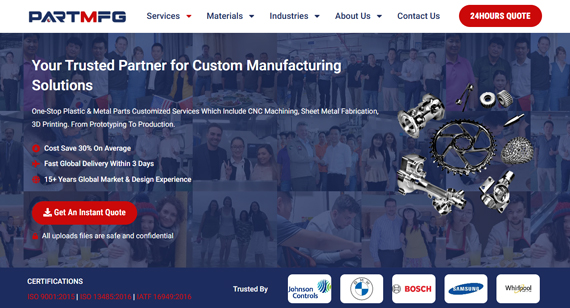
PARTMFG positions itself as a strictly DFM-driven CNC parts manufacturer. They emphasize upfront engineering support, optimizing complex designs for manufacturability before tooling or cutting begins across their 50,000-square-foot facility.
Core Services
Key Advantages
Best For
City: Shenzhen | Founded: 2009 | Employees: 51–200
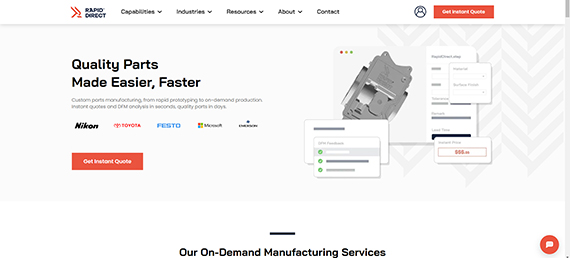
RapidDirect is a digital-first rapid prototyping company that built its reputation on an instant online quotation platform. Their system seamlessly combines automated cloud-based DFM analysis with real-time pricing to streamline traditional RFQ workflows.
Core Services
Key Advantages
Best For
City: Shenzhen | Founded: 2007 | Employees: 10–49
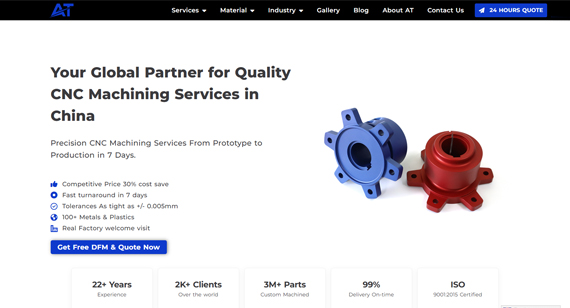
AT-Machining is a specialized precision CNC shop offering tight-tolerance machining (down to ±0.005 mm) with a specialized material catalog exceeding 100 choices, including superalloys, advanced ceramics, and industrial composites.
Core Services
Key Advantages
Best For
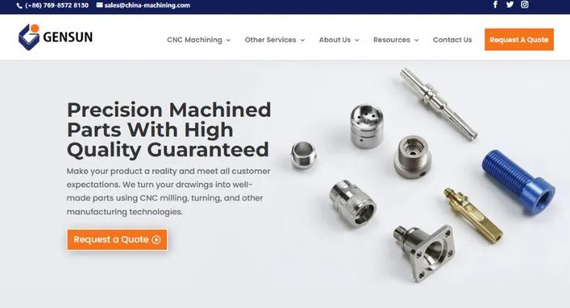
City: Dongguan | Founded: 2006 | Employees: 51–200
Gensun Precision operates out of Dongguan’s industrial manufacturing hub, specializing in custom prototypes and low-volume production for international markets. They uniquely combine traditional CNC machining with raw precision casting and extrusion capabilities.
Core Services
Key Advantages
Best For
City: Beijing | Founded: 1994 | Employees: 1,000+
Beijing Jingdiao is China's premier manufacturer of high-precision CNC engraving and milling machine tools. They operate a specialized machining services division that leverages their own state-of-the-art machinery and proprietary CAD/CAM software.
Core Services
Key Advantages
Best For
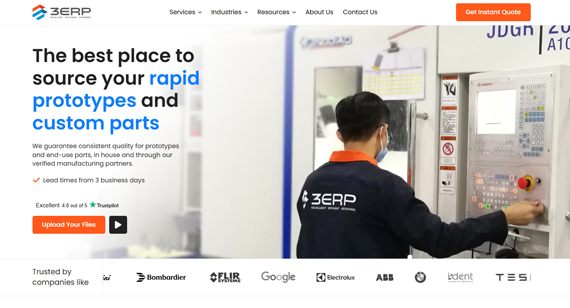
City: Zhongshan | Founded: 2010 | Employees: 11–50
3ERP runs a focused rapid prototyping and low-volume manufacturing operation in Zhongshan. They specialize in getting functional prototypes into engineers' hands quickly by seamlessly deploying multi-process engineering workflows.
Core Services
Key Advantages
Best For

City: Zhongshan | Founded: 2005 | Employees: 51–100
Star Rapid combines CNC machining, injection molding, and rapid tooling from its custom Zhongshan facility. They focus heavily on close international client involvement, assigning dedicated engineering teams to guide projects from design review through to final inspection.
Core Services
Key Advantages
Best For
The global CNC machining market is crossing the $23 billion milestone in 2026, moving along a steady 6.1% CAGR trajectory through 2029. Growth is heavily driven by skyrocketing demand for ultra-precision, complex components in LiDAR sensing, autonomous driving, medical surgical devices, and aerospace systems.
Asia Pacific remains the dominant export region, with China leading in absolute manufacturing output. This competitive pressure is forcing top-tier shops to differentiate. Standard tolerances, digital quoting platforms, and basic multi-axis capabilities have become baseline expectations. The shops standing out in 2026 are those deploying domain-specific engineering expertise — such as optical-grade surface handling, medical-implant certifications, and automated DFM.
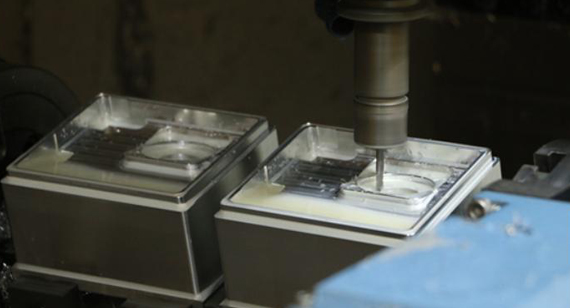
Why Source CNC Machining from China?
As a professional CNC machining manufacturer in China, VMT provides:
From prototype development to mass production, VMT helps customers reduce manufacturing risks while maintaining consistent quality and competitive pricing.
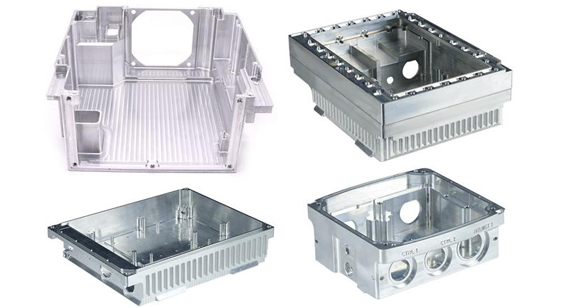
EV Motor Controller Aluminum Housing(Custom Machined Enclosures Services)
An EV powertrain supplier was qualifying a motor controller housing machined from 6061-T6 aluminum plate: 280 × 180 × 65 mm, with a deep pocket cavity (55 mm depth) and a continuous O-ring groove along the sealing face. The housing had to mate with a die-cast lid and maintain IP67 sealing under thermal cycling from -40°C to 125°C.
The challenges:
VMT's approach:
Result:
Because precision masking is a high-risk operation, involving two separate vendors for masking and anodizing is a recipe for disaster—when bleed-under occurs, accountability completely dissolves.
By bringing machining, masking, and anodizing under one roof, VMT aligns the entire process plan under one team.
Finding a CNC machining partner in China is about with a supplier that truly understands your requirements. While large-scale manufacturers offer massive capacity, specialized applications like optical systems, medical devices, and aerospace sensors require tight under-one-roof process control to prevent quality drift. By prioritizing factories that offer robust DFM feedback and single-responsibility manufacturing, engineering teams can eliminate supply chain friction and bring their designs to market with absolute confidence. VMT is a Shenzhen-based direct-factory CNC machining company with 100+ machines, IATF 16949 and ISO 13485 certifications, and in-house surface treatment. For 16 years, VMT has delivered fully traceable precision parts — from prototype to production — across optics, EV, automotive, medical, and UAV industries. Contact VMT engineering for a DFM review and quote.
Q1: What are standard lead times for custom CNC parts from China?
Prototypes typically ship within 5 to 7 working days, while standard production runs average 2 to 4 weeks depending on volume and finishing complexity. Chemical surface treatments (like anodizing or hard coating) typically add 2 to 3 days to the timeline.
Q2: How do Chinese CNC companies guarantee quality for international buyers?
Top manufacturers utilize ISO 9001 as a baseline, alongside specialized IATF 16949 (automotive) or ISO 13485 (medical) quality systems. Reliable shops provide full material traceability certifications, CMM dimensional layouts, and RoHS compliance documentation as standard components of their QA delivery.
Q3: What are the main drivers of custom CNC machining costs?
Cost is determined by part complexity (number of unique setups and cycle time), material selection, tolerance demands, and finishing requirements. Tightening tolerances from ±0.05 mm to ±0.005 mm requires specialized tooling, slower feed rates, and increased inspection overhead, which can raise unit costs by 20% to 40%.
Q4: Can a single shop handle both early prototyping and mass production?
Yes. Modern digital-first manufacturers span both ends of the lifecycle. This allows the exact same facility to handle the initial prototype and the eventual production scale-up, completely eliminating the data-transfer risks of moving a qualified design to an entirely new vendor.
Q5: How does optical-grade CNC machining differ from standard manufacturing?
Standard precision machining strictly validates physical dimensions (bore diameters, threads, concentricity). Optical-grade machining adds a vital second layer: verifying surface roughness as an explicit light-scattering parameter. Achieving an exact Ra 0.8–1.6 µm window for stray light control requires deliberate cutting speeds, specialized insert shapes, and controlled blasting media that general job shops rarely utilize.
Q6: What is the typical Minimum Order Quantity (MOQ)?
Most premium shops featured on this list operate with no formal MOQ, gladly accepting single-piece prototype orders. However, because setup times and programming costs are amortized over the run, per-unit costs drop significantly at 50 to 100 pieces and stabilize completely above 500 pieces.
The technical information and manufacturing advice shared on the VMT website are for general guidance only. While we strive for accuracy, VMT does not guarantee that the processes, tolerances, or material properties mentioned are applicable to every specific project. Any reliance you place on such information is strictly at your own risk. It is the buyer's responsibility to provide definitive engineering specifications for any production orders. Final specifications and service terms shall be subject to the formal contract or quotation confirmed by both parties.


 +86 15099911516




 Read more