16 years one-stop China custom CNC machining parts factory

Hey there I’m VMT Sam!
With 25 years of CNC machining experience we are committed to helping clients overcome 10000 complex part-processing challenges all to contribute to a better life through intelligent manufacturing. Contact us now
 727 |
Published by VMT at Jul 15 2026 | Reading Time:About 5 minutes
727 |
Published by VMT at Jul 15 2026 | Reading Time:About 5 minutes


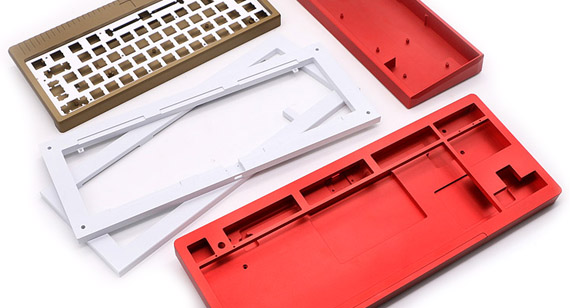
Choosing an aluminum alloy only by price, strength, or color can create unexpected problems later. The wrong grade may increase machining cost, complicate anodizing, or provide strength your design does not need. By reviewing the case structure, finish, quantity, and assembly requirements together, you can select a more suitable material before production begins.
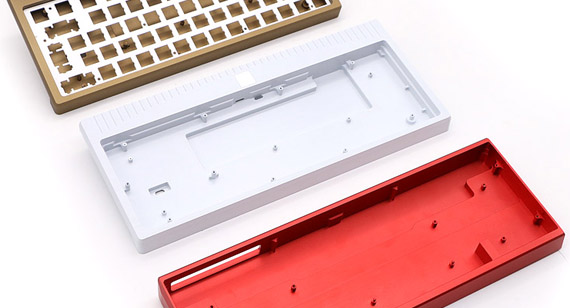
Aluminum is widely used for custom mechanical keyboard cases because it balances low weight, rigidity, CNC machinability, corrosion resistance, and anodized appearance. For most projects, 6061 is the practical starting point, 6063 suits appearance-focused designs, and 7075 is reserved for applications that genuinely need higher strength.
This guide explains why aluminum is popular for mechanical keyboard housings, how the main alloy grades differ, and what you should confirm before choosing a material for your project.
An aluminum mechanical keyboard case offers a practical balance between weight, structural stiffness, appearance, manufacturing flexibility, and cost.
Compared with a molded plastic housing, aluminum gives your keyboard a more rigid structure and a clear metal feel. Compared with brass or stainless steel, it keeps the finished assembly easier to handle, package, and ship.
Aluminum can also be CNC machined into:
This flexibility is useful when your design is still changing. You can update the internal cavity, mounting position, case angle, or external profile without creating a new mold for every version.
However, aluminum is not automatically suitable just because it is easy to machine. A long housing with deep pockets and thin walls can still deform if the blank, fixture, wall thickness, and machining sequence are not planned correctly.
Before quoting or machining a custom aluminum keyboard case, VMT reviews the complete geometry and assembly rather than looking only at the alloy name. This makes it easier to identify whether the selected aluminum grade supports the required structure, finish, and production quantity.
Weight is one of the main reasons many keyboard brands choose aluminum instead of steel, brass, or a fully plastic housing.
You usually want the case to feel stable on a desk without making the keyboard unnecessarily heavy. Aluminum provides more rigidity and metal texture than common molded plastics while remaining much lighter than steel or brass.
This balance is useful for:
However, material choice alone does not determine strength.
A poorly designed aluminum case can still flex or deform if it has:
VMT reviews the wall thickness, pocket depth, mounting points, ribs, and material-removal ratio before machining. If an area is likely to lose stability, the design can often be adjusted by changing a hidden wall, adding support, or modifying the internal corner radius without changing the exterior appearance.
This allows you to keep the intended weight and metal feel while reducing the risk of housing deformation, loose mounting points, or uneven assembly gaps.
Tip: Do not reduce every wall only to make the keyboard lighter. A small weight reduction can create longer machining time, more deformation risk, and higher inspection cost.
The case forms the structural base for the PCB, plate, switches, gasket, and mounting hardware. If the housing is not stable, small changes in flatness or support height can affect how these components sit together.
For example, a warped bottom case may:
Aluminum provides a rigid base, but the final result still depends on the keyboard layout, wall thickness, internal cavity, plate material, and mounting structure.
The material also influences the overall acoustic character, but it does not determine the sound by itself. The final sound and typing feel are affected by:
Choosing aluminum does not guarantee a particular sound. A stiff 7075 case and a well-designed 6061 case may perform differently because their structures and mounting systems are not the same.
During DFM review, VMT checks the material together with the plate support, mounting structure, gasket features, and internal clearance. This prevents the alloy decision from being separated from the structure that controls the real assembly and typing experience.
Note: Evaluate sound with a finished prototype. CAD models and material names cannot fully predict how the complete keyboard will behave after assembly.
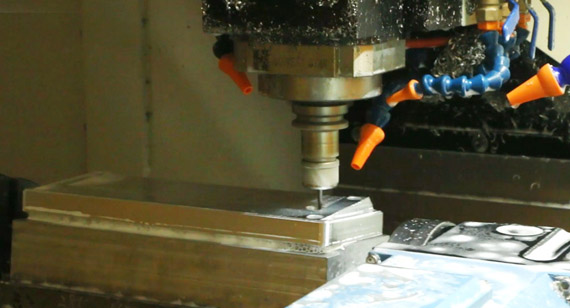
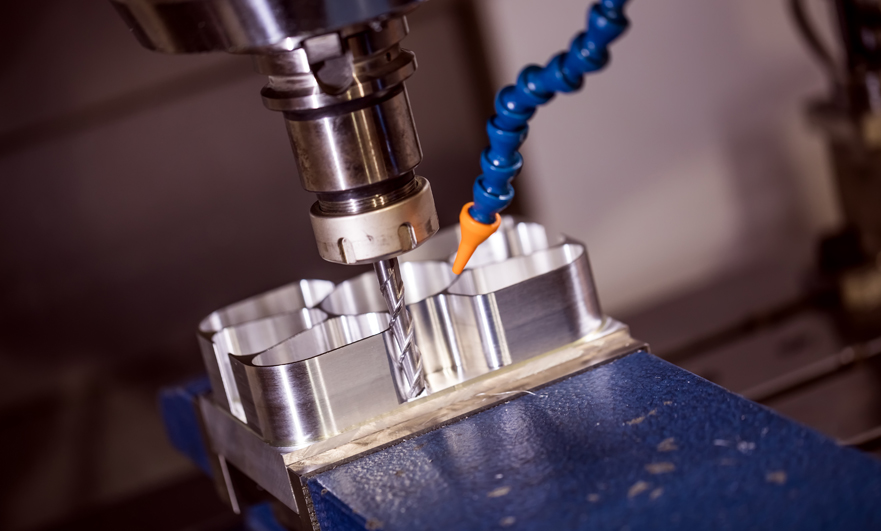
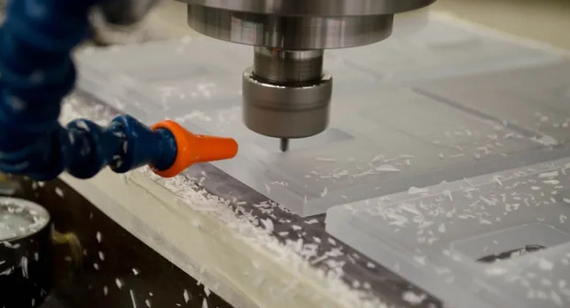
Aluminum is easier to CNC machine than many harder metals, making it suitable for customized keyboard housings, prototypes, group-buy projects, limited editions, and repeat production.
A CNC machined aluminum keyboard case can include complex features without requiring a dedicated production mold. You can modify:
This is especially useful when you need several versions of the same keyboard or expect the design to change after prototype testing.
However, good machinability does not mean every aluminum case is simple to produce. Large pockets, thin walls, deep cavities, narrow grooves, and long mating surfaces can increase machining time and deformation risk.
If most of the original aluminum block is removed from one side, residual material stress may be released. The part can measure correctly while clamped and then move after it is removed from the fixture.
Before machining, VMT reviews:
Rough and finish machining can then be planned according to the geometry. This gives the housing time to stabilize before critical surfaces and mounting features are completed.
For a detailed explanation of flatness, hole position, mounting structures, burrs, threads, inspection, and prototype production, read the CNC mechanical keyboard case machining guide:
Tip: Add practical internal radii wherever a perfectly sharp corner is not required. Very small corner radii often need smaller tools and longer machining time without improving assembly.
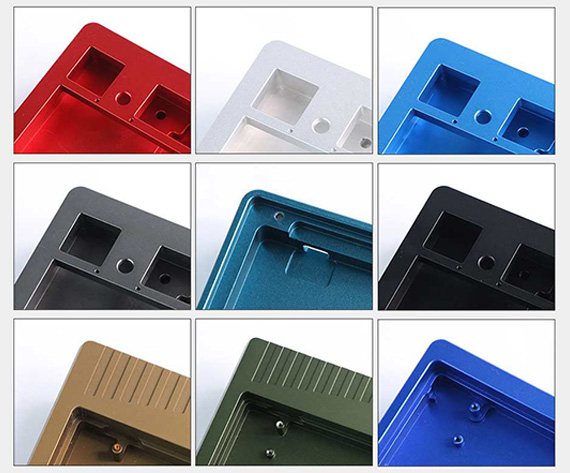
Appearance is another important reason to choose aluminum for a custom mechanical keyboard housing.
Aluminum supports finishes such as:
Bead blasting followed by anodizing is widely used for premium keyboard cases because it creates a uniform matte texture and supports a broad range of colors.
However, anodizing cannot hide every machining defect. Tool marks, dents, inconsistent roughness, and locally reworked areas may become more visible after finishing.
Color is also influenced by more than the dye itself. Differences may appear when matching parts use:
If the top and bottom cases require a close color match, they should use consistent material and surface-preparation standards. VMT checks visible surfaces before finishing and coordinates material batches, blasting requirements, approved samples, and handling methods for matching components.
This reduces the chance of completing two dimensionally correct housings that cannot be used together because their colors or textures look different.
A digital color code can guide the process, but it cannot fully represent the appearance of anodized metal. A physical sample is more reliable when color matching is important.
For a deeper explanation of anodized colors, bead blasting, surface defects, and cosmetic inspection, read the aluminum keyboard case anodizing guide:
Note: Confirm visible A surfaces, acceptable color variation, hanging positions, and physical samples before batch anodizing. These decisions become more expensive to change after finishing begins.
There is no single best aluminum for every keyboard case. The right grade depends on your housing design, required strength, anodized appearance, material availability, quantity, and budget.
| Aluminum Alloy |
Best Suited For |
Main Advantage |
What You Should Review |
| 6061 | Most custom cases, prototypes, and repeat production | Balanced machinability, strength, availability, and finishing | Wall thickness, material condition, and anodizing consistency |
| 6063 | Appearance-focused anodized housings | Good surface and decorative anodizing potential | Required strength, stock form, temper, and batch consistency |
| 7075 | High-strength or limited-edition designs | Higher strength than common 6-series alloys | Material cost, machining cost, finish expectations, and actual strength need |
| 5052 | Sheet-based covers, plates, and formed parts | Good corrosion resistance and formability | Stock form and whether deep CNC pocketing is necessary |
Aluminum 6061: The Practical Starting Point
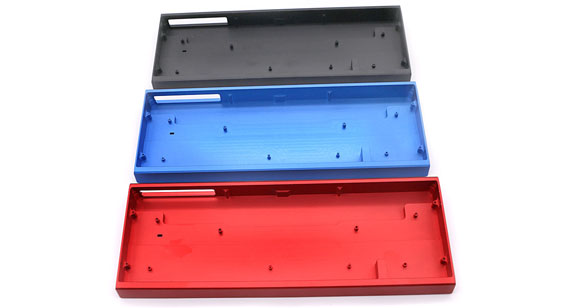
Aluminum 6061 is a practical starting point for most custom mechanical keyboard cases.
It provides a useful balance of:
It is commonly used for top cases, bottom cases, frames, plates, and other CNC aluminum keyboard components.
6061 also responds well to clear, color, and hard anodizing, although the final appearance still depends on material condition and surface preparation.
You should consider 6061 when your project needs a reliable material for both prototype testing and repeat production without paying for strength that the structure does not use.
However, a 6061 label alone is not enough. Temper and stress condition can affect how a large blank behaves during machining. For long or deeply pocketed cases, VMT reviews the material form, machining allowance, wall thickness, and release of internal stress before deciding the operation sequence.
This makes 6061 a practical choice rather than an automatic one.
Aluminum 6063: The Appearance-Focused Option
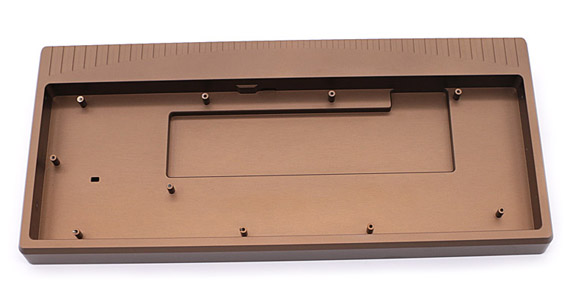
Aluminum 6063 is often considered when decorative appearance and anodizing consistency are important.
It is widely used in visible applications because it can provide a good surface finish and reliable anodizing response.
For an anodized aluminum keyboard case, 6063 may be suitable when:
However, choosing 6063 does not guarantee a perfect color match. Different batches, tempers, machining textures, and blasting conditions can still produce visible variation.
VMT reviews the required case size, wall thickness, finish, stock availability, and mechanical requirements before recommending 6063. Matching components can then be planned around consistent material and preparation standards rather than relying only on the alloy name.
Aluminum 7075: The High-Strength Option
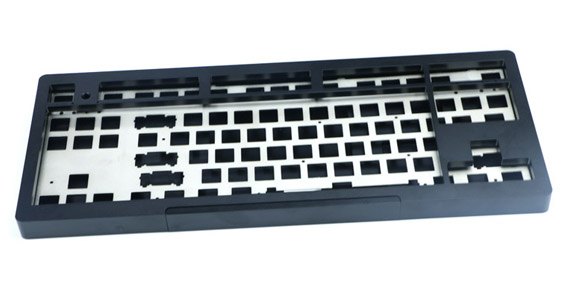
Aluminum 7075 offers significantly higher strength than common 6-series alloys and is widely used where mechanical performance is a priority.
It may be suitable for:
However, a keyboard housing does not automatically need 7075 simply because it is positioned as a premium product.
Selecting 7075 can increase:
If the case is already structurally stable in 6061, changing to 7075 may add cost without improving assembly, appearance, or service life.
VMT compares the required wall thickness, load, geometry, finish, and target price before suggesting 7075. This keeps the material decision connected to the function rather than using “aircraft-grade aluminum” only as a marketing label.
Tip: Use 7075 when the design benefits from its strength. Do not use it only because the grade sounds more premium.
Aluminum 5052 can be machined. It is not correct to describe it as an aluminum alloy that cannot be processed.
5052 is well known for corrosion resistance, weldability, and formability.
It may be suitable for:
For a solid CNC keyboard case with a large internal cavity, 6061 is usually a more practical starting point. Deep pocketing and extensive milling do not make full use of the forming advantages that often lead designers to choose 5052.
If your design uses a sheet-based structure instead of a thick machined block, 5052 may reduce material waste and production cost. If your design needs an integrated top or bottom case with deep cavities, bosses, and decorative external surfaces, 6061, 6063, or 7075 may be easier to evaluate for that application.
The material should therefore be selected according to the manufacturing form, not only corrosion resistance or alloy availability.
Aluminum is popular because it offers a balanced solution, but it is not the correct material for every component.
| Material |
Main Reason to Choose It |
Main Trade-Off |
| Aluminum | Balanced weight, rigidity, CNC flexibility, and anodized appearance | Higher cost than molded plastic |
| Plastic or polycarbonate | Lightweight, transparent options, and different acoustic behavior | Lower metal feel and different structural stiffness |
| Brass | High mass and decorative contrast | Heavy, expensive, and sensitive to scratches |
| Stainless steel | High strength and wear resistance | Heavy and slower to machine |
| Titanium | Premium appearance and high strength-to-weight performance | High material and machining cost |
Aluminum vs Plastic
Plastic may be more suitable when your priority is low weight, transparent appearance, lower unit cost at high volume, or a different acoustic response.
Aluminum is more suitable when you need a rigid metal housing, precise machined features, anodized colors, and design changes without new injection molds.
Aluminum vs Brass
Brass adds more mass and visual contrast, making it popular for keyboard weights and plates.
A complete brass housing can become very heavy and expensive to machine. For this reason, many designs use an aluminum main case with a brass weight instead of producing the entire housing from brass.
Aluminum vs Stainless Steel
Stainless steel provides high strength and wear resistance but increases weight, cutting force, machining time, and tool wear.
It is often more suitable for plates, weights, badges, and decorative parts than for a complete portable keyboard housing.
Aluminum vs Titanium
Titanium can provide a distinctive appearance and strong premium positioning, but it requires more demanding machining and a higher budget.
It is often used for knobs, badges, plates, accents, and limited-edition components rather than as the default case material.
Choosing aluminum simply because it is common can create unnecessary cost.
Another material or process may be more suitable when:
For example, polycarbonate may suit a transparent housing, brass may suit a heavy internal weight, and 5052 sheet may suit a formed lower cover.
A hybrid design can also be more effective than making every component from the same material. You might use:
VMT reviews the complete assembly so that each material is selected for its function. This avoids using an expensive alloy in a hidden part or choosing a surface-focused material where structural stability is more important.
Before you specify 6061, 6063, 7075, or another grade, confirm how the case will be used and manufactured.
Keyboard Layout and Case Size
A compact 60% case and a long full-size housing do not have the same deformation risk.
Long housings need more attention to blank stability, flatness, fixture support, and surface consistency.
Wall Thickness and Internal Cavity
Thin walls reduce weight but may increase deformation, machining time, and inspection requirements.
A large material-removal ratio may also affect the stability of the finished housing.
Mounting Structure
Tray, top, bottom, gasket, sandwich, and O-ring mounting systems place different demands on support surfaces, grooves, screw bosses, and internal clearances.
Required Weight and Stiffness
Decide whether you need a lightweight portable case, a balanced desktop housing, or a heavier premium assembly with a separate weight.
Confirm whether you need:
The selected finish may affect alloy choice, material batch control, masking, dimensional allowance, and inspection standards.
Color Consistency
If the top case, bottom case, and knob must match, specify:
Prototype and Batch Quantity
A prototype project allows more design adjustment, while repeat production requires stable material supply, approved samples, fixtures, inspection points, and finishing standards.
Critical Tolerances
Identify which dimensions control:
Do not assign the same tight tolerance to every dimension.
Target Cost
The strongest or most expensive alloy is not always the most suitable.
A material should support the required design and appearance without creating machining cost that does not improve the finished keyboard.
Tip: Provide the complete assembly rather than only the top or bottom case. The PCB, plate, gasket, daughterboard, weight, and knob may change which material and tolerances are most practical.
Material selection should not be separated from geometry, assembly, and finishing.
When VMT reviews a custom aluminum keyboard case project, the process begins with the 2D drawings, 3D models, and complete assembly. The engineering team checks the layout, case size, wall thickness, internal cavities, mounting structure, screw bosses, USB position, weight pockets, visible surfaces, and required finish.
A large TKL case with deep pockets may need a different blank condition and machining sequence from a compact 60% case. An appearance-focused top case may benefit from different material and surface controls than a hidden internal bracket.
The review also checks whether anodizing or coating may affect:
The first prototype can then be checked in its raw condition before anodizing. If the PCB, plate, gasket, USB opening, or case gap needs adjustment, the drawing can be corrected without wasting the finishing process.
After the raw assembly is approved, the finished prototype confirms the real color, texture, edge appearance, and post-finish fit. The approved material, surface sample, and inspection requirements can then be carried into pilot and batch production.
Reviewing the alloy together with the complete keyboard prevents the material decision from being based only on strength, price, or color. The selected grade must support machining, assembly, appearance, and repeat production at the same time.
For project-specific material and manufacturing support, visit the custom aluminum mechanical keyboard case machining page.
Aluminum is widely used for custom mechanical keyboard cases because it offers a practical balance of weight, rigidity, CNC flexibility, anodized appearance, and production cost.
6061 is the practical starting point for most projects. 6063 may suit appearance-focused anodized housings, while 7075 should be selected when the structure genuinely benefits from higher strength. 5052 may be more suitable for formed sheet components than deeply pocketed solid cases.
The final decision should consider your layout, wall thickness, mounting system, surface finish, color requirement, quantity, assembly, and target cost together.
Upload your 2D drawings and 3D models to receive a quotation and DFM review. VMT can review the aluminum grade, case structure, critical fits, anodizing requirements, prototype plan, and production risks before machining begins.
Request a quote for your custom aluminum mechanical keyboard case.
Send your drawings, requirements, and target quantity. VMT will review your project and provide a machining solution and quote.
1 Tell us what you need
2 Get solution & quote
3 Approve production
Email: inquiry@vimetal.com.cn
1. Is 6061 or 6063 better for a mechanical keyboard case?
6061 is a practical choice for most CNC keyboard cases because it balances machinability, strength, availability, finishing, and cost.
6063 may be considered when decorative anodizing and visible surface quality are especially important. However, you should also review stock availability, temper, wall thickness, and required strength.
Neither alloy guarantees consistent color without controlled material batches and surface preparation.
2. Is 7075 aluminum worth the additional cost?
7075 may be worth the cost when your case genuinely needs higher strength, thinner structural sections, or a specific premium material requirement.
For many standard keyboard housings, a properly designed 6061 case already provides sufficient structural stability. In that situation, 7075 may increase material and machining cost without improving assembly or appearance.
3. Can an aluminum keyboard case warp during CNC machining?
Yes. Long housings, thin walls, large pockets, material stress, cutting heat, and excessive clamping force can cause movement.
Warping can be reduced through stable material, suitable wall thickness, balanced material removal, controlled fixtures, staged machining, and free-state inspection before finishing.
4. Does an aluminum case improve keyboard sound?
Aluminum affects the structure and acoustic response, but it does not control the sound alone.
The plate, mounting system, gasket, foam, switches, keycaps, internal cavity, weight, and screw positions also influence the final result.
A finished prototype is the most reliable way to evaluate the sound and typing feel.
5. Can 6061 and 6063 be anodized to the same color?
They can be processed using the same nominal color, but the final appearance may not match exactly.
Alloy composition, temper, material batch, surface roughness, blasting, geometry, and anodizing conditions can create visible differences.
Avoid mixing alloys in components that require a close color match unless physical samples have been approved.
6. Is an aluminum keyboard case heavier than a plastic case?
Yes, an aluminum case is generally heavier than a comparable plastic case.
However, aluminum provides greater metal rigidity and allows the designer to adjust wall thickness, cavity size, and weight pockets. Many products use aluminum because it provides a stable metal feel without the weight of a full brass or stainless-steel housing.
7. Can aluminum keyboard cases be recycled?
Aluminum is recyclable, but the environmental impact of a finished keyboard also depends on material sourcing, manufacturing energy, surface finishing, assembly design, product life, and local recycling systems.
A durable case that can remain in use for longer may also reduce the need for frequent replacement.
8. Is 5052 suitable for a CNC keyboard case?
5052 can be machined and may work well for sheet-based covers, formed housings, plates, and brackets.
For a solid case with deep CNC-machined cavities and many integrated features, 6061 is usually a more practical starting point.
The correct choice depends on whether your design is milled from a thick block or formed from sheet.
9. What is the best finish for an aluminum keyboard case?
Bead blasting followed by anodizing is a common choice for a uniform matte appearance.
Brushing creates a directional metal texture, while polishing produces a reflective finish. Hard anodizing may be used when wear resistance is more important than decorative color.
The best finish depends on your appearance, wear, color, dimensional, and cost requirements.
10. What files are needed for a custom aluminum keyboard case quote?
Provide:
Complete assembly information makes it easier to review the material, machining, finishing, and fit before production.


 +86 15099911516




 Read more