16 years one-stop China custom CNC machining parts factory

Hey there I’m VMT Sam!
With 25 years of CNC machining experience we are committed to helping clients overcome 10000 complex part-processing challenges all to contribute to a better life through intelligent manufacturing. Contact us now
 602 |
Published by VMT at Jul 17 2026 | Reading Time:About 6 minutes
602 |
Published by VMT at Jul 17 2026 | Reading Time:About 6 minutes


A CNC aluminum keyboard case can meet every dimensional requirement and still be rejected because the black color looks uneven, the bead-blasted texture is inconsistent, or scratches appear during shipping. These problems usually begin with material, machining, surface preparation, racking, masking, or handling decisions made before the anodizing process starts.
Aluminum keyboard case anodizing creates a durable, corrosion-resistant surface while preserving the metal appearance. The final color and texture depend on the aluminum alloy, material batch, machining marks, bead blasting, anodizing conditions, rack positions, masking, inspection, and packaging.
This guide explains how to choose a mechanical keyboard case surface finish, avoid common cosmetic defects, protect critical fits, and maintain a more consistent appearance from prototype to batch production.
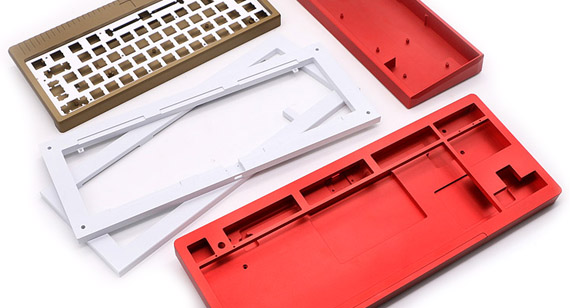
The surface finish is one of the first things your customer notices when opening the package. It controls the color, texture, gloss, metal feel, logo appearance, scratch visibility, and perceived quality of the completed keyboard.
It can also affect functional features such as:
If the finish is considered only after CNC machining is complete, a part that fits correctly in its raw condition may become difficult to assemble after anodizing, plating, or coating.
For example, an anodized layer can make a small hole or thread effectively tighter. A weight pocket with almost no clearance may no longer accept the finished weight. An unapproved rack position may leave a visible fixture mark on an appearance-critical surface.
Surface treatment also cannot correct machining problems such as:
These issues should be corrected before finishing begins. At VMT, raw keyboard housings are checked for critical dimensions, threads, burrs, surface defects, and assembly fit before they are released for anodizing or another cosmetic process.
This prevents additional finishing cost from being added to a part that already has a machining or assembly problem.
For more information about case flatness, hole position, mounting structures, threads, and prototype validation, read the CNC mechanical keyboard case machining guide.
Tip: Do not approve a surface finish only from a rendered image. A physical sample gives you a more reliable reference for color, gloss, texture, and visible variation.
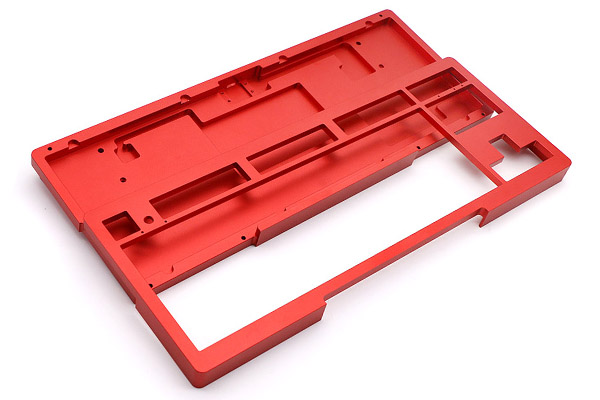
Anodizing is an electrochemical process that converts the surface of aluminum into a controlled oxide layer.
Unlike paint or powder coating, the anodized layer is formed from the aluminum surface itself. It does not simply sit on top as a separate film.
For decorative CNC aluminum keyboard cases, the basic process normally includes:
The porous surface created during anodizing can absorb dye before sealing. This makes it possible to produce black, gray, blue, red, green, purple, gold, bronze, and other decorative finishes.
Anodizing is commonly selected because it can provide:
However, the anodizing bath does not control the final result by itself. The aluminum alloy, material batch, machining texture, bead blasting, cleaning, part geometry, rack position, dyeing, and sealing all influence the finished appearance.
A keyboard top case and bottom case can therefore receive the same nominal anodizing color but still look different if their materials or surface preparation are not consistent.
For help selecting 6061, 6063, 7075, or another aluminum grade before finishing, read the aluminum mechanical keyboard case material guide.
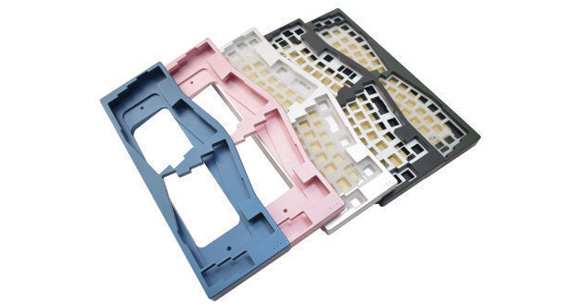
The best finish depends on how you want the keyboard to look, how the surfaces will be used, and how tightly several components must match.
| Your Requirement |
Recommended Finish |
Typical Result |
What Must Be Controlled |
| Uniform matte housing | Bead blasting and anodizing | Soft matte texture with anodized color | Blasting media, pressure, material batch, color sample |
| Natural metal appearance | Clear anodizing | Silver or natural aluminum appearance | Raw surface condition and alloy consistency |
| Dark premium case | Black anodizing | Black, charcoal, or dark gray appearance | Color depth, alloy, blasting, batch matching |
| Custom brand color | Color anodizing | Blue, red, green, purple, gold, or other colors | Physical sample, dye control, batch variation |
| Higher wear resistance | Hard anodizing | Thicker, more wear-resistant surface | Thickness, threads, holes, pockets, color expectations |
| Directional metal texture | Brushing | Linear satin grain | Brushing direction, edge consistency, scratch protection |
| Reflective decorative component | Polishing | Bright or mirror-like surface | Waves, dents, edge rounding, handling |
| Decorative metal weight | Polishing and PVD | Premium metallic color | Base polish, coating uniformity, rack location |
| Logo or serial number | Laser engraving | Permanent high-contrast marking | Position, line width, contrast, fixture repeatability |
Choose According to the Whole Assembly
A finish that looks suitable on one component may create problems when several parts are assembled together.
For example:
VMT reviews the finish together with your material, geometry, visible surfaces, fits, and assembly method. This helps keep the finish decision connected to both appearance and function.
Tip: Use different standards for appearance surfaces and hidden internal areas. Requiring the same cosmetic level on every surface can increase finishing and inspection cost without improving the final product.
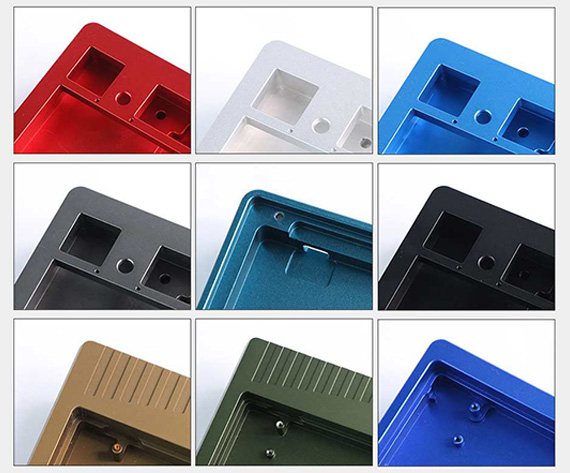
Anodizing gives you broad color flexibility, but it does not reproduce screen colors in the same way as printed ink or painted plastic.
The final appearance changes with the aluminum alloy, surface roughness, lighting, viewing angle, and anodizing conditions.
Clear and Silver Anodizing
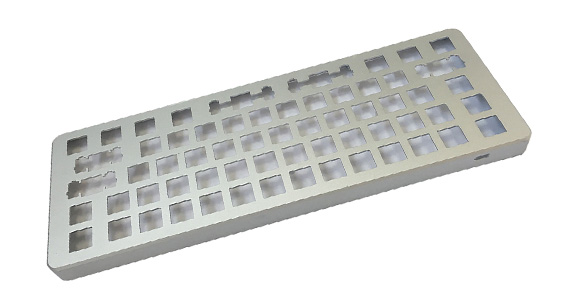
Clear anodizing retains a natural aluminum appearance.
It is suitable when you want:
Because clear anodizing does not hide the base surface, cutter marks, polishing lines, stains, or uneven bead blasting can remain visible.
The raw surface should therefore be approved before finishing.
Black Anodizing
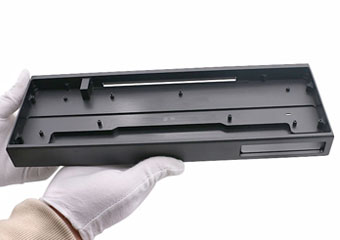
Black anodizing is one of the most common choices for custom mechanical keyboard cases.
It can create a dark matte, satin, or metallic appearance, depending on the surface preparation.
However, “black” does not always mean one exact shade. Finished parts may appear:
The variation can come from the alloy, material batch, surface roughness, dye conditions, sealing, and part geometry.
If your top case, bottom case, knob, and aluminum badge must match closely, use the same alloy and material batch whenever possible. They should also receive the same blasting standard and be processed in the same finishing batch.
Gray and Gunmetal
Gray and gunmetal finishes are useful when you want a softer alternative to black.
Small changes in blasting texture or dye depth can make gray parts appear warmer, cooler, lighter, or darker. An approved physical sample is especially important because gray shades can look different under factory lighting, daylight, and indoor lighting.
Blue, Red, Green, and Purple
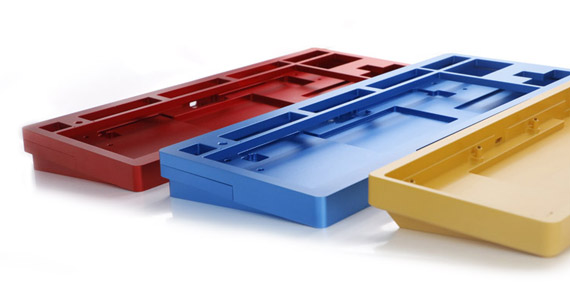
Bright anodized colors can support product families, special editions, and brand identity.
These colors often show batch differences more clearly than black. Large flat keyboard housings can also make small changes in shade easier to notice.
Before batch production, confirm:
Gold and Bronze
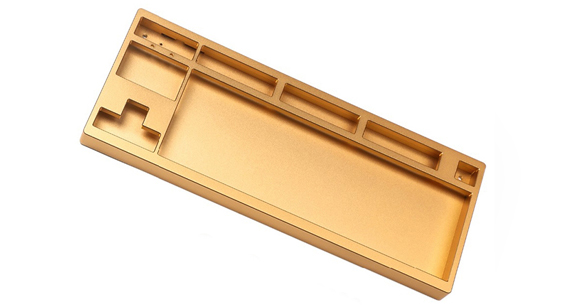
Gold and bronze anodizing can create a warm premium appearance without using solid brass.
The final tone may range from light champagne to darker bronze. If the project also includes a brass or PVD weight, compare the assembled materials rather than approving each component separately.
Tip: Do not mix 6061, 6063, and 7075 in matching visible components unless sample testing confirms the result. Different alloys may respond differently even when processed with the same dye.
Bead blasting followed by anodizing is one of the most widely used finishes for CNC aluminum keyboard cases.
In commercial discussions, bead blasting is also often called sandblasting, although the blasting media may not be actual sand.
The blasting process changes the texture before anodizing. It can reduce visible machining lines and create a soft matte surface that feels more consistent across the case.
The final result depends on:
If these factors vary, the anodized case may show:
Deep cutter marks cannot always be removed by blasting. If the operator spends more time on one local area to hide a defect, that section may have a different texture and anodized color.
For this reason, VMT checks cosmetic surfaces before bead blasting. Matching components are assigned consistent machining and blasting requirements so they enter anodizing with a more uniform base surface.
The result is not created by anodizing alone. It begins with the CNC finish and remains dependent on how the part is handled through every later stage.
Note: Avoid requesting extremely aggressive blasting only to hide machining marks. A rougher surface may change the visual shade, edge definition, and final feel of the case.
Anodizing is not the only surface option for a mechanical keyboard assembly. Other processes can be used for the case, plate, weight, badge, knob, and decorative components.
For a broader overview of available processes, visit VMT’s aluminum surface finishing services.
Brushing
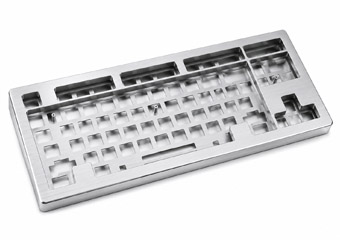
Brushing creates a directional linear grain on aluminum, stainless steel, or brass.
It works well for:
The brushing direction should be shown on your drawing. If the top case and side frame are brushed in different directions, the parts may look mismatched even when the dimensions and color are correct.
Local rework is also difficult because a repaired area may have a different line width or direction.
VMT confirms the grain direction, visible surfaces, and edge requirements before brushing. The finished parts are then protected from cross-grain scratches during inspection and packaging.
Polishing
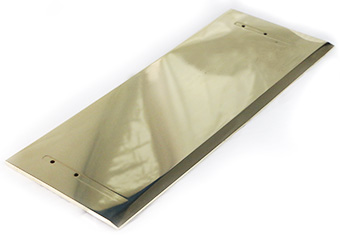
Polishing creates a bright or reflective surface.
It is commonly used for:
Polishing can reveal waves, dents, cutter marks, and uneven edges. It can also round sharp corners or change small dimensions if too much material is removed.
Before polishing, VMT checks the base surface and identifies features that must retain their geometry. The finished component is then handled separately because fingerprints, rubbing, and small scratches are highly visible on reflective surfaces.
PVD Coating
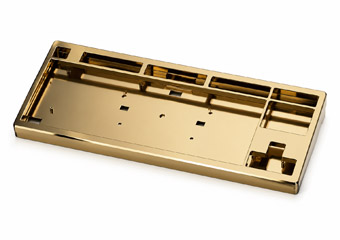
PVD is often used on brass, stainless-steel, or titanium weights and decorative components.
It can provide colors such as:
PVD does not hide defects in the base surface. Polishing lines, dents, scratches, or inconsistent brushing can remain visible after coating.
Rack or contact positions must also be planned before processing. A fixture mark placed on a visible weight surface may make the finished part unusable.
The pre-coated surface should therefore be approved before the PVD process begins.
Laser Engraving
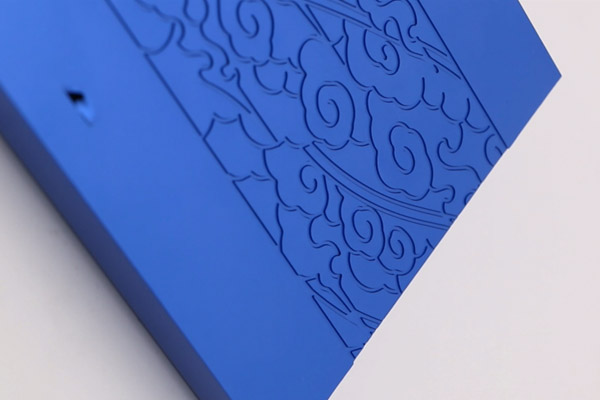
Laser engraving is commonly used after anodizing to add:
The logo position should be dimensioned from a visible edge or functional datum, not placed by visual estimation.
For small text or thin lines, VMT can test:
A positioning fixture can then keep the logo in the same location across the batch.
Tip: Approve the finished laser sample on the actual anodized color. A laser setting that looks clear on black anodizing may produce a different contrast on gray, red, or clear anodizing.
The most expensive finishing problems are often discovered after machining, polishing, anodizing, and engraving are already complete.
Understanding the causes makes it easier to prevent them before the full batch begins.
Black Anodizing Color Difference
Black anodizing can vary between parts even when the same color specification is used.
Common causes include:
A top case that appears blue-black and a bottom case that appears brown-black may both meet the supplier’s general black standard but still look unacceptable when assembled together.
For matched housings, VMT uses the same alloy and material batch where practical, applies a consistent surface-preparation standard, and processes related components together whenever possible.
The completed parts are compared under consistent lighting rather than approved from isolated photographs.
Uneven Bead Blasting and Bright Spots
Bright spots may appear when one area has a smoother base surface, less blasting exposure, or local manual rework.
Uneven blasting can also create different gloss levels across large flat surfaces.
If the defect is discovered after anodizing, local repair is difficult. Re-blasting only one area may leave a visible patch, while stripping and re-anodizing can affect dimensions and still may not reproduce the original color exactly.
VMT inspects the raw machined surface before blasting and checks the blasted texture before anodizing. This allows cutter marks, dents, or inconsistent areas to be corrected before the color process is added.
Rack Marks and Fixture Contact Points
Anodizing requires electrical contact between the part and the rack. A contact point is therefore necessary.
The contact area may leave:
Saying that an anodized part can always be produced with no rack mark is unrealistic.
The correct approach is to place the contact point where it will not affect appearance, assembly, sealing, or function.
Possible locations include:
Large keyboard housings may need several contact points to maintain stable electrical contact.
VMT confirms the proposed rack position during the cosmetic review so that the finished contact mark does not appear on a visible A surface.
Note: Rack positions should be approved before the batch begins. Moving the contact area after sample approval can change both appearance and process stability.
Scratches and Handling Damage
Anodized aluminum has improved surface durability, but it is not completely scratch-proof.
Deep scratches can cut through the anodized layer and damage the base aluminum. Small rubbing marks may also become visible on matte black or dark-colored cases.
Scratches can occur during:
Local repair rarely matches the original finish perfectly.
VMT separates appearance-critical parts, protects visible surfaces, and avoids direct contact between the top case, bottom case, weight, knob, and decorative components.
This keeps the cosmetic standard intact after inspection instead of losing finished parts during final handling.
Threads and Holes Becoming Tight After Anodizing
Anodizing changes the effective size of holes, threads, pockets, and mating features.
The effect becomes more important when the feature already has limited clearance or when a thicker hard-anodized layer is required.
Possible problems include:
Depending on the function, the design may require:
VMT reviews critical threads, holes, and fits before machining and checks them again after finishing. This allows screws and components to assemble without forcing, stripping the thread, or damaging the anodized surface.
Tip: Do not simply re-tap every anodized thread after finishing. Uncontrolled re-tapping can remove the protective layer and leave visible bare aluminum.
Edge Burning, Dark Corners, and Uneven Color
Sharp corners, thin edges, deep cavities, and complex geometry can respond differently during anodizing.
Possible results include:
Adding a practical radius to exposed sharp edges can improve machining and reduce the risk of visually inconsistent corners.
Deep internal cavities may also need realistic cosmetic standards because liquid flow and electrical conditions are different from large open surfaces.
VMT reviews the visible geometry and finish expectation before production so that the design does not demand the same perfect color in areas that are difficult to process and hidden after assembly.
Laser Logo Position and Contrast Problems
A logo can look incorrect even when the engraving itself is clear.
Common problems include:
VMT uses the drawing datum and a positioning fixture to control the laser location. A finished sample confirms the logo scale, line width, contrast, depth, and relationship to the visible case edges before the full batch is engraved.
Consistent finishing requires control before, during, and after the anodizing process. Final inspection alone cannot correct a poor material choice, machining mark, or rack position.
Drawing and Cosmetic Standard Review
Before production, VMT reviews:
If these details are not defined, different teams may interpret the same drawing in different ways.
Confirming them before machining creates a shared standard for the engineering, CNC, finishing, inspection, and packaging teams.
Material and Batch Planning
Matching visible components should use the same aluminum grade and material batch whenever possible.
Mixing alloys may create different colors or textures even if all parts receive the same nominal finish.
For replacement orders, VMT also reviews whether the new batch must match a previous physical sample. Exact repeat color can be difficult when raw material, dye, bath condition, or surface preparation changes over time, so the acceptable variation should be confirmed in advance.
Pre-Finish Inspection
Before the parts are sent for anodizing or coating, VMT checks:
A sample that fails assembly should not move into a cosmetic process.
This inspection keeps machining and fit problems from becoming more expensive finished-part problems.
Physical Sample Approval
A physical sample can define:
For a new color or premium appearance standard, VMT recommends approving the finished sample before processing the complete batch.
This is especially important for blue, red, gray, purple, gold, bronze, and other colors where screen images are unreliable.
Batch Processing Control
For matching parts, VMT coordinates:
The top case, bottom case, knob, and related aluminum components are processed together where practical.
This does not eliminate every natural variation, but it reduces avoidable differences caused by inconsistent preparation or separate processing conditions.
Post-Finish Inspection
After finishing, VMT checks:
Parts are inspected both individually and, where required, as a matched assembly.
This is important because two parts may look acceptable separately but show a clear difference when placed next to each other.
For more information about VMT’s dimensional and appearance controls, visit the CNC machining quality control process.
Appearance quality can be lost at any point between CNC machining and final delivery.
Inspection and packaging should therefore be treated as part of the finishing process.
| Production Stage |
What Is Checked |
Why It Matters |
| Before finishing | Dimensions, flatness, threads, holes, burrs, tool marks, assembly | Problems can still be corrected before anodizing cost is added |
| After finishing | Color, texture, scratches, rack marks, coating defects, logo, fits | Confirms the actual condition of the finished part |
| Before shipping | Cleaning, surface protection, component separation, package fit | Prevents cosmetic damage after final approval |
Before Finishing
The raw case is checked for defects that anodizing cannot hide.
This includes:
If these problems are corrected before anodizing, the part avoids unnecessary stripping, reworking, and reprocessing.
After Finishing
The anodized or coated case is checked under suitable lighting for:
The top and bottom cases should be compared together when color and seam consistency are important.
Before Shipping
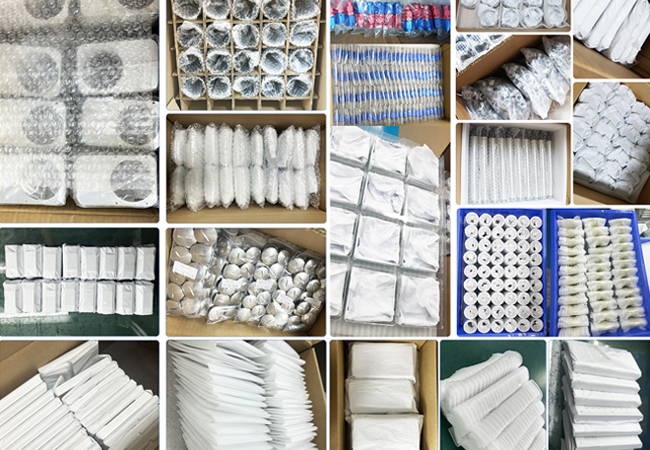
Finished keyboard housings should not contact each other inside the package.
Depending on the appearance requirement, VMT may use:
Polished weights, coated badges, knobs, and anodized housings are packed separately so that vibration during shipping does not create rubbing marks.
A perfect finish that arrives scratched is still a rejected product. Packaging is therefore part of quality control, not only a logistics task.
Tip: Share your customer-facing packaging or unboxing requirement early. Retail packaging, protective export packaging, and internal factory transfer packaging may need different designs.
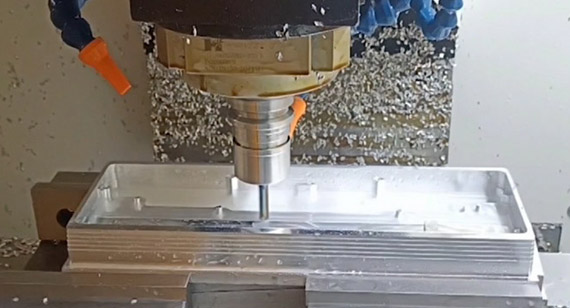
Surface finishing cost is affected by more than the name of the process.
Custom Color Development
A standard black or clear finish is usually easier to manage than a highly specific custom color.
Developing a special shade may require:
Tight Color Matching
Cost increases when several parts must match closely, especially when they use different alloys, shapes, or surface textures.
Matching a large top case, bottom case, knob, and badge may require more careful material planning, joint processing, comparison, and sorting.
Mixed Aluminum Alloys
6061, 6063, and 7075 can respond differently during anodizing.
Requesting the same visible color across mixed alloys may require sample testing and may still result in natural differences.
Using one alloy for matching visible components is usually more predictable.
Special Rack Position Requirements
Every anodized part needs an electrical contact point.
If all normal hidden positions are restricted, the finishing supplier may need a custom rack or a more complicated contact method.
This can increase setup cost and process risk.
Extensive Masking
Masking may be needed for:
A large number of small masking areas increases labor and inspection time.
Mirror Polishing
Mirror polishing requires more preparation than standard bead blasting.
Deep cutter marks, flatness waves, dents, and edge condition must be corrected before the final polish.
The part also requires more careful handling and protective packaging.
PVD Coating
PVD adds pre-coating preparation, racking, coating, inspection, and packaging requirements.
It is commonly used for decorative weights and badges rather than the complete aluminum housing.
Strict Appearance Inspection
A requirement for 100% appearance inspection, tight color sorting, limited rack marks, and no visible handling marks increases inspection and handling time.
The drawing should clearly separate critical A surfaces from less visible areas so the correct effort is applied.
Protective Packaging
Individual films, soft bags, foam trays, and custom cartons add cost but may prevent far more expensive cosmetic rejection during shipping.
Tip: Approve the color, texture, rack position, masking plan, and laser sample before the full batch begins. Changing these requirements after anodizing may require stripping, polishing, re-machining, and complete reprocessing.
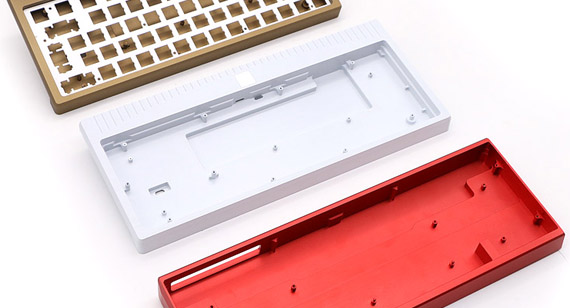
A mechanical keyboard case surface finish must do more than add color. It must preserve the metal appearance, protect critical dimensions, maintain a consistent texture, support the final assembly, and survive handling and shipping.
Bead blasting and anodizing are practical for matte aluminum housings. Brushing creates directional texture, polishing suits reflective decorative parts, PVD adds premium metallic colors, and laser engraving provides permanent branding.
The right process depends on your alloy, visible surfaces, color target, threads, holes, mating parts, order quantity, and acceptable appearance variation.
VMT can review your 2D drawings, 3D models, material, finish, color sample, masking areas, rack positions, logo requirements, inspection standard, and packaging plan before production begins.
For project-specific support, visit the custom mechanical keyboard case machining page and upload your drawings to request a quotation and DFM review.
Send your drawings, requirements, and target quantity. VMT will review your project and provide a machining solution and quote.
All information and uploaded files are secure and confidential.
1 Tell us what you need
2 Get solution & quote
3 Approve production
Email: inquiry@vimetal.com.cn
1. What is the most common finish for an aluminum keyboard case?
Bead blasting followed by anodizing is one of the most common options. It creates a matte metal texture and supports clear, black, gray, blue, red, green, purple, gold, and other colors.
The final result depends on the alloy, material batch, machined surface, blasting, anodizing, and sealing conditions.
2. Why do black anodized keyboard cases show color differences?
Black color can vary because of aluminum grade, temper, material batch, surface roughness, bead blasting, dyeing, sealing, geometry, and finishing batch.
Matched top and bottom cases should use consistent material and surface preparation and be processed together whenever possible.
3. Can anodizing hide CNC machining marks?
Anodizing does not hide deep tool marks, dents, or uneven surfaces. Bead blasting may reduce the visibility of light machining lines, but severe defects can remain visible or appear more obvious after anodizing.
Cosmetic surfaces should be checked and corrected before finishing.
4. Why does a threaded hole become tight after anodizing?
The anodized layer changes the effective size of threads and holes. The effect is more noticeable on small threads, close fits, and thicker hard-anodized surfaces.
Critical threads may need machining allowance, masking, plugging, or post-finish inspection with a gauge or assembly screw.
5. Can an anodized scratch be repaired locally?
Minor visual touch-up may be possible in some non-critical areas, but a local repair normally does not reproduce the original anodized color and texture perfectly.
If the scratch damages the base aluminum, the part may require stripping, surface repair, and complete re-anodizing. Even then, the new color may not exactly match the original batch.
6. Where should anodizing rack marks be placed?
Rack marks should be placed on hidden or non-critical areas, such as internal holes, threaded holes, covered mounting areas, the bottom surface, or areas hidden by a weight or badge.
The contact position must not affect assembly, electrical function, sealing, or the visible A surface.
7. Can 6061, 6063, and 7075 be anodized to the same color?
They can receive the same nominal dye, but the final shades may differ because each alloy responds differently.
Avoid mixing alloys in closely matched visible components unless sample testing confirms that the variation is acceptable.
8. Is hard anodizing suitable for a mechanical keyboard case?
Hard anodizing can improve wear resistance, but it usually produces a thicker layer and may have more limited decorative color control.
It may be suitable for functional or high-wear parts. Threads, holes, pockets, and mating fits must be reviewed carefully before processing.
9. Should the logo be laser engraved before or after anodizing?
Logos are often laser engraved after anodizing because the laser can create a permanent contrast against the finished color.
The best sequence depends on the required logo effect, depth, color, and material. A finished sample should be approved before batch engraving.
10. How can keyboard cases be protected from scratches during shipping?
Use separate protective packaging for each finished component.
Protective film, soft bags, foam separators, custom trays, and fixed cartons prevent anodized cases, polished weights, knobs, and badges from rubbing against each other during transport.


 +86 15099911516




 Read more