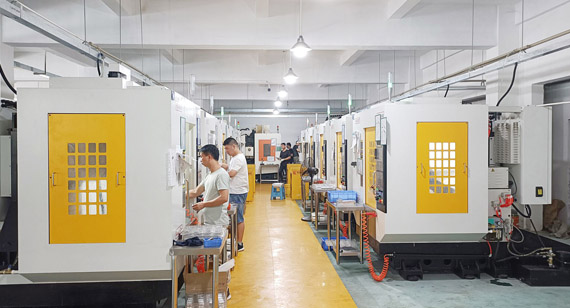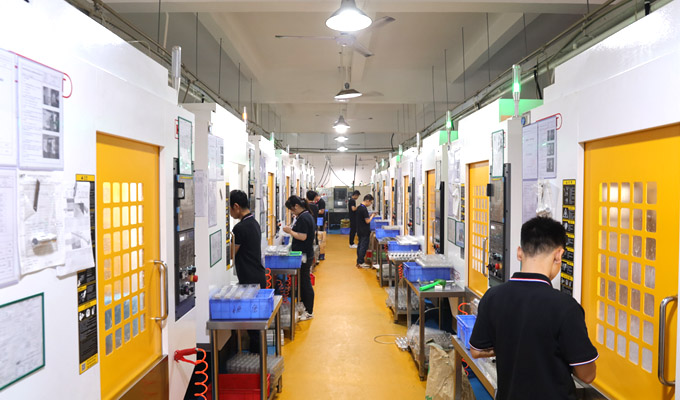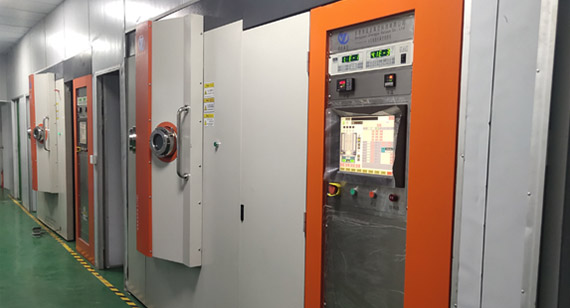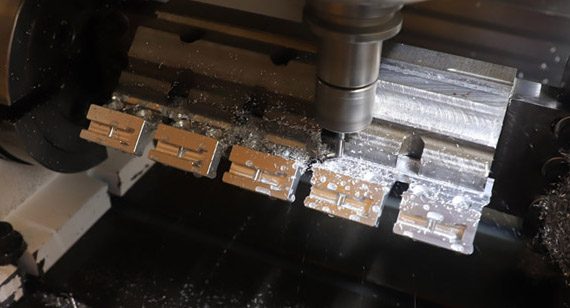
16 years one-stop China custom CNC machining parts factory

Hey there I’m VMT Sam!
With 25 years of CNC machining experience we are committed to helping clients overcome 10000 complex part-processing challenges all to contribute to a better life through intelligent manufacturing. Contact us now
 474 |
Published by VMT at Jul 24 2026 | Reading Time:About 5 minutes
474 |
Published by VMT at Jul 24 2026 | Reading Time:About 5 minutes


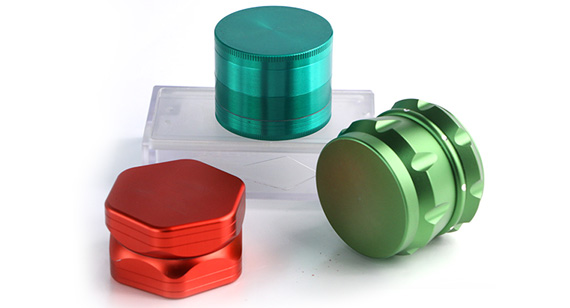
Choosing between an aluminum and zinc herb grinder is not only a material decision. It also determines the manufacturing process, tooling investment, design flexibility, surface finish, assembly control, unit cost, and production quantity suitable for your project.
CNC-machined aluminum is generally a practical choice for prototypes, premium custom designs, frequent design revisions, and low-to-medium-volume production. Zinc alloy grinders are more commonly produced by die casting when the design is stable and projected quantities can justify dedicated tooling.
However, material alone does not determine product quality. Smooth rotation, sharp teeth, reliable threads, stable magnets, consistent anodized colors, secure screens, and repeatable assembly all depend on how the components are designed, machined, finished, inspected, and assembled.
This guide explains the main differences between aluminum and zinc grinders, the parts of two-piece to four-piece designs, critical CNC machining controls, surface finishing risks, inspection requirements, and how to select a suitable custom manufacturing partner.
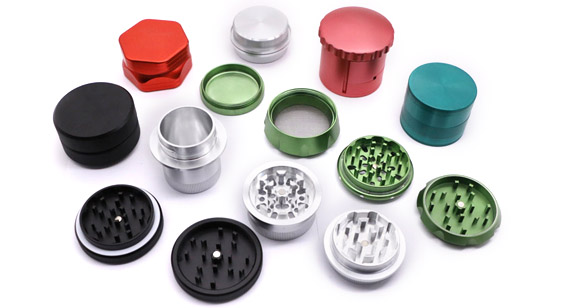
A custom herb grinder, also called a weed grinder or spice grinder in different markets, is a multi-component product designed to break material into smaller and more consistent particles through manually rotated teeth.
The most common designs use two, three, or four main layers. Depending on the product concept, the assembly may also include magnets, O-rings, stainless steel screens, shafts, washers, retaining rings, engraved logos, or custom packaging.
From a manufacturing perspective, a grinder is not simply a round container with teeth. It is a precision assembly containing several interacting features:
Internal and external diameters must remain concentric. Teeth must be positioned correctly without excessive burrs. Threads must remain functional after surface finishing. Mating layers must rotate smoothly without excessive looseness. Magnet pockets must control depth, diameter, polarity, and adhesive. Screens and retaining structures must remain secure after assembly. Cosmetic surfaces must remain free from scratches, dents, stains, and color differences.
A successful custom grinder project therefore requires coordinated control of design, material, CNC turning, CNC milling, deburring, surface finishing, inspection, assembly, and packaging.
Aluminum and zinc alloys can both be used to manufacture grinder components, but they normally follow different production routes.
| Comparison Factor |
CNC-Machined Aluminum Grinder |
Zinc Alloy Die-Cast Grinder |
| Primary manufacturing process | CNC turning and CNC milling | High-pressure die casting with possible secondary machining |
| Initial tooling investment | No dedicated production mold is normally required | Requires a dedicated steel die |
| Prototype production | Suitable for prototypes and design verification | Prototype tooling may increase initial cost and lead time |
| Design modifications | CAD and CNC programs can be updated relatively quickly | Major changes may require die modification or new tooling |
| Small-batch production | Usually more practical | Tooling cost may make small quantities less economical |
| High-volume production | Unit cost remains influenced by machining time and material removal | Can become more efficient after tooling is approved |
| Teeth and precision features | Teeth, pockets, threads, and fits can be machined directly | Critical features may require secondary CNC machining |
| Weight | Typically lighter for a similar product volume | Zinc alloy normally provides a heavier feel |
| Common finishes | Bead blasting, anodizing, hard anodizing, polishing, PVD, laser engraving | Plating, painting, powder coating, electrophoresis, or other compatible finishes |
| Best suited to | Premium custom designs, prototypes, flexible quantities, frequent revisions | Stable high-volume designs with sufficient tooling budget |
The better choice depends on your design, quantity, target price, appearance expectations, weight preference, performance requirements, and expected product lifecycle.
CNC-machined aluminum is often selected when a customer needs greater design flexibility or wants to validate the product before committing to dedicated tooling.
It may be the more suitable option when:
The product is still in the prototype or development stage. The teeth, chambers, threads, logo position, or external shape may change. You require a premium machined appearance. The expected order quantity does not justify a die-casting mold. The grinder contains critical rotating or threaded fits. You need different sizes, colors, or branded versions. You want to test market demand before scaling production. You require production based on proprietary 2D or 3D drawings.
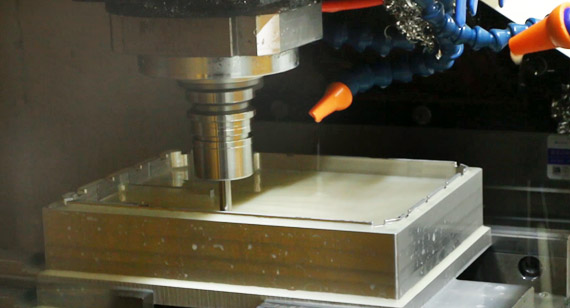
CNC machining also allows the manufacturer to divide the product into controlled turning and milling operations. Circular walls, bores, grooves, threads, and mating diameters can be turned, while teeth, magnet pockets, logos, holes, and positioning features can be milled.
The main purchasing consideration is that machining time and material removal continue to affect the unit cost. Therefore, the product should be designed to deliver the required performance without adding unnecessary deep cavities, extremely thin walls, excessive teeth, or difficult tool access.
Zinc alloy die casting can be considered when the design is stable and expected production quantities are high enough to support the initial tooling investment.
It may be suitable when:
The annual quantity is relatively high and predictable. The product design is unlikely to change. The buyer accepts the mold cost and tooling lead time. Complex near-net shapes can reduce later material removal. A heavier product feel supports the brand positioning. The selected coating or plating system is compatible with the zinc alloy. Secondary machining can be added for critical threads, bores, or rotating fits.
High-pressure die casting uses a reusable steel die and is capable of producing complex shapes at high production rates. Even so, a die-cast component may still require CNC machining, trimming, deburring, polishing, plating, inspection, and assembly before it becomes a finished product.
The final decision should therefore compare the complete project cost rather than only the raw material price. Mold construction, trial runs, secondary machining, finishing, rejected cosmetic parts, assembly, packaging, and design-change risk must all be included.
Different grinder structures create different manufacturing and inspection requirements.
Two-Piece Herb Grinder
A two-piece grinder normally consists of a top lid and a lower grinding chamber. Both sides contain teeth, and the material remains inside the same chamber after grinding.
The main manufacturing controls include:
This structure contains fewer components, but smooth rotation still depends on the concentricity and fit between the upper and lower sections.
Three-Piece Herb Grinder
A three-piece design normally adds a storage or collection chamber below the grinding section.
In addition to the controls required for a two-piece product, the manufacturer must manage:
The additional threaded connection makes anodizing allowance and thread inspection more important.
Four-Piece Herb Grinder
A four-piece grinder commonly includes:
Depending on the design, the assembly may also contain magnets, O-rings, stainless steel screens, rotating shafts, PTFE washers, retaining rings, or plugs.
Because multiple layers interact, inspection cannot focus only on individual part dimensions. The manufacturer should also test the complete assembly for rotation, thread engagement, axial movement, layer alignment, screen retention, magnetic closure, noise, and cosmetic consistency.
Top Lid
The lid provides the user interface, visual branding, and part of the grinding function. Its external profile, magnet pocket, teeth, knurling, logo area, and mating diameter must be coordinated with the lower chamber.
Poor concentricity or incorrect clearance can cause wobbling, scraping, uneven rotation, or a loose feel.
Grinding Chamber
The grinding chamber contains the mating teeth and directs material toward the lower section. The chamber depth, wall thickness, tooth position, discharge openings, and mating diameter must be designed for tool access and chip evacuation.
Very deep cavities or narrow gaps may require longer tools, additional machining operations, or modified tooth geometry.
Machined Teeth
The number, height, profile, spacing, and orientation of the teeth affect both machining time and functional performance.
Important controls include:
Aggressive polishing or blasting can change tooth edges, so finishing requirements should be considered before the final toolpath is approved.
Threads
Threads connect the storage and collection layers. Problems frequently appear when the thread dimensions are accepted before finishing but become too tight after anodizing or coating.
The DFM review should confirm:
Hard anodizing can create measurable dimensional growth, which is especially important for threads, bores, shafts, and closely fitted surfaces.
Magnets and Magnet Pockets
Magnet performance depends on more than magnetic strength. The pocket diameter, depth, bottom flatness, polarity, adhesive type, adhesive quantity, and curing process must all be controlled.
A pocket that is too loose may depend excessively on adhesive. A pocket that is too tight may damage the magnet or make assembly unstable. Excess adhesive can overflow onto visible surfaces or interfere with rotation.
Stainless Steel Screen
The screen must be cut, formed, inserted, and retained without becoming loose or uneven.
The surrounding groove or retaining feature should be designed to avoid:
O-Rings, Shafts, and Washers
O-rings or polymer washers may be used to reduce direct metal contact, adjust rotational resistance, or control noise. Shafts and washers also influence alignment and axial movement.
Their grooves, seating surfaces, compression, and assembly direction should be confirmed during prototype testing rather than left until mass production.
Aluminum 6061
Aluminum 6061 is a practical starting point for many custom CNC grinder projects because it offers a useful balance of machinability, strength, corrosion resistance, availability, and compatibility with anodizing.
It is commonly considered for lids, chambers, threaded bodies, internal structures, and custom external shapes.
Aluminum 6063
Aluminum 6063 may be considered for appearance-focused products, particularly when the raw material form, surface preparation, and anodizing requirements have been reviewed together.
The buyer should confirm the exact alloy temper and raw material route because final cosmetic consistency depends on more than the alloy number alone.
Aluminum 7075
Aluminum 7075 provides higher strength than common 6xxx-series aluminum alloys, but that does not automatically make it the best option for every grinder.
It may increase material and machining costs without providing meaningful customer value when the design does not require its additional strength. It should be selected only when the structural, positioning, weight, or premium-material requirement justifies it.
The Aluminum Association describes 6xxx-series alloys as versatile, heat-treatable alloys with moderately high strength and good corrosion resistance, while 7xxx-series alloys include very-high-strength grades such as 7075.
Zinc Alloys
Zinc alloys are normally evaluated together with the die-casting process rather than as direct substitutes for CNC-machined aluminum bar or billet.
The selected zinc grade, die design, parting line, ejector locations, draft angles, plating requirements, and secondary machining operations must be confirmed before tooling begins.
Stainless Steel
Stainless steel can provide higher weight, wear resistance, and a distinctive metallic appearance. However, it normally requires longer machining time and greater tool consideration than aluminum.
It may be used for complete grinder bodies, screens, shafts, pins, inserts, or selected premium components.
Titanium
Titanium may support lightweight premium positioning, corrosion resistance, and product differentiation, but its material and machining costs are substantially higher than those of common aluminum alloys.
It is more suitable for projects where the material itself contributes to brand value rather than for cost-sensitive general production.
Brass and Copper Alloys
Brass or copper alloys may be used for decorative rings, badges, inserts, knobs, or selected components. Their weight, surface oxidation, finish, and interaction with adjacent materials should be evaluated before production.
A custom grinder should move through a controlled sequence from drawing review to packaging.
1. Drawing and Requirement Review
The manufacturer reviews the 2D drawings, 3D models, assembly relationships, materials, finishes, quantities, cosmetic standards, and critical dimensions.
Missing requirements should be clarified before quotation or prototype production.
2. DFM Analysis
DFM analysis identifies manufacturing and assembly risks, including:
The objective is not simply to make the part machinable. It is to reduce redesign, rejected samples, delayed surface finishing, unstable assembly, and unnecessary production cost.
3. Raw Material Confirmation
The alloy, temper, dimensions, material certificate requirements, surface condition, and material batch should be confirmed.
For anodized assemblies containing several visible layers, using consistent raw material and process conditions can help reduce avoidable appearance variation.
4. CNC Turning
CNC turning is commonly used for:
Whenever possible, related rotating fits should be produced from consistent datums to reduce concentricity errors.
5. CNC Milling
CNC milling is commonly used for:
The toolpath should balance tooth definition, cycle time, tool rigidity, chip evacuation, and deburring requirements.
6. Deburring and Surface Preparation
Loose burrs must be removed from teeth, holes, threads, chamber edges, and assembly surfaces.
Deburring should not create new problems by rounding teeth, changing mating diameters, damaging threads, or leaving inconsistent visible edges.
7. Trial Assembly Before Finishing
Before surface finishing, the manufacturer should verify:
This allows dimensional or toolpath corrections to be made before anodizing increases the cost of rework.
8. Surface Finishing
The finish may include bead blasting, color anodizing, hard anodizing, brushing, polishing, PVD, plating, painting, electrophoresis, or laser engraving.
The selected finish must be compatible with the material, dimensions, visual standard, product positioning, and expected production quantity.
9. Final Inspection and Assembly
After finishing, each critical feature should be rechecked. Components are then assembled under controlled conditions to avoid scratches, reversed magnets, excessive adhesive, loose screens, incorrect O-rings, or mixed colors.
10. Protective Packaging
Finished components should be separated to prevent metal-to-metal contact. Custom trays, sleeves, bags, foam, partitions, or individual boxes may be required depending on the finish and shipping method.
| Customer Problem |
Possible Manufacturing Cause |
Recommended Control |
| Lid is difficult to rotate | Incorrect mating diameter, poor concentricity, burrs, coating buildup | Control common datums, finishing allowance, deburring, and final rotation test |
| Lid feels too loose | Excessive assembly clearance or inconsistent diameters | Define functional clearance and inspect mating dimensions |
| Threads jam after anodizing | Coating thickness was not included in the tolerance analysis | Adjust pre-finish dimensions, use gauges, and test after finishing |
| Teeth are not sharp enough | Unsuitable tooth geometry, cutter limitations, or excessive edge rounding | Review cutter access, toolpath, edge break, and finishing method |
| Tooth edges contain burrs | Unstable milling, worn tools, or insufficient deburring | Add in-process checks and controlled deburring |
| Layers show different colors | Different alloy batches, inconsistent blasting, or anodizing variation | Use approved samples, consistent materials, and set-based visual inspection |
| Magnet becomes loose | Incorrect pocket fit, insufficient adhesive, or poor curing | Control pocket dimensions, adhesive quantity, polarity, and curing process |
| Adhesive overflows | Excessive glue or unsuitable assembly method | Standardize dispensing quantity and add visual inspection |
| Screen becomes loose | Incorrect groove, riveting, pressing, or screen size | Verify screen retention and inspect complete assembly |
| Product is scratched during assembly | Unprotected work surfaces or metal-to-metal contact | Use clean fixtures, protective films, trays, and controlled handling |
| Complete product wobbles | Accumulated flatness, height, or concentricity errors | Inspect both individual components and the final stack assembly |
| Batch rotation feels inconsistent | Individual parts pass inspection but assembly clearance varies | Use matched assembly inspection and functional sampling or full testing |
Bead Blasting and Anodizing
Bead blasting creates a more uniform matte texture before anodizing, while anodizing adds color and an oxide layer to the aluminum surface.
Critical controls include:
Hard Anodizing
Hard anodizing may be selected when greater surface hardness and wear resistance are required.
Because the coating can cause dimensional growth, it should not be specified only as a cosmetic upgrade. Threads, bores, shafts, magnet pockets, and rotating fits must be reviewed before machining dimensions are finalized.
Brushing
Brushing creates a directional texture and can support a premium visual effect. However, all visible parts should maintain a consistent brushing direction.
Edges, logos, curved profiles, and recessed areas may require special process planning.
Polishing
Polishing can produce a smooth or reflective surface, but it also removes material and can soften edges.
It should be controlled carefully around teeth, threads, logos, sharp transitions, and dimensionally critical areas.
PVD Coating
PVD can provide distinctive colors and a premium metallic appearance. Surface defects below the coating may remain visible, so pre-coating machining, polishing, cleaning, and handling standards are important.
Laser Engraving and Branding
Laser engraving can add logos, serial numbers, patterns, scale marks, or traceability information.
The drawing should specify the position, size, depth or contrast, orientation, and whether engraving is completed before or after the main surface finish.
For additional finish options, buyers can review VMT’s aluminum surface finishing service page. VMT’s current finishing page includes anodizing, hard anodizing, polishing, painting, powder coating, electrophoresis, and blasting options.
Not every grinder dimension requires an extremely tight tolerance. Tolerances should be assigned according to function.
Critical Functional Features
These may include:
Cosmetic Features
These may include:
Recommended Inspection Methods
Depending on the drawing and component structure, inspection may use:
A single inspection report cannot replace functional assembly testing. Multi-piece grinder components should be evaluated both individually and as a complete product.
VMT’s published quality control process includes DFM analysis, incoming material inspection, dimensional inspection, and project-specific quality controls.
There is no universal order quantity at which one process automatically becomes cheaper. The correct choice depends on part size, geometry, material, cycle time, finish, tolerance, scrap rate, tooling complexity, assembly, and forecast stability.
CNC Machining Cost Structure
CNC machining cost is influenced by:
Its main advantage is that the buyer can begin without a dedicated production die and can revise the design through updated drawings and programs.
Zinc Die-Casting Cost Structure
Zinc die casting cost is influenced by:
Its economic advantage normally appears when the design is stable and sufficient production volume spreads the tooling investment across many parts.
Practical Purchasing Decision
Choose CNC-machined aluminum when design flexibility, lower initial tooling commitment, controlled features, premium appearance, or smaller production quantities are important.
Evaluate zinc die casting when the design has been validated, demand is stable, and the total projected volume supports dedicated tooling.
Some projects may use both processes: die casting for the main body and CNC machining for critical threads, bores, teeth, logos, or assembly features.
A suitable supplier should help you reduce engineering and supply-chain risk rather than simply quote the lowest unit price.
Before placing an order, ask the following questions.
Can the Supplier Manufacture From Your Drawings?
Confirm that the factory supports customer-designed products rather than only selling existing retail models.
Ask whether it accepts STEP, STP, IGES, X_T, DWG, DXF, PDF, or other required file formats.
Does the Supplier Provide DFM Feedback?
The supplier should identify tooth access, wall thickness, thread allowance, magnet fit, screen retention, finishing risks, and assembly problems before production.
Can It Coordinate Turning and Milling?
Round grinder components often require both CNC turning and CNC milling. The supplier should explain how datums, tool transitions, concentricity, and repeatable setups are controlled.
Can It Manage Surface Finishing?
Ask how the supplier controls:
Can It Inspect the Complete Assembly?
Individual parts can pass dimensional inspection and still fail after assembly.
The inspection plan should include rotation, thread engagement, magnet retention, screen installation, layer alignment, color matching, and appearance.
Can It Support Prototype to Batch Production?
The supplier should explain how prototype findings are converted into production drawings, control plans, inspection standards, assembly instructions, packaging specifications, and batch records.
Does It Protect Proprietary Designs?
For patented or confidential products, confirm NDA support, drawing access control, controlled sample display, and authorization requirements before project images are published.
Can It Protect Finished Parts During Export?
Premium anodized, polished, or PVD-coated components require protective packaging that prevents scratches and metal-to-metal contact during assembly, storage, and international transportation.
VMT provides custom CNC turning, milling, surface finishing, inspection, and assembly support for customer-designed metal and engineering plastic components.
For custom grinder projects, the manufacturing scope may include:
A typical project process includes:
Receive drawings, models, quantity, material, finish, and assembly requirements. Review manufacturability, tolerances, teeth, threads, magnets, screens, and cosmetic risks. Confirm quotation and production specifications. Machine and inspect prototype components. Complete finishing and trial assembly. Record customer feedback and update controlled specifications. Begin batch production after sample approval. Complete final inspection, assembly, documentation, and packaging.
VMT’s published CNC machining capabilities include CNC turning, CNC milling, three-axis, four-axis, and five-axis machining for prototypes and production parts.
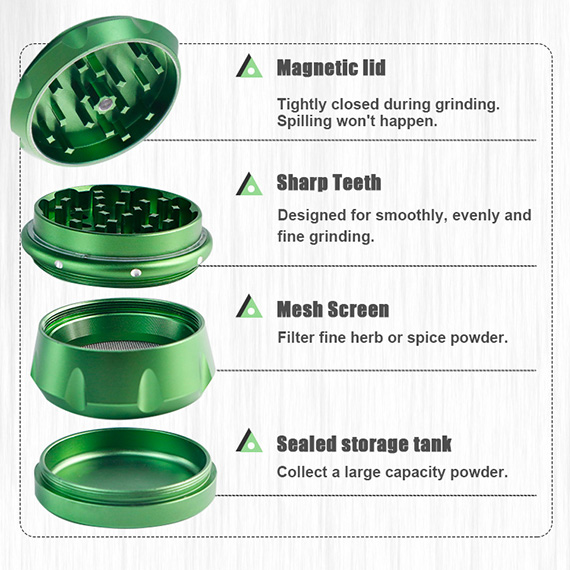
A four-piece grinder may contain deep internal cavities, overlapping turning and milling areas, machined teeth, magnet pockets, a stainless steel screen, a rotating shaft, and a polymer washer.
These features create risks such as:
A separate VMT manufacturing article documents these types of machining and assembly considerations in more detail. The case page should be used to demonstrate the manufacturing process, while this guide remains focused on material selection and purchasing decisions.
For detailed production steps, read the four-piece CNC herb grinder manufacturing process.
The correct material and manufacturing process depend on your design, expected quantity, appearance standard, assembly structure, target cost, and future production plan.
Send VMT your 2D drawings, 3D CAD models, material requirements, surface finish, and estimated quantity. Our team will review:
VMT manufactures customer-designed CNC parts rather than limiting buyers to standard stock products. From the first prototype to repeat batch production, the objective is to help you control manufacturing risk, assembly performance, appearance consistency, and delivery quality.
Upload your drawings to receive a project-specific review and quotation.
Send your drawings, requirements, and target quantity. VMT will review your project and provide a machining solution and quote.
All information and uploaded files are secure and confidential.
1 Tell us what you need
2 Get solution & quote
3 Approve production
Email: inquiry@vimetal.com.cn
Is Aluminum or Zinc Better for a Custom Herb Grinder?
Aluminum is generally more suitable for CNC-machined prototypes, premium custom products, design revisions, and flexible production quantities. Zinc alloy die casting may be more economical for stable high-volume products after the tooling investment is justified.
The better choice depends on quantity, weight, appearance, design stability, tooling budget, finishing, and functional requirements.
What Is the Most Common Aluminum for CNC Herb Grinders?
Aluminum 6061 is a practical starting point for many projects because it provides a useful balance of machinability, strength, availability, corrosion resistance, and anodizing compatibility.
However, the final alloy should be selected according to the drawing, finish, product positioning, mechanical requirements, and raw material form.
What Are the Main Parts of a Four-Piece Herb Grinder?
A typical four-piece design includes a top lid, grinding chamber, screen chamber, and bottom collection chamber.
It may also contain magnets, O-rings, stainless steel screens, shafts, washers, retaining rings, or other customer-designed components.
Why Do Grinder Threads Become Tight After Anodizing?
Anodizing forms a coating on the aluminum surface and may change the effective dimensions of internal and external threads.
The manufacturer should include the specified coating thickness in the tolerance analysis and inspect the completed threads after finishing.
How Can Burrs on Grinder Teeth Be Controlled?
Burr control starts with tooth geometry, cutter selection, tool condition, workholding, toolpath, and cutting parameters.
After machining, burrs should be removed with a controlled method that does not excessively round functional tooth edges.
How Can Color Differences Between Grinder Layers Be Reduced?
Color consistency can be improved by controlling raw material, blasting parameters, anodizing conditions, approved samples, hanging methods, and visual inspection.
Components intended for one complete product should be inspected as a matched set when appearance requirements are strict.
Can Logos and Custom Colors Be Added?
Yes. Depending on the material and design, branding options may include laser engraving, mechanical engraving, printing, color anodizing, PVD, plating, painting, or other compatible finishes.
The drawing should specify the logo dimensions, position, orientation, color, depth, and acceptable appearance.
What Files Are Needed for a Custom Grinder Quote?
The most useful quotation package includes:
Providing both a 3D model and a controlled 2D drawing reduces uncertainty during DFM review and quotation.
Should the Grinder Be Tested Before Mass Production?
Yes. A finished prototype should be inspected and assembled after the final surface treatment.
The customer should approve rotation, threads, tooth geometry, magnets, screens, color, logo, appearance, packaging, and complete product feel before batch production begins.


 +86 15099911516




 Read more