16 years one-stop China custom CNC machining parts factory

Hey there I’m VMT Sam!
With 25 years of CNC machining experience we are committed to helping clients overcome 10000 complex part-processing challenges all to contribute to a better life through intelligent manufacturing. Contact us now
 75 |
Published by VMT at Jul 03 2026 | Reading Time:About 3 minutes
75 |
Published by VMT at Jul 03 2026 | Reading Time:About 3 minutes


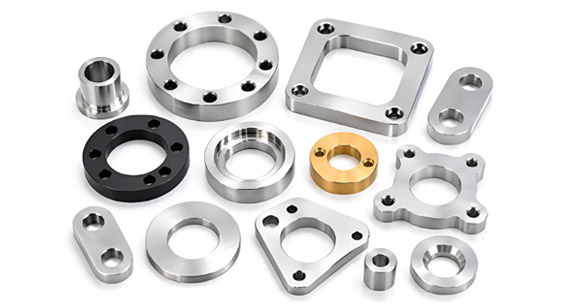
Custom CNC metal spacers play a vital role in mechanical engineering and assembly. These precision components are essential for maintaining precise clearance, aligning parts, and ensuring structural integrity across industries such as aerospace, electronics, automotive, and medical devices. While standard off-the-shelf options are widely available, custom metal spacer solutions become necessary for your company's proprietary designs or R&D projects to meet exact dimensions, tight tolerances, and specific material properties required by your application.
This blog post will introduce the definition of CNC metal spacers, their common types, material selection guides, and solutions to common manufacturing challenges. At the end of the article, we will also share a case study on how our factory successfully resolved issues with warpage and high defect rates for a custom spacer a customer designed for their robotics project.
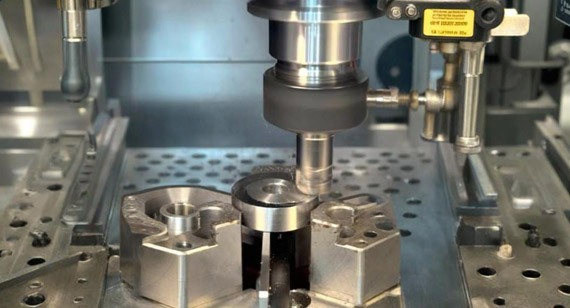
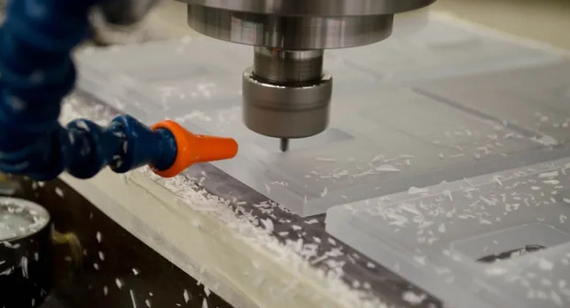
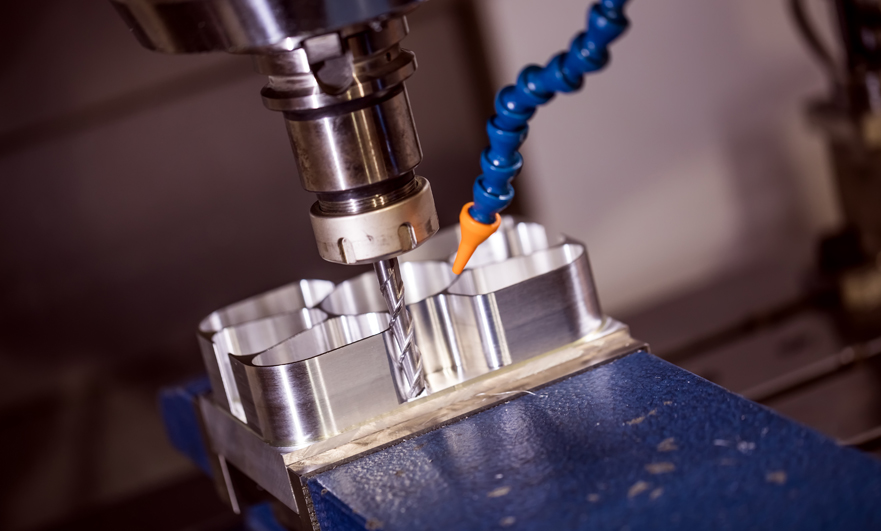
CNC machined metal spacers are precision components produced through a process where computer-programmed controls guide various cutting tools on a lathe or mill. By following a pre-set path, the machine performs cutting, milling, turning, drilling, and grinding to remove excess material from a metal block, ultimately achieving the exact specifications required by the design blueprint. Thanks to this programmatic control, precision CNC machining spacers offer exceptional dimensional accuracy. This allows them to perfectly meet the strict tolerances, flatness, and tight assembly requirements of demanding fields like aerospace, electronics, automotive, and medical devices.
Through CNC custom spacer manufacturing, you are no longer limited by standard catalog sizes. Whether your design calls for a unique inner diameter, an irregular outer profile, an extremely thin wall thickness, or specialized metal materials, CNC machining provides the ultimate flexibility to create custom metal spacers that perfectly match your design specifications.
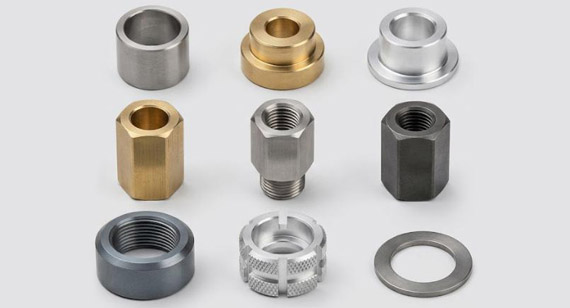
Depending on your assembly requirements, spacers can be designed in various geometric shapes and functional structures:
High-precision assembly calls for demanding requirements regarding surface flatness—warped metal spacers can lead to component misalignment, uneven load distribution, or even structural failure. Therefore, careful and precise control over the manufacturing process is necessary to achieve strict flatness tolerances for spacers.
To ensure that high-tolerance metal spacers maintain perfect flatness, the following steps are essential:
Untreated metal spacers are susceptible to scratching, which can compromise both their aesthetic appeal and assembly precision. To ensure high scratch resistance for CNC metal spacers, factories typically recommend combining surface hardening treatments with post-machining surface finishes. Below are several common surface treatment options:
Anodizing is the most popular surface treatment for CNC machined aluminum spacers. It can achieve a clear finish (clear anodizing) to maintain the raw metal color, a low-profile look for black anodized spacers, a wide variety of vibrant colors (Type II anodizing), or superior scratch resistance (hardcoat anodizing). To achieve uniform color and flatness on multi-colored (Type II) aluminum spacers, there are three primary variables your partner factory must control and manage:
Different aluminum grades (such as 6061, 7075) react differently to anodizing chemicals. Even different batches of the same grade can lead to color variations. A reliable factory always sources raw materials from trusted mills and strictly segregates batches to ensure uniformity.
Any residual cutting fluids, oils, or fingerprints will block the anodizing solution, resulting in uneven coloring or spotting. Therefore, thorough chemical degreasing and acid etching are essential to create a pristine, chemically active surface before the process begins.
During the anodizing process, the current density, bath temperature, and chemical concentrations must remain perfectly stable. Additionally, proper racking design—which ensures secure electrical contact without shielding the spacer's surface areas—guarantees that the anodic oxide layer grows at an identical rate across every single part.
Selecting the right metal for custom spacers depends heavily on the operating environment of the product. Below is a quick breakdown table showing the most popular metal materials for custom spacers to guide your material selection:
| Material Type |
Core Advantages |
Typical Applications for Spacers |
| CNC Aluminum Spacers (e.g., 6061 or 7075) |
Lightweight, high strength-to-weight ratio, excellent thermal conductivity, and highly customizable with anodized colors. | Aerospace products, consumer electronics, automotive racing components. |
|
Stainless Steel Custom Spacers (e.g., 304 or 316) |
Superior tensile strength, high durability, excellent wear resistance, and naturally serves as a corrosion-resistant metal spacer. | Marine environments, medical devices, food processing machinery, and heavy industrial equipment. |
|
Brass CNC Spacers (e.g., HPb59-1 ) |
Low friction, non-magnetic, spark-resistant, excellent machinability, and features a bright, golden metallic appearance. | Electrical hardware, plumbing fixtures, and musical instrument components. |
|
Titanium Custom Spacers (e.g., Titanium Grade 5 ) |
Exceptional strength-to-weight ratio (as strong as steel but 45% lighter), extreme corrosion resistance, and excellent biocompatibility. | high-performance racing, and deep-sea exploration equipment, medical uses. |
|
Copper CNC Spacers (e.g., C11000 ) |
Industry-leading electrical and thermal conductivity, excellent ductility, and natural antimicrobial properties. | High-power electronics,and grounding components. |
|
Carbon Steel Spacers (e.g., 1018 ) |
Highly cost-effective, excellent machinability; Requires surface plating (like zinc) to prevent rust. | General machinery manufacturing |
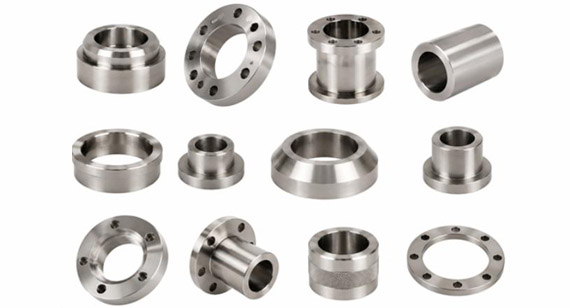
A leading customer focusing on high-end industrial robotics manufacturing contacted us with an urgent need for a batch of custom metal spacers for prototyping. The product design was highly demanding, specifying aerospace-grade 6061-T6 aluminum to manufacture ultra-thin, high-tolerance metal spacers. The customer set stringent machining requirements: the thickness tolerance had to be consistently controlled within +/-0.01 mm, alongside strict demands for spacer surface roughness (Ra 0.6) and surface flatness. Prior to this, the customer's previous supplier failed to meet production requirements. This was primarily because, during traditional face turning processes, thin-walled aluminum components are highly susceptible to severe warpage and deformation caused by cutting heat and clamping forces, leading to massive product failures and a persistently high rejection rate.
After a detailed analysis of the part blueprints and material properties, our senior engineering team decided to utilize a precision CNC lathe machining process for the spacers, paired with a proprietary vacuum mandrel fixture. The core advantage of this fixture lies in abandoning the localized, point-to-point clamping method of traditional three-jaw chucks. Instead, it perfectly and uniformly distributes the holding force across the entire face of the thin-walled spacer via vacuum suction, thereby eliminating any physical deformation caused by mechanical clamping forces. In terms of cutting strategy, we applied a two-stroke machining approach: first performing rough machining to remove most of the material, then allowing the part to cool naturally to completely release cutting stresses, and finally using high-precision diamond inserts for high-speed micro-finishing cuts.
Thanks to the successful application of the custom vacuum fixture and the flawless execution of the precision CNC lathe spacer machining process, the component deformation issue during machining was completely overcome. Within the production cycle of this small-batch customization, every single CNC aluminum spacer achieved a 99.9% yield rate on the first pass, perfectly meeting the flatness, surface roughness, and thickness tolerance standards required by the customer.
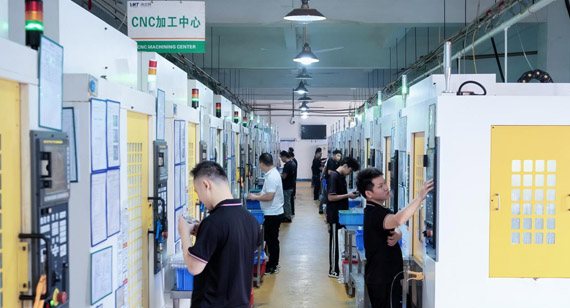
Whether you are developing precision drones or consumer electronics assemblies, or need a reliable batch of heavy-duty hardware or brass spacers for musical instruments, precision, assembly fit, aesthetic appearance, scratch resistance, and flatness are all vital elements. High-quality custom metal spacers ensure that your assembly fits flawlessly and your product remains both beautiful and durable.
Our factory has over a decade of rich manufacturing experience in precision CNC machined spacers, strict surface roughness control, and aluminum alloy anodizing color consistency management. We have not only mastered the machining techniques for various high-tolerance metal spacers but can also provide you with a one-stop manufacturing solution from small-batch prototyping to large-scale mass production. Feel free to send us your drawings anytime to receive a professional technical evaluation and a competitive custom budget quote! [2D drawing (PDF file), 3D drawing (IGS/STP/STEP file)]

What is the standard tolerance for custom metal spacers?
For conventional precision CNC machined spacers, the standard linear and thickness tolerances typically range between +/-0.05 mm and +/-0.1 mm. However, for high-end applications in high-precision industries like medical and aerospace, professional factories can firmly control tight tolerances for thickness, as well as inner and outer diameters, within +/-0.01 mm by utilizing specialized fixtures and micro-cutting processes.
Does your factory support small-batch custom metal spacers, or is mass production mandatory?
We fully support small-batch production. Due to the flexibility and mold-free nature of CNC machining, programming and setting up machines for orders ranging from 10 to 100 pieces is highly economical and efficient.
What is the typical turnaround time for custom spacer prototypes?
The turnaround time for prototyping primarily depends on raw material stock and design complexity. Generally, if standard grades of aluminum, stainless steel, or brass are used, the entire prototyping process—from 3D drawing confirmation, CNC machining, deburring, and surface polishing to final quality inspection—can be completed and shipped in about 7 working days.
In practical applications, why should CNC machined spacers be preferred over cheaper stamped washers?
CNC machined spacers feature smooth, burr-free edges without the tensile dishing or shear zones caused by stamping. Their tolerances are several times tighter than those of stamping, and they allow for the effortless integration of precision threads into the inner bore or outer diameter of the spacer.
How does the surface roughness of a spacer affect actual assembly and operational performance?
Lower surface roughness (meaning a smoother spacer surface) ensures maximum surface contact between the spacer and its mating components. This is critical in high-load or high-vibration applications, as it prevents joints from loosening over time due to material settling.
What is the difference between clearance spacers and threaded spacers?
Clearance spacers feature a smooth, unthreaded inner bore that simply allows bolts or screws to pass directly through. In contrast, threaded metal spacers (or standoffs) feature internal or external threads, enabling them to provide clearance distance while also acting as a functional nut or bolt to fasten components together.
The technical information and manufacturing advice shared on the VMT website are for general guidance only. While we strive for accuracy, VMT does not guarantee that the processes, tolerances, or material properties mentioned are applicable to every specific project. Any reliance you place on such information is strictly at your own risk. It is the buyer's responsibility to provide definitive engineering specifications for any production orders. Final specifications and service terms shall be subject to the formal contract or quotation confirmed by both parties.


 +86 15099911516




 Read more