16 years one-stop China custom CNC machining parts factory

Hey there I’m VMT Sam!
With 25 years of CNC machining experience we are committed to helping clients overcome 10000 complex part-processing challenges all to contribute to a better life through intelligent manufacturing. Contact us now
 651 |
Published by VMT at Aug 31 2026 | Reading Time:About 8 minutes
651 |
Published by VMT at Aug 31 2026 | Reading Time:About 8 minutes


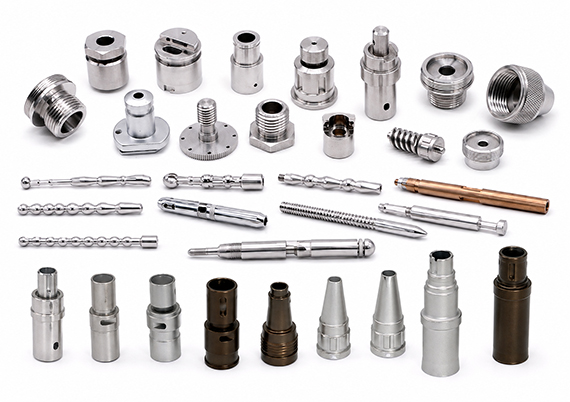
A CNC turning quote can look simple until material, machining time, tolerance, tooling, finishing, inspection, and order quantity are considered together. If these cost drivers are overlooked, you may receive a low initial price but face additional costs, dimensional problems, rework, or unstable production later.
CNC turning parts price is mainly determined by material, setup and programming, machining cycle time, tooling, tolerance, secondary operations, surface finishing, inspection, quantity, packaging, and shipping. Fixed setup costs are distributed across the batch, so the unit price generally decreases as production volume increases.
Understanding how these costs are calculated helps you compare CNC turning quotations more accurately and identify opportunities to reduce cost without affecting the function or quality of your parts.
For CNC machining buyers and suppliers, understanding CNC machining technology is only part of the quotation process. A reasonable CNC turning price should also consider the manufacturing method, production efficiency, quality requirements, delivery conditions, and the risks involved in consistently producing the required parts.
A detailed CNC turning quotation should start with the drawing rather than with a general price-per-kilogram or price-per-hour assumption.
1. Review the Part Drawing and Machining Requirements
First, evaluate the key and complex features in the drawing and determine the appropriate CNC machining process.
This includes reviewing:
The machining sequence can then be planned and the approximate processing time of each operation determined.
2. Calculate the CNC Machine Cost
Machining cost can be estimated according to the machine required for the job and the time needed to manufacture each part.
Different components may require:
Using a more expensive machine does not always mean a more expensive final part. If a turn-mill or Swiss machine eliminates secondary operations and additional setups, the total manufacturing cost may actually decrease.
3. Add Other Manufacturing Costs
The final CNC machining price should also consider:
These costs should be evaluated together rather than using material cost alone to estimate the final part price.
For purchasing and engineering teams, a useful way to understand a CNC turning quotation is to separate fixed production costs from variable costs.
CNC Turning Unit Price Formula
| Cost Component | What Affects the Price |
|---|---|
| Material | Alloy grade, bar diameter, stock size, material utilization and scrap |
| Setup & Programming | CAM programming, machine setup, tooling preparation and first-part verification |
| Machining Cost | CNC cycle time × applicable machine rate |
| Tooling | Inserts, drills, taps, boring bars, grooving tools and special tools |
| Secondary Operations | Milling, cross drilling, grinding, EDM, thread rolling or heat treatment |
| Surface Finishing | Anodizing, plating, passivation, polishing, black oxide and other treatments |
| Inspection | Tolerance, measurement time, CMM, FAI and inspection documentation |
| Quantity | Determines how fixed setup costs are distributed across each component |
| Packaging & Shipping | Protective packaging, weight, destination and delivery method |
For many CNC turned parts, cycle time is one of the most important price factors.
A simple spacer may require only facing, OD turning, drilling and parting. A complex fitting may require boring, multiple grooves, internal and external threads, cross holes, tight tolerances and additional inspection.
Even when the two parts use approximately the same amount of raw material, their CNC turning prices can therefore be very different.
Tip: Machine time should include more than theoretical cutting time. Tool changes, positioning, loading, unloading, inspection and other production activities can also affect the real manufacturing cycle.
You can link calculate CNC machining time here to your existing machining-time guide.
For early-stage estimating, some CNC machining workshops use ratios between material cost and machining cost.
These methods can be useful for preliminary evaluation, but they should not replace a drawing-based quotation.
Large CNC Turned Parts
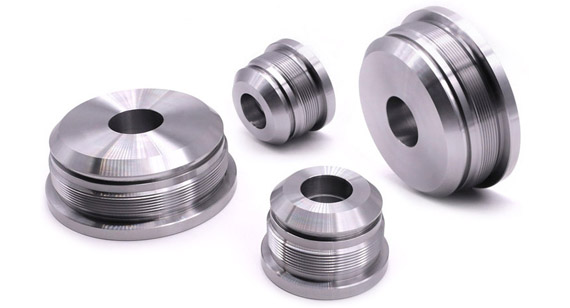
For relatively large and heavy parts:
The actual ratio generally decreases as production quantity increases because fixed costs can be distributed across more parts.
Small and Medium CNC Turned Parts
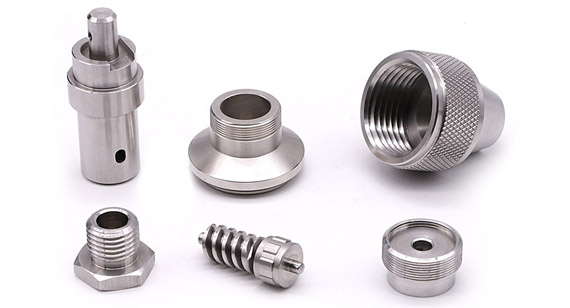
For small and medium-sized components:
Small components may use very little material, but material weight is not necessarily the main cost driver. Setup, machining cycle time, tooling, part handling, inspection, and production stability can represent a much larger percentage of the unit price.
Note: These ratios are rough shop-floor estimation references, not universal CNC turning price standards. Actual CNC turning prices depend on material, machine type, geometry, tolerance, quantity, tooling, finishing, inspection requirements, labor cost, and production location.
Different CNC turned features can require different machining time, tools, and inspection methods. For this reason, early workshop estimates are often based on feature type, size, machining difficulty, and production quantity.
Drilling and Hole Machining
CNC lathe processing general material drilling processing. The depth is less than 2.5 times and the diameter is less than 25MM. According to the drill diameter of 0.05, the drill diameter is calculated according to the drill diameter of 0.12~25-60 (the smallest hole is greater than 0.5 yuan). The basic price of ordinary materials with a depth-to-diameter ratio greater than 2.5 is charged at 0.4 of the depth-to-diameter ratio, and the hole diameter accuracy is less than 0.1MM or the center distance is less than 0.1MM, and the charge is 5 yuan.
The charging standard for tapping is based on the diameter of the taper hole. 0.2 charge (cast iron is the standard, steel parts charge at 1.2). The standard basic price is 0.2-0.8 (depending on the batch size and processing difficulty)
For general-material drilling, the original shop-floor estimation method considers factors such as:
For holes with a depth below approximately 2.5 times the diameter and diameters below 25 mm, relatively simple drilling can generally be completed efficiently.
When the depth-to-diameter ratio exceeds 2.5, machining becomes more difficult because chip evacuation, tool rigidity, heat, and tool breakage become more important.
The original estimation reference also applies additional cost when:
These figures should be treated as workshop estimation references rather than fixed market prices.
Tapping Cost
Tapping price is affected by:
The existing estimation method uses a base factor around 0.2, with material-related adjustments. Steel components may require a higher factor than easier-to-machine materials because of cutting load and tool wear.
The original reference range of approximately 0.2–0.8 also varies according to production quantity and machining difficulty.
Precision Shaft CNC Turning
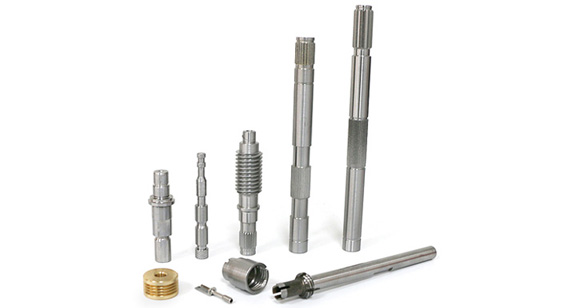
For ordinary precision shafts with a length-to-diameter ratio below approximately 10, the original shop-floor reference uses a workpiece-size factor of approximately 0.2, with a minimum estimated machining charge of approximately 5 yuan.
When the length-to-diameter ratio exceeds 10, shaft deflection, vibration, runout, and support become more important.
The original reference uses an additional factor of approximately 0.15 according to the length-to-diameter ratio.
If diameter accuracy needs to remain within approximately 0.05 mm, or if tighter taper accuracy is required, the machining cost can be substantially higher than for a general shaft.
Stepped Shafts
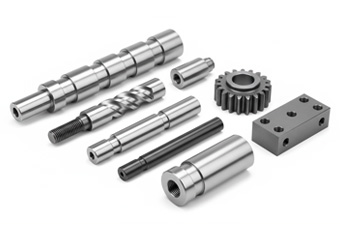
Typical stepped shaft applications include:
The original estimation method uses approximately 2× the general precision shaft base cost for common stepped shafts because additional diameters, shoulders, transitions, and machining passes increase cycle time.
Parts containing tapers, internal features, external features, or more complex geometry may require a higher multiplier.
Lead Screws
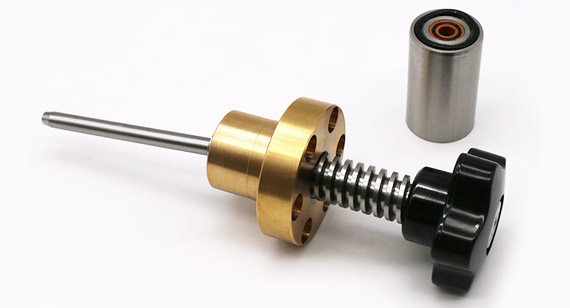
Ordinary lead screws require more machining time and greater control of the thread geometry than standard shafts.
The existing shop-floor reference estimates approximately 4× the ordinary precision shaft base cost, depending on thread geometry, accuracy, material, and quantity.
Flange Parts
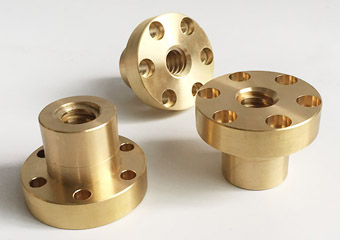
The existing rough estimation method uses approximately:
for common flange components.
For diameters above approximately 430 mm, the existing reference increases to approximately:
Large flange components can require different equipment, slower speeds, larger workholding, and longer machining cycles.
Round and Trapezoidal Nuts
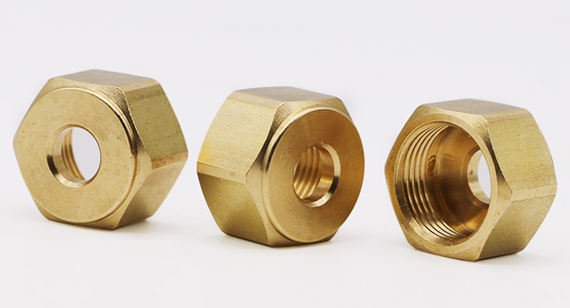
The existing estimation references include:
Actual prices should still be confirmed according to thread specification, tolerance, material, quantity, and inspection requirements.
CNC Turned Bushings
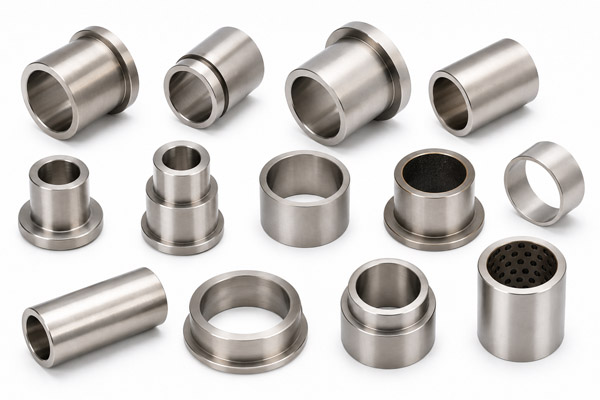
For common bushings with:
the original estimation method uses approximately:
When the length-to-diameter ratio increases, boring stability, wall thickness, concentricity, deformation, and inspection requirements can increase the machining cost.
These traditional estimation formulas are useful for understanding how shops historically estimate turning work, but for custom CNC parts, a quotation based on the actual 2D drawing and 3D model is more reliable.
The following example shows why a part's CNC turning price cannot be determined from material weight alone.
Example: CNC Turned 6061 Aluminum Bushing
Assume your project requires:
| Parameter | Example Requirement |
|---|---|
| Part Type | CNC Turned Bushing |
| Material | Aluminum 6061-T6 |
| Outside Diameter | Ø30 mm |
| Length | 25 mm |
| Quantity | 100 pcs |
| Surface Roughness | Ra 1.6 μm |
| Tolerance | Standard tolerance with selected critical dimensions |
| Finish | Machined finish |
| Inspection | Critical dimensions inspected |
Step 1: Material Cost
Material cost should include:
Using oversized bar stock may appear convenient, but it increases both material consumption and the amount of material that must be removed.
Step 2: Setup and Programming
Before production, the supplier needs to:
These are primarily fixed costs.
For one prototype, almost all setup cost is allocated to one component. For 100 parts, the same setup cost can be distributed across the complete batch.
Step 3: CNC Turning Cycle Time
The bushing may require:
A basic calculation is:
Step 4: Tooling and Inspection
Standard tooling generally helps control cost.
However, the price may increase if your bushing requires:
Step 5: Calculate the Final Unit Price
Once the complete batch cost is known:
This is an illustrative CNC turning cost example, not a fixed VMT quotation.
An accurate price requires your actual material, drawing, quantity, tolerance, surface finish, and inspection requirements.
There is no universal CNC turning parts price list for custom components.
Two shafts with the same diameter may have completely different prices if one has general tolerances while the other requires tight runout, concentricity, ground bearing surfaces, multiple threads, or cross holes.
A more useful price list therefore identifies the main cost drivers for each type of part.
| CNC Turned Part | Main Price Drivers |
|---|---|
| CNC Turned Bushings | ID tolerance, wall thickness, concentricity and roughness |
| CNC Turned Shafts | Length-to-diameter ratio, runout, diameter tolerance and straightness |
| CNC Spacers | Material, OD/ID, overall length and quantity |
| Precision Pins | Diameter tolerance, straightness, surface finish and volume |
| Threaded Fittings | Thread type, sealing surfaces, ports and inspection |
| Automotive Turned Parts | Volume, repeatability, traceability and quality requirements |
| Swiss Turned Parts | Diameter, micro features, tooling and cycle time |
| Turn-Mill Parts | Cross holes, flats, slots, off-axis features and tool count |
When comparing CNC turning suppliers, send each supplier the same:
Otherwise, you may be comparing different manufacturing scopes rather than different prices for the same part.
A 2 mm diameter CNC turned part is not automatically cheaper because it is smaller.
Miniature shafts, pins, connectors, bushings, and automotive components use very little raw material, but production can require much greater process control.
Swiss-type CNC machining is often suitable for small-diameter parts because the workpiece is supported close to the cutting area. This helps reduce deflection when machining long or slender components.
However, several factors can still increase the price:
For a 2 mm diameter automotive CNC turning part, process stability and inspection may therefore contribute more to the unit cost than raw material.
Tip: For miniature shafts, pins, and high-volume components, link Swiss CNC machining here so buyers can understand when a Swiss-type process may offer better stability and production efficiency.
1. Select the Right CNC Machine
The appropriate machine should be selected according to the structure and tolerances of the part.
Possible equipment includes:
Using specialized equipment can improve production efficiency and reduce unnecessary operations.
For example, a small complex shaft may be more efficiently produced on a Swiss-type machine, while a component with cross holes and side flats may benefit from turn-mill machining.
2. Optimize the Machining Sequence
If a component cannot be completed in one operation, the production sequence should be planned according to:
Toolpaths and machining sequences can significantly affect CNC cycle time and therefore affect the final price.
3. Consider Alternative Manufacturing Processes
For some components, producing the complete geometry from solid bar stock may not be the most economical method.
Depending on:
alternative processes may include:
CNC turning can then be used only for the critical dimensions and precision features.
This combination can reduce material removal and machining time in higher-volume production.
1. Material Selection
Material affects both raw material cost and machining efficiency.
Aluminum and free-machining brass are generally easier to cut than many stainless steels, titanium alloys, and nickel-based superalloys.
Material selection affects:
If two materials can satisfy the same mechanical and environmental requirements, machinability should be considered during DFM review.
2. Part Geometry and Machining Complexity
A basic cylindrical shaft can normally be manufactured efficiently.
Cost increases when a drawing includes:
Features requiring a second machine or additional setup also introduce:
Where suitable, turn-mill machining can complete turning and off-axis features in one setup.
3. Tolerance Requirements
Tighter tolerances can significantly increase CNC turning cost.
For example, changing a diameter tolerance from ±0.05 mm to ±0.01 mm can require:
This does not mean you should loosen every tolerance.
Instead, apply the tightest tolerances to dimensions that actually affect:
Avoid applying unnecessarily tight tolerances to non-functional dimensions.
4. Surface Roughness
Surface roughness also affects machining time.
Requirements such as:
may require different feeds, tools, finishing passes, or secondary processes.
If very low roughness is specified on every surface, manufacturing cost may increase without improving the function of your part.
5. Order Quantity
Quantity determines how fixed costs are distributed.
For prototypes, setup and programming represent a large percentage of the unit cost.
For production quantities, the importance gradually shifts toward:
6. Secondary Operations
Not every turned component can be completed through turning alone.
Additional processes may include:
A DFM review may identify ways to simplify these features or combine operations.
7. Surface Finishing and Inspection
Surface finishing adds additional manufacturing processes after CNC turning.

Typical requirements may include:
Finishing may also affect dimensions, threads, sealing areas, and surface roughness.
Inspection cost depends on:
Link CNC machining quality control naturally in this section.
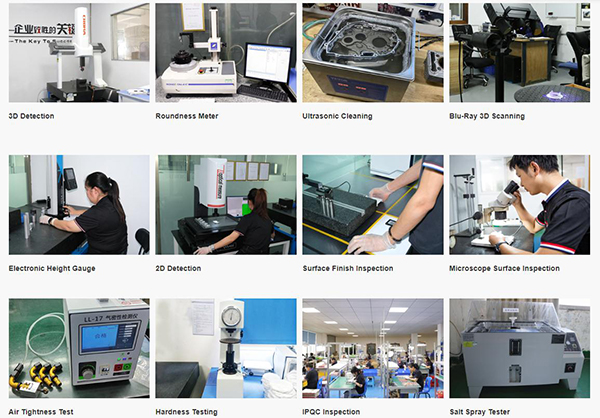
Order quantity has a major impact on unit price because some manufacturing expenses occur once while others occur for every component.
| Quantity | Main Cost Characteristics |
|---|---|
| 1–5 pcs | Setup, programming and first-part verification are a large part of unit cost |
| 10–100 pcs | Fixed costs begin to be distributed across more parts |
| 100–1,000 pcs | Cycle time, tool life and automation become more important |
| 1,000+ pcs | Process stability, scrap control and production efficiency dominate |
Prototype CNC Turning
For prototypes, the main purpose is normally design validation.
Even when actual cutting takes only a short time, the CNC manufacturer still needs to prepare:
This is why prototype unit prices are normally higher.
Small and Medium Batches
As the quantity increases, setup costs can be distributed across more parts.
Engineers can also optimize:
Mass Production
In high-volume production, saving only a few seconds per part can become significant across thousands of pieces.
Cost control therefore depends heavily on:
Tip: Do not increase order quantity only to obtain a lower unit price before the design has been validated. Prototype and assembly verification can prevent much larger losses in mass production.
You may send the same STEP file and PDF drawing to several CNC machining suppliers and receive very different prices.
This does not necessarily mean that one supplier calculated incorrectly.
One supplier may use a conventional CNC lathe plus secondary milling. Another may complete the part on a turn-mill center. A small shaft may be produced on a conventional lathe by one factory and a Swiss CNC machine by another.
Quotation differences may come from:
The lowest CNC turning quotation does not always mean the lowest total manufacturing cost.
A quotation that excludes necessary inspection or underestimates a critical tolerance may later result in:
When comparing CNC turning prices, compare the complete manufacturing scope—not only the unit price.
Use Standard Bar Stock Sizes
Where possible, select dimensions that allow the component to be manufactured from commonly available bar stock with reasonable machining allowance.
Oversized stock increases both material consumption and machining time.
Avoid Unnecessarily Tight Tolerances
Use tight tolerances on dimensions that affect actual function.
This can reduce:
without affecting assembly performance.
Use Standard Tool-Compatible Features
Standard:
usually reduce the need for custom tools.
A feature may be easy to add in CAD but expensive to produce thousands of times.
Reduce Secondary Setups
Where possible, design important features so they can be completed during one machine setup.
This reduces:
Select Material According to Function and Machinability
Do not select a difficult-to-machine alloy unless its properties are necessary.
Consider:
together.
Validate the Prototype Before Mass Production
Verify:
before committing to a large batch.
A small design change during prototyping is generally much less costly than correcting thousands of production components.
Before production, VMT can review your drawing, material, tolerances, tool access, machining sequence, and inspection requirements. DFM feedback can identify cost-driving features while protecting the dimensions your part needs to function.
A reliable CNC turning price requires clear manufacturing information.
| Information | Why It Matters |
|---|---|
| 2D Drawing | Defines dimensions, tolerances, threads, roughness and special requirements |
| 3D Model | Helps evaluate geometry and machining strategy |
| Material | Determines stock cost and machinability |
| Quantity | Determines setup allocation and production method |
| Tolerance | Affects machining and inspection requirements |
| Surface Roughness | Determines finishing passes or secondary processing |
| Surface Finish | Adds finishing operations and may affect dimensions |
| Inspection Requirements | Determines measurement time and documentation |
| Delivery Requirements | Affect scheduling, planning and shipping |
For production projects, also specify whether you require:
Providing complete information makes it much easier to compare quotations from different CNC turning manufacturers fairly.

The price of a custom CNC turned component cannot be determined accurately from its diameter, weight, or material alone.
A reliable quotation should consider the complete manufacturing process:
If your goal is to reduce CNC turning cost, start with manufacturability rather than simply requesting a lower unit price. Appropriate tolerances, suitable materials, fewer setups, standard tooling, and early prototype validation can reduce manufacturing cost while protecting part performance.
VMT provides custom CNC turning, Swiss CNC machining, and turn-mill manufacturing for prototype and production components. Our engineering team can review your drawing, material, tolerances, machining strategy, surface finishing, inspection requirements, and production quantity before manufacturing.
Upload your 2D/3D drawings to request a CNC turning quotation and ask VMT for DFM feedback before production.
Upload your 2D/3D drawings and project requirements for manufacturing review and quotation.
All information and uploaded files are secure and confidential.
1 Tell us what you need
2 Get solution & quote
3 Approve production
Email: inquiry@vimetal.com.cn
How much does a CNC turned part cost?
There is no universal price per CNC turned part. Cost depends on material, geometry, cycle time, tolerance, quantity, tooling, surface finish, and inspection requirements. A simple high-volume spacer may have a low unit cost, while a prototype precision shaft requiring tight runout, multiple threads, and secondary operations can cost considerably more.
How is CNC turning price calculated?
CNC turning price normally includes material, setup and programming, machining cycle time, tooling, secondary operations, finishing, inspection, packaging, and shipping. Fixed setup costs are distributed across the order quantity, while material and machining costs generally apply to every component.
Is there a standard CNC turning parts price list?
There is no universal price list for custom CNC turned parts because every drawing has different requirements. A price list is more useful for identifying the typical cost drivers of shafts, bushings, pins, fittings, and other turned components than for predicting an exact price.
Why are 2 mm diameter CNC turned parts not always cheaper?
Although a 2 mm part contains little raw material, miniature machining may require Swiss-type equipment, small tools, stable bar support, micro drilling, burr control, and more careful inspection. For miniature components, machining stability can matter more to the price than material weight.
Why does stainless steel CNC turning usually cost more than aluminum?
Many stainless steels require lower cutting speeds and create greater cutting forces, heat, and tool wear than common aluminum alloys. This may increase CNC cycle time, insert consumption, and process-control requirements.
How does quantity affect CNC turning price per part?
As quantity increases, fixed setup and programming expenses can be distributed across more parts. Larger production runs also make cycle-time optimization, automatic bar feeding, and tool-life management more valuable.
What should I provide for an accurate CNC turning quote?
Provide a 2D drawing and 3D model together with material, quantity, tolerances, surface roughness, surface finishing, inspection, and delivery requirements. Clear specifications allow the manufacturer to select the correct process and avoid adding unnecessary cost or production risk.


 +86 15099911516




 Read more