16 years one-stop China custom CNC machining parts factory

Hey there I’m VMT Sam!
With 25 years of CNC machining experience we are committed to helping clients overcome 10000 complex part-processing challenges all to contribute to a better life through intelligent manufacturing. Contact us now
 166 |
Published by VMT at Sep 01 2026 | Reading Time:About 6 minutes
166 |
Published by VMT at Sep 01 2026 | Reading Time:About 6 minutes


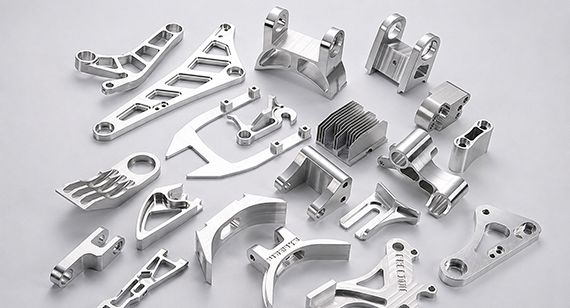
You send the same CNC part drawing to several suppliers and receive very different quotations. Choosing the lowest unit price may reduce your initial purchasing cost, but unclear material, missing finishing, insufficient inspection, extra tooling charges, or poor process planning can quickly make that “cheap” quote more expensive after production begins.
CNC machining quotes should be compared using the same material, drawing revision, quantity, tolerances, surface finish, inspection scope, tooling, packaging, lead time, and delivery requirements. After normalizing these items, compare the supplier’s manufacturing plan and total project cost—not only the unit price.
The following guide shows you what to check before selecting a CNC machining supplier and how to identify a quotation that offers better manufacturing value rather than simply a lower number.
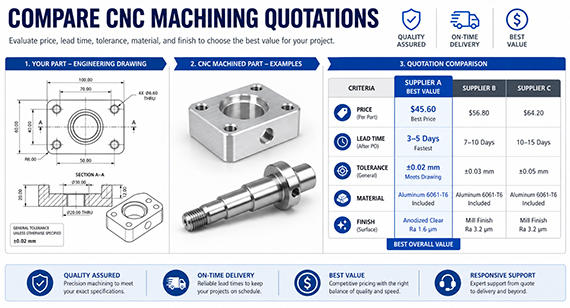
Comparing CNC machining quotations does not mean placing three unit prices next to each other and selecting the lowest one.
A CNC machining quotation is based on a manufacturing plan. That plan may include material preparation, CNC programming, machine setup, fixtures, tooling, machining time, deburring, surface finishing, inspection, packaging, and logistics.
Two suppliers may quote the same drawing but calculate the project differently.
For example, one supplier may use several 3-axis setups, while another may machine more features in one 5-axis setup. One quotation may include anodizing and CMM inspection, while another may include machining only.
The prices may therefore look very different even though both suppliers received the same CAD model.
Before comparing the numbers, you need to confirm that each supplier is quoting the same manufacturing scope.
A fair comparison should answer three questions:
Once these points are clear, the quotation becomes much easier to evaluate.
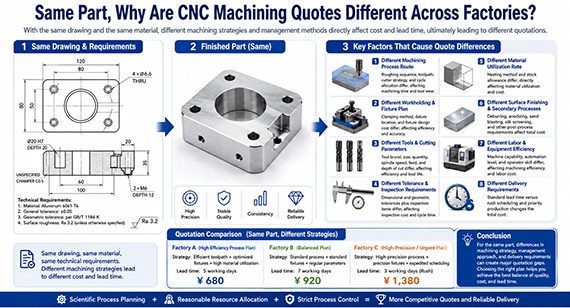
Even when suppliers receive the same drawing, their quotations can vary because they may use different process routes, equipment, machining strategies, raw material sources, fixtures, inspection methods, and finishing assumptions.
A housing that requires three setups on a 3-axis machine, for example, may require fewer setups on a 5-axis machining center. The 5-axis machine may have a higher hourly rate, but reduced setup time and fewer datum transfers can lower the total manufacturing cost and reduce positional errors.
Differences can also come from:
If you want to investigate this topic in more detail, it should be covered separately in VMT's guide to why CNC machining quotes vary between suppliers.
For this page, the more important question is what you should compare after the quotations arrive.
1. Compare the Same Drawing Revision and RFQ Scope
The first step is making sure every CNC supplier is quoting the same part.
This sounds obvious, but it is one of the most common reasons quotations cannot be compared directly.
One supplier may receive only your STEP file, while another receives an updated 2D drawing containing:
These suppliers are not pricing the same manufacturing scope.
Before comparing quotations, confirm that every supplier received the same:
If your design changes after the first quotation, mark the revision clearly and request an updated quote from every supplier.
Tip: Add the drawing revision number to your RFQ and purchase order. This helps prevent an old CAD file from being used for production.
2. Compare the Exact Material Grade and Condition
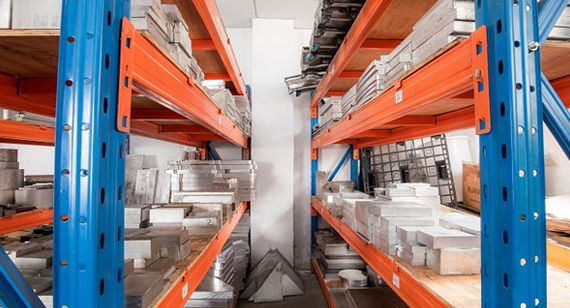
A quotation that says only “aluminum,” “stainless steel,” or “plastic” is not detailed enough for a meaningful comparison.
Different material grades can have different:
For example, these are not equivalent quotation requirements:
Aluminum and Aluminum 6061-T6
Likewise, 6061 and 7075 aluminum may require different material costs and machining considerations.
Your quotation should clarify, where relevant:
For aerospace, medical, optical, semiconductor, or other controlled applications, material traceability may also affect the quotation.
A lower quotation based on a substitute or unspecified material should not be compared directly with one based on the exact material required by your drawing.
3. Compare the Manufacturing Process, Not Only the Machine Rate
A common mistake is asking each factory:
“What is your CNC machine hourly rate?”
Hourly rate matters, but it does not tell you the complete cost of your part.
The same component may be manufactured through different process routes.
Supplier A
Supplier B
Supplier C
The machine with the lowest hourly rate does not automatically produce the lowest-cost part.
You should evaluate:
A more capable machining process may reduce:
For complex multi-sided parts, precision housings, angled features, or tight positional requirements, process planning can matter more than the machine's hourly rate.
4. Compare Critical Tolerances Carefully
Tolerance requirements can significantly influence CNC machining cost.
Before comparing quotations, make sure every supplier has identified the same critical dimensions.
For example, your drawing may contain:
If Supplier A calculates the quote based on the complete tolerance specification while Supplier B assumes standard commercial tolerances, Supplier B may appear cheaper.
But the parts may not meet your assembly requirements.
Tighter tolerances may require:
A good CNC supplier should not simply say that tight tolerance is expensive. The engineering team should identify which dimensions actually increase machining difficulty and whether non-critical dimensions can use practical manufacturing tolerances.
Tip: Tighten tolerances where function requires them, not across the entire drawing. Unnecessary precision usually increases cost without improving your assembly.
5. Compare Surface Finishing on the Same Basis
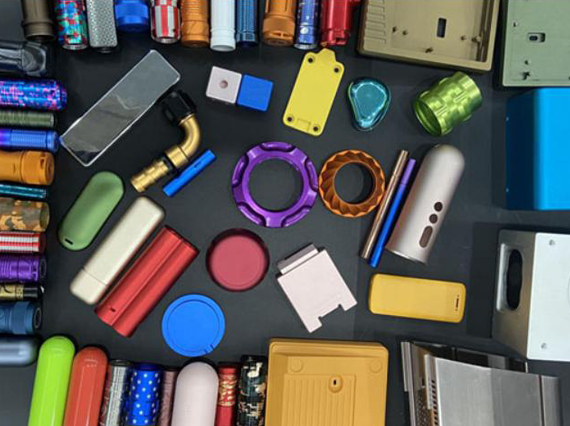
Surface finishing is another common source of misleading CNC quote comparisons.
A quotation may simply state:
Black anodizing included.
But what exactly does “included” mean?
For an aluminum cosmetic housing, the complete requirement may actually include:
Another supplier may quote basic black anodizing without these additional controls.
The second quotation will naturally look cheaper.
When comparing surface finishing, confirm:
Finish Type
Anodizing, hard anodizing, passivation, plating, polishing, brushing, bead blasting, powder coating, PVD, or another process.
Surface Appearance
Matte, gloss, brushed, polished, textured, or controlled machined finish.
Color Requirement
Standard production color or controlled visual consistency.
Masking
Threads, holes, electrical contacts, sealing surfaces, or mating surfaces.
Dimensional Requirements
Whether critical dimensions apply before or after finishing.
Surface finishing should therefore be treated as part of the manufacturing specification, not as a simple cosmetic add-on.
6. Compare the Inspection Scope
Two CNC machining quotations may have similar part prices but very different quality control scopes.
One supplier may include:
Another may perform only basic sampling inspection.
These are not equivalent quotations.
For precision components, ask what will actually be inspected.
Important questions include:
Your drawing may contain 50 dimensions, but only five of them may directly affect assembly or product performance.
A strong inspection plan should identify these dimensions before production begins.
This is especially important for precision bores, mating surfaces, concentric features, locating holes, sealing surfaces, threads, and GD&T-controlled geometry.
7. Check Tooling, Fixture, Programming, and Setup Charges
Some quotations show only the unit price.
Others separate:
Neither pricing method is automatically wrong.
The important point is whether you understand what is included.
This becomes especially important when comparing prototype and mass production pricing.
For a prototype quantity of five parts, a supplier may use soft jaws or general-purpose workholding to avoid investing in dedicated fixtures.
For 5,000 parts, developing a dedicated fixture may increase the initial tooling cost but reduce:
Therefore, a higher one-time tooling charge can sometimes reduce the unit cost of mass production.
Ask suppliers to identify major non-recurring charges separately when necessary. This allows you to understand what you are paying for and whether the tooling can be reused for repeat orders.
8. Compare Lead Time and Production Capacity
Price is only one part of purchasing cost.
Lead time can be equally important if your parts are required for:
Consider the following example:
| Supplier | Unit Price | Lead Time |
|---|---|---|
| Supplier A | $10.80 | 25 days |
| Supplier B | $11.40 | 12 days |
Supplier A is cheaper by $0.60 per part.
But if the longer lead time delays your prototype testing or assembly schedule, the project impact may be much greater than the unit-price difference.
When lead time matters, ask about:
Also distinguish between:
machining lead time and door-to-door delivery time.
They are not always the same.
9. Check Packaging and Shipping Requirements
Packaging is often ignored during CNC quote comparison until damaged parts arrive.
For basic internal components, standard packaging may be sufficient.
For cosmetic or precision parts, however, packaging can directly affect quality.
Examples include:
If finished parts are packed together without adequate separation, vibration during transportation can cause:
One supplier may include individual protective packaging while another uses bulk packaging.
The second quotation may look cheaper but creates additional receiving and quality risk.
When cosmetic appearance or precision surfaces matter, packaging requirements should be defined before the quotation is finalized.
10. Compare Total Project Cost, Not Just Unit Price
This is the most important step.
The lowest CNC machining unit price does not always create the lowest project cost.
A more realistic comparison is:
For example, imagine Supplier A is 8% cheaper than Supplier B.
After production, however:
The original 8% saving may disappear completely.
This is why experienced sourcing teams evaluate total cost of ownership, not only purchase price.
The best CNC machining quotation is therefore not automatically the lowest price.
It is the quotation that gives you the best balance of:
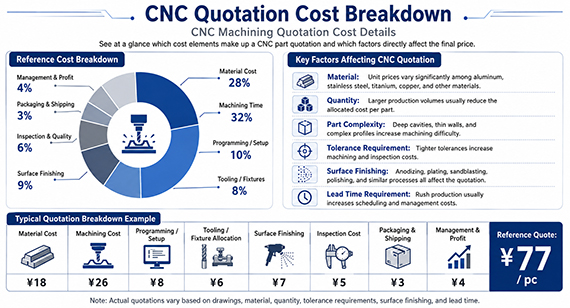
Use the following checklist when comparing quotations from different CNC machining suppliers.
| Comparison Item | Supplier A | Supplier B | Supplier C |
|---|---|---|---|
| Correct drawing revision | ✓ | ✓ | ✓ |
| Exact material grade | ✓ | ✓ | ? |
| Material certificate | Included | Extra | Included |
| Quantity | Same | Same | Same |
| Critical tolerances confirmed | ✓ | ? | ✓ |
| CNC process defined | ✓ | ✓ | ✓ |
| Fixture charge | Included | Extra | Included |
| Surface finishing | Included | Included | Included |
| Masking requirements | Included | Extra | ? |
| Post-finish dimensional inspection | Included | No | Sampling |
| CMM inspection | Included | Extra | Sampling |
| Inspection report | Included | No | Included |
| Protective packaging | Individual | Bulk | Individual |
| Production lead time | 15 days | 12 days | 20 days |
| Shipping | Excluded | Excluded | Included |
This table does not mean Supplier A, B, or C is automatically better.
Its purpose is to make sure you compare the same manufacturing scope before evaluating the final price.
A low quotation can be legitimate. A supplier may have better equipment, available raw material, optimized fixtures, more efficient toolpaths, or higher machine utilization.
However, an unusually low price deserves a closer review.
Material Grade Is Not Clearly Specified
If your RFQ requires 6061-T6 but the quotation only says “aluminum,” confirm what material is actually being priced.
The same applies to:
Material substitution should never happen without your approval.
Critical Tolerances Are Not Acknowledged
If your drawing contains tight bore tolerances, flatness, concentricity, position tolerances, or critical threads but the quotation does not reference them, ask the supplier to confirm manufacturing feasibility.
A quote based only on general tolerances may not represent the true cost of your part.
Surface Finishing Scope Is Unclear
Statements such as:
“Anodizing included”
or:
“Polishing included”
may not be enough.
Clarify:
Inspection Is Not Defined
A supplier saying “we inspect every part” does not tell you enough.
You need to know:
Important Charges Appear Only After the Purchase Order
Watch for unexpected charges related to:
These items should be clarified before your supplier selection whenever possible.
Lead Time Looks Unrealistic
A very short lead time is not automatically a problem, but the supplier should understand the complete project route.
Machining may take only a few days, while:
can extend the complete delivery schedule.
Consider a project requiring:
The following example is illustrative and is not intended as a market price benchmark.
| Item | Supplier A | Supplier B | Supplier C |
|---|---|---|---|
| Unit Price | $12.60 | $14.10 | $13.40 |
| 6061-T6 Material | Included | Included | Included |
| Bead Blasting | Extra | Included | Included |
| Black Anodizing | Included | Included | Included |
| Masking | Extra | Included | Included |
| Critical Dimension Inspection | Sampling | Included | Sampling |
| CMM Report | Extra | Included | Extra |
| Protective Packaging | Bulk | Individual | Individual |
| Lead Time | 18 days | 15 days | 12 days |
At first glance, Supplier A is the cheapest.
But after adding blasting, masking, CMM inspection, and improved packaging, the difference may become much smaller.
Supplier C offers the shortest lead time but provides a different inspection scope.
Supplier B has the highest initial unit price but includes more of the required manufacturing and inspection scope.
The correct purchasing decision therefore depends on your actual priorities:
This example demonstrates why quotation comparison should begin with scope normalization rather than unit price.
A competitive quotation should be based on a manufacturing process that can reliably produce your part.
At VMT, engineering review focuses on the drawing, manufacturing route, critical dimensions, finishing requirements, and production risks before the project moves into machining.
Drawing and DFM Review
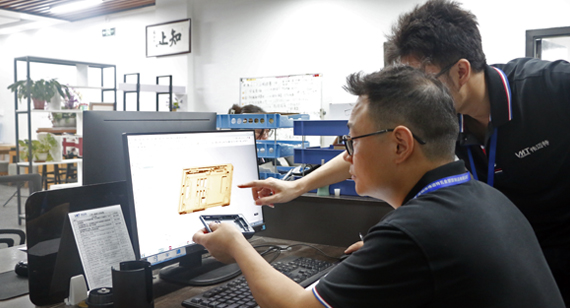
Your 2D drawing and 3D model can be reviewed for:
The objective is not simply to reduce the quotation.
The objective is to identify manufacturing risks before they become scrap, rework, or assembly problems.
Process Selection
Depending on your geometry, VMT can evaluate suitable manufacturing methods such as:
For some components, a more advanced machine can reduce setups and improve consistency.
For simpler parts, using expensive equipment may provide no real benefit.
The process should match the geometry and production requirement.
Fixture and Machining Sequence Optimization
Fixturing is particularly important for:
An unstable fixture can create deformation, datum variation, chatter, or inconsistent dimensions.
Machining sequence should therefore be planned together with workholding strategy.
In-Process and Final Inspection
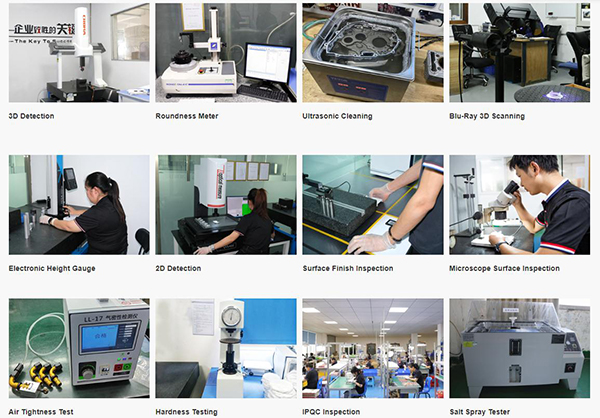
Critical dimensions should be identified before production rather than discovered during final inspection.
Depending on your requirements, inspection may include:
For batch production, inspection planning also supports better repeatability between production lots.
Surface Finishing Coordination
Surface finishing should be considered before CNC machining is completed.
For example, anodizing, plating, polishing, or other finishing processes may affect:
Reviewing these requirements before machining helps reduce problems such as post-finish interference, damaged threads, unwanted coating on contact areas, or inconsistent cosmetic surfaces.
DFM does not mean simply making a part easier to machine.
A useful DFM review helps distinguish between requirements that are essential to your product and features that increase manufacturing cost without adding functional value.
Potential opportunities can include:
For example, if only one bearing bore requires tight dimensional control, applying the same tolerance to every external surface can create unnecessary inspection and machining cost.
The goal is not to reduce part quality.
The goal is to spend manufacturing cost where the part actually needs precision.
Tip: Ask your supplier which three features contribute most to your CNC machining cost. The answer can reveal whether the supplier has genuinely reviewed your drawing.
Prototype and mass production pricing follow different manufacturing economics.
For a prototype order, the supplier still needs to perform:
If you order only one part, these costs are absorbed by a very small quantity.
For batch production, these costs can be distributed across more parts.
However, mass production may justify additional investment in:
Therefore, if your project will move from prototype to production, it is useful to request quantity-break pricing such as:
This helps you understand how the manufacturing plan changes as volume increases.
It can also reveal whether a supplier is suitable only for prototypes or can support stable repeat production.
A reliable CNC quotation should demonstrate that the supplier understands your part.
Good signs include:
A quotation should not simply tell you what the part costs.
It should give you confidence that the factory understands how the part will be manufactured and controlled.
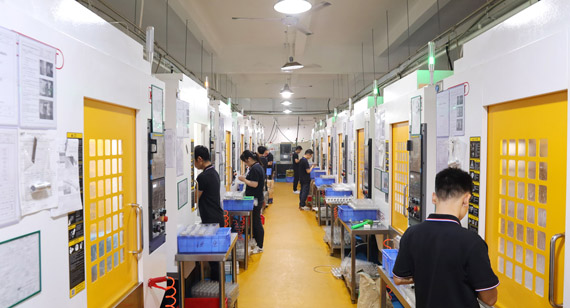
When several CNC machining suppliers quote the same project, the lowest unit price is only one part of the decision.
First make sure every supplier is pricing the same:
Then compare the manufacturing process, tooling strategy, quality control, lead time, communication, and total project cost.
A good CNC machining supplier should help you understand why the part costs what it does and how manufacturing risks will be controlled before production begins.
If you are comparing CNC machining quotations for a new project, send VMT your 2D drawing and 3D CAD model, together with your material, quantity, tolerance, surface finish, inspection, and delivery requirements.
VMT can review your design, provide DFM feedback, evaluate the manufacturing route, and prepare a quotation for your prototype or production project.
Upload your drawings and request a CNC machining quote with DFM feedback.
Upload your drawings and quotation requirements for a manufacturing review and quote.
All information and uploaded files are secure and confidential.
1 Tell us what you need
2 Get solution & quote
3 Approve production
Email: inquiry@vimetal.com.cn
Why are CNC machining quotes so different for the same drawing?
Different suppliers may use different machines, machining strategies, fixtures, raw material sources, cycle-time estimates, inspection plans, finishing suppliers, and risk assumptions. Compare the manufacturing scope before comparing the final price.
How should I compare CNC machining quotes from different suppliers?
First normalize the drawing revision, material, quantity, tolerance, finish, inspection, packaging, and delivery requirements. Then compare the manufacturing process, included services, lead time, quality control, and total project cost.
Should I always choose the lowest CNC machining quote?
No. A lower quotation may exclude finishing, inspection, fixtures, packaging, or other requirements. Evaluate whether the quote represents the complete project scope before selecting the lowest unit price.
What should be included in a CNC machining quotation?
Depending on your project, the quotation may include material, programming, setup, machining, tooling, fixtures, deburring, surface finishing, inspection, packaging, and shipping. Confirm which items are included and which are charged separately.
How do tight tolerances affect CNC machining quotes?
Tighter tolerances may require more stable fixtures, slower machining, finishing passes, tool compensation, temperature control, and additional measurement. Tight tolerances should therefore be specified only where function and assembly require them.
Does surface finishing need to be included in the CNC quote?
Yes, if you require a finished part. Specify the finishing type, color, texture, masking, coating thickness, cosmetic requirements, and any dimensions that must be controlled after finishing.
Should CMM inspection be included in CNC machining pricing?
It depends on your drawing and quality requirements. If CMM inspection or a dimensional report is required, include it in the RFQ so all suppliers quote the same inspection scope.
Can 5-axis CNC machining be cheaper than 3-axis machining?
Yes. Although 5-axis machines may have higher hourly rates, fewer setups and reduced fixture changes can lower total machining time and manufacturing risk for suitable part geometries.
What hidden costs should I check in a CNC machining quotation?
Check for tooling, fixtures, programming, material certification, finishing, masking, inspection reports, packaging, shipping, and expedited production charges. Clarifying these items before ordering makes supplier quotations easier to compare.
How can DFM reduce CNC machining cost?
DFM can identify unnecessary tight tolerances, difficult tool access, deep pockets, thin walls, small internal radii, excessive setups, complex threads, and other features that increase machining time without improving part function.


 +86 15099911516




 Read more