16 years one-stop China custom CNC machining parts factory

Hey there I’m VMT Sam!
With 25 years of CNC machining experience we are committed to helping clients overcome 10000 complex part-processing challenges all to contribute to a better life through intelligent manufacturing. Contact us now
 97 |
Published by VMT at May 14 2026 | Reading Time:About 2 minutes
97 |
Published by VMT at May 14 2026 | Reading Time:About 2 minutes


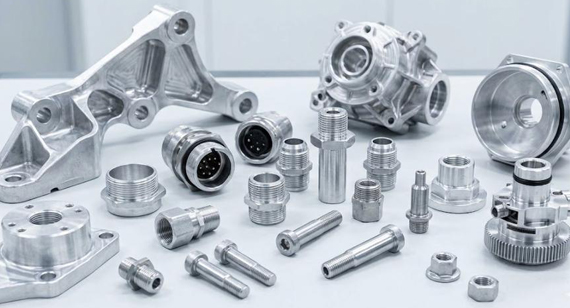
Are you currently looking for an aluminum that can achieve tight precision while lowering production costs for your custom machined parts? 2011 aluminum could be the perfect choice for high-precision components in your next product assembly!
This free-machining alloy 2011 can provide good strength, hardness, and an excellent surface finish for mass CNC machining with short chips and less tool damage. Whether you are sourcing components for lightweight automotive sensors, electronics, or precision valve parts, you can trust the 2011 aluminum alloy in aspects of efficiency and tight tolerance. It seems aluminum 2011 is similar to the versatile aluminum 6061 from the introduction above, right? But it’s not. In this blog, we will also share a case study on how we solved the issue of achieving “strict dimensional tolerances without boosting production costs or extending delivery cycles” for one of our clients.
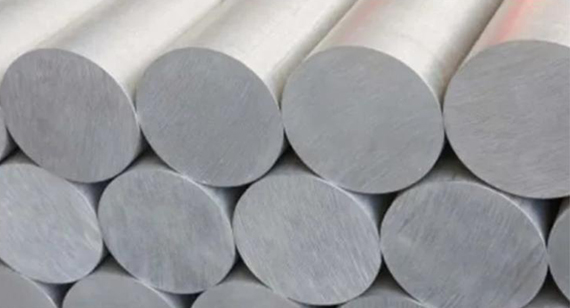
If you come from different regions, you might have seen the following equivalent grades in drawings or web. They are the same as 2011 aluminum:
With the addition of copper (Cu), bismuth (Bi), and lead (Pb), the 2011 aluminum composition determines its easy-to-machine properties—its machinability rating is 100%, making it the easiest aluminum to be cut, drilled, milled, turned, or ground. This also means that if your project requires high-volume aluminum 2011 machined parts with complex geometries, this free-machining alloy definitely provides a competitive advantage over any other aluminum.
Belonging to the 2xxx series aluminum, 2011 aluminum can be heat-treated to gain higher strength and hardness (e.g., 2011-T3 aluminum or 2011-T6 aluminum) like the 6xxx series aluminum. But it can’t achieve as good corrosion resistance and weldability as 6061 or 6063 aluminum. Therefore, if you want extruded aluminum or structural aluminum with good corrosion resistance and weldability, you should choose 6061 or 6063 aluminum, respectively.
Mechanical and Physical Properties of Aluminum 2011
| Property | Unit | 2011-O | 2011-T3 | 2011-T6 |
| Tensile Strength | MPa | ~170 | ~310 | ~370 |
| Yield Strength | MPa | ~50 | ~270 | ~290 |
| Elongation at Break | % | ~15% | ~10-15% | ~10% |
| Brinell Hardness | HB | ~45 | ~95 | ~115 |
| Modulus of Elasticity | GPa | 70 | 70 | 70 |
| Thermal Conductivity | W/m·K | ~170 | ~150 | ~150 |
| Electrical Conductivity | % IACS | ~45% | ~39% | ~39% |
| Melting Range |
°C | 540 – 650 | 540 – 650 | 540 – 650 |
| Density |
g/cm³ | 2.82 | 2.82 | 2.82 |
It’s clear from the table that both tempers of 2011-T3 and 2011-T6 provide good strength, toughness, and hardness. You can just choose the suitable one for 2011 aluminum machined parts, just to mention don’t exceed the property limits when using. (Often, you find a CNC machining factory to produce the designed parts. The factory process 2011-O which is the soft state into the parts. Then, the factory completes the heat treatment T3 or T6 to the parts to gain a better performance.)
Choose 2011 Aluminum if:
You need high-volume, complex aluminum machined parts with intricate threads, tight tolerances, and you want the lowest possible machining cost.
Choose 6061 Aluminum if:
You require parts with structural welding, good corrosion resistance, or a better decorative color-anodized finish.
To further help you make the best decision for your product assembly, let’s break down the primary differences in this 2011 aluminum vs. 6061 showdowns:
Machinability: 2011 Aluminum is the Winner.
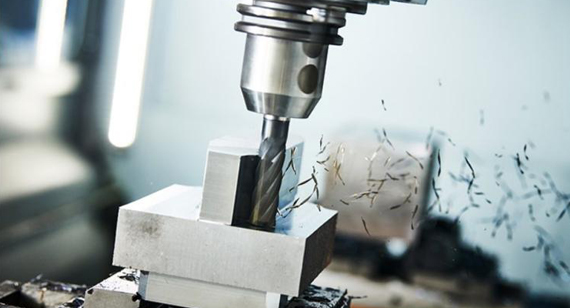
The biggest win for aluminum 2011 is its machinability rating of 100%. In contrast, 6061 (rated at about 50-60%) often produces long, stringy chips that can tangle around the tools and slow down production during CNC machining. Faster machining cycles mean the factory can deliver your parts in less time and at a lower cost per unit.
Corrosion Resistance and Weldability: 6061 Aluminum is the Winner.
This is where you need to be careful with your design. Because aluminum alloy 2011 has a high copper content, its natural resistance to corrosion is lower than that of 6061. Therefore, if your parts will be exposed to outdoor environments, 6061 is the more corrosion-resistant one. Also, if your assembly requires parts to be welded together, do not choose 2011 because its composition of copper and lead may cause potential cracking after welding.
Mechanical Strength, Toughness, and Hardness: No Big Difference.
Here you can check the mechanical properties of 6061-T6 or T651. There is not a very big difference between 6061 and 2011 in structural loading and wear resistance.
Anodizing Surface Treatment: 6061 Aluminum Performs Better.
Anodizing 2011 aluminum is possible, but it yields different results than 6061. Due to the high copper content, the anodic coating in 2011 may appear darker or more "mottled" compared to the crisp, clear finish on 6061. If your part is purely functional (internal components), this is rarely an issue. But if it’s a high-visibility consumer part, you should carefully choose between 2011 and 6061.
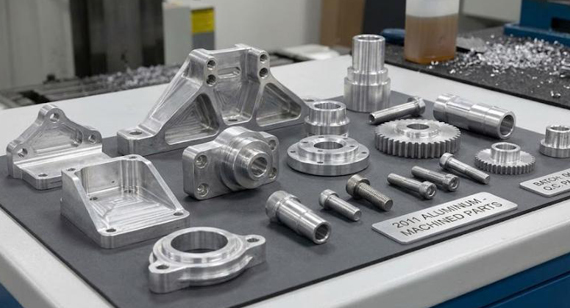
Because of its "free-machining" nature, aluminum alloy 2011 is quite outstanding for parts that require high-volume, high-precision components—and performed with good strength, hardness, and surface roughness. If your product falls into any of the following examples, 2011 is likely your good choice:
Enhancing Production Efficiency for Automotive Fuel System Components
An automotive client partnered with VMT CNC Machining Factory to produce 15,000 units of a complex fuel line adapter. The project’s main challenge was the requirement for high-precision internal threads and a specific geometric tolerance of ±0.01mm. Initially, the client considered using 6061 aluminum, but preliminary tests showed that the material’s long, stringy chips were clogging the internal threads during high-speed tapping, leading to a 12% rejection rate and frequent tool breakages.
After analyzing the application—an internal component constantly submerged in fuel where atmospheric corrosion was not a concern—our engineering team recommended aluminum alloy 2011. We explained that the "free-machining" properties of 2011 would solve the chip-nesting issue. By switching to 2011 aluminum machined parts, our CNC technicians were able to optimize the cutting parameters, ensuring that the chips broke into small, fine pieces that were easily flushed away, keeping the delicate internal threads clean and consistent throughout the entire production run.
The results of the material switch were immediate and measurable. The rejection rate dropped from 12% to less than 0.5%, significantly improving the overall quality yield. Furthermore, the 100% machinability rating of 2011 allowed us to reduce the cycle time per part by 25%. These efficiencies allowed cost-effective to the client, resulting in a 15% reduction in total unit costs while ensuring that the entire 15,000-unit order was delivered three days ahead of the client’s strict deadline.
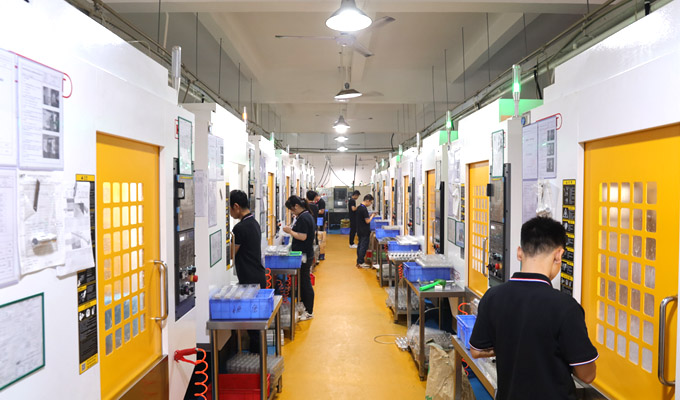
Since 2011 aluminum has been rated at 100% machinability; your partner factory can operate CNC lathes and mills at their maximum speeds. When you are on a tight schedule or limit budget, choosing 2011 aluminum allows to shorten lead times and lower production cost—but still good at strength, hardness, and achievement of intricate internal threads, tiny boreholes, or complex geometric features. What' s more, 2011 aluminum can save the hidden costs in custom part manufacturing is post-processing—polishing, deburring, and smoothing. Just to mention 2011 aluminum’ limitations in welding and less performed in corrosion resistance like 6061.
Ready to bring your project to life? Our engineering team is ready to review your designs and provide expert feedback on how aluminum 2011 machined parts can benefit your project. Upload your CAD files today to get a free, no-obligation quote and a professional technical consultation.

Can 2011 aluminum be used as a substitute for brass?
Yes, but it is an excellent substitute only for the free-cutting brass in high-speed machining applications where weight reduction and cost-efficiency are the priorities. However, it should be avoided if the part requires good electrical conductivity, or easy soldering/brazing capabilities inherent to brass.
Is 2011 aluminum good for CNC machining?
Absolutely. 2011 aluminum is known as the "free-machining alloy" with a 100% machinability rating, making it the best choice for high-speed CNC operations that require excellent surface finishes and fine chips.
Can 2011 aluminum alloy be welded?
Generally, no. Due to its high copper content, 2011 aluminum is considered non-weldable as it is prone to cracking; if your assembly requires welding, please use other alloys like 6061 aluminum.
How do 2011 T6 aluminum properties differ from T3?
2011-T6 provides higher tensile and yield strength compared to T3 due to artificial aging, making it more suitable for precision parts that will be under higher stress within your product assembly.
Does 2011 aluminum have good corrosion resistance?
2011 aluminum has lower corrosion resistance than many other aluminum alloys because of its copper content. Thus, you should choose one of the surface treatments for the machined parts:
What is the main difference between 2011 and 2017 aluminum?
Essentially, you can choose 2011 aluminum for the fastest production of complex parts and 2017 aluminum for structural components that require better strength, ductility, and fatigue resistance.
The technical information and manufacturing advice shared on the VMT website are for general guidance only. While we strive for accuracy, VMT does not guarantee that the processes, tolerances, or material properties mentioned are applicable to every specific project. Any reliance you place on such information is strictly at your own risk. It is the buyer's responsibility to provide definitive engineering specifications for any production orders. Final specifications and service terms shall be subject to the formal contract or quotation confirmed by both parties.


 +86 15099911516




 Read more