16 years one-stop China custom CNC machining parts factory

Hey there I’m VMT Sam!
With 25 years of CNC machining experience we are committed to helping clients overcome 10000 complex part-processing challenges all to contribute to a better life through intelligent manufacturing. Contact us now
 84 |
Published by VMT at May 13 2026 | Reading Time:About 2 minutes
84 |
Published by VMT at May 13 2026 | Reading Time:About 2 minutes


Have you ever known a type of steel where adding additional lead or sulfur elements can achieve high-speed CNC machining? This means the steel parts can be produced in a much shorter time and with lower machining costs for your project—as machining fees account for CNC machining minutes.
This is where free-machining steel comes in—with two main types: sulfur-based (resulfurized) and lead-based (leaded) steels. Both are engineered to be cut at high speeds, but they serve different needs.
In this guide, we will break down the differences between these steels and help you understand their applications, advantages, and disadvantages, so you can make a more suitable choice. At the very end, we will share a case study of how we optimize high-volume production for RoHS-compliant components for one of our clients.
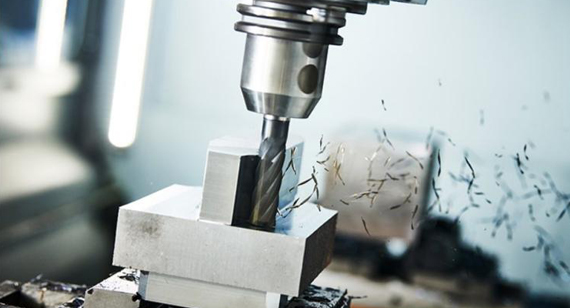
If your custom parts require high-volume production, free-machining steel is the ultimate solution for cost optimization. This material is specially formulated with added elements such as lead or sulfur to improve chip breaking and reduce tool wear when CNC machining. For your project, choosing this material means a higher machinability rating. This allows your partner CNC machining factory to run the production at higher speeds, significantly shortening your delivery lead times and ensuring consistent precision for components like complex bolts, bushings, and fittings.
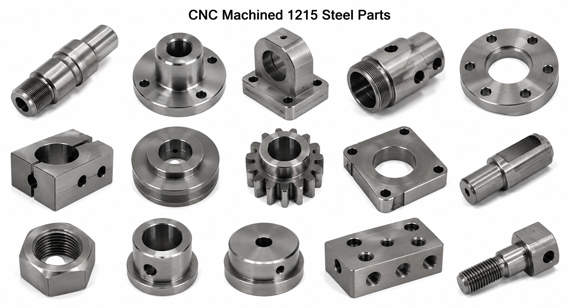
If your product must meet strict environmental regulations, sulfur-based grades (such as 1215 and 1117) are the ideal choice.
These grades use manganese sulfide inclusions as an "internal lubricant." You get excellent machinability in a completely lead-free material.
It is fully compliant with RoHS and REACH standards. This is crucial if you are assembling parts for household appliances, furniture hardware, or office equipment destined for the US and European markets.
These steels are also perfect for automatic parts production of hydraulic hose fittings, precision long shafts, and printer guide rails that require a balance of strength and efficiency.
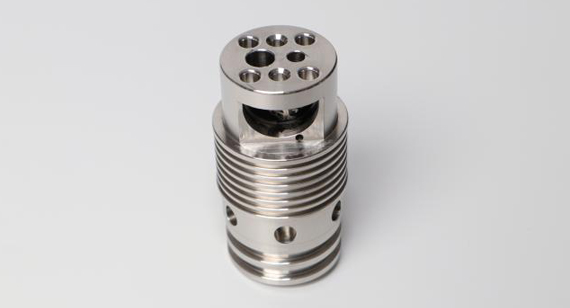
When your project demands even higher production speeds or has a very tight budget, lead-based free-machining steel such as 12L14 (the industry-standard leaded steel) is the top performer. Lead steel means higher parts’ production speed.
The microscopic lead particles act as a powerful lubricant, allowing your partner CNC machining factory to machine complex geometries at much higher RPMs. It also produces an incredibly smooth finish right off the machine, saving you the extra costs of secondary polishing or grinding. You can widely use the lead-based free-machining steel for automotive fuel system components, electronic connector pins, and miniature clock parts where complexity and high precision are required.
JUST BE AWARE OF ITS ENVIRONMENTAL RESTRICTIONS: particularly in the United States or Europe, where steel lead content must be kept at 0.05% or lower (steel products for human contact under RoHS/REACH regulations). If you are unsure, our team can provide a technical assessment to ensure your part is compliant with local laws.
Choosing the right material is a balance between your budget, the part's function, and the target market's regulations. To help you decide, here is a table summarized the key differences below:
Comparison Table: Sulfur-Based vs. Lead-Based Steel
| Comparison Dimension |
Sulfur-Based (e.g.,1215/1117) |
Lead-Based (e.g., 12L14) |
| Machining Speed |
Fast (Standard High-Speed) | Extremely Fast (Maximum Efficiency) |
| Material Cost |
Moderate | Slightly Higher |
| Surface Finish |
Good | Excellent (Mirror-like) |
| Mechanical Strength |
Better for structural integrity | Lower (Prioritizes machinability) |
| Environmental Compliance |
Eco-friendly (RoHS & REACH compliant) | Subject to lead-content restrictions |
It is very clear from the comparison table that:
If your product requires hundreds or thousands of small, intricate metal components, you are likely ready to use these alloys. Here are the most common industrial applications:
Fuel injector nozzles, sensor housings, and brake fittings. These parts require extremely tight tolerances and a burr-free internal finish to ensure proper fluid flow.
Electronics and Electrical Hardware
Hydraulics and Pneumatics
Hydraulic hose ends, valve spools, and manifolds. The "lubricating" effect of sulfur or lead inclusions allows factory to achieve a high-quality surface finish on threads and O-ring grooves. This prevents leaks and ensures that your hydraulic assemblies perform reliably without the need for expensive secondary lapping or grinding.
Precision Fasteners and Shafts (e.g. for Appliances)
Motor shafts, custom bushings, and specialized screws. If you are designing home appliances or power tools, you need internal components that are both cheap to produce and durable enough for years of use. 1144 (Stress proof) or 1215 steel are highly recommended.
Optimizing High-Volume Production for RoHS-Compliant Components
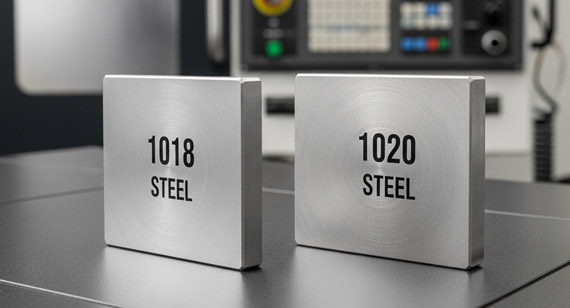
A European electronics manufacturer approached VMT to produce 20,000 custom connector housings for a new product launch. Their original design specified standard 1018 carbon steel, but the material's poor chip-breaking properties led to frequent tool breakages and a 45-second cycle time per part, making the project over-budget and behind schedule. Additionally, the client required strict RoHS compliance for their global supply chain, which meant they could not use traditional leaded steels despite the need for high-speed production.
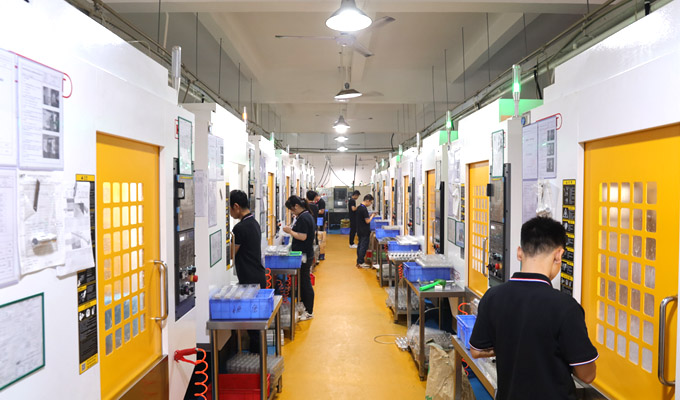
Our engineering team analyzed the technical requirements and recommended a switch to 1215 sulfur-based free-machining steel. Unlike leaded alternatives like 12L14, 1215 is a resulfurized steel that provides the necessary environmental compliance while significantly improving machinability. VMT optimized our high-speed CNC lathes specifically for the unique properties of 1215, utilizing specialized tooling geometries to ensure consistent chip control and a superior surface finish directly from the machine.
By transitioning to 1215 free-machining steel, VMT reduced the cycle time from 45 seconds to just 28 seconds per part, representing a 37% increase in production efficiency. The client benefited from a 20% reduction in total "per-unit" costs and received their precision turned components two weeks ahead of the original deadline. The final parts met all strict dimensional tolerances and environmental standards, allowing the customer to successfully launch their product in the EU market without any regulatory or supply chain delays.
Whether you need the high-speed efficiency of leaded steel(e.g. 12L14 ) or the compliant, reliable performance of sulfur-based steel(e.g.1215) , the goal is the same: getting high-quality parts into your assembly as fast as possible. By choosing a free-machining grade, you are already ahead of the curve in terms of cost-efficiency.
Are you working on a new component design? Contact our engineering team, and send us your CAD files (STEP, IGES, or PDF), and we will provide a detailed quote and material recommendation to ensure your product is built for success.
What is the main difference between 12L14 and 1215 free-machining steel?
While both are excellent for high-speed CNC machining, 12L14 contains lead for maximum machinability and tool life, whereas 1215 is a resulfurized steel that offers a lead-free, RoHS compliant alternative for environmentally sensitive projects.
Can free-machining steel be used for high-strength structural components?
Generally, no; grades like 12L14 and 1215 prioritize chip breaking and surface finish over mechanical strength, making them ideal for precision turned components like Bushings and fasteners rather than heavy-duty structural uses.
Is sulfur-based free-machining steel weldable?
Resulfurized steels (such as 1117 or 1215) are generally not recommended for welding because the high sulfur content can cause "hot shortness" or cracking; for custom metal parts requiring assembly, mechanical fastening or specialized brazing is preferred.
Are there any restrictions on exporting parts made from lead-based steel?
Yes, while 12L14 leaded steel is widely used in industrial applications, certain regions and industries (like medical or consumer electronics) require RoHS and REACH compliance, in which case we recommend switching to a sulfur-based free-machining steel.
Can these steels be hardened?
Since most free-machining steels are "low carbon," they cannot be hardened by simple quenching. However, they are perfect for case-hardening. If your shafts or bushings need high wear resistance, we can add a hard surface layer while keeping the core tough and ductile.
How do I prevent rust?
These steels are not "stainless" and require a surface finish if exposed to moisture. Because of their sulfur or lead content, they need expert preparation for proper coating adhesion. You can choose:
The technical information and manufacturing advice shared on the VMT website are for general guidance only. While we strive for accuracy, VMT does not guarantee that the processes, tolerances, or material properties mentioned are applicable to every specific project. Any reliance you place on such information is strictly at your own risk. It is the buyer's responsibility to provide definitive engineering specifications for any production orders. Final specifications and service terms shall be subject to the formal contract or quotation confirmed by both parties.


 +86 15099911516




 Read more