16 years one-stop China custom CNC machining parts factory

Hey there I’m VMT Sam!
With 25 years of CNC machining experience we are committed to helping clients overcome 10000 complex part-processing challenges all to contribute to a better life through intelligent manufacturing. Contact us now
 156 |
Published by VMT at May 12 2026 | Reading Time:About 2 minutes
156 |
Published by VMT at May 12 2026 | Reading Time:About 2 minutes


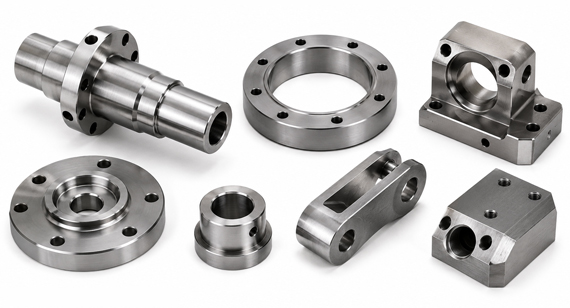
Are you now seeking steel parts required to be subjected to extreme pressure, frequent friction, or high-load rotation? If so, you can take a look at what we will introduce in this blog—52100 alloy steel (also named as 52100 bearing steel).
Of course, it’s important to understand this high-carbon chromium alloy steel’s properties, composition, uses, and pros. It is also important for you to consider whether the 52100 alloy steel parts can be precisely assembled or not, and to look at detailed data like hardness to know their limit for preventing premature failure. In this article, we will dive into these issues. At the very end, we will also share a case study on how we solved the precision (±0.01 mm) and hardness (HRC 62) requirements of precision 52100 steel drive shafts for high-load robotics for our clients.
Before we dive into the steel uses and properties, it’s important to understand what makes AISI 52100 (also known as SAE 52100 or 100Cr6) unique—great strength, wear resistance, and fatigue life.
Chemical Composition of 52100 Alloy Steel
| Element |
Content (%) |
Role in Performance |
| Carbon (C) |
0.98 – 1.10 | Maximum hardness and wear resistance. |
| Chromium (Cr) |
1.30 – 1.60 | Prevents surface oxidation. |
| Manganese (Mn) |
0.25 – 0.45 | Improves tensile strength and workability. |
| Silicon (Si) |
0.15 – 0.35 | Increases strength. |
| Phosphorus/Sulfur |
≤ 0.025 | Kept to a minimum to ensure material purity and fatigue life. |
| Iron(Fe) |
Balance | Base Metal |
Key Properties of 52100 Alloy Steel
When you choose 52100 for your custom parts, you are investing in three core mechanical advantages:
Give Your Parts Exceptional Hardness
Suppose you are sourcing industrial rollers, the hardness ensures your parts resist deformation and surface wear even under punishing contact pressure.
Benefit from High Fatigue Strength
When you use this steel for high-load bearings or transmission gears, the elastic modulus can give the parts a longer service life and reducing the risk of expensive field recalls.
Ensure Excellent Dimensional
robotic joints or precision drive shafts, you can be confident that the tight tolerances can be required due to 52100 moderate-to-good machinability.
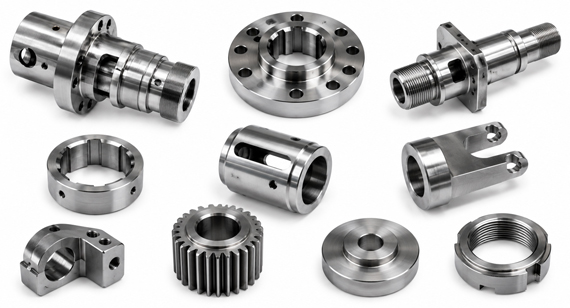
Precision Bearings and Bushings
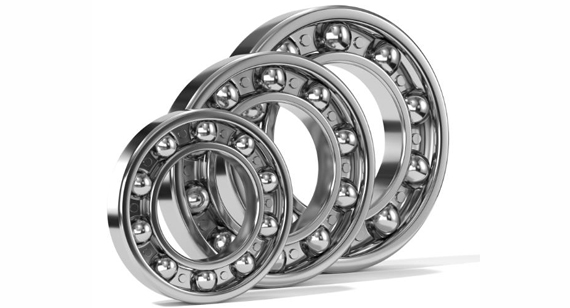
This is the most common application for 52100. If your project involves ball bearings, roller bearings, or high-speed bushings, this steel provides the surface integrity you need—ensure smooth, low-friction rotation that extends the life of your entire mechanical assembly.
High-Pressure Hydraulic Components
When you are designing pumps, piston valves, or high-pressure nozzles, the material must withstand intense internal stress without deforming—52100 can achieve this reliable seal and consistent pressure performance, preventing leaks or pressure drops in critical hydraulic systems.
Custom Tooling and Dies
52100 is an excellent, cost-effective alternative (instead of tool steel like M2) for cold-work dies, gauges, and precision punches—good resistance under impact help spend less time on tool maintenance.
52100 offers the high fatigue strength required for these high-load parts like drive shafts and CV joints. Be assured of these components can keep the torque capacity or safety of the vehicle.
Machining 52100 has a trade-off between hardness and precision. While it is relatively manageable in its annealed state, CNC machining 52100 steel post-heat treatment becomes a challenge. By precisely controlling temperatures, an experienced CNC machining factory ensures your parts achieve the ideal HRC 60-64 hardness without sacrificing the structural stability required for long-term use.
Beyond heat treatment, achieving micron-level tolerances requires a mastery of finishing techniques. While hard turning can be efficient for certain geometries, a specialized facility will often prioritize a rigorous grinding process to guarantee the highest surface integrity and dimensional accuracy. For high-load parts such as precision drive shafts, this change from turning to grinding is what ensures your requirements of 0.01 mm tolerances are met consistently. Working with a factory that understands these nuances means fewer rejected parts and a much more reliable final assembly for your project.
If you want to optimize the best cost for 52100 steel parts, the first important factor is to define the parts’ final effects—such as the hardness or degree of surface smoothness, and the manufacturing efficiency—higher requirement for performance means more production time and cost.
To manage your budget effectively, you can tell the final assembly environment with the partner CNC machining factory. An experienced factory can suggest the most cost-effective hardness range that meets your wear requirements without over-complicating the heat treatment process.
When it comes to volume, remember that 52100 responds exceptionally well to scale; while prototypes carry a higher per-unit setup cost due to the specialized tooling required for hard metals and tool paths designing cost, batch production can largely offset the cycle-time expenses.
Finally, you can avoid the common pitfall of over-engineering: apply strict, micron-level tolerances only to critical mating surfaces, and use standard tolerances elsewhere. Focusing on precision where it truly matters can reduce precision machining time and this portion of cost.
Precision 52100 Steel Drive Shafts for Robotics
A leading industrial robotics manufacturer approached us— VMT CNC Machining Factory with issues: their existing drive shafts, made from standard alloy steel, were experiencing premature surface pitting and catastrophic fatigue failure under continuous 24/7 high-torque cycles.
Our team suggested a custom-machined solution using 52100 alloy steel to extend the service life of their robotic arms, demanding a mirror-like surface finish and a final hardness of HRC 62 to ensure seamless integration into their high-precision assemblies. And then, we implemented a two-stage process: first, we performed high-speed CNC turning in the annealed state to reach near-net shape, followed by vacuum heat treatment to reach the target hardness. Finally, we utilized high-precision internal and external grinding with CBN wheels to achieve a surface roughness of Ra 0.8, ensuring the shafts would fit perfectly within the client’s needle bearing sets.
The result was a 40% increase in component lifespan compared to the client's previous material choice, quite reducing the maintenance costs and downtime. By delivering the parts with a consistent tolerance of ±0.01mm, we eliminated the client's assembly-line rejection rate entirely.
Whether you are developing high-load robotics or mission-critical automotive components, 52100 alloy steel can be one of the options for the durable and cost-friendly purpose. By understanding the balance between hardness and machinability, and by focusing on precision where it truly counts, you can leverage 52100 to deliver superior performance without overextending your budget.
Ready to bring your high-wear components to life? Contact us now for a free DFM (Design for Manufacturing) analysis and a competitive quote on your 52100 custom parts.

1. What makes 52100 alloy steel better than standard carbon steel for custom parts?
52100 contains high carbon and chromium levels, providing superior hardness (HRC 60-64) and exceptional fatigue life that standard steels cannot match in high-friction environments.
2. Can 52100 alloy steel be CNC machined after heat treatment?
It can, but not often recommended. While it is extremely hard after heat treatment, by utilizing specialized CBN (Cubic Boron Nitride) tooling and precision grinding to achieve micron-level tolerances on hardened 52100 components.
3. Does 52100 steel require specialized surface coating or lubrication?
Yes, because it is not stainless steel, 52100 parts should be operated in an oil bath, greased, or plated with protective coatings to prevent corrosion in humid environments.
4. What are the typical tolerances you can achieve with 52100 custom parts?
Through our advanced CNC grinding and hard-turning processes, our VMT CNC machining factory can consistently achieve precision tolerances as tight as ±0.01mm for critical assembly dimensions.
5. How does 52100 compares to 440C stainless steel for bearings?
52100 offers higher load-carrying capacity and better wear resistance at a lower material cost, whereas 440C is preferred only when high corrosion resistance is the primary requirement.
6. Can you handle both the machining and the heat treatment of 52100?
Absolutely; we provide an integrated service that includes annealed machining, vacuum heat treatment, and post-hardening finishing to ensure total dimensional stability.
The technical information and manufacturing advice shared on the VMT website are for general guidance only. While we strive for accuracy, VMT does not guarantee that the processes, tolerances, or material properties mentioned are applicable to every specific project. Any reliance you place on such information is strictly at your own risk. It is the buyer's responsibility to provide definitive engineering specifications for any production orders. Final specifications and service terms shall be subject to the formal contract or quotation confirmed by both parties.


 +86 15099911516




 Read more