16 years one-stop China custom CNC machining parts factory

Hey there I’m VMT Sam!
With 25 years of CNC machining experience we are committed to helping clients overcome 10000 complex part-processing challenges all to contribute to a better life through intelligent manufacturing. Contact us now
 190 |
Published by VMT at Jan 06 2026 | Reading Time:About 2 minutes
190 |
Published by VMT at Jan 06 2026 | Reading Time:About 2 minutes


When manufacturing bicycle components, choosing the right production method has a direct impact on performance, durability, cost, and design flexibility. Among all available methods, CNC machining and forging are two of the most frequently compared processes. Both are widely used in the bicycle industry, but they serve different purposes and excel in different scenarios.
This article provides a clear, engineering-focused comparison of CNC bicycle (bike) parts vs forged bicycle (bike) parts, helping you understand the real advantages, limitations, and ideal use cases of each method.
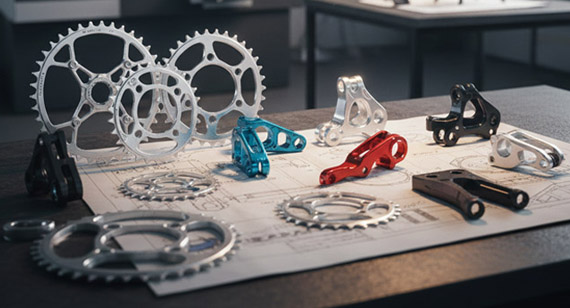
CNC bicycle (bike) parts
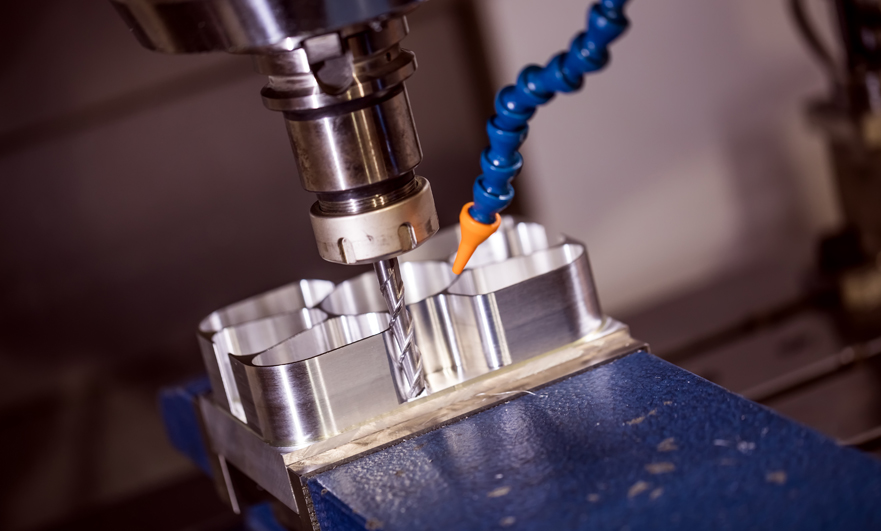
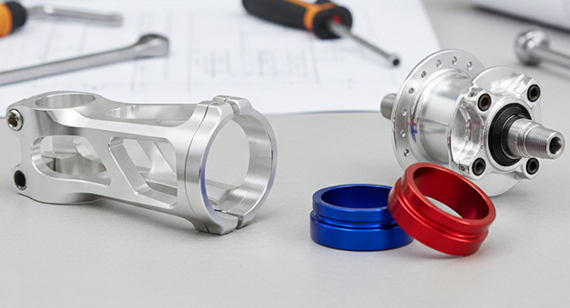
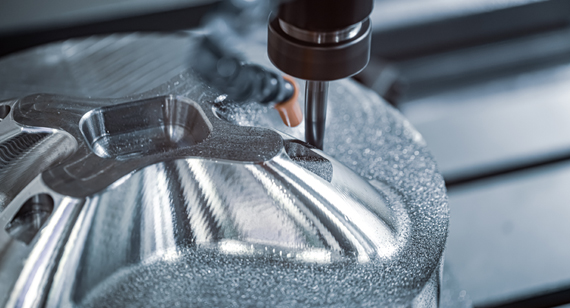
CNC bicycle (bike) parts are the bicycle (bike) parts produced using CNC machining method, where material is precisely removed from a solid billet—such as aluminum, titanium, or stainless steel— the machine’s movement is controlled by computer programs. This process emphasizes precision, repeatability, and design freedom.
Forged bicycle (bike) parts
Forged bicycle (bike) parts are created by shaping heated metal using dies and compressive force. Forging improves grain flow and material toughness, making it suitable for parts subjected to high impact loads. However, forging typically requires additional machining to achieve final dimensions and tolerances.
Both processes are proving effective manufacturing methods, but their benefits differ significantly depending on application requirements.
CNC bicycle (bike) parts are machined from solid billets of materials such as aluminum, titanium, or stainless steel using precise, computer-guided toolpaths. These parts excel in applications where precision, complex design, and customization are critical. Below are the key advantages:
Precision and Design Flexibility
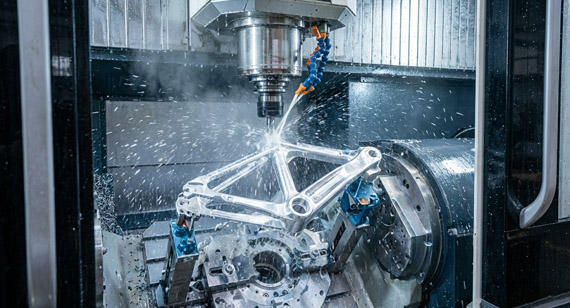
CNC machining can let your bicycle (bike) parts achieve extremely tight tolerances (0.05mm or even minim 0.01mm). This means hubs, cranksets, brake mounts, and bearing interfaces fit perfectly.
It also allows for intricate designs, sharp edges, and complex shapes of your bicycle (bike) components, which is hard or expensive to achieve with forging. It’s because forged parts often need extra machining to reach the same level of precision.
With CNC parts, you get ready-to-fit components that are consistent, reliable, and look great too—perfect for precision bicycle (bike) parts.
Lightweight Optimization
CNC machining removes material exactly where it’s not needed. This means it can create hollow or pocketed structures to make bicycle (bike) parts lighter without losing strength--the material structure remains integrity.
It’s perfect for high-end road bicycle (bike)s, mountain bicycle (bike)s, and e-bicycle (bike)s where highlight the lightweight requirement yet must keep strength.
Forged parts are strong and dense, but they don’t allow the same level of weight reduction without extra machining.
Aesthetic Appeal
CNC bicycle (bike) parts are known for their “bling” appeal, especially if your bicycle (bike) parts are made of metal through CNC.
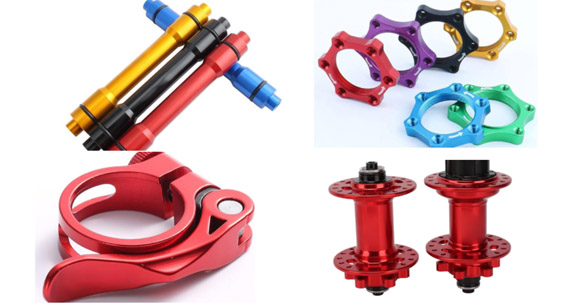
You can choose to anodize, polish, bead-blast, or laser-engrave your bicycle (bike) parts for a sharp, clean look.
Surface finishes such as anodizing can not only improve your bicycle (bike) parts to resist corrosion and wear better, but also you can choose different colors to achieve your beautiful bicycle (bike) design.
Forged parts can look good too, but they usually need extra machining and finishing to reach the same visual quality; time and cost usually add to the manufacturing process.
Customization and Small-Batch Production
CNC bicycle (bike) parts can update designs quickly using CAD files. This makes it perfect for rapid prototypes, boutique components, or limited-edition parts. Manufacturers can iterate fast and adapt to market trends without expensive tooling.
Forging, on the other hand, works best for high-volume production. Any design change requires new dies, which makes small batches or custom components less practical.
Although CNC bicycle parts provide precision, surface finishing advantage, and can rapidly respond to the market, there are also some limitations:
Higher Per-Unit Cost
CNC machining is slower per piece, especially for complex designs. Forging can be cheaper per unit at large volumes once dies are prepared.
Material Waste
Subtractive CNC processes remove excess material, whereas forging compresses metal efficiently, reducing scrap.
Machine Size Constraints
Very large components may exceed CNC machine capacity, while forging can handle some large-scale parts more readily.
Cost and Production Considerations
Although for small to medium batches, prototypes, or custom components, CNC is very efficient. But if it's a very complex design, CNC machining can take longer per piece as well as increase time cost.
Secondary Operations
Most precision bicycle (bike) parts come out after machining very close to finished dimensions. But sometimes minor post-processing of some parts may be needed such as threading or fine-tuning edges. This is usually minimal compared to the extra work required for forged parts to reach similar precision.
Forged bicycle (bike) parts are produced by shaping heated metal under extreme pressure, aligning the internal grain structure for enhanced toughness. The advantages are particularly clear that:
Superior Impact Resistance
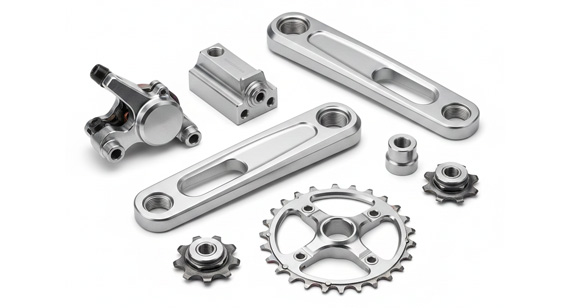
Forged bicycle (bike) parts are known for their exceptional impact resistance. The forging process aligns the metal’s internal grain structure, allowing the part to absorb repeated shock loads more effectively. This makes forging a strong choice for components like crank arms, high-stress hubs, and wheel parts that experience constant impacts.
CNC bicycle (bike) parts are machined from high-quality billet materials to maintain overall strength and structural integrity while they may not benefit from grain flow alignment.
Durability for High-Stress Areas
Forged bicycle (bike) components are less likely to crack under repeated heavy loads because the forging process compresses and aligns the metal’s grain structure to follow the shape of the part. This improves fatigue resistance and makes forged parts well suited for areas that experience constant shock, bending, or impact forces.
To achieve similar durability in high-stress areas, CNC parts need to rely more on proper engineering design, such as optimized geometry, sufficient wall thickness, smooth transitions, and controlled load paths.
Material Efficiency Under High Load
During forging, the metal is compressed and its internal grain structure becomes more resistant to fatigue. This improved material strength allows forged bicycle (bike) components to carry high loads using less material, without increasing overall size or thickness.
CNC parts achieve strength under high load through material selection and structural design, rather than through material compaction or grain alignment.
Cost-Effective for Mass Production
Forging bicycle parts becomes very cost-efficient for large-volume production once the dies are created. Although the initial investment in dies is relatively high, the per-unit production cost drops significantly at scale, making forging ideal for high-volume, load-critical components.
CNC machining, while more flexible and well-suited for small- to medium-batch production, rapid prototypes, or custom components, tends to be more expensive for large-scale runs.
Forging is highly effective for impact-critical and load-bearing parts, but has trade-offs relative to CNC machining:
Lower Design Flexibility
Complex shapes require expensive new dies, while CNC can adapt quickly via CAD updates.
Aesthetic Limitations
Forged bicycle (bike) parts are less capable of achieving intricate or sharply detailed designs without additional machining or finishing. Extra polishing or engraving is often required to reach premium visual quality.
CNC machining can achieve these details more easily through milling, drilling and cutting.
Secondary Machining Often Required
The forging process provides excellent strength and durability, but material flow and die limitations can result in slight dimensional variations. Thus, forged bicycle (bike) parts often need additional machining to achieve tight tolerances for precision interfaces such as hubs, cranksets, or brake mounts.
The choice between CNC and forging depends on production volume, design complexity, and performance requirements. The comparison table summarizes the ideal use cases:
Table 1: Comparison Table of CNC Bicycle (Bike) Parts and Forged Bicycle (Bike) Parts
| Feature | CNC Bicycle (Bike) Parts | Forged Bicycle (Bike) Parts |
| Material Structure | Cuts through grain lines; internal strength depends on billet. | Aligns grain lines for maximum internal strength and fatigue resistance. |
| Precision & Complexity | Extremely high; allows intricate designs and tight tolerances. | Moderate; secondary machining needed for precision. |
| Aesthetics | Sharp, precise, highly customizable industrial look. | Smooth, organic shapes; extra finishing may be required. |
| Ideal Production Volume | Small to medium batches; prototypes or boutique parts. | Large-scale mass production; cost-effective after dies are made. |
| Design Flexibility | Extremely high; easy to update via CAD software. | Limited; design changes require new dies. |
| Strength-to-Weight | Excellent; pocketing and hollow structures possible. | High; dense metal provides strength but less design flexibility. |
| Common Parts | Stems, chainrings, pedals, derailleur hangers, CNC bicycle (bike) frames, hubs, brake mounts. | Crank arms, high-end wheels, high-performance stems. |
| Customization | Ideal for small-batch or prototype parts; laser engraving possible. | Not practical; high tooling cost limits customization. |
| Cost | Higher per-unit cost; low upfront tooling. | Lower per-unit at high volume; high upfront die investment. |
Both CNC machining and forging are essential in bicycle component manufacturing. CNC bicycle (bike) parts excel in precision, lightweight performance, and customization, while forged parts provide superior impact resistance and efficiency in mass production.
Manufacturers, OEMs, and aftermarket suppliers should select the method based on component function, production volume, and design complexity. In practice, many bicycles combine both: CNC for precision parts and forging for stress-critical components, achieving an optimal balance of performance, durability, and cost.
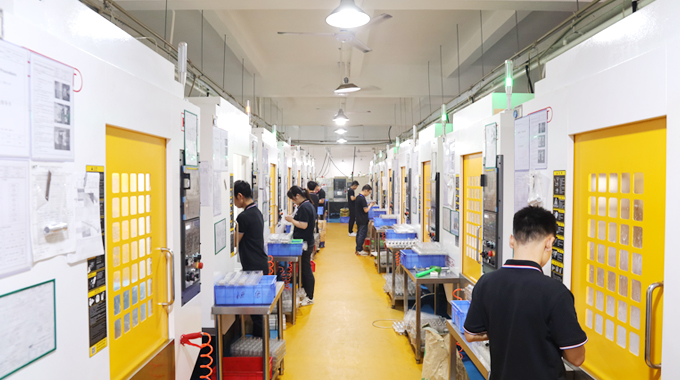
For brands and builders looking for high-quality CNC bicycle (bike) parts, VMT CNC Machining Factory offers professional custom machining services. With extensive experience producing a wide range of bicycle components, including stems, hubs, cranksets, and brake mounts, VMT provides precise machining, advanced surface finishes, and small- to medium-batch flexibility. You can explore more of our custom CNC motorcycle bicycle (bike) parts here.

Q1: What makes CNC bicycle (bike) parts different from traditional bicycle (bike) components?
CNC bicycle (bike) parts are cut from solid billets with computer-controlled precision. Unlike cast or forged parts, they allow complex shapes, sharp edges, and very tight tolerances. This method ensures consistent quality, and it’s ideal for custom, high-performance, or lightweight components.
Q2: Are CNC bicycle (bike) parts suitable for professional or racing bicycles?
Yes. CNC bicycle (bike) parts provide precision, lightweight designs, and durable construction, making them safe for racing and high-performance applications. Properly machined parts also maintain dimensional accuracy, ensuring consistent handling and fitness.
Q3: When should I choose forged bicycle (bike) parts over CNC?
Forged parts are better for high-stress, load-bearing components like crank arms or wheels. The forging process aligns the metal grain, giving maximum strength and fatigue resistance, which is especially useful for mass production and impact-critical applications.
Q4: Can CNC bicycle (bike) parts be customized for small production runs?
Absolutely. CNC machining allows quick updates to CAD designs without expensive tooling. This makes it ideal for small batches, prototypes, or boutique custom components like stems, pedals, and derailleur hangers.
Q5: How do CNC bicycle (bike) parts optimize weight without sacrificing strength?
CNC machining enables selective material removal, hollowing, and pocketing, so manufacturers can reduce weight while maintaining structural integrity. This strength-to-weight optimization is especially valuable for performance bicycles.
Q6: What materials are commonly used for CNC bicycle (bike) parts?
CNC bicycle (bike) components are often made from aluminum alloys, titanium, stainless steel, and some engineering plastics. Each material is chosen based on strength, weight, corrosion resistance, and machining compatibility for the intended bicycle application.


 +86 15099911516




 Read more