16 years one-stop China custom CNC machining parts factory

Hey there I’m VMT Sam!
With 25 years of CNC machining experience we are committed to helping clients overcome 10000 complex part-processing challenges all to contribute to a better life through intelligent manufacturing. Contact us now
 222 |
Published by VMT at Aug 21 2026 | Reading Time:About 6 minutes
222 |
Published by VMT at Aug 21 2026 | Reading Time:About 6 minutes


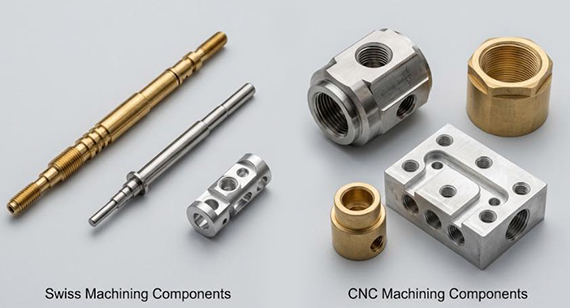
Choosing the right method between CNC Swiss machining and traditional CNC machining impacts your part tolerance, surface finish, cycle times, tooling expenses, and overall production costs. Beyond their basic operation, both processes differ fundamentally in their capabilities and ideal component applications.
In short, Swiss machines feed bar stock through a sliding headstock and guide bushing, preventing material deflection on long, small-diameter, micro-precision parts. Traditional CNC machines keep the workpiece stationary, making them better suited for larger, shorter, or heavier components.
In this guide, we’ll compare both processes across stability, precision, tooling, and cost to help you select the ideal manufacturing solution for your project. We’ll also walk you through a case study detailing how our factory helped a client consolidate a complex multi-step component into a single Swiss machining setup, cutting cycle time by 45% and reducing per-part costs.
Here is a clear and professional comparison table outlining the pros and cons of Swiss turning vs traditional turning for Your Quick Reference:
| Criteria | CNC Swiss Machining | Traditional CNC Machining |
| Tolerances | Extremely high; up to ±0.0002 inches(±0.005mm) — ideal for micro parts | High, but typically within ±0.001 to ±0.005 inches(±0.0254 mm to ±0.127 mm) |
| Best for Part Size | Small-diameter, long, cylindrical parts | Medium to large parts with varied shapes |
| Cycle Time & Efficiency | Shorter cycle time; ideal for high-volume production | Longer cycle time; may require multiple setups |
| Secondary Operations Needed | Often unnecessary due to excellent finish(Ra0.4–0.8μm) and precision | Sometimes needed, depending on surface finish and tolerance |
| Setup Time & Complexity | Higher setup time and more complex programming | Faster setup, especially for short runs or prototypes |
| Flexibility | Limited to small, symmetrical parts | Highly versatile for a broad range of geometries and materials |
| Machine Cost | Higher cost of equipment and tooling | Lower machine and maintenance costs |
| Production Type | Ideal for long-run production of precision components | Suitable for short to medium runs, prototyping, and general production |
| Common Industries | Medical, aerospace, electronics, defense, precision automotive parts | Automotive, aerospace, industrial, mold making, custom components |
| Skill Requirements | Requires highly skilled operators and programming expertise | Easier for general machinists to program and operate |
Choosing between Swiss machining vs traditional CNC isn’t always straightforward. Your decision should depend on part specifications, production volume, tolerance requirements, and budget. Both technologies have unique strengths and limitations, so the key is aligning the right method with the right job.
| Factor | Choose CNC Swiss Machining If... | Choose Traditional CNC Machining If... |
| Part Size | Your parts are small, slender, and precision-critical | Your parts are medium to large with broader dimensional ranges |
| Tolerances | You require ultra-tight tolerances (±0.0002”) and fine finishes | You need standard tolerances or can tolerate secondary operations |
| Production Volume | You're running high-volume production of identical components | You need low- to medium-volume runs or frequent design changes |
| Cycle Time | You need faster cycle times and fewer secondary operations | You can accommodate longer cycle times and post-processing |
| Material Handling | You want to reduce manual handling and improve automation | You need flexibility in workholding or multi-face machining |
| Budget & Setup | You can invest in higher machine/tooling costs for long-term efficiency | You need a cost-effective solution for prototyping or smaller batches |
| Part Geometry | The part is symmetrical or cylindrical in nature | The part has complex 3D contours, varying thicknesses, or multiple faces |
History
CNC Swiss machining is a highly precise subtractive manufacturing process that originated in the Swiss watchmaking industry. It uses a specialized type of lathe known as a Swiss-type lathe, which operates differently from traditional lathes.
Working Principles
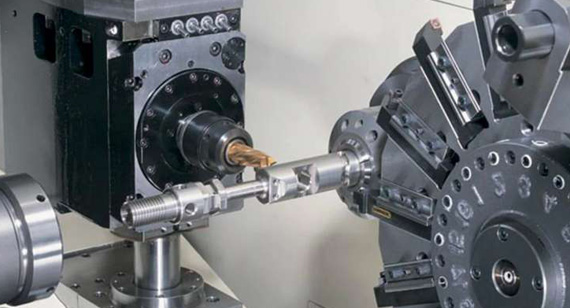
The defining feature of Swiss machining is the sliding headstock mechanism. Instead of holding the workpiece stationary while the tools move, the Swiss machine feeds the material through a guide bushing. The cutting tools remain close to the point of contact, drastically reducing deflection and vibration. This setup provides exceptional accuracy, especially for slender or complex parts.
Swiss machining is known for producing small-diameter, high-precision components that demand tight tolerances—often within ±0.0002 inches. This makes it ideal for industries such as medical, aerospace, electronics, and defense, where micro-components are standard. Swiss-type machines can perform multiple operations in a single cycle, such as turning, milling, drilling, knurling, and threading, without transferring the part between machines. This leads to reduced setup time, enhanced consistency, and faster throughput.
Suitable Parts Features
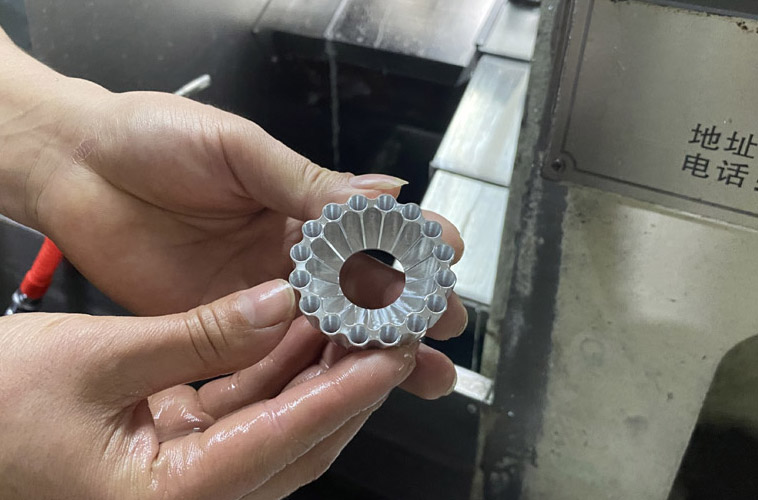
CNC Swiss machining is especially beneficial for producing long, thin parts or those with complex geometries. If your project involves components with deep cuts, intricate shapes, or tight tolerances—especially in high volumes—Swiss machining is often the best choice. For example, many CNC Swiss machining parts include surgical screws, valve stems, electronic pins, and miniature shafts.
For manufacturers looking for precise, repeatable, and efficient production, CNC Swiss machining offers unparalleled advantages. At VMT, we provide advanced CNC Swiss machining services tailored to your project’s unique specifications.
Working Principles
Traditional CNC machining is a versatile and widely adopted manufacturing process used to create a broad range of precision parts. At its core, CNC (Computer Numerical Control) machining uses pre-programmed software to automate and control machine tools like lathes, mills, routers, and grinders. In traditional CNC setups, the workpiece remains stationary or is held in a rotating spindle while various tools move around it to remove material and shape the final part.
Suitable Parts Features
Unlike CNC Swiss machining, which uses a sliding headstock and guide bushing, traditional CNC machines rely on a fixed workholding method. This makes them better suited for medium-to-large parts or components that are shorter and more rigid. The setup allows for complex operations involving multiple axes (3, 4, or even 5-axis machining), giving engineers tremendous flexibility in creating complex geometries, detailed features, and smooth finishes.
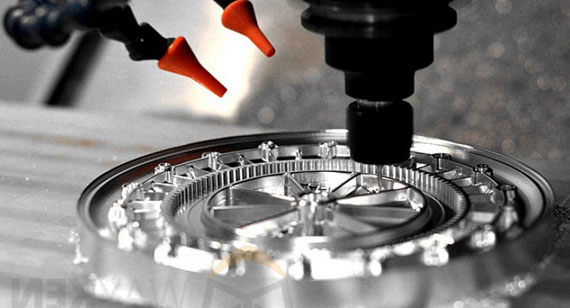
Traditional CNC machining is highly effective for prototyping, low-to-medium volume production, and parts that do not require extreme precision on very small scales. Common parts made with this method include brackets, casings, custom fixtures, enclosures, structural components, and various industrial equipment parts.

Although both CNC Swiss machining and traditional CNC machining serve similar goals—precision, repeatability, and automation—they operate under fundamentally different principles. These differences affect everything from part size and complexity to cycle time, tooling, and ideal applications. Choosing between these two methods depends on your project’s unique requirements. Below, we compare their key attributes to help you make the right decision.
Spindle Box Motion & Support
Machining Axes & Complexity
Ideal Part Size & Geometry
Coolant System Efficiency
Tooling & Modular Setup
Cycle Times & Automation
Tolerances & Surface Finish
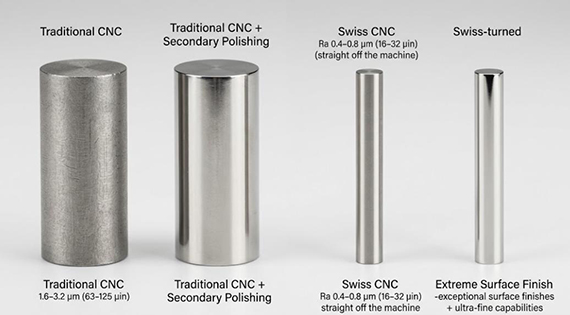
Swiss Machining Cost vs Traditional CNC Cost
Applications of CNC Swiss Machining
CNC Swiss turning is the preferred method for producing high-volume, small-diameter, tight-tolerance parts, particularly those that require precise concentricity and clean surface finishes. Its ability to perform multiple operations in a single cycle makes it indispensable in high-precision industries:
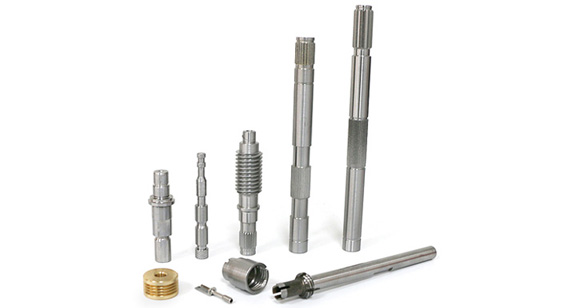
Swiss CNC machining for medical devices
Swiss machines are widely used to manufacture orthopedic screws, dental implants, surgical pins, and catheter components. Their ability to meet stringent regulatory tolerances makes them ideal for life-critical devices.
Lightweight, high-strength aerospace parts such as miniature fasteners, connectors, and valve components are commonly produced on Swiss machines.
Consumer Electronics Components
Precision parts used in smartphones, wearables, and audio devices—including shafts, bushings, and hardware—are manufactured efficiently with Swiss screw machining.
Defense Product Components
Applications include micro-mechanical firearm components, high-tolerance fasteners, and secure electronics enclosures.
Swiss machining is used to create fuel injection nozzles, sensor pins, and small mechanical parts where precision affects performance.
These industries favor Swiss machining for its speed, accuracy, and the ability to eliminate secondary processes, saving both time and cost over large production volumes.
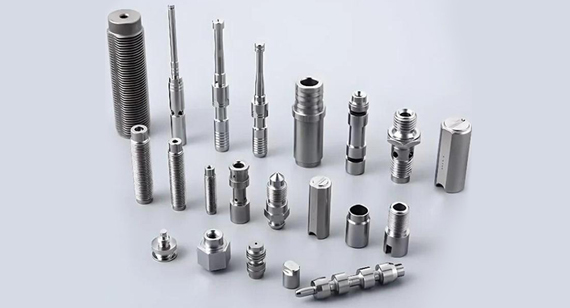
Applications of Traditional CNC Machining
Traditional CNC machining is known for its versatility, handling a broad range of materials, part sizes, and shapes. It is frequently used for both prototyping and full-scale production in the following areas:
Engraving and Decorating
CNC routers and mills produce fine engravings on metals, plastics, and wood for signage, branding, and decorative parts.
Component Manufacturing
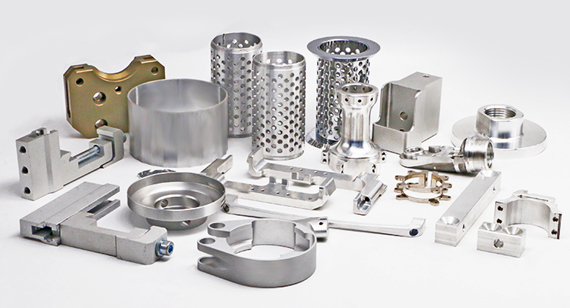
From custom brackets and flanges to structural frames, traditional turning handles medium-to-large components across countless industries.
Automotive Component Manufacturing
Parts such as engine blocks, transmission housings, and brake components are frequently machined using multi-axis CNC equipment.
Mold Manufacturing
Injection molds, die cast tools, and press mold bases require high rigidity and complex 3D geometries—tasks traditional CNC machines handle well.
Aerospace Component Manufacturing
Large turbine components, bulkheads, and structural elements are often machined using 5-axis CNC milling or turning.
Automated Production Lines
Fixtures, jigs, end-effectors, and mounting brackets for robotics and conveyors are routinely made with traditional CNC methods.
Part Finishing and Modification
Post-casting or forging, parts may require precision milling or drilling—applications where traditional CNC excels.
Medical Device Components
Traditional CNC is used for surgical instrument handles, orthopedic tools, and prototypes for custom medical solutions.
Consumer Electronics Components and Housings
Metal casings, internal support structures, and EMI shielding elements are machined for devices like laptops and monitors.
CNC machining is used to fabricate lens housings and precision adjustment frames in the optics industry.
Custom machine parts, pumps, flanges, and housings in heavy-duty applications rely on traditional CNC for durability and performance.
In short, CNC Swiss machining shines in micro-part production for high-precision, high-volume industries, while traditional CNC machining is better suited for larger, more complex, or varied parts across a broader range of industries.
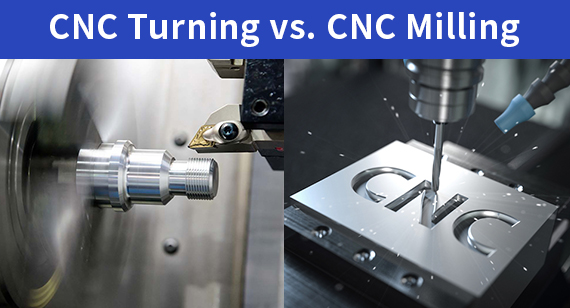
Traditional CNC machining primarily encompasses CNC milling (for non-cylindrical, complex 3D shapes) and CNC turning (for symmetrical, round components). Depending on your part design, selecting between these traditional operations—or combining them with Swiss machining—can further optimize your manufacturing costs.
To learn more about specific machining techniques, explore our in-depth guides:
Your Trusted CNC Machining Partner for Precision Parts
At VMT, we understand that choosing between CNC Swiss machining vs. traditional CNC machining can be challenging. That’s why we offer a comprehensive range of CNC machining services to support your specific production goals — whether you're manufacturing high-precision micro components or robust, complex assemblies.
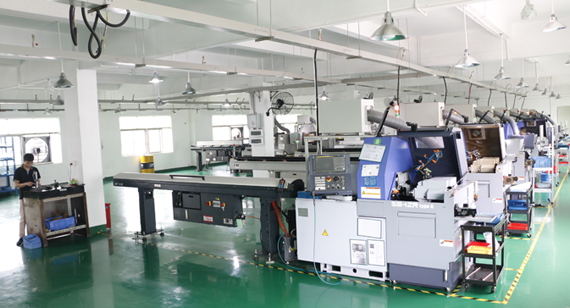
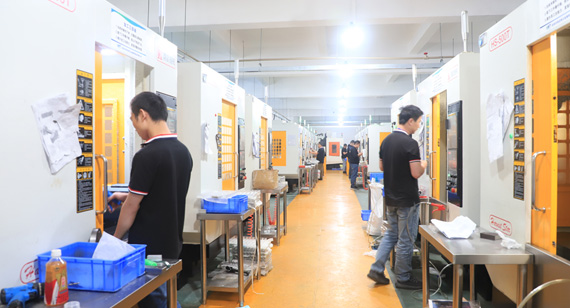
With over a decade of experience, VMT has grown into one of the most reliable CNC machining factories, specializing in Swiss machining, CNC turning, CNC milling, and custom part fabrication. We serve industries like medical, aerospace, electronics, automotive, and industrial equipment, delivering consistent quality and performance every time.
Why Choose VMT for CNC Swiss and Traditional Machining?
Full-Service Capabilities
Tight Tolerance Machining
Surface Finishing & Quality Assurance
Responsive Engineering Support
Get Your CNC Machining Project Started Today
Whether you need high-volume CNC Swiss machining for tiny electronic components or traditional CNC machining for large aerospace structures, VMT is the one-stop solution. Our in-house expertise, modern equipment, and commitment to customer success make us the ideal partner for your precision machining needs.
Ready to get a quote or discuss your project? Contact VMT today to explore how our CNC machining services can benefit your production line.
Resolving Complex Machining, Lead Time, and Cost Issues for Stainless Steel Valve Components
A medical device client reached out to our engineering team with an urgent production challenge: they needed a batch of micro stainless steel valve components. Because these valves control critical fluid delivery in medical devices, the application demanded an ultra-tight tolerance of ±0.0002" (±5μm) to ensure a zero-leakage precision seal.
However, their existing supplier was struggling: the delivered parts suffered from dimensional variations, rough surface finishes, and high scrap rates, leading to severe supply chain delays.
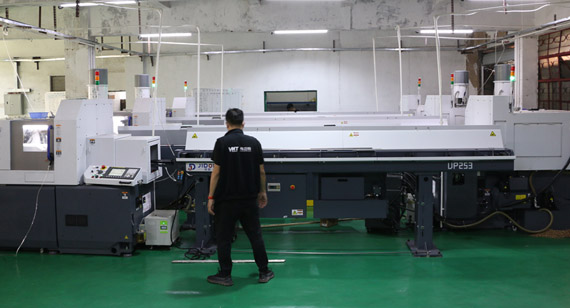
Upon reviewing the engineering drawings, our engineering team identified the cause: the previous supplier probably had processed the parts on traditional CNC equipment, where the lack of continuous material support on slender features caused severe tool deflection and chatter. We proposed switching the project to our 5-axis CNC Swiss machines. Using a sliding headstock and guide bushing, we supported the raw bar stock directly at the cutting zone to avoid deflection. To further expediate production, our engineers programmed custom live tooling and synchronized high-pressure coolant (2,000 psi) to execute primary turning, cross-drilling, back-boring, and micro-milling simultaneously in a single setup, removing secondary manual operations.
The results exceeded the client's expectations. By correcting the manufacturing approach, we solved deflection defects and reliably held the required ± 0.0002" (±5μm) tolerance with pristine, burr-free surface finishes straight off the machine. Furthermore, single-setup Swiss machining slashed total cycle times by 15% and reduced unit costs, allowing the client to restore their project timeline.
Choosing between CNC Swiss machining and traditional CNC machining ultimately comes down to the specific requirements of your project — part size, tolerance, complexity, production volume, and material. CNC Swiss machining excels in producing small, high-precision components with tight tolerances and high efficiency, making it ideal for sectors like medical devices, aerospace, and electronics. On the other hand, traditional CNC machining offers greater flexibility for larger parts, complex geometries, and a wide range of machining operations such as milling, turning, and drilling.
Throughout this article, we've examined the key differences, pros and cons, and application scenarios of both methods, helping you better understand which solution best fits your needs. We've also highlighted other complementary machining technologies like CNC milling, turning, and turret machining, which further expand your manufacturing capabilities.
If you're still unsure which process is best for your application, the experienced team at VMT is ready to help. With advanced equipment, deep technical expertise, and a full suite of CNC machining services, we can provide you with optimized solutions for everything from prototype development to mass production.
For expert support, competitive pricing, and unmatched precision, contact VMT — your trusted CNC machining factory for both Swiss and traditional CNC machining parts.
Send your 2D drawings, 3D CAD models, material requirements, dimensional tolerances, surface-finish requirements, prototype quantity and production quantity. VMT will review whether Swiss machining or traditional CNC machining is better suited to your part and provide manufacturability feedback and quotation requirements.
All information and uploaded files are secure and confidential.
1 Tell us what you need
2 Get solution & quote
3 Approve production
Email: inquiry@vimetal.com.cn
Can Swiss machines perform milling operations?
Yes, modern CNC Swiss machines can perform milling in addition to turning. They are equipped with live tooling and multi-axis capabilities, allowing for complex machining operations such as drilling, slotting, and cross-milling — all in one setup.
What are the limitations on the types of parts that can be manufactured by Swiss machines?
Swiss machines are optimized for small, slender, and high-precision parts, typically less than 1.25 inches in diameter. They're less suitable for large or bulky components due to limited work envelope size and bar stock capacity.
Can traditional CNC machines achieve the same level of precision as Swiss machines?
While traditional CNC machining can offer tight tolerances, CNC Swiss machining typically delivers greater precision for long, narrow parts. This is due to the guide bushing system that supports the workpiece close to the cutting tool, minimizing deflection.
Can Swiss machines handle secondary operations such as knurling and threading?
Yes. Swiss-type lathes can handle knurling, threading, engraving, cross-drilling, and even complex contouring without transferring the part to another machine, reducing cycle time and improving accuracy.
What are the 5 most common types of CNC machine tools?
The five most common types of CNC machines include:
Is Swiss machining more expensive than traditional CNC machining?
Swiss machining typically has higher initial tooling and setup costs, but it becomes far more cost-effective per unit for high-volume production of small, complex parts.
What is the maximum diameter for Swiss CNC machining?
Most standard Swiss machines handle bar stock up to 1.25 inches (32 mm) in diameter, though larger specialized models can accommodate stock up to 1.5 to 1.75 inches (38–45 mm).
Can a traditional CNC lathe replace a Swiss lathe?
A traditional CNC lathe can replace a Swiss lathe for short, rigid parts with standard tolerances, but it cannot match a Swiss lathe's precision, stability, and speed for long, slender, or micro-precision components.
The technical information and manufacturing advice shared on the VMT website are for general guidance only. While we strive for accuracy, VMT does not guarantee that the processes, tolerances, or material properties mentioned are applicable to every specific project. Any reliance you place on such information is strictly at your own risk. It is the buyer's responsibility to provide definitive engineering specifications for any production orders. Final specifications and service terms shall be subject to the formal contract or quotation confirmed by both parties.


 +86 15099911516




 Read more