16 years one-stop China custom CNC machining parts factory

Hey there I’m VMT Sam!
With 25 years of CNC machining experience we are committed to helping clients overcome 10000 complex part-processing challenges all to contribute to a better life through intelligent manufacturing. Contact us now
 295 |
Published by VMT at Aug 26 2026 | Reading Time:About 6 minutes
295 |
Published by VMT at Aug 26 2026 | Reading Time:About 6 minutes


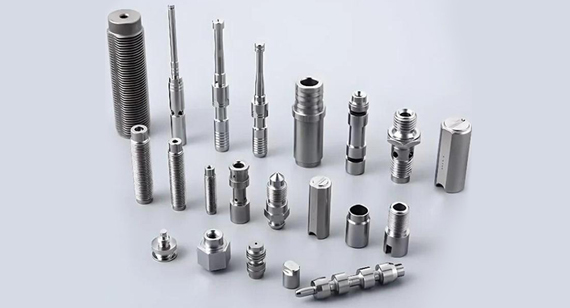
Choosing the wrong CNC machining process often leads to unnecessary setup costs, missed delivery deadlines, and out-of-spec part tolerances. While traditional CNC (cnc milling, or cnc turning) remains the budget-friendly way for simple geometries, multi-axis mill-turn centers (cnc milling and turning in one machine) have changed the manufacturing method for complex components by completing parts in a single setup. At the end, we will share a case study of how we use dfm & mill-turn saved an urgent optical mount project.
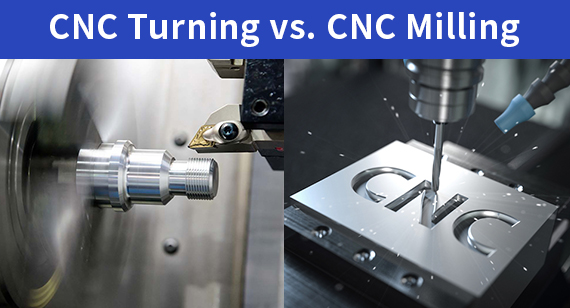
Traditional CNC machining( or conventional CNC machining) is a subtractive manufacturing process where pre-programmed software controls the movement of machines’ cutting tools to remove extra materials to form a part. This technology (CNC milling, or CNC turning) allows for high precision and repeatability in producing complex parts.
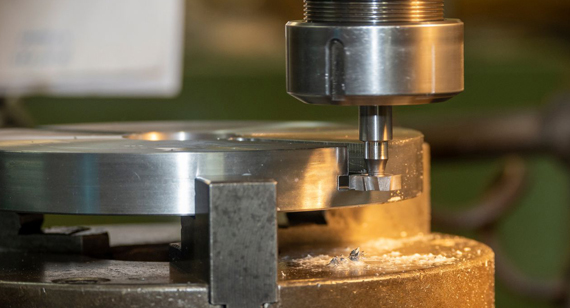
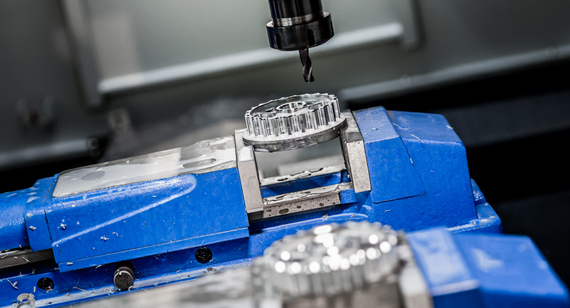
CNC milling involves a rotating cutting tool that moves along multiple axes to remove material from a workpiece. It's ideal for creating intricate shapes, slots, holes, and contours. Milling is highly versatile and suitable for a wide range of materials and part geometries.
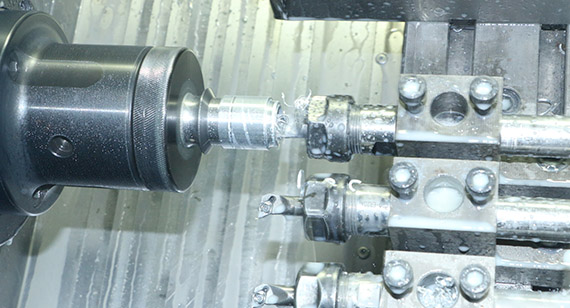
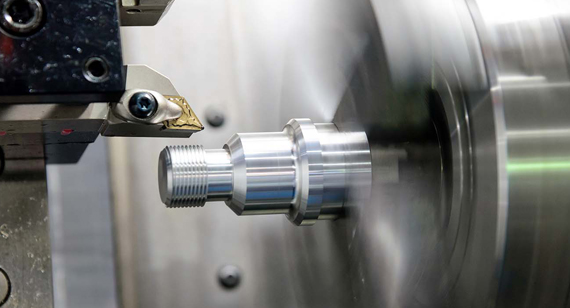
In CNC turning, the workpiece rotates while a stationary cutting tool removes material. This process is optimal for producing cylindrical parts like shafts, rods, and bushings. Turning is known for its efficiency and ability to achieve tight tolerances on round components.
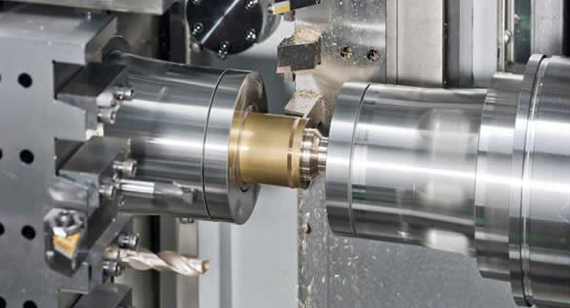
Mill-Turn machining combines the capabilities of milling and turning in a single machine setup. This hybrid approach allows for the complete machining of complex parts without multiple setups, reducing handling time and potential errors. Mill-Turn machines are equipped with both rotating spindles and milling tools, enabling the production of intricate components with high precision.
Choosing the right machining approach (Mill-Turn or traditional CNC machining) can significantly affect your project's outcome in terms of cost, efficiency, and quality. To help you decide which method best fits your application, let’s explore how these two approaches compare in key areas such as surface finish, precision, efficiency, lead time, and cost.
1. Machining Accuracy & Surface Finish
Precision in custom component manufacturing is heavily dictated by how many times a workpiece is re-clamped.
2. Lead Time & Setup Efficiency
Turnaround speed directly impacts supply chain flexibility and time-to-market.
3. Equipment & Tooling (Impact on Part Pricing)
Understanding machine and toolings helps clarify how shops price your production orders.
When evaluating production quotes, focusing on the Total Cost Per Finished Part.
Total Part Cost = (Material Cost) + (Tooling & NRE Setup / Volume) + (Machining Time × Hourly Rate) + (Manual Labor & QC Overhead)
| Cost Driver | Traditional CNC Machining | Mill-Turn Machining |
| Machine Hourly Rate | Lower | Higher |
| Fixture & Tooling (NRE) | High (Multiple custom fixtures) | Low (Standardized workholding; fewer custom fixtures) |
| Labor & Operator Cost | High (Multiple load/unload cycles) | Minimal (Automated hand-off / Single load) |
| Scrap Rate Risk | Higher (Multiple setups increase error risk) | Near Zero (Single-setup repeatability) |
The best budget-friendly machining method usually depends on the parts shapes and production volume:
Check the boxes that apply to your component design to quickly identify the optimal manufacturing route:
Select Mill-Turn Machining if the project meets 2 or more of these criteria:
Select Traditional CNC Machining if the project fits these profiles:
Mill-Turn machining and conventional CNC machining each offer unique benefits and drawbacks, depending on the complexity of the part, batch size, and project requirements. In this section, we’ll use a clear table to compare both methods to help you make informed decisions tailored to your application needs.
| Machining Type | Pros | Cons |
| Mill Turn Machining (combines turning and milling) |
• Single Setup ("Done-in-One"): Reduces re-fixturing errors and reduces floor time. • Superior Accuracy: Holds tighter concentricity and tolerances (±0.005 mm). • Complex Geometries: Excels at off-center holes, keyways, and complex features. • Shorter Lead Times: Fast cycle times for high-mix/complex parts. |
• Higher Capital Investment: Machinery costs significantly more upfront.(Suppiler counts this for your production cost). • Complex CAM Programming: Requires multi-axis software and skilled programmers. • Single Point of Failure: Maintenance halts both milling and turning capabilities. • Higher Operator Skill Floor: Demands advanced machinists for operation and troubleshooting.( also means cost). |
| Traditional CNC Machining (simple turning, or milling) |
• Lower Initial Cost: Individual mills and lathes are more budget-friendly.(also benefits to your quote). • Simpler Programming: Faster CAM setup for basic 2D/3D parts. • Ideal for Simple High-Volume Runs: Highly cost-effective for straightforward parts. • Isolated Maintenance: Machine downtime less affect overall shop operations.(related to the lead time). |
• Multiple Setups Required: Increases cumulative alignment errors (tolerance stack-up). • Labor-cost: Manual part transfers boost labor costs and slow cycle times. • Tooling & Fixture Overhead: Requires dedicated jigs, vises, and larger floor space. • Geometry Bottlenecks: Struggling/costly with multi-angle complex features. |
Mill-Turn machining is ideal for complex parts requiring multiple operations, while traditional CNC machining is better suited for simpler components or high-volume runs of uniform parts. Below is how Mill-Turn and Traditional CNC perform across key applications:
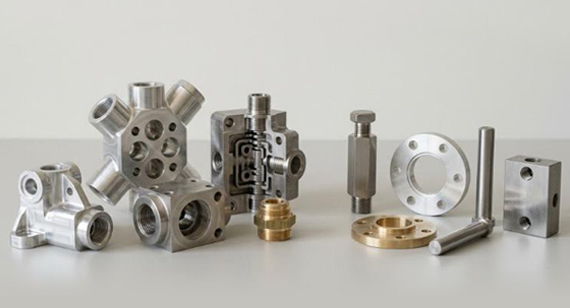
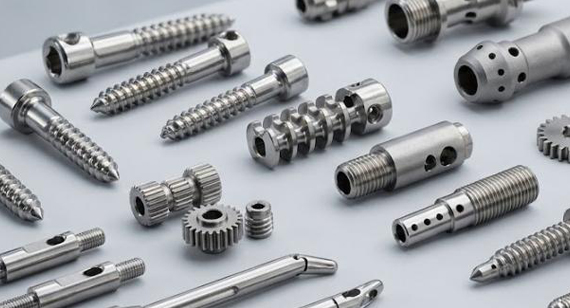
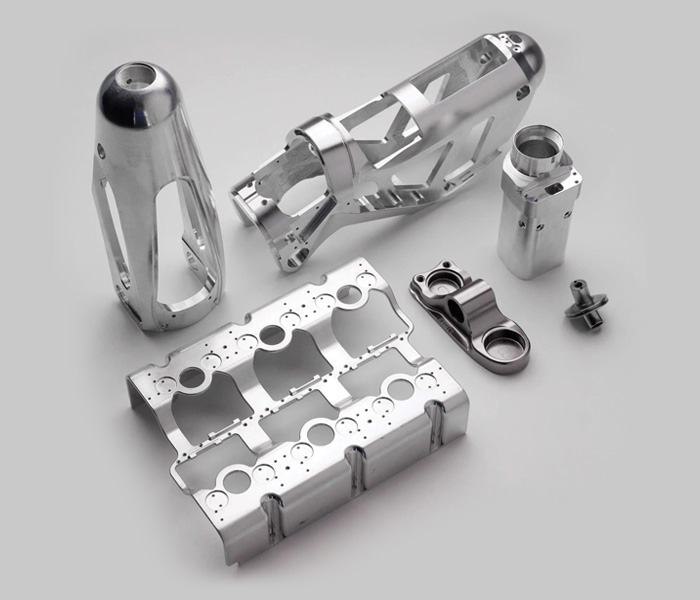
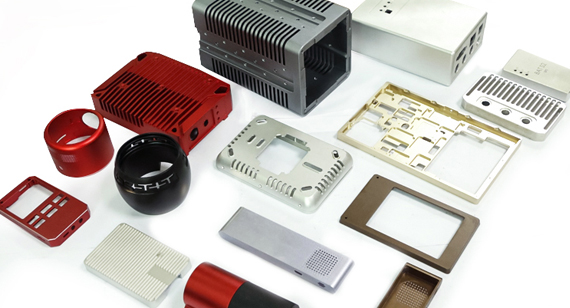
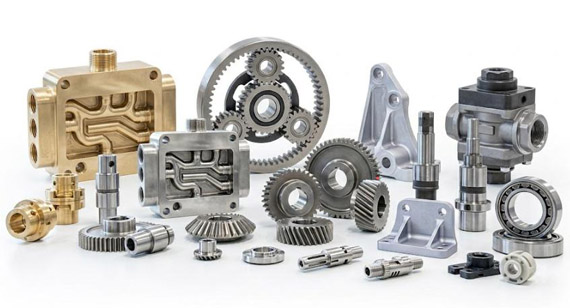
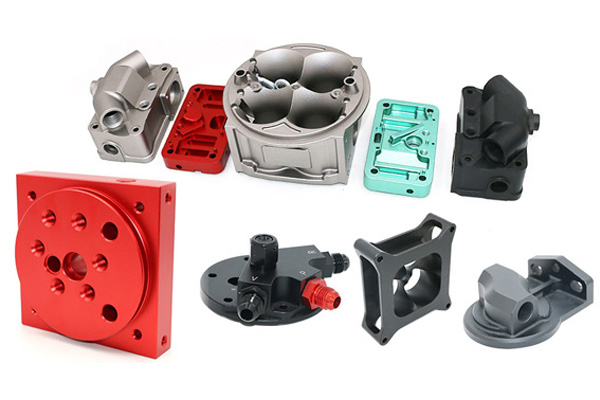
Defense & Military
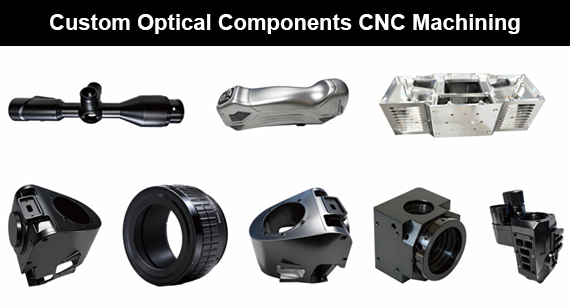
Automation Equipment
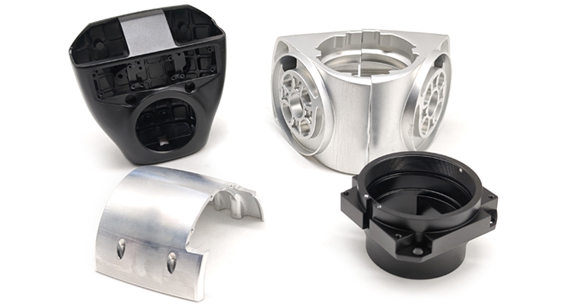
How DFM & Mill-Turn Saved an Urgent Optical Mount Project
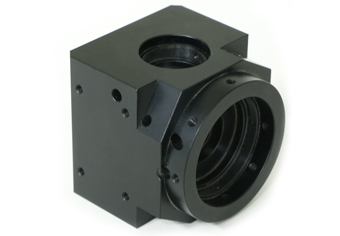
When a high-precision optical equipment manufacturer faced a strict launch deadline, they needed to scale production for a complex Aluminum 6061-T6 Optical Mounting Bracket.
If this is under a traditional CNC approach, the part required four separate machine setups (turning, 3-axis milling, 5-axis milling, and drilling). This multi-machine routing projected a 14-day lead time and introduced a high risk of alignment errors across critical mounting surfaces.
To meet the client's urgent delivery window, our engineering team first applied Design for Manufacturability (DFM) optimizations. We standardized internal pocket radii to allow higher cutter speeds without tool chatter, adjusted thread reliefs, and re-aligned datums so every feature could reference a single holding point. These design refinements prepared the part for seamless multi-axis execution.
We then shifted production to a 5-axis Twin-Spindle Mill-Turn Center with Live Tooling. In a single clamping setup ("Done-in-One"), the machine completed the main turning, milled the angled sensor pockets, and passed the part to the sub-spindle for back-side keyway milling and cross-drilling. This reduced intermediate queue times and manual re-fixturing entirely.
By combining DFM refinements with Mill-Turn technology, we slashed production lead time from 14 days down to just 6 days (a 57% reduction). The single-setup process also achieved key features with tolerance of ±0.005 mm, reduced scrap to near zero, and cut total unit costs by 17%, allowing the client to launch their product on schedule.
In the highly competitive world of precision manufacturing, selecting the right CNC machining factory can be the difference between a successful project and a costly mistake. Many companies struggle to find a machining partner that not only offers state-of-the-art equipment but also delivers consistent quality, flexible production capabilities, and expert engineering support. This is where VMT steps in—bridging the gap between demanding industry requirements and innovative CNC machining solutions.
At VMT, we specialize in both Mill-Turn machining and traditional CNC machining services, enabling us to serve a diverse range of industries with unmatched precision and efficiency. Whether you're developing intricate aerospace components or large-volume automotive parts, our factory is equipped with the technology and expertise to deliver consistent results. By integrating milling and turning operations into a single Mill-Turn platform, we reduce setup time, increase production efficiency, and minimize errors—offering our clients faster turnaround and reduced costs for complex parts.
VMT operates with a customer-first philosophy, offering end-to-end CNC machining services including material sourcing, design optimization, prototyping, full-scale production, and rigorous quality control. We work with a wide range of metals and plastics, and our capabilities extend across CNC Swiss machining, CNC milling, CNC turning, and advanced multi-axis machining. This versatility allows us to tailor machining strategies to the specific needs of each project, whether it involves tight tolerances, high-volume production, or intricate geometries.
If you are unsure which process—milling and turning vs. traditional CNC machining—is right for your part, our engineers will evaluate your requirements and recommend the most cost-effective and technically sound solution. From high-precision CNC machining parts to fully customized production lines, VMT is your trusted partner for quality, reliability, and performance.
Learn more about our CNC Swiss machining vs. traditional CNC machining comparison or visit our full services overview to explore how VMT can support your next machining project.
Choosing between Mill-Turn machining and traditional CNC machining is not a matter of which process is universally better—it's about selecting the one that aligns with your specific project requirements. While Mill-Turn machining offers superior efficiency, precision, and the ability to handle complex geometries in a single setup, traditional CNC machining remains a powerful and cost-effective solution for simpler parts, larger production batches, or when distinct milling and turning operations are preferred.
Understanding the key differences in versatility, production speed, cost, and applicability can help you make informed decisions. Mill-Turn machining excels in industries where high precision, multi-process integration, and reduced handling are crucial—such as medical devices, aerospace components, and intricate automation equipment. On the other hand, traditional CNC machining is often ideal for applications with well-defined processes, tight budgets, or lower complexity requirements.
At the heart of a successful machining project lies a knowledgeable partner. VMT CNC machining factories are equipped with both Mill-Turn and traditional CNC technologies, supported by experienced engineers who assess each project's goals and constraints before recommending the best machining path. From high-quality CNC machining parts to fast turnaround CNC machining services, VMT ensures that clients receive optimal performance, reliability, and value at every stage.
Still unsure which machining method fits your part design? Explore our CNC machining services page for technical insights, or contact our experts to request a custom quote tailored to your application.
Send your 2D drawing, 3D CAD model, material, tolerances, surface-finish requirements, prototype quantity and production quantity. VMT will review whether Mill-Turn or traditional CNC machining is more suitable for your part and provide DFM feedback and a quotation.
All information and uploaded files are secure and confidential.
1 Tell us what you need
2 Get solution & quote
3 Approve production
Email: inquiry@vimetal.com.cn
Q1: Is Mill-Turn machining more expensive than traditional CNC machining?
A: The machine hourly rate for Mill-Turn centers is generally higher due to advanced multi-axis capabilities. However, for complex parts requiring multiple operations, Mill-Turn lowers the total cost per part by removing extra tooling, reducing manual setup labor, and cutting cycle times by up to 60%.
Q2: When should I choose Mill-Turn instead of separate CNC milling and turning?
A: Choose Mill-Turn when your part features both turned diameters and off-center milled features (such as cross-holes, keyways, or flats), or when tight geometric tolerances (under ±0.005 mm) cannot tolerate the alignment errors caused by re-clamping across multiple machines.
Q3: What is the main difference between Mill-Turn machining and Swiss CNC machining?
A: While both combine turning and live tooling, Swiss machining uses a guide bushing to support the bar stock right at the cutting site, making it ideal for extremely slender, small-diameter parts (typically under 32 mm). Mill-Turn centers are designed for larger, heavier, and broader multi-axis components.
Q4: Can Mill-Turn machining handle low-volume prototype orders?
A: Yes, provided the part geometry is sufficiently complex. For intricate prototypes, Mill-Turn reduces the need to design and manufacture custom holding fixtures for secondary operations, significantly accelerating sample delivery time.
Q5: How does Mill-Turn machining improve component tolerance control?
A: In traditional CNC, moving a workpiece between multiple machines creates "tolerance stack-up" from manual re-alignment. Mill-Turn completes features in a single setup ("Done-in-One"), preventing clamping variations and maintaining consistent concentricity and positional accuracy.
Q6: Is 5-axis CNC machining considered milling, turning, or mill-turn machining?
A: Common 5-axis CNC machining is primarily multi-axis milling, designed for complex 3D surfaces and prismatic geometries. However, 5-axis mill-turn centers machining combine both capabilities, integrating a turning spindle with 5-axis milling features in a single machine setup.
The technical information and manufacturing advice shared on the VMT website are for general guidance only. While we strive for accuracy, VMT does not guarantee that the processes, tolerances, or material properties mentioned are applicable to every specific project. Any reliance you place on such information is strictly at your own risk. It is the buyer's responsibility to provide definitive engineering specifications for any production orders. Final specifications and service terms shall be subject to the formal contract or quotation confirmed by both parties.


 +86 15099911516




 Read more