In toy and game hardware projects, producing mass-produced parts that combine cost-effectiveness, appearance quality, and stable assembly and use from design drawings is not a simple matter of just putting them into production. Due to a lack of understanding of actual CNC machining for toy and game parts, some projects, when moving from prototype to mass production, often face scenarios of assembly interference, abnormal tolerances, or surface textures that do not meet expectations.
Based on actual engineering and Design for Manufacturability (DFM), this article introduces the definition, assembly & design, appearance, and cost of CNC machining for toy and game parts to provide you with an engineering reference. In addition, at the end of the article, we will share a case study of our factory producing aluminum tabletop game parts with smooth edges, consistent anodized colors, and stable assembly dimensions for a client.
Overview of CNC Machining for Toy & Game Parts
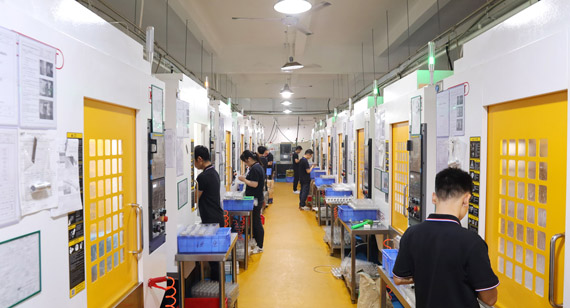
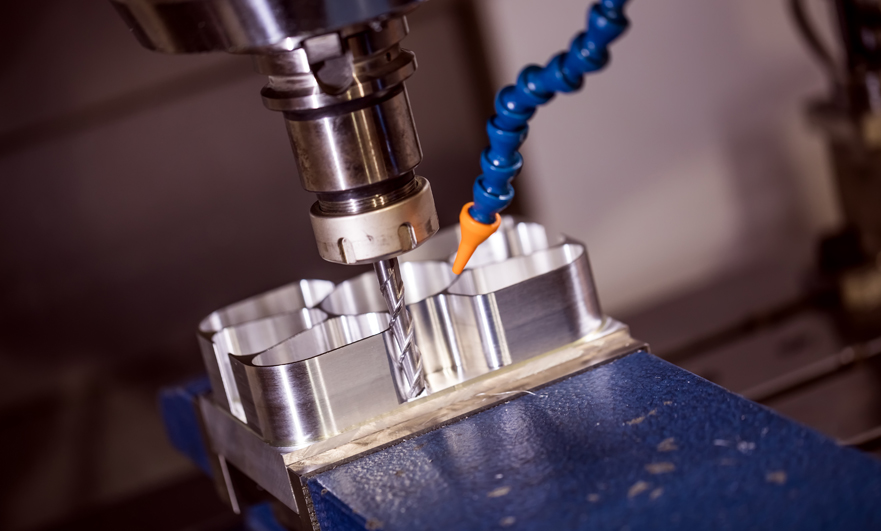
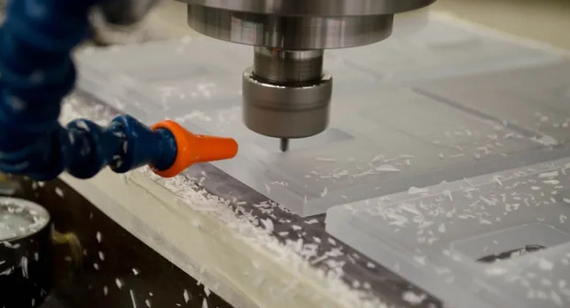
On-demand CNC machining can endow toy and game components with a precision (less than or equal to 0.01mm) and surface quality (less than or equal to Ra 0.8) that traditional injection molding or 3D printing cannot achieve. Precision CNC machining cuts and drills to remove excess material through various cutting tools controlled by computer programming. This process for producing parts features high repeatability (saving the program is sufficient; programming controls the tools so that precision and dimensional stability are controllable) and design flexibility (modifying the program is sufficient; no mold-opening required, resulting in lower costs).
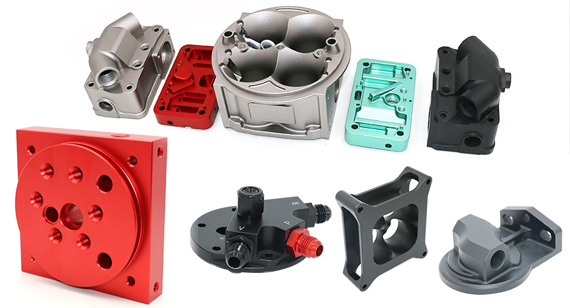
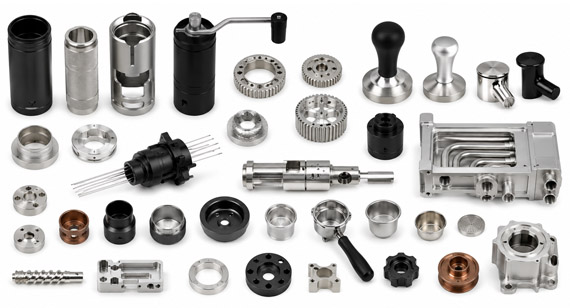
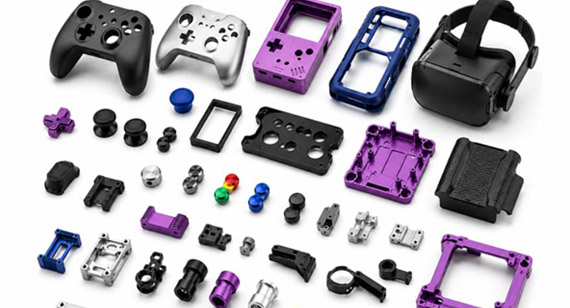
The following summarizes the most typical part types and examples of CNC machining in toy and game manufacturing:
- High-End Gaming Peripherals & Equipment Enclosures: Common parts such as CNC Gaming Device Controller Parts (metal joystick rings, D-pad keys, micro-switch brackets) and CNC Protective Game Console Cover Cases (anti-drop metal shells for handheld consoles, customized keyboard cases).
- High-Frequency Dynamically Stressed Structural Components: Including CNC RC Toy Brackets (upgraded suspension brackets for RC racing cars, steering cups, motor mounts) and the main fuselage connecting arms of professional drones.
- Educational Toys, STEM Kits & Puzzle Products: Typical parts such as multi-stage transmission gearboxes in educational mechanical models, metal limited-edition chess pieces in complex board games, and core transmission shafts in interactive gaming equipment.
- Collector-Grade Toys & Interactive Gaming Hardware: For example, mecha model joints, metal skeletons, and precision valve bodies for sound and light interactive devices.
Precision Assembly of Toy & Game Parts: How CNC Machining Solves "Tolerance Stack-up"
For hardware containing multi-component interlocking, electronic compartments, or mechanical transmission systems (such as RC models, educational STEM kits, and interactive gaming equipment parts), tolerance stack-up is the primary cause of assembly failure. Even if an individual part meets its tolerances during measurement and inspection, issues like interference fit (too tight) or excessive mating clearance can still occur after multiple parts are combined.
Process Control of Shaft-Hole Interference and Multi-Axis Concentricity
- Impact of Geometric Tolerances on Transmission Efficiency: In gearboxes, power output shafts, or high-frequency interactive mechanical structures, the concentricity of the shaft and hole determines the overall transmission efficiency. If geometric tolerances for concentricity or position exceed limits, the transmission shaft will generate uneven radial and tangential forces during operation. Under high-frequency operation, this leads to abnormal wear, heat generation, a increase in noise, or even jamming of the mechanism.
- Assembly Advantages of Multi-Axis CNC Machining: Traditional processes usually require multiple setups to machine different geometric features, and each repositioning introduces uncontrollable human error and fixture tolerances. By using multi-axis precision milling, the simultaneous machining of interrelated hole positions, bearing seats, and locating slots can be completed in a single setup. This avoids the accumulated tolerance caused by secondary setups, ensuring micron-level precision assembly between components.
- "Swiss-Type Turning" for High Aspect Ratio Micro Parts: For parts with large aspect ratios common in designs—such as micro locating pins, slender transmission shafts, or precision miniature bolts—standard turning easily causes deflections and deformations due to cutting forces during machining. Introducing Swiss-type turning (Swiss Turning) for ultra-precision micron-level machining utilizes the guide bushing of a sliding headstock machine to provide strong rigid support at the cutting point. This effectively guarantees high straightness and concentricity, maintaining the long-term stability of complex mechanical structures.
Realization of Lightweight Design and Strength for CNC Toy & Game Parts
For toy and game parts that require high maneuverability or involve energy consumption and strength considerations—such as CNC RC Toy Brackets (remote control toy brackets), suspension brackets, steering knuckles, or load-bearing joints—it is necessary to simultaneously consider achieving lightweight design and structural strength. This means that when CNC machining these parts, while excess material is removed to reduce the weight of the component, its rigidity should also be ensured to meet the impact-resistance requirements in actual operating conditions.
Optimization of Stress Concentration Points and Material Removal
- Risk of Fatigue Fracture Caused by Internal Sharp Corners: When designing suspension brackets, steering knuckles, or load-bearing joints, sharp internal corners are high-risk areas in product structural design. When the hardware experiences an impact or undergoes high-standard drop testing, stress streamlines will overlap here, generating stress concentrations that lead to fatigue fracture of the component under higher loads.
- Reasonable Transition Between Tool Internal Radii and Design: Based on the geometric characteristic that CNC milling cutters themselves are cylindrical, machining cannot directly cut absolute internal right angles. During the engineering drawing stage, a reasonable internal fillet should be reserved in the dead corners of slots. This not only aligns with the cutting path of the tool and reduces corner-clearing operations, but also allows the stress streamlines to transition smoothly, enhancing the overall fatigue life and structural rigidity of the component.
- Precise Pocketing and Weight Reduction Based on Topological Features: By selecting high-strength aluminum alloys (such as 6061, 7075) or modified engineering plastics (such as POM, PEEK), precision milling processes can be used to machine blind slots, weight-reduction holes, or pocketed grids in non-primary load-bearing areas. This method accurately removes excess material while preserving the wall thickness in critical directions to maintain structural stability, achieving weight reduction without compromising structural integrity.
Color Consistency and Tactile Quality of Gaming Components: Surface Finishing
The aesthetics and texture of gaming peripheral and hardware surfaces (commonly such as game controller shells, remote control casings, buttons, and volume knobs) are important. They directly affect the end-user's physical experience with the gaming device and their impression of your brand. For example, if the surface of parts like CNC gaming device controller parts or a CNC protective game console cover case exhibits visible machining ripples or roughness, it not only ruins the overall texture of the product but also lowers users' impression for brand.
Industrial-Grade Control of Tool Marks, Burrs, and Surface Finish
As components that interact frequently with humans, the handling of surface defects on toy and game parts directly impacts the overall sensory quality of both sight and touch. Without optimized cutting parameters, machining can easily leave microscopic tool marks on the metal surface and generate tiny burrs along the edges.
- Precision Deburring and Safety Compliance: To address the microscopic burrs generated along the cutting edges, post-processing must be performed using specialized mechanical polishing, bead blasting, or ultrasonic deburring technologies. Breaking the edges of the parts with micro-chamfers or rounded edge passivation ensures that everywhere the hand touches is smooth and free of sharp edges. While enhancing the tactile quality of the product and delivering a smooth, refined grip, this also ensures the product fully complies with safety standards for children's and teenagers' toys, preventing potential scratching hazards.
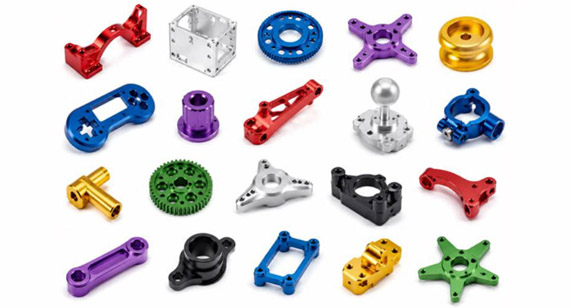
- Achieving Color Consistency and Durability: Industrial-grade cosmetic parts typically undergo premium surface finishing after bead blasting (such as selecting a specific grit of glass or ceramic beads) to mask microscopic machining textures. For instance, for the aluminum anodizing, strictly controlling the bath composition, dyeing temperature, and current density can suppress visual color variations within the same batch and across different mass-production batches to the greatest extent. This ensures the overall premium feel of the device and extends product lifespan against exposure to dust, air humidity, and hand sweat.
Tips for Achieving Design for Manufacturability (DFM), Cost-Effectiveness, and Production Stability
In the pursuit of more beautiful and unique design visuals and mechanical deconstructions, drawings for custom toy and game parts often feature hard-to-reach internal cavities or extremely thin wall thicknesses. This leads to an increase in manufacturing costs and a high defect rate during mass production.
Design Recommendations for Balancing Cost-Effectiveness and Mass-Production Stability
Before drawings enter the actual On-Demand CNC Machining phase, conducting a DFM (Design for Manufacturability) review can effectively lock in manufacturing costs and prevent repeated revisions to drawings later on:
- Optimize the Aspect Ratio of Narrow and Deep Slots: In engineering design, narrow slots with an excessively large aspect ratio (depth greater than 5 times the tool diameter) should be avoided. Such features cause excessive tool overhang during machining, which easily triggers tool deflection and chatter, and also ruins the surface finish at the bottom of the slot. Optimizing the slot width or adopting a modular, split-assembly design can improve the machining efficiency of individual parts and enhance overall cost-effectiveness.
- Reasonably Label Linear and Geometric Tolerances: Not all features on a part need to maintain extreme, micron-level precision. Appropriately loosening tolerances for non-critical cosmetic surfaces that are not involved in precision assembly can reduce precision inspection costs, machining hours, and expenses. Concentrating the precision budget precisely on core dimensions such as critical mating positions and bearing holes ensures production stability while effectively reducing the comprehensive manufacturing cost per piece.
- Maintain Reasonable Minimum Wall Thickness to Prevent Machining Deformation: In the pursuit of extreme lightweighting or compact enclosures, overly thin metal or plastic walls (e.g., less than 1.0 mm) often appear in designs. During the CNC milling process, thin-walled components are highly susceptible to elastic deformation or even fracturing due to cutting and clamping forces, leading to out-of-tolerance dimensions or surface chatter marks. For aluminum parts, it is recommended to maintain a minimum wall thickness of no less than 1.2 mm, and no less than 1.5 mm for modified plastics. If a structure must be thin, reinforcing ribs can be incorporated to enhance rigidity, thereby securing mass-production yield and stability without significantly increasing weight.
Rapid Prototyping and Flexible Supply of CNC Toy & Game Parts
The trends and consumer preferences in the toy and game market change rapidly, and the popularity cycle of products has become compressed. If a project relies heavily on high-cost, long-lead-time hard steel molds during the early stages, it faces significant profitability and capital risks once market feedback falls short of expectations.
Strategies for Minimizing Inventory Backlogs and Shortening Time-to-Market
- Design Verification Through Rapid Prototyping: In the initial R&D stage, utilizing the CNC process to directly cut solid bars or plates allows for the acquisition of 1:1 real samples within days without the need for mold-opening. These high-fidelity prototypes can be directly used for functional assembly testing, evaluation, and engineering drop tests, helping you discover and correct design flaws in a short time and shortening the product's time-to-market cycle.
- Risk Hedging via Flexible On-Demand CNC Machining: Driven by digital G-code programs, CNC machining does not generate the high upfront amortization costs associated with traditional mold-opening. You can implement small-batch, on-demand mass production based on actual early-stage market orders or crowdfunding feedback (such as initially producing 200 or 500 sets for market testing). Since the machining process and toolpath programs are consistent once finalized, the dimensions of subsequent part batches are guaranteed to be completely identical. This manufacturing model allows you to flexibly adjust the production rhythm according to market demands.
VMT CNC Machining Factory Case Study: Aluminum Tabletop Game Components
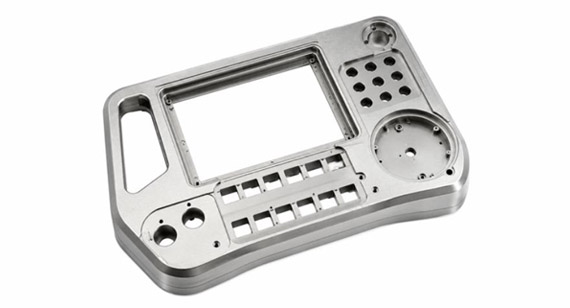
A well-known gaming peripheral brand planned to launch a high-end, player-facing tabletop interactive gaming console. The enclosure component of this product was a custom aluminum alloy panel with a complex structure. As a part placed directly on the desktop for high-frequency user operation, the client put forward strict delivery standards for this component:
- Surface and Tactile Quality: The cosmetic surface had to achieve a skin-friendly feel with zero visible tool marks and zero microscopic burrs, and all overall edges needed to be smoothly passivated.
- Color Consistency: After anodizing, the surface color had to be completely uniform, with no perceptible color variation allowed within the same batch or across different batches.
- Precision Fitting: The mating tolerances between the LCD screen window, button matrix holes, and internal PCB components had to be controlled within plus or minus 0.02mm to avoid assembly interference or button jamming.
- Complex Geometry: The component surface integrated a large-area rectangular LCD window, multiple sets of matrix button holes, stepped counterbores for knobs, and curved edge slots, all of which required precise machining.
Solutions
Our engineering and technical team initiated a Design for Manufacturability (DFM) review and implemented full-process optimization:
- Optimized Clamping and Machining Strategy to Eliminate Stress Deformation: To prevent deformation caused by large-area pocketing, we adopted a three-step method: "rough machining - stress-relief aging treatment - finish machining." After removing most of the material during rough machining, the internal stress of the component was allowed to fully release. Concurrently, we designed specialized pneumatic multi-point fixtures to ensure uniform force distribution on the part during the finish machining of button holes and windows. This stably controlled geometric tolerances and hole alignment within plus or minus 0.02mm, solving the tolerance stack-up issue.
- Optimized CNC Toolpaths and Multi-Pass Precision Deburring: Using advanced CAM software, we replanned the toolpaths for High-Speed Machining (HSM). We specifically optimized the tool's entry and exit angles at corners, employing a finish-milling strategy with a small depth of cut and high rotational speed. After machining, large burrs were removed via mechanical polishing, and we introduced a custom ultrasonic cleaning and micron-level chemical deburring process. This applied micro-passivation fillets to the perimeter of the LCD screen window and the edges of the matrix holes, ensuring a refined, scratch-free touch.
- Strict Pre-Anodization Surface Consistency Control: To ensure absolute color consistency after anodization, we added a standard pre-treatment step before parts entered the anodizing tanks: fully automated precision bead blasting using a specific grit of ceramic beads. This utilized tiny spheres to uniformly strike the aluminum alloy surface, creating a completely consistent, matte diffuse-reflective microstructure. During the anodizing phase, by establishing a dedicated chemical temperature control curve and a constant current density control system, we dynamically compensated for process fluctuations between different batches.
Results
- The first batch of optimized samples achieved 100% geometric and dimensional compliance, and the cosmetic and sensory quality perfectly passed the review of the client's design director.
- The fit between the LCD screen, PCB, buttons, and the metal enclosure was seamless, with no assembly jamming or catching.
- The mass-delivered aluminum tabletop accessories performed excellently in color consistency and edge finish. Random inspections across multiple batches revealed no visible color differences or anodizing spots. The client was highly satisfied and stated that they would place additional bulk orders according to their production schedule to maintain a long-term partnership.
Final Thought
Creating an excellent toy or game hardware product that possesses market competitiveness and is deeply loved by end-users is a collaborative process between design creativity and machining production supply. Gaining a deep understanding of the aforementioned engineering challenges and solutions during the R&D stage enables more effective control over product aesthetics, development cycles, and budgets.
Are you currently planning a new project for CNC toy and game parts, or facing a process upgrade for existing components? Feel free to send your drawings and contact our engineering team to learn about the custom practices and process technologies for CNC toys & games parts, allowing your outstanding designs to come to fruition in the most textured and compliant form possible.[2D drawing (PDF file), 3D drawing (IGS/STP/STEP file)]

FAQs
Q1: What are the most commonly used CNC machining materials for toy and game parts?
A: The most commonly used materials include metals such as aluminum alloys (e.g., 6061-T6, 7075-T6), brass, and stainless steel. In terms of engineering plastics, POM (Polyoxymethylene/Acetal), Nylon, PC, and ABS are also widely used in various game accessories and transmission components due to their excellent mechanical strength and machining stability.
Q2: How does CNC machining ensure the safety and compliance of children's toys and gaming peripherals?
A: The key to toy safety lies in avoiding sharp edges and chemical contamination. In CNC machining, we strictly eliminate microscopic burrs left from cutting through specialized deburring processes, mechanical polishing, and edge passivation (chamfer/fillet design). Meanwhile, the raw engineering materials we select comply with environmental protection and non-toxic standards, ensuring that the finished products are safe and compliant.
Q3: Why do my assembled toy parts pass individual tolerance inspections but jam during final assembly?
A: This is typically caused by tolerance stack-up. When multiple parts are combined, their individual tiny positive or negative tolerances overlap, triggering interference. The solution is to utilize high-precision multi-axis CNC machining and precision milling to complete the cutting of interrelated hole positions in a single setup on one machine, compressing mating tolerances into an extremely small range.
Q4: When designing CNC RC toy brackets, how can I prevent fractures during drop testing?
A: The core lies in optimizing stress concentration points. When creating design drawings, please try to avoid absolute internal right-angle slots; it is highly recommended to proactively reserve reasonable internal fillets (R-radii). The radiused transition can smoothly guide the stress streamlines during an impact, enhancing the fatigue life of the component under shock loads.
Q5: Why does the CNC machining quote increase when designing high/low stepped surfaces or deep slots?
A: When the depth of a designed narrow slot exceeds 5 times the tool diameter, the tool head is highly susceptible to chatter during the machining process. This not only lowers the surface finish at the bottom of the slot but also increases the risk of tool breakage. During structural design, appropriately widening the slot width or adopting a modular, split-assembly design during the DFM review can shorten cutting hours and improve cost-effectiveness.
Q6: How should I choose the right tolerance standard for game controller button holes (matrix holes)?
A: Their geometric dimensions and positional tolerances typically need to be controlled within plus or minus 0.02mm to ensure a smooth, dampened feel and prevent sticking. For non-critical cosmetic surfaces that are not involved in assembly and only serve a visual purpose, it is recommended to loosen the tolerance to plus or minus 0.1mm. This effectively avoids manufacturing cost overruns while securing stable quality.
Disclaimer
The technical information and manufacturing advice shared on the VMT website are for general guidance only. While we strive for accuracy, VMT does not guarantee that the processes, tolerances, or material properties mentioned are applicable to every specific project. Any reliance you place on such information is strictly at your own risk. It is the buyer's responsibility to provide definitive engineering specifications for any production orders. Final specifications and service terms shall be subject to the formal contract or quotation confirmed by both parties.


 76 |
Published by VMT at Jul 06 2026 | Reading Time:About 4 minutes
76 |
Published by VMT at Jul 06 2026 | Reading Time:About 4 minutes 


 +86 15099911516




 Read more