16 years one-stop China custom CNC machining parts factory

Hey there I’m VMT Sam!
With 25 years of CNC machining experience we are committed to helping clients overcome 10000 complex part-processing challenges all to contribute to a better life through intelligent manufacturing. Contact us now
 62 |
Published by VMT at Jul 07 2026 | Reading Time:About 3 minutes
62 |
Published by VMT at Jul 07 2026 | Reading Time:About 3 minutes


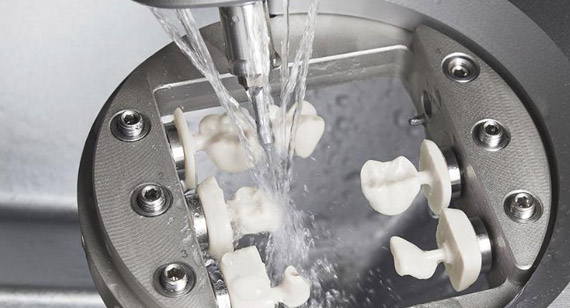
Dental medical devices often require ultra-tight tolerances, complex geometries, strict hygiene standards, and biocompatible materials. Precision CNC machining the custom dental equipment parts can meet these demanding requirements that traditional machining cannot—these core components are vital for reliable device performance as well as safety and comfort in medical dental applications. And, it is essential to understand and master the selection of safe materials for CNC dental components, the achievement of high precision, and post-processing techniques for hygienic, durable surfaces.
This article will introduce the material selection, surface finishes, and applications of CNC dental equipment parts. At the end, we will also share a case study from our factory on how we resolved the high heat generation and short lifespan issues of a core shaft component in a pneumatic dental handpiece.
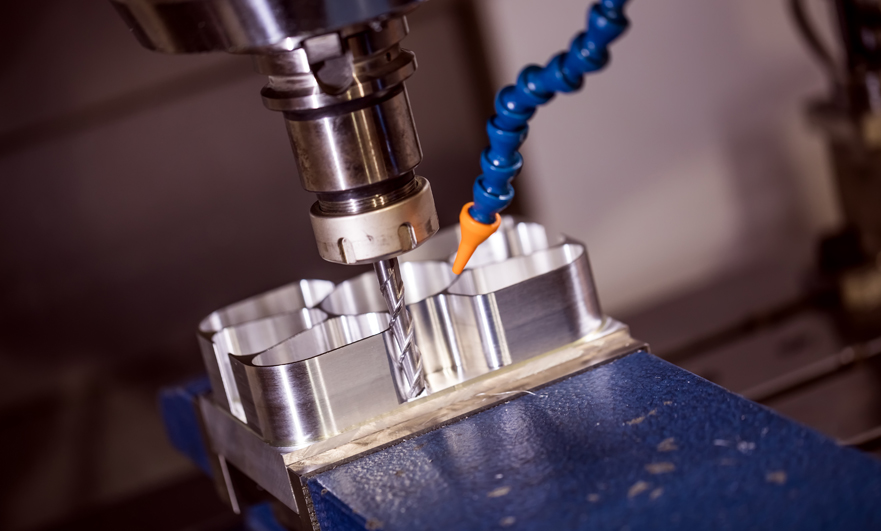
Precision CNC machining is a subtractive manufacturing process that utilizes computer programming to design the operational paths of lathes or various cutting tools for material cutting, drilling, and more. For the dental industry, the manufacturing process of CNC dental equipment parts involves multi-axis simultaneous machining (such as high-precision 5-axis CNC milling and Swiss-type turn-mill multitasking). By importing high-precision 3D CAD models, the CNC machining process can accomplish complex operations—including turning, milling, drilling, reaming, and engraving—within a single setup, transforming solid blocks of biocompatible or other compliant materials into precision dental parts.
Compared to traditional manufacturing methods like casting or injection molding, CNC machining perfectly achieves both mass production and customization for precision dental parts. It meets the stringent requirements of medical-grade dental components for precision, dimensional consistency, and production flexibility:
The selection of materials for custom CNC-machined dental components directly affects their safety and service life.
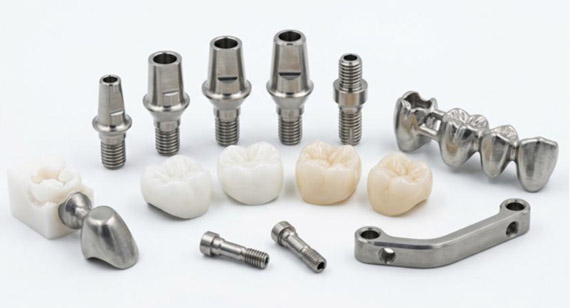
Materials for Oral Contact CNC Dental Parts
These materials are used for instrument components that directly enter the patient's oral cavity or are even implanted into bone tissue. They must be non-toxic, non-irritating, corrosion-resistant, and high-strength:
Materials for Non-Oral Contact Medical Dental Parts
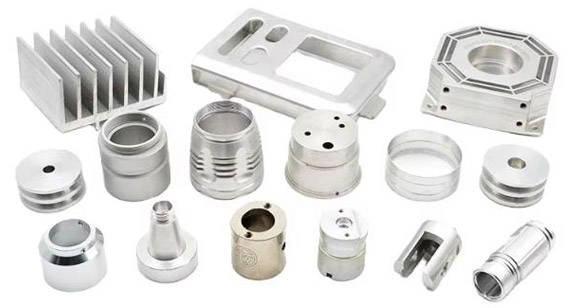
For components that do not come into direct contact with the oral mucosa but serve as core transmission, sealing, or housing structures inside dental equipment, the following materials are recommended:
Precision medical dental components need to resist bacterial growth, while non-oral contact parts better to be durable. Fine post-processing of CNC medical dental components is vital to the safety of medical dental products:
Below are some common precision custom CNC-machined dental equipment parts, along with their unique or critical requirements:
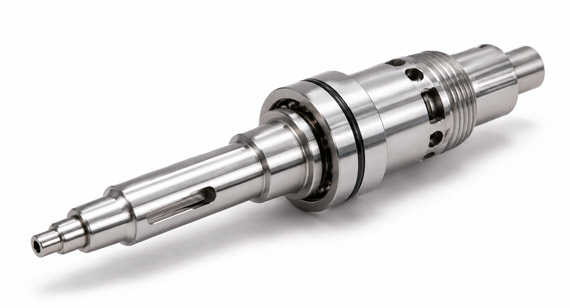
A dental medical device manufacturer encountered problems while developing a clinical high-speed pneumatic dental handpiece. The handpiece was designed to operate at speeds up to 380,000 RPM. However, during the testing phase, the spindle generated severe heat due to ultra-high-frequency rotation, and after less than two months of use, microscopic wear led to intensified vibration, making it highly unsafe.
After our engineering team stepped in, we re-analyzed the drawings and processes and implemented the following solutions:
Results
The CNC dental components produced by our factory achieved a continuous operational lifespan that was extended by 10 times in the client's subsequent lifespan testing, while the operating temperature rise was reduced by 18 degrees Celsius, and running noise dropped significantly. The client's equipment successfully passed the medical device system certification, and they subsequently placed mass-production orders with our factory in batches.
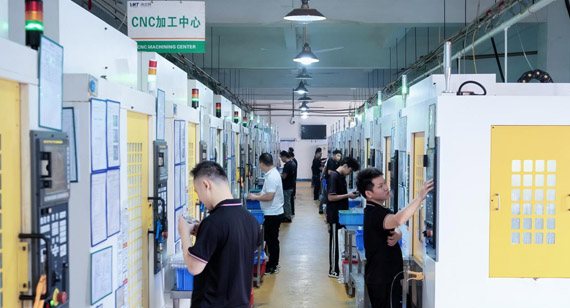
Precision custom CNC machining technology is an essential process for achieving high precision, hygienic and durable surfaces, and complex geometries for custom dental equipment parts. From the selection of biocompatible materials that guarantee life and health, to the assurance of tight tolerances and dimensional stability for safety, and to specialized post-processing for smooth, hygienic finishes—machining precision dental equipment parts demands absolute accountability for medical safety. With its safe, flexible, and highly stable performance, CNC machining method can bring more efficient and safer manufacturing to your custom medical dental equipment projects.
Are you looking for high-quality CNC dental equipment machined parts that meet strict medical standards? Welcome to contact our engineering team to learn more about customized dental equipment part solutions or to request a quote.[2D drawing (PDF file), 3D drawing (IGS/STP/STEP file)]

Q1: What is the most common tolerance range achieved for dental CNC machined parts?
For dental components, CNC machining can typically achieve a precision tolerance of plus or minus 0.01 mm. For critical transmission components such as dental handpiece spindles and precision bearing seats, dimensional tolerances can be controlled within plus or minus 0.005 mm through ultra-precision turn-mill multitasking and fine grinding.
Q2: Why is Grade 5 Titanium (Ti-6Al-4V) more commonly used for dental surgical tools and components than pure titanium?
Pure titanium has excellent biocompatibility, but its mechanical strength is relatively low. Grade 5 Titanium (Ti-6Al-4V) retains excellent biocompatibility and corrosion resistance while significantly increasing tensile strength and hardness through alloying. This makes the machined dental drills, implant tools, or instruments much more wear-resistant and durable.
Q3: Can dental parts made of PEEK material really replace metal?
In some applications, yes. PEEK offers strong resistance to chemical cleaning agents and repeated high-temperature, high-pressure steam sterilization. It is commonly used to manufacture dental laboratory equipment fixtures, positioning sleeves, and instrument handles that do not directly bear ultra-high torque.
Q4: Aside from aesthetics, what is the significance of the polishing process for medical-grade dental components?
Medical-grade polishing is not just for looks. Fine polishing removes microscopic micro-cracks and tool marks left by CNC machining. A smoother surface means that bacteria, blood, and saliva cannot easily adhere or remain, making it much easier to achieve sterility standards during clinical autoclaving.
Q5: Can you handle small-batch custom prototyping for dental parts?
Absolutely. We support a flexible transition from individual custom prototype R&D (OEM prototyping) to mass production. Whether it is test parts during the R&D stage of new equipment or small-scale, high-precision components urgently needed for clinical use, we can respond quickly and guarantee quality.
Q6: Why do stainless steel dental equipment parts require passivation treatment?
Through passivation, trace elements of free iron and other impurities left on the part surface during the CNC cutting process can be removed, and an extremely dense, uniform protective passivation film is formed on the metal surface. This allows the parts to withstand high-frequency, high-temperature, and high-pressure steam sterilization in clinics, making them more corrosion-resistant and less prone to discoloration.
The technical information and manufacturing advice shared on the VMT website are for general guidance only. While we strive for accuracy, VMT does not guarantee that the processes, tolerances, or material properties mentioned are applicable to every specific project. Any reliance you place on such information is strictly at your own risk. It is the buyer's responsibility to provide definitive engineering specifications for any production orders. Final specifications and service terms shall be subject to the formal contract or quotation confirmed by both parties.


 +86 15099911516




 Read more