16 years one-stop China custom CNC machining parts factory

Hey there I’m VMT Sam!
With 25 years of CNC machining experience we are committed to helping clients overcome 10000 complex part-processing challenges all to contribute to a better life through intelligent manufacturing. Contact us now
 159 |
Published by VMT at Jan 10 2026 | Reading Time:About 2 minutes
159 |
Published by VMT at Jan 10 2026 | Reading Time:About 2 minutes


4943 aluminum provides engineers and fabricators with a reliable welding solution that combines durability, corrosion resistance, and excellent weldability.
Developed as a higher-strength alternative to ER4043, this aluminum–silicon filler metal delivers improved as-welded mechanical performance while maintaining excellent crack resistance and arc stability.
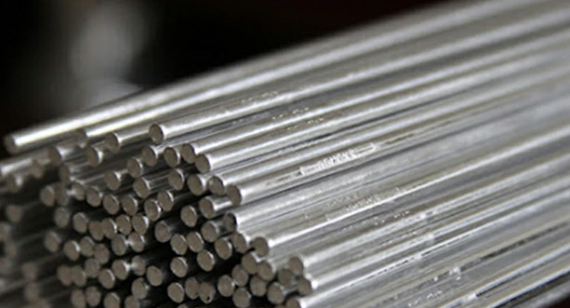
Beyond its role as a filler metal, 4943 aluminum contributes significantly to the structural performance of welded assemblies, making it widely used in automotive frames, aerospace components, HVAC systems, marine structures, and other load-bearing aluminum fabrications where joint strength and dimensional stability are critical.
This guide covers the composition, properties, typical applications of 4943 aluminum, and compares it with other commonly used AWS ER filler alloys, including ER4043, ER4047, and ER5356.
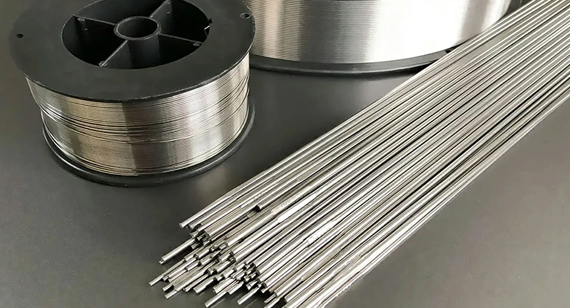
4943 aluminum is not a standard structural base material alloy, that means, not supplied as sheet or plates to make components. Instead, it is a high-performance aluminum welding filler metal used for joining structural components.
This Al–Si based filler metal is standardized under AWS A5.10 as ER4943, specifically engineered to provide enhanced joint performance in aluminum welding applications. Its key characteristics include:
As a non-toxic, lightweight, and corrosion-resistant filler metal, 4943 aluminum is widely used in the fabrication of welded products and assemblies across the automotive, aerospace, marine, medical, sports equipment, and construction industries.
The American Welding Society (AWS) classifies aluminum filler metals under AWS A5.10 based on their chemical composition and welding performance to ensure consistent quality and reliable weld results.
In AWS designations, “ER” stands for electrode and rod, meaning the filler metal can be used as either a TIG welding rod or a MIG welding wire.
The table below lists commonly used AWS aluminum filler metals, including ER4943, ER4043, ER4047, and ER5356.
Table 1: Overview of Common AWS Aluminum Filler Metals
| AWS ER | Alloy System | Key Characteristics |
| ER4943 | Al-Si (enhanced) | Enhanced aluminum-silicon: high weld strength, bright appearance, low distortion |
| ER4043 | Al-Si | Standard aluminum-silicon: general-purpose welding, moderate strength, good flowability |
| ER4047 | High Si | High-silicon: excellent flow, crack-resistant, ideal for brazing or leak-tight joints |
| ER5356 | Al-Mg | Aluminum-magnesium: high-strength welds, suitable for anodizing and structural applications |
(For a more detailed comparison, you can see the section: Aluminum 4943 vs 4043 vs 4047 vs 5356)
The chemical composition table below refers specifically to ER4943 weld metal, as weld metal chemistry directly determines joint strength, crack resistance, and overall weld quality.
Table 2: Chemical Composition of ER4943
| Element | Typical Content (% by weight) | Notes |
| Al | Balance | Primarily Element |
| Si | 5.0–6.0 | Main alloying element; improves flowability and crack resistance |
| Mg | 0.1–0.5 | Strengthening element |
| Fe | ≤0.4 | Controlled impurity to ensure stable welding and high-quality welds. |
| Cu | ≤0.1 | |
| Mn | ≤0.05 | |
| Zn | ≤0.1 | |
| Ti | ≤0.15 | |
| Be | <0.0003 | |
| Others (each) | ≤0.05 | |
| Others (total) | ≤0.15 |
The properties listed below apply specifically to ER4943 aluminum weld metal, as standardized under AWS A5.10. For weld joint design and performance evaluation, these properties are the key and important factors.
Outstanding Mechanical Performance
ER4943 weld metal exhibits high yield, tensile, and shear strength, making it suitable for structural welds, fillet joints, and load-bearing connections. It supports T6 heat treatment without relying on magnesium dilution from the base metal, allowing the weld metal to achieve enhanced strength independently.
Optimized Weldability
ER4943 inherits the superior welding characteristics of 4000-series Al–Si alloys, including a low melting range, excellent flowability, smooth and bright weld appearance, minimal hot cracking tendency, and low spatter, enabling stable and high-quality welds.
Excellent Heat Treatment Responsiveness
Welded joints made with ER4943 can be solution-treated and artificially aged to form strengthening phases, further improving mechanical properties for applications requiring higher strength.
Physical Stability
ER4943 weld metal exhibits low thermal shrinkage and good dimensional stability, helping maintain accurate part geometry and minimizing warping during welding.
Excellent Corrosion Resistance
The weld metal provides reliable corrosion resistance in marine and industrial environments, contributing to the long-term durability of welded structures.
Anodizing Color Match
When anodized, welds made with ER4943 achieve good color consistency, particularly when joining 5xxx or 6xxx series aluminum alloys, resulting in uniform and aesthetically pleasing finishes.
Complementary Table to Above 4943 Aluminum Properties
Below table shows physical, mechanical, and thermal properties of aluminum 4943:
Table 3: Properties of Aluminum 4943
| Category | Property | Typical Value / Description |
| Mechanical | Ultimate Tensile Strength (UTS, As-Welded) | 35,000 psi (241 MPa) |
| Yield Strength (As-Welded) | ~30,000 psi (205 MPa), ~50% higher than 4043 | |
| Shear Strength | >15,500 psi (107 MPa); up to 21,000 psi (full weld metal) | |
| Mechanical / Heat Treatment | Heat Treatment Response | Supports T6; strengthening without relying on base metal |
| Physical | Density | 0.097 lbs/in³ (2.685–2.69 g/cm³) |
| Electrical Conductivity | ~41–42% IACS | |
| Formability & Toughness | Low ductility and toughness, similar to 4043 | |
| Physical / Aesthetics | Anodized Color | Gray |
| Thermal | Solidus | 1065 °F (574 °C) |
| Liquidus | 1170–1175 °F (632–635 °C) | |
| Thermal Conductivity | Medium (consistent with 4000 series alloys) | |
| Thermal Shrinkage | Low, helps reduce welding distortion | |
| Maximum Service Temperature | >150 °F (66 °C) |
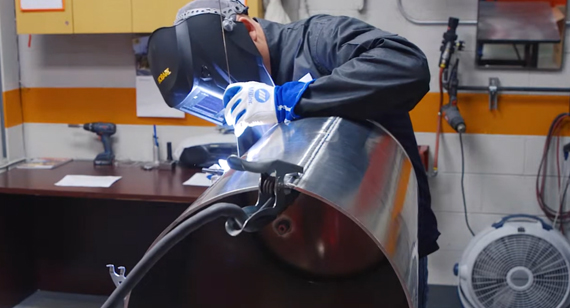
4943 aluminum welding wire is one of the most common forms of 4943 aluminum used in welding applications, and here it is taken as an example. Other typical forms include 4943 aluminum TIG rod, 4943 aluminum filler rod, 4943 aluminum wire, and 4943 filler rod.
Best Practices for 4943 Aluminum Welding Wire:
Keeping stable wire feed, angle, and travel speed to avoid spatter, porosity, and weld defects, you can achieve 4943 aluminum produces bright, low-distortion welds.
(For detailed welding parameters and shielding gas recommendations for ER4943, you may see here as a practical reference. )
Beyond its common use as a welding filler, 4943 aluminum offers improved mechanical strength, lightweight performance, corrosion resistance, non-toxicity, and good anodizing adaptability. As a result, it is widely used in structural and functional welded assemblies, including:
Automotive Frames
4943 aluminum is commonly used in subframes, brackets, battery enclosures, and lightweight structural joints, where higher joint strength and reduced post-weld distortion help maintain tight dimensional tolerances.
Aerospace Components
It is applied in secondary aircraft structures, housings, brackets, and support frames, where weight reduction, corrosion resistance, and consistent weld quality are critical.
Heat Exchangers & Radiators
4943 aluminum is widely used in radiator tanks, cooling channels, and heat exchanger assemblies, providing leak-resistant welds that can withstand thermal cycling and pressure variations.
Marine Applications
This alloy is suitable for boat frames, deck structures, fuel tanks, and aluminum enclosures, where corrosion resistance and water-tight or air-tight weld integrity are essential.
HVAC Systems
4943 aluminum is applied in air handling units, aluminum ducts, heat pump frames, and refrigeration components, benefiting from easy weldability and long-term corrosion resistance.
Structural Parts
It is also used in ladders, equipment frames, machine guards, enclosures, and CNC-machined structural assemblies, especially where clean weld appearance and stable mechanical performance are required.
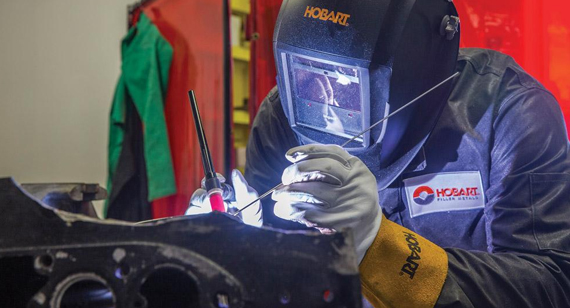
Choosing the right aluminum filler metal depends on your base alloy, desired weld strength, crack sensitivity, and post-weld finishing requirements. Below table shows aluminum filler metal 4943 vs 4043 vs 4047 vs 5356:
Table 4: Aluminum filler metal 4943 vs 4043 vs 4047 vs 5356
| Property | 4943 | 4043 | 4047 | 5356 |
| Yield Strength | 135 MPa | 90 MPa | 95 MPa | 205 MPa |
| Tensile Strength | 205 MPa | 165 MPa | 175 MPa | 270 MPa |
| Crack Sensitivity | Low | Low | Very Low | Moderate |
| Weld Appearance | Bright | Bright | Very Bright | Slightly Dull |
| Post-Anodizing Color | Good | Fair | Poor | Excellent |
| Typical Applications | Automotive, aerospace, structural | General 6xxx series welding | Brazing, leak-tight joints | High-strength, anodized aluminum |
Selecting the appropriate filler ensures optimal weld quality, mechanical performance, and surface finish. Here are some suggestions:
This article covered 4943 aluminum (ER4943), detailing its composition, properties, weldability, and heat treatment performance. We also compared it with 4043, 4047, and 5356 to provide a quick selection guide for engineers and fabricators. With excellent strength, corrosion resistance, and anodizing compatibility, 4943 aluminum is ideal for automotive, aerospace, marine, HVAC, and other structural welded assemblies.
Client Challenge:
A U.S.-based aerospace supplier required lightweight, high-strength 4943 aluminum components for secondary aircraft structures. The parts demanded high weld strength, minimal distortion, and featured intricate geometries with tight tolerances. Standard welding and machining methods risked cracking, uneven welds, or dimensional inaccuracies.
Solution:
VMT developed detailed strategies tailored for 4943 aluminum:
Adjusted cutting speed, feed rate, and tool paths based on part geometry to prevent work hardening and thermal accumulation; For thin-walled or complex curved parts, multi-pass cutting and fixture supports were used to maintain dimensional stability during machining.
TIG Welding: 100% argon shielding, current set between 80–120 A, with travel speed adjusted according to material thickness to achieve smooth, low-distortion welds; MIG Welding: ER4943 filler wire (1.2 mm diameter) with optimized voltage and feed rate for uniform, bright welds; Pre-weld cleaning of oxide layers and preheating of thicker sections to 100–150°C minimized thermal stress and reduced cracking risk.
Real-time inspection of dimensions and weld appearance during machining and welding; Thickness gauges and visual inspection ensured consistent weld penetration and surface finish.
Post-weld spatter removal, weld smoothing, and light mechanical shaping ensured consistent appearance; Pre-anodizing treatment guaranteed color match between welds and base material.
Results:

Q: What is a 4943 filler rod used for?
A: Automotive frames, aerospace components, heat exchangers, marine applications, HVAC, and structural parts.
Q: Is 4043 or 5356 better for cast aluminum?
A: 4043 offers lower cracking risk and better fluidity; 5356 provides higher strength. 4943 aluminum provides a balance between these properties.
Q: What is the difference between 4043 and 4943?
A: 4943 has ~50% higher yield strength and ~25% higher tensile strength while maintaining similar weldability.
Q: What is the composition of 4943 aluminum?
A: 4.5–6.0% Si, 0.45–0.9% Mg, ≤0.5% Fe, ≤0.2% Cu, ≤0.2% Mn, ≤0.1% Zn.
Q: Can 4943 be used in TIG and MIG welding?
A: Yes, it works well with both processes, producing bright, low-distortion welds.
Q: Can 4943 welds be heat-treated to increase strength?
A: Yes, ER4943 welds can undergo solution treatment and artificial aging (T6) to form strengthening phases, improving mechanical performance independently of the base metal.


 +86 15099911516




 Read more