16 years one-stop China custom CNC machining parts factory

Hey there I’m VMT Sam!
With 25 years of CNC machining experience we are committed to helping clients overcome 10000 complex part-processing challenges all to contribute to a better life through intelligent manufacturing. Contact us now
 511 |
Published by VMT at Jan 08 2026 | Reading Time:About 2 minutes
511 |
Published by VMT at Jan 08 2026 | Reading Time:About 2 minutes


Thanks to 4027 aluminum’s balanced strength, good corrosion resistance, and excellent machinability, this alloy become a prefered material for many people using among aerospace, automotive lightweighting, and high-precision industrial component design.
This is not noly because the inherent properties of 4027 aluminum alloy itself, but also for it is certified to AMS 4027 standard, which means 4027 aluminum produced under strict standards and certified. This ensures consistency and stability of the material , giving designers and engineers confidence in critical applications.
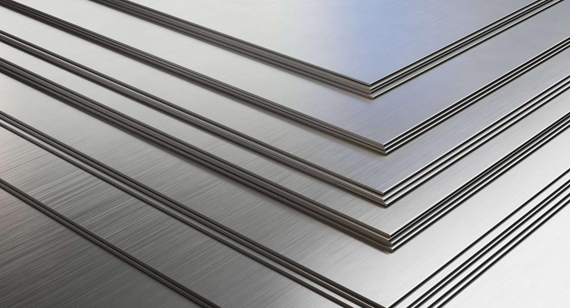
4027 Aluminum refers to 6061 aluminum alloy plate and sheet produced under strict specifications, specifically in compliance with AMS 4027. In simple terms, 4027 aluminum is 6061 aluminum plate and sheet that meets the AMS 4027 standard.
So, who created AMS 4027?
AMS 4027 is an aerospace material specification issued by SAE (the Society of Automotive Engineers, USA). It is a standard specifically written for 6061 aluminum alloy plate and sheet, and it clearly defines the following requirements:
Because of these strict controls, 4027 aluminum offers excellent consistency and full traceability. That’s why aluminum plate and sheet certified to AMS 4027 are widely used in industries such as aerospace, automotive, and structural engineering, where strength, corrosion resistance, and machining performance are critical.
AMS 4027 belongs to the 6061 aluminum alloy family. Its main chemical elements and their typical weight percentages are outlined below:
Table 1: Chemical Composition of AMS 4027
| Element | Content (wt. %) | Function |
| Magnesium (Mg) | ~1.0% | Provides solid-solution strengthening and improves overall strength |
| Silicon (Si) | ~0.60% | Combines with magnesium to form Mg₂Si, increasing hardness |
| Copper (Cu) | ~0.28% | Enhances tensile strength and fatigue performance |
| Chromium (Cr) | ~0.20% | Inhibits grain growth and improves machinability |
| Aluminum (Al) | Balance | Base metal, providing overall ductility and toughness |
The composition design of AMS 4027 aluminum ensures a well-balanced combination of corrosion resistance, weldability, heat-treatment response, and mechanical performance. The strengthening phases formed by magnesium and silicon allow the alloy to achieve moderate strength in the T6 and T651 tempers, while still maintaining good ductility and fatigue life.
The physical and mechanical properties of AMS 4027 in the T6/T651 state are as follows:
Table 2: Mechanical and Physical Properties of AMS 4027
| Category | Property | Typical Value |
| Physical | Density | 2.70 g/cm³ (0.0975 lb/in³) |
| Melting Range | 582–652 °C (1080–1205 °F) | |
| Thermal Conductivity | ~167 W/m·K | |
| Electrical Conductivity | 40%–43% IACS | |
| Coefficient of Thermal Expansion | 23.6 µm/m·K (13.1 µin/in·°F) | |
| Mechanical | Ultimate Tensile Strength | 290–310 MPa (42–45 ksi) |
| Yield Strength | 241–276 MPa (35–40 ksi) | |
| Elongation | 8%–12% (≈10% at 0.025 in thickness) | |
| Hardness | ~95 HB / ~60 HRB | |
| Modulus of Elasticity | 68.9–70 GPa (≈10,000 ksi) | |
| Fatigue Strength | Moderate (suitable for aerospace & automotive structures) |
AMS 4027 (6061-T6/T651) combines properties that give it an excellent strength-to-weight ratio for weight-sensitive structural components. The key characteristics of 4027 Aluminum include:
High strength to support loads
With an ultimate tensile strength of 290–310 MPa and a yield strength of 241–276 MPa, the material can withstand significant tensile and compressive forces under static loading, meeting the structural demands of critical components.
Ductility and toughness for structural reliability
An elongation of 8%–12% and a modulus of elasticity of 68.9–70 GPa allow the material to store elastic energy and deform moderately under stress, reducing the risk of brittle failure.
Lightweight design and dimensional stability
Fatigue performance for long-term load-bearing applications
Under typical conditions, the reference fatigue strength is ~95 MPa at 5×10⁸ cycles, making it suitable for components subjected to cyclic loading in aerospace and automotive structures, ensuring long-term reliability.
AMS 4027 aluminum is commonly available in two tempers: T6 and T651. These tempers refer to different heat treatment and stress-relief processes, which influence strength, corrosion resistance, and dimensional stability of aluminum 4027. In general,
Below is the table distinguish AMS 4027 aluminum Under T6 and T651 Temper:
Table 2: Comparison of AMS 4027-T6 Aluminum and AMS 4027-T651 Aluminum
| Temper | AMS 4027-T6 Aluminum | AMS 4027-T651 Aluminum |
| Treatment Process | Solution heat treatment + artificial aging | T6 treatment + stress-relief (stretching or stress-relieving) |
| Key Properties | High strength; Excellent corrosion resistance; Good mechanical properties after machining |
Maintains T6 strength and corrosion resistance; Reduces distortion after machining or welding; Requires dimensional stability |
| Typical Applications | Aerospace fuselage panels, automotive frames, general structural components |
Large aerospace panels, precision machinery parts, components with tight dimensional tolerances |
AMS 4027 aluminum is highly resistant to both air and saltwater corrosion. This is mainly thanks to the naturally forming aluminum oxide layer, which acts like a protective skin for the metal. On top of that, the way the magnesium-silicon phases are distributed in the material helps reduce tiny spots of corrosion, making the alloy even more reliable over time.
Compared with other common 6xxx series aluminum alloys, like 6063 or 6082, AMS 4027 stays more stable in humid, hot, and salty environments. That’s why it’s a popular choice for parts that are exposed to the elements for a long time—such as aircraft fuselage panels, car frames, housings, and even bridge structures—where durability really matters.
AMS 4027 aluminum is easy to weld, including when it is in the strong T6 or T651 temper ( despite the material being heat-treated and strong). It can produce strong welds that resist cracking, making it reliable for structural parts. Common welding methods include TIG, MIG, and FSW. Its balanced magnesium and silicon content helps prevent brittle areas from forming in the weld zone, which reduces the risk of cracks.
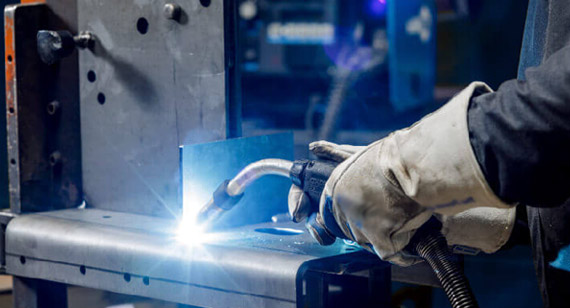
The metal also has a stable internal structure thanks to the controlled distribution of strengthening phases, and in the case of T651, an additional stress-relief treatment reduces internal stresses that could cause warping or cracking during welding. By carefully controlling the heat applied during welding, the metal keeps most of its original strength and toughness near the welded area. This combination of properties makes AMS 4027 ideal for aircraft, car parts, and other structures where both strength and long-term reliability are essential.
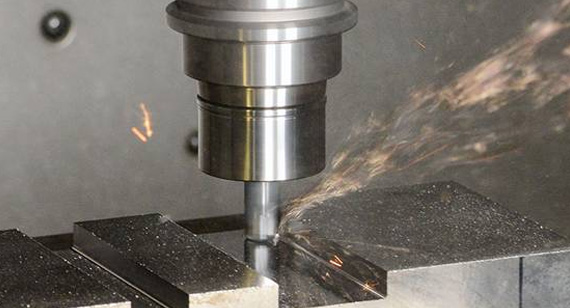
AMS 4027 aluminum has excellent machinability, making it easy to cut, drill, and mill. Its key machining characteristics include:
But why AMS 4027 aluminum has excellent machinability? This is because that:
AMS 4027, with its medium strength, good corrosion resistance, and machinability, is widely used across multiple industries. Common examples include:
1. Aerospace Applications
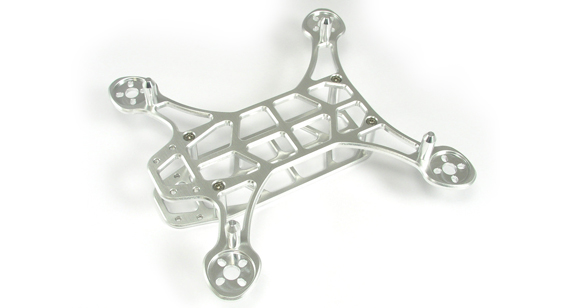
2.Automotive Industry
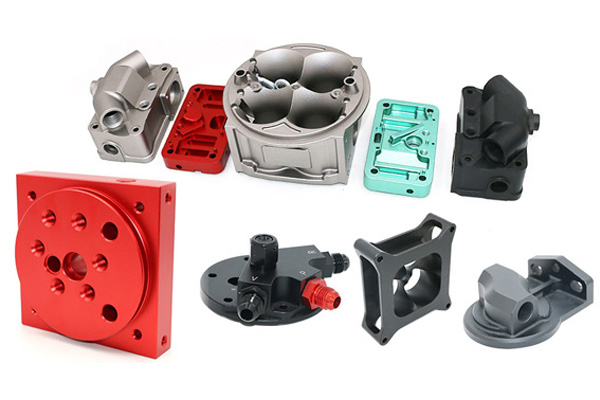
3. Marine Applications
4. Construction Applications
5. Consumer Applications
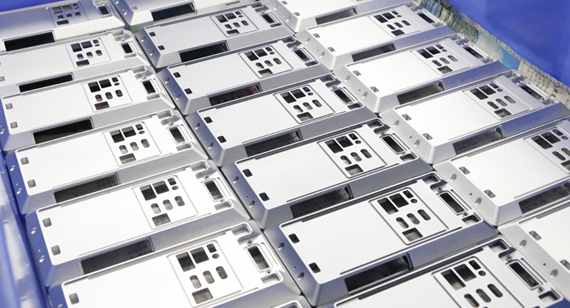
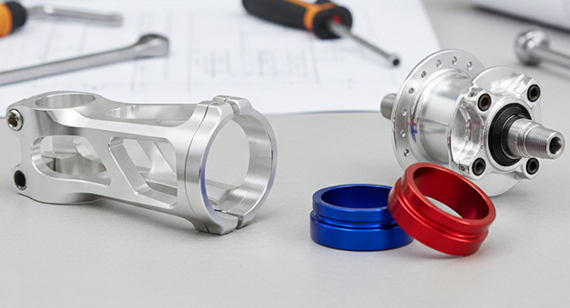
The price of 4027 aluminum is mainly affected by the following factors:
1. Raw Material Market Price
Fluctuations in global aluminum prices directly impact the cost of 4027 aluminum. When aluminum ingot prices rise due to supply shortages or increased demand, the price of 4027 aluminum increases accordingly.
2. Sheet Size and Thickness
Larger sheet sizes and thicker plates generally result in higher prices due to increased material consumption, more demanding rolling processes, and higher production costs.
3. Heat Treatment Condition (T6 / T651)
Heat-treated tempers such as T6 or T651 typically cost more than untreated or basic tempers because they require additional solution heat treatment, aging processes, and stricter process control.
4. AMS Certification Availability
Materials supplied with AMS certification are priced higher due to rigorous testing, documentation, quality control, and full traceability required to meet aerospace standards.
5. Aerospace Grade vs. Industrial Grade
Aerospace-grade 4027 aluminum is generally more expensive than industrial-grade material because it offers tighter chemical composition limits, superior mechanical consistency, and stricter inspection standards.
6. Comparison with 6061 Aluminum
AMS 4027 is usually priced slightly higher than standard 6061 aluminum because it provides enhanced strength, stricter material consistency, and full traceability required for aerospace and high-performance applications.
AMS 4027 (4027 aluminum) is a high-performance, heat-treatable aluminum alloy sheet and plate material, offering medium to high strength, good machinability, and reliable structural stability. When properly processed and surface-protected, it meets the requirements of demanding engineering applications.
This alloy is widely used in aerospace, automotive, engineering structures, and industrial design applications. By selecting the appropriate heat treatment condition (T6 / T651), machining process, and a reliable material supplier, the full performance advantages of AMS 4027 aluminum can be effectively realized.
If your project involves high-reliability structural components or precision-machined parts, AMS 4027 aluminum is a material well worth considering.
Custom Aluminum Parts CNC Machining Services
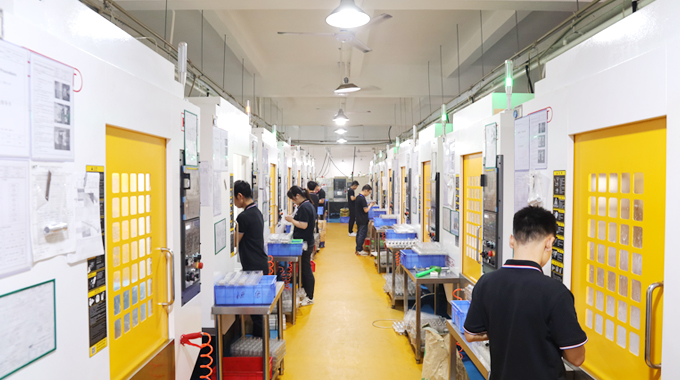
VMT CNC Machining Factory specializes in high-precision custom aluminum CNC machining services, supporting a wide range of aluminum alloys for aerospace, automotive, industrial, and custom engineering applications. We are capable of producing complex components, prototypes, and mass production parts; ensure tight tolerances and consistent quality control; and provides one-stop CNC machining solutions from drawings to finished parts. Learn more about our custom aluminum parts machining services here.

Q1: What is the difference between AMS 4027 and ASTM B209?
A: AMS 4027 is an aerospace specification that emphasizes material consistency, mechanical performance, and full traceability. ASTM B209 is an industrial standard with more flexible requirements, mainly used for general aluminum plate and sheet applications.
Q2: How is AMS 4027 different from standard 6061 aluminum?
A: AMS 4027 is the aerospace-grade specification of 6061 aluminum, subjected to stricter heat treatment, testing, and quality control. It offers higher performance consistency and is better suited for structural and precision-machined components.
Q3: What are the equivalent standards to AMS 4027?
A: Common equivalent standards include EN AW-6061, ISO 6061, and GB/T 3190. However, for aerospace or traceability-critical applications, AMS 4027 is preferred.
Q4: What temperature range can AMS 4027 withstand?
A: AMS 4027 performs reliably at room temperature and moderate service temperatures. When exposed to temperatures above 150°C (302°F) for extended periods, its strength may decrease and should be evaluated based on specific engineering requirements.
Q5: What inventory forms are commonly available for AMS 4027?
A: AMS 4027 is typically supplied in plate and sheet forms, with common tempers such as T6 and T651. Availability is more limited compared to standard 6061 aluminum, and custom cutting or fixed-length sizes may be offered by specialized suppliers.
Q6: Does AMS 4027 require surface treatment?
A: Due to its limited corrosion resistance, AMS 4027 is often treated with anodizing, Alclad (cladding), or protective coatings to enhance corrosion protection, especially for use in humid or corrosive environments.


 +86 15099911516




 Read more