16 years one-stop China custom CNC machining parts factory

Hey there I’m VMT Sam!
With 25 years of CNC machining experience we are committed to helping clients overcome 10000 complex part-processing challenges all to contribute to a better life through intelligent manufacturing. Contact us now
 64 |
Published by VMT at Jul 17 2026 | Reading Time:About 3 minutes
64 |
Published by VMT at Jul 17 2026 | Reading Time:About 3 minutes


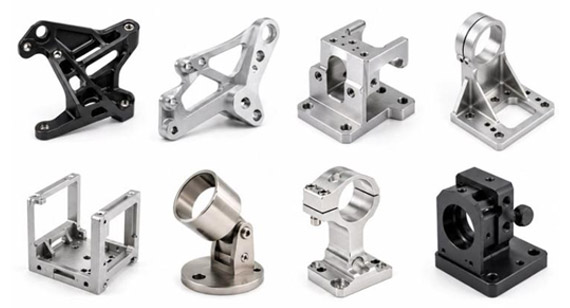
Custom brackets and custom mounts are essential across almost every industry. Whether it is for motorcycles, automotive, robotics, electronic lighting, drones, or industrial equipment, there is a constant demand for bespoke cnc bracket designs and advanced cnc mount solutions. While the market is flooded with mass-produced stamped or die-cast alternatives, these are almost always standard, off-the-shelf components. When developing a new product, off-the-shelf options rarely suffice, you need the parts exactly according to engineering drawings, ensuring that the precision meets assembly requirements, colors match perfectly without variance, and flatness strictly adheres to standards. When it comes to functional performance, custom bracket and mount projects also demand specialized material strength, strategic weight reduction, long-term durability, or strict corrosion resistance.
This comprehensive guide covers precision engineering for custom components, exploring industry applications, aesthetic finishes, functional benchmarks, and key manufacturing recommendations. At the end of this article, we will also share a case study from our machine shop detailing a precision aluminum manufacturing project with assembly problem solving.
If we categorize these specialized components, the most straightforward approach is by material. Common options include high-strength custom steel brackets, heavy-duty machined steel bases, aluminum alloy brackets, and brass brackets(custom metal bracket or mounts); POM / ABS / PTFE / PEEK / Nylon(custom plastic bracket or mounts). Explore for more: Material Types and Grades
Alternatively, we can classify them by their specific industry applications. Here are a few prominent examples:
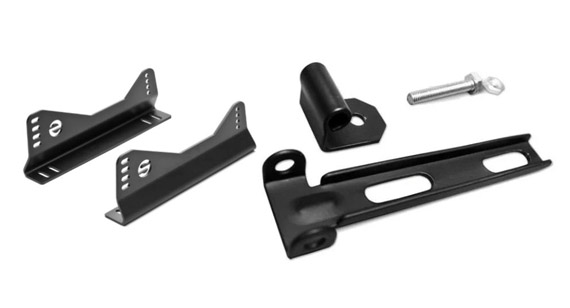
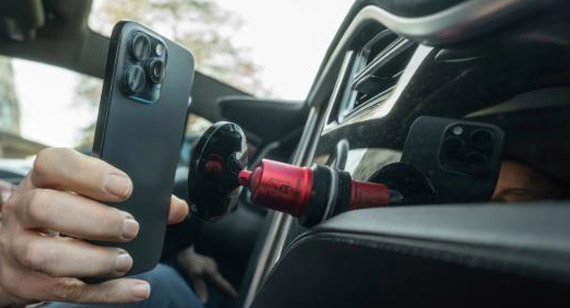
Looking for tailored manufacturing services for your industry? Check out our: Custom CNC Machining Brackets and Mounts Service.
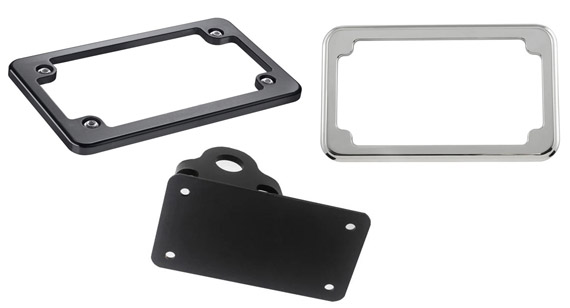
Beyond pure functionality, the visual appeal of a custom component is often a top priority. A perfect example of this is the production of high-end custom license plate brackets.
By utilizing advanced CNC milling and turning processes, manufacturers can achieve exceptionally smooth surface finishes. Whether working with stainless steel or aluminum alloys, computer-controlled machining allows for the intricate engraving of complex patterns directly onto the workpiece.
Following the primary machining cycles, secondary finishing processes can be applied to elevate the surface quality even further. For aluminum components, surface treatment options like multi-colored anodizing are highly popular. For steel variants, premium electroplating delivers a pristine, bright metallic luster that significantly boosts the overall premium feel of the product.
Explore for more: Surface Treatment Services
1. Load-Bearing and Structural Strength
First and foremost among functional needs is load-bearing capacity. For these critical structural components, simply choosing a strong material is not enough. The overall geometric design, wall thicknesses, and fastening zones must be meticulously engineered to prevent the risk of bending, loosening, or structural fatigue during field operation.
2. Thermal Management, Corrosion, and Chemical Resistance
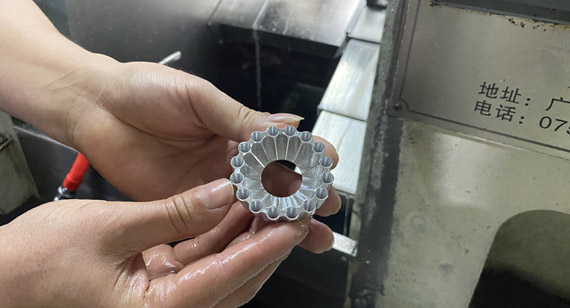
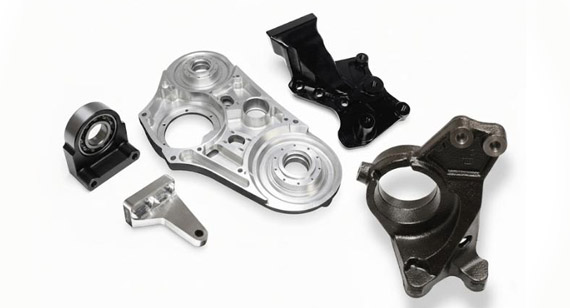
Many applications demand that a support component handle extreme heat dissipation or harsh chemical exposure. Consider custom engine mounts project or heavy-duty custom motor mounts . In modern electric vehicles (EVs) or traditional internal combustion powertrains, a cnc universal motor mount must endure continuous, high-frequency vibrations alongside high engine-bay temperatures. By choosing CNC machining, we can cut complex, integrated cooling fins directly onto the body of the part. When paired with a hard-coat anodized finish, the resulting component delivers excellent thermal management alongside superb environmental resistance.
3. Assembly Precision and Surface Matching
When dealing with rapid prototyping or low-volume runs of high-precision, durable mounting solutions, exact tolerances are mandatory. Achieving this level of fit requires accurate CNC milling followed by a wear-resistant surface treatment, such as hard anodizing, electroless nickel plating, or PTFE coating.
4. Material Selection for High Corrosion Resistance
Achieving the right level of corrosion resistance comes down to a calculated combination of base material and surface finish. For a balance of cost-effectiveness and durability, 304 and 316 stainless steel remain the industry benchmarks. For example, outdoor automotive components or a robust custom frame mounts assembly will face constant exposure to rain, road salt, and humidity. Using stainless steel treated with a professional passivation process offers an efficient, highly economical way to maximize environmental resistance.
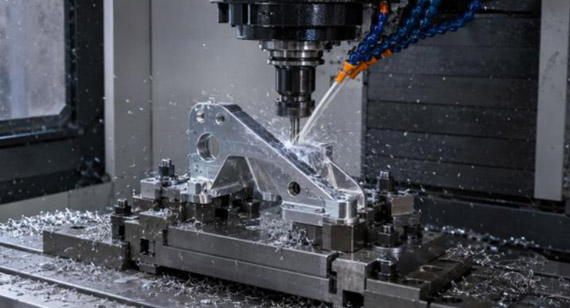
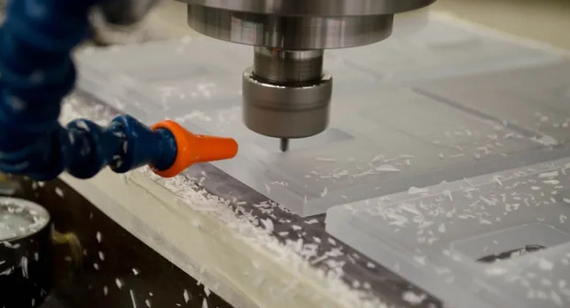
CNC machining relies on computer programming to guide automated lathes and mills, cutting solid raw material blocks along precise paths according to digital engineering drawings. Because the entire sequence is automated and software-driven, dimensional consistency and tight tolerances are guaranteed across every single run. Furthermore, once a program is optimized and saved, it can be recalled instantly for future production batches, ensuring identical precision, stability, and repeatability every time.
Compared to additive manufacturing (3D printing), die casting, or sheet metal stamping, CNC machining’s greatest edge is its unmatched precision. Standard metal parts comfortably achieve ISO 2768-mK tolerances, while critical assembly holes and tight fits can be held to an ultra-precise plus or minus 0.01 mm. This precision extends to threaded features as well; poor thread quality leads to unstable fastening, stripping, and assembly failures. CNC production ensures that thread pitch, depth, and deburring all meet exact standards, making it the premier method for high-spec assembly requirements.
Additionally, CNC machining delivers exceptional flatness and ultra-low surface roughness. Poor flatness causes gaps, unwanted vibrations, and component misalignment during final assembly—issues that can ruin high-precision industrial equipment. Standard CNC milling yields a surface roughness (Ra) between 1.6 and 3.2 microns. For demanding optical setups or tight seals, advanced fine milling and polishing can push that roughness down to a mirror-like 0.8 microns.
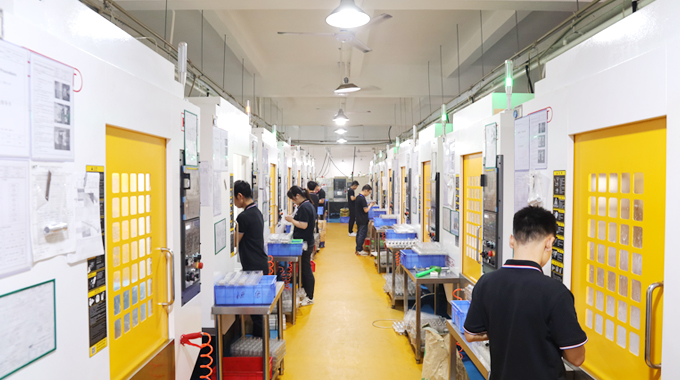
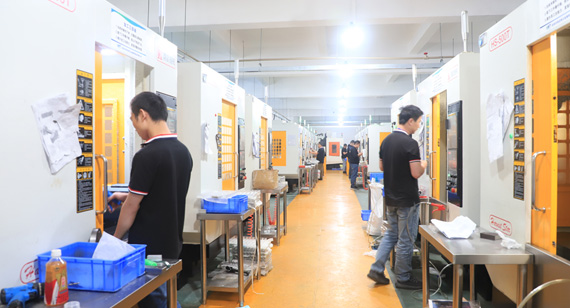
For handling new product rollouts, traditional manufacturing methods often introduce dimensional drift, aesthetic inconsistencies, high design-change costs, and rigid lead times. Partnering with an experienced, fully certified machine shop solves these headaches through standardized machining workflows, strict quality control inspection, and full production traceability.
To help choose the best manufacturing approach for a new project, here is a direct comparison of CNC machining versus alternative production methods:
| Feature Comparison |
Die Casting |
3D Printing (SLM/DMLS) |
Sheet Metal Stamping |
CNC Machining |
| Assembly Precision | Lower (approx. ±0.1mm); critical features require secondary CNC machining. | Lower; threads and mating surfaces require secondary CNC post-processing. | Lower; highly affected by material bending and springback. | High precision (consistently holds ±0.01mm); ideal for precise threading. |
| Initial Cost & Lead Time | High tooling costs ($10k-$100k+); tooling fabrication takes weeks. | Zero tooling costs, but individual per-part printing rates are very expensive. | Requires dedicated stamping dies; limited to thin, simple geometries. | Zero tooling costs; direct programming from CAD file allows fast turnaround. |
| Structural Rigidity & Material Integrity | Cast parts are prone to internal porosity and moderate strength. | Parts can contain micro-voids; lower fatigue resistance under heavy cyclic loads. | Limited to uniform, thin sheets; cannot support massive structural loads. | Machined from solid, uniform forged billet blocks; maximum structural density and strength. |
| Geometric Constraints | Restricted by draft angles, parting lines, and mold release requirements. | Unmatched design freedom; ideal for complex internal lattice structures. | Limited to 2D developments and straightforward bending geometries. | Excellent for complex 3D profiles, variable wall thicknesses, and deep pockets. |
| Economic Production Volume | Ideal for ultra-high volumes (tens of thousands of units). | Strictly limited to low volumes or highly complex aerospace prototyping. | Excellent for high-volume runs of relatively flat, simple components. | Most cost-effective choice for low-to-medium volumes (1,000 to 10,000 units). |
| Primary Limitation | Design changes are incredibly costly and difficult to implement after mold creation. | Slow production speeds; high material costs (similar to CNC material waste). | Incapable of producing thick, solid, three-dimensional blocks or heavy bases. | High material waste due to subtractive cutting, especially with expensive metals like titanium. |
If you are concerned about the costs of CNC machining for your custom brackets, let me put it to you straight: during the prototyping and mock-up stages, CNC machining is hands-down the most budget-friendly choice because it completely bypasses the need for expensive molds, saving you both upfront tooling costs and precious time.
For small-to-medium batches where high precision is a must, CNC machining remains the most practical and cost-effective process you can find. Based on our current supply chain experience, for many precision brackets, CNC machining is incredibly competitive for volumes up to 1000 units. However, if your tolerances are loose and you are looking at massive, high-volume production, that is when you should start looking into other manufacturing methods.
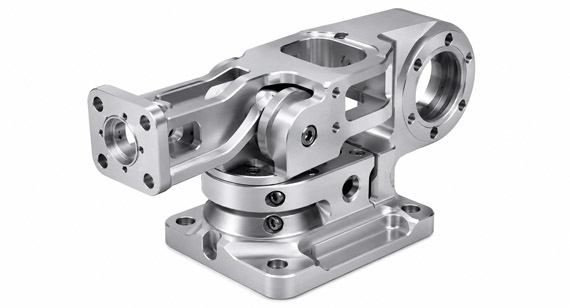
A prominent robotics manufacturer approached us to produce a batch of multi-joint precision mounts. Because these parts had to withstand massive torsional forces and featured intricate internal bearing bores, previous manufacturing partners struggled continuously; their parts either suffered from out-of-tolerance dimensions that jammed the assemblies, or poor surface roughness that tore up the oil seals.
By providing rapid technical evaluations within 24 hours and managing the entire lifecycle—including raw cutting, bead blasting, precise color-matched anodizing, and final CMM (Coordinate Measuring Machine) inspection—we assure clients’ custom aluminum mounts’ surface quality and precision assembly. And the finished custom components sailed through the rigorous assembly and high-load mechanical fatigue tests.
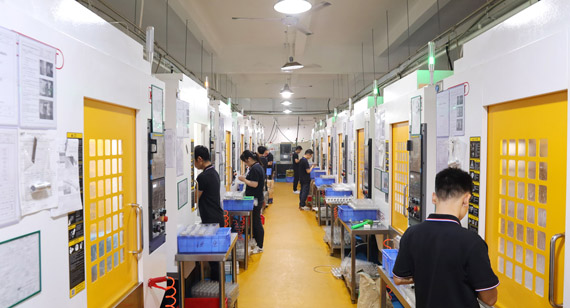
In summary, high-quality custom brackets require careful consideration of industry application, visual finishes, structural limits, material choice, and machining strategies. It is highly recommended to partner with a single-source manufacturer who handles the entire workflow—from initial rough machining and fine milling to surface treatment, final inspection, and logistics. Entrusting the entire process to a single vendor guarantees significantly better quality control and a more stable supply chain than splitting the work among multiple sub-contractors.
Looking for an all-in-one manufacturing partner capable of delivering precision CNC machining, premium surface finishing, strict quality inspection, and reliable delivery? Contact our engineering team now, and we provide comprehensive design-for-manufacturing (DFM) analysis, tailored process planning, and highly competitive quotes within 24 hours! [2D Drawings (PDF files), 3D Drawings (IGS/STP/STEP files)]
Send your drawings, requirements, and target quantity. VMT will review your project and provide a machining solution and quote.
All information and uploaded files are secure and confidential.
1 Tell us what you need
2 Get solution & quote
3 Approve production
Email: inquiry@vimetal.com.cn
Q1: What is the typical lead time for custom CNC machined components?
Prototypes and rapid models are generally completed within 3 to 7 business days. Small-volume production runs usually average 2 to 3 weeks, depending on part complexity and post-processing requirements.
Q2: Can you help manufacture a part from a rough sketch?
Absolutely. Our in-house engineering team can take rough concepts or design criteria and generate fully optimized 2D and 3D CAD models ready for computer-aided manufacturing.
Q3: What is the primary purpose of applying passivation or anodizing to a finished part?
These treatments greatly enhance corrosion and oxidation resistance. Anodizing also provides a noticeable boost to surface hardness for aluminum parts while offering a wide range of aesthetic color options.
Q4: Which metals are most frequently specified for custom precision brackets?
Aluminum alloys (like 6061 and 7075) are widely favored for their excellent strength-to-weight ratio, while stainless steel grades (such as 304 and 316) are selected for maximum load capacities and excellent rust resistance.
Q5: What is the tolerance that CNC machining can achieve?
Precision machining setups can reliably hold tolerances down to±0.01mm, ensuring perfect fits for high-tolerance bearing bores, alignment pins, and smooth linear rails.
Q6: For small orders of a few hundred units, should CNC or hard tooling be used?
For quantities ranging from a few hundred to a few thousand parts, CNC machining is far more economical. It saves thousands of dollars in upfront tooling costs and lets you modify a design instantly without financial penalties.
The technical information and manufacturing advice shared on the VMT website are for general guidance only. While we strive for accuracy, VMT does not guarantee that the processes, tolerances, or material properties mentioned are applicable to every specific project. Any reliance you place on such information is strictly at your own risk. It is the buyer's responsibility to provide definitive engineering specifications for any production orders. Final specifications and service terms shall be subject to the formal contract or quotation confirmed by both parties.


 +86 15099911516




 Read more