16 years one-stop China custom CNC machining parts factory

Hey there I’m VMT Sam!
With 25 years of CNC machining experience we are committed to helping clients overcome 10000 complex part-processing challenges all to contribute to a better life through intelligent manufacturing. Contact us now
 75 |
Published by VMT at Jul 14 2026 | Reading Time:About 4 minutes
75 |
Published by VMT at Jul 14 2026 | Reading Time:About 4 minutes


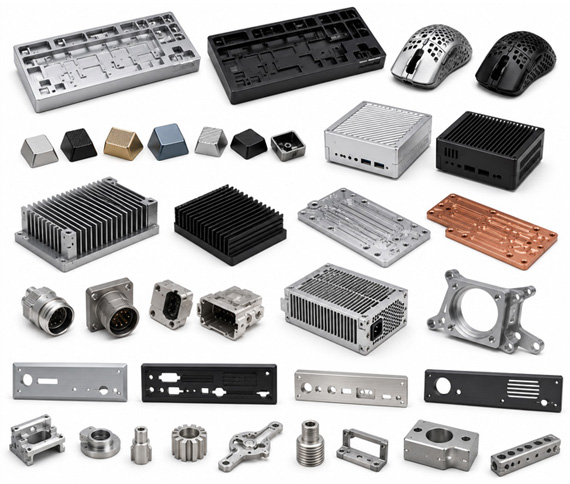
In the computing and precision electronic hardware industries, the manufacturing quality of structural parts, cosmetic components, and internal hardware directly affects the market competitiveness of the final assembled computers. However, when custom-ordering parts for computers, you may often face a series of production headaches: ultra-thin enclosures that look perfect in 3D designs but warp during mass production due to thermal and mechanical stresses; high-end metallic finishes that should meet strict color consistency expectations but reveal tiny pinholes and color variations after anodization; or micron-level tight tolerances being exceeded, causing physical interference when assembling internal cooling modules, cameras, or vital semiconductor parts.
The high-end electronics market tolerates no compromise when it comes to the cosmetics, precision, and consistency of computer parts pc components. So, how do you ensure high repeatability, superior surface texture, and stable thermal performance while tightly controlling manufacturing costs? This article provides a deep engineering look into material selection, manufacturing process comparisons, and quality control systems for desktop computer parts and components. At the end, we share a real factory case study showing how we successfully manufactured custom CNC machined Mini PC enclosures to meet stringent surface finish and high-precision machining specifications.
When discussing computer and parts, the classifications are diverse and complex. From a structural and manufacturing engineering standpoint, we can divide them into several core categories:
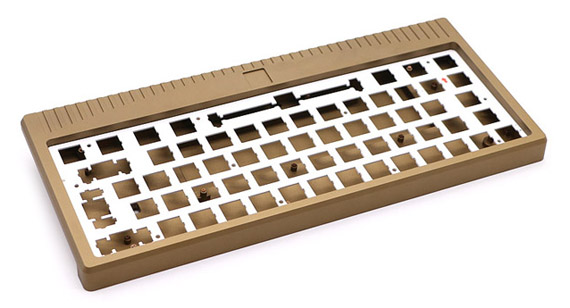
When discussing the customization and sourcing of parts for computers, it is essential to differentiate between different computer types and application environments.
For instance, with professional e-sports systems or parts of a gaming computer, the responsiveness of the mouse and keyboard is critical to a player’s reaction speed. This means that if you are sourcing computer parts for gaming applications—specifically mechanical keyboard plates or mouse trigger components—you must pay close attention to dimensional precision and tight tolerances. The clearance tolerances of these mechanical contact areas and actuation paths directly dictate the post-assembly tactile responsiveness. If the tolerances are loose, the keys or buttons will wobble or stick, degrading the precision and feel.
In terms of manufacturing technology, Computer Numerical Control (CNC) machining is the key process to consistently hit these tight tolerance requirements. (Learn more: Advantages of CNC machining for high precision and dimensional consistency). CNC machining ensures that mass-produced gaming computer components maintain highly consistent fit clearances, perfectly safeguarding the extreme responsiveness required by high-end gaming peripherals.
For portable laptops or high-performance gaming notebooks, lightweight engineering is a core pillar of product development. Business professionals and students alike drive a rigid demand for portability. When selecting materials for these parts of a notebook computer and structural housings, the most common engineering options include:
Achieving Lightweight Cosmetics: CNC milling processes allow these aluminum alloys to be machined into ultra-thin-walled structures (down to 1.0 mm or thinner in local areas). Combined with specialized surface post-processing, this approach yields diverse cosmetic colors and a premium metallic feel, successfully checking the boxes for both "lightweight" and "high-end" design requirements.
Want to explore more material and surface options? View our: [Surface Finishing Services]
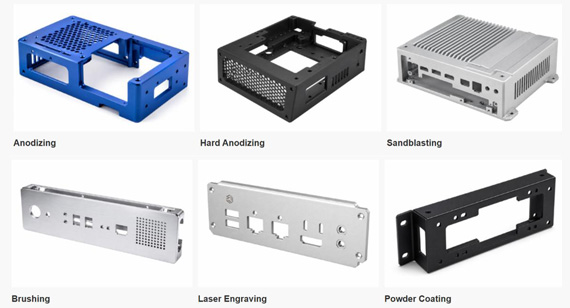
Computer internal hardware like semiconductor parts demand exceptionally tight manufacturing tolerances. If the dimensions fall outside the design criteria, the operational performance and signal integrity of the electronic assembly will be compromised. In real-world manufacturing and multi-part assemblies, engineers focus on two main criteria:
Inside a computer, the design of core functional components directly impacts performance output, electrical safety, and overall structural integrity. Different functional desktop computer components call for distinct material and CNC machining strategies:
Thermal Dissipation Parts: Material Selection and CNC Optimization
As chip Thermal Design Power (TDP) continues to rise, the manufacturing quality of thermal components (such as heatsinks, liquid cooling plates, and fan brackets) directly impacts chip frequency stability.
Electrical Insulation Components: Engineering Plastics Selection
Computers contain numerous areas where high and low voltages interact or where high-frequency signals pass (such as power receptacle pins, network ports, internal ribbon cable connectors, and motherboard isolation spacers). These components of computer keyboard and chassis bases must use materials with robust dielectric properties to stop electrical leakage and signal crosstalk.
High-Stress Internal Support Structures: High Rigidity and Low Weight
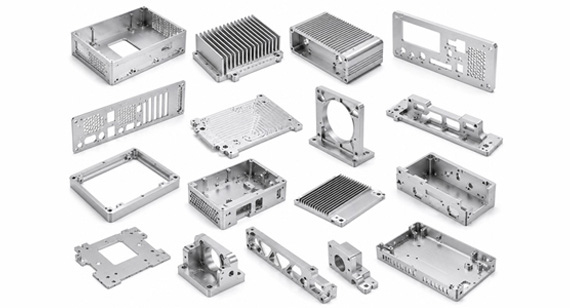
Beyond the outer desktop computer parts, internal structural elements like chassis frames, mid-frame brackets, and GPU anti-sag braces must balance high rigidity and lightweight design in confined spaces.
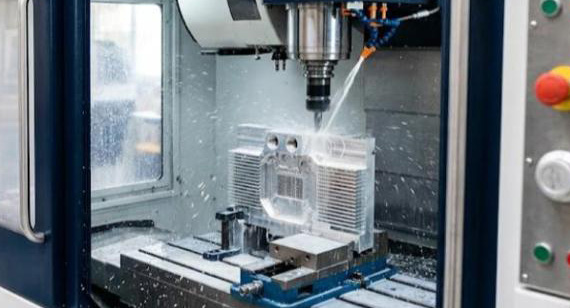
When selecting a manufacturing partner for computer part manufacturing, companies typically evaluate the technical and economic trade-offs between 3D printing, die casting, and CNC machining.
For high-volume production, die casting and 3D printing have their specific use cases: 3D printing excels at validating highly complex, organic geometries during early prototyping, while die casting offers low piece-part costs for standard parts at high annual volumes.
However, when a project demands premium cosmetic finishes and tight dimensional precision, CNC machining offers distinct advantages:
In summary, different computer categories—including Mini PCs, industrial computers, gaming laptops, and standard notebooks—place vastly different technical demands on surface finish, cooling efficiency, structural strength, durability, insulation, and piece-part costs.
Recent manufacturing industry data shows that with the growth of high-performance computing and AI PCs, global procurement demand for ultra-precision components holding positive/negative 0.005 mm tolerances is climbing steadily. Because computers are high-value electronic devices, their demands for dimensional repeatability and tolerance control are significantly higher than standard industrial goods.
Regarding manufacturing costs, the price of a custom CNC machined part is built transparently from machining cycle time, machine depreciation, material yield rates, and post-processing steps. Buyers can evaluate their product position to balance quality and budget, deploying CNC machining where it delivers maximum value, such as core structural frames or high-visibility cosmetic panels. Through smart design for manufacturing (DFM), the quality and performance boost from CNC machining can be fully absorbed by the premium positioning of the final product.
During project execution, CNC machining provides exceptional engineering flexibility for low-volume production and rapid product iterations. The CNC process works directly from 3D CAD models. Engineers perform a Design for Manufacturing (DFM) review, optimize the file, and program the toolpaths to begin cutting immediately.
During early-stage R&D or low-volume pilot runs, this workflow allows engineering teams to modify designs on the fly based on testing feedback, ensuring extremely fast turnaround times. Conversely, die casting or injection molding requires weeks or months for tooling fabrication, sampling, and mold modification. If a design change occurs mid-way, scrapping hard tooling is an expensive and time-consuming setback.
While CNC machining is highly versatile, product designers must account for its inherent physical limitations during the engineering phase. Two common challenges include (contact our team for a comprehensive DFM review):
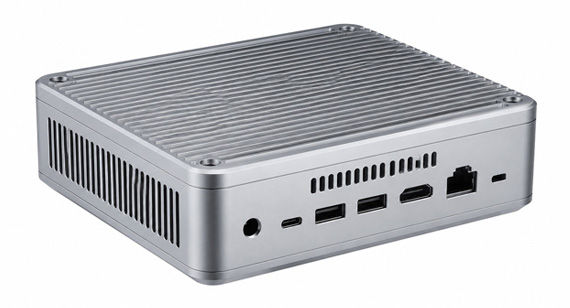
A foreign manufacturer of compact computers needed a custom, lightweight aluminum alloy enclosure for a new high-density Mini PC. Because the internal components were highly integrated, the enclosure had to satisfy strict engineering requirements: high thermal dissipation efficiency, robust electromagnetic interference (EMI) shielding, flawless color consistency across anodized batches, and precise assembly tolerances.
The Challenge: The client’s previous manufacturer used standard die casting and basic 3-axis machining centers. They failed to achieve a specified 1.2 mm local thin-wall feature because the walls overheated, warped, and buckled during cutting. Furthermore, due to non-uniform grain structures in their raw extruded aluminum stock and poorly managed chemical tanks, the parts showed large clusters of pinhole defects and severe color banding after anodization. As a result, the initial batch failed the client's quality inspection.
Our Solution: Upon taking over the project, our engineering team conducted a thorough Design for Manufacturing (DFM) analysis and carried out several process improvements:
The Result: Prototype delivery lead time was cut by 30 percent. Under the client’s strict testing, the Mini PC’s thermal dissipation efficiency increased by 35 percent, the chassis delivered 100 percent compliant EMI shielding, and the surfaces showed zero pinholes or color defects. All critical assembly holes aligned perfectly, allowing internal hardware to slide into place smoothly. Following sample approval, the client awarded us a long-term contract for ongoing production volumes.
Send your drawings, requirements, and target quantity. VMT will review your project and provide a machining solution and quote.
1 Tell us what you need
2 Get solution & quote
3 Approve production
Email: inquiry@vimetal.com.cn
This article outlines the distinct types and specific hardware examples used across various computing platforms. It reviews the structural engineering specifications for critical components regarding weight reduction, electrical insulation, durability, and mechanical strength, while offering material advice, tolerance guidelines, and ideal use cases for CNC manufacturing.
Are you currently vetting or looking for a stable, long-term manufacturing partner for custom computer parts? Does your current supplier struggle with batch-to-batch tolerance repeatability, anodizing color shifts, or fitment issues in complex assemblies?
If you have questions regarding your design's manufacturability (DFM) or need guidance on selecting the right production process, our engineering team is here to assist. We offer professional technical consulting, including complete blueprint and CAD file reviews within 24 hours, alongside detailed technical feedback and accurate, transparent quotes. [We accept 2D Drawings (PDF files) and 3D Drawings (IGS/STP/STEP files)].

Q1: What are the main benefits of choosing stainless steel for custom parts for computers?
A: Stainless steel provides exceptional mechanical strength and COrrosion resistance. It is commonly used for heavy-duty internal brackets, structural fasteners, and ruggedized connector housings. Applying a chemical passivation post-treatment further boosts its resistance to oxidation. For precision electronic hardware, engineering teams standardly specify high-quality grades like 304 or 316 stainless steel.
Q2: Which engineering plastic materials are most commonly used for custom parts inside a computer?
A: Engineering plastics are primary choices for weight reduction and electrical insulation. Typical grades used in CNC machining include POM, ABS, and PEEK. POM (Acetal) delivers high hardness, self-lubricating wear resistance, and excellent dielectric performance, making it the premier material for internal mechanical gears and slider guides. ABS is economical and easy to machine, making it a standard choice for general-purpose covers and internal frames. PEEK is an advanced, ultra-performance polymer with extreme mechanical strength, chemical stability, and heat resistance, ideal for demanding high-density electronic applications.
Q3: What kind of cosmetic finish does bead sandblasting produce on aluminum computer and keyboard housings?
A: Sandblasting uses a high-velocity stream of fine abrasive media to erase micro-tool marks left behind by CNC milling cutters. It creates a highly uniform, matte, non-reflective micro-texture on aluminum surfaces, significantly elevating the tactile feel and premium visual aesthetic of high-end notebooks and custom mechanical keyboard cases.
Q4: What are the applications and advantages of laser engraving computer part components?
A: Laser engraving is a non-contact marking process used to etch permanent brand logos, port text, or serial numbers onto computer chassis, aluminum keyboard plates, and front panels. Because it exerts zero mechanical force, it marks the part without altering critical dimensions or damaging surrounding surface coatings.
Q5: What advantage does a Brushing surface treatment offer for computer parts pc components?
A: For aluminum visual components like front panels, external drive enclosures, and custom keyboard housings, brushing creates straight, uniform linear textures on the metal surface. This finish accentuates a crisp, modern metallic sheen, adding significant industrial design value to high-end electronics.
Q6: If I select CNC machining for custom desktop computer components, how should I evaluate the supplier’s quality control system?
A: A comprehensive, compliant quality assurance workflow should include the following five pillars:
The technical information and manufacturing advice shared on the VMT website are for general guidance only. While we strive for accuracy, VMT does not guarantee that the processes, tolerances, or material properties mentioned are applicable to every specific project. Any reliance you place on such information is strictly at your own risk. It is the buyer's responsibility to provide definitive engineering specifications for any production orders. Final specifications and service terms shall be subject to the formal contract or quotation confirmed by both parties.


 +86 15099911516




 Read more