16 years one-stop China custom CNC machining parts factory

Hey there I’m VMT Sam!
With 25 years of CNC machining experience we are committed to helping clients overcome 10000 complex part-processing challenges all to contribute to a better life through intelligent manufacturing. Contact us now
 72 |
Published by VMT at Jul 23 2026 | Reading Time:About 3 minutes
72 |
Published by VMT at Jul 23 2026 | Reading Time:About 3 minutes


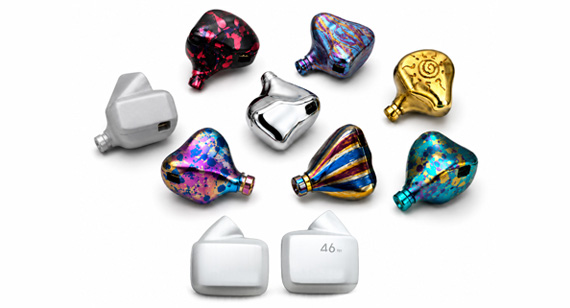
The choice of shell material plays a critical role in shaping the acoustic performance of an in-ear monitor (IEM). Because different metals possess unique acoustic resonance and damping characteristics, machining a shell from warm, dense brass produces a distinctly different sound profile compared to neutrally tuned aluminum, crisp, high-frequency-extended titanium, or tight, punchy stainless steel. Beyond the primary tuning set by the driver configuration and back-volume geometry, these material properties directly impact an IEM's mid-range clarity and overall sonic character. For your CNC audio parts projects, custom CNC machining delivers the tight acoustic tolerances (±0.03 mm), low-volume launch flexibility, and diverse premium surface finishes required to engineer high-performance in-ear monitors across consumer, custom-fit (CIEM), TWS, pro-audio, and headphone categories. At the end part, we will also share a case study on how our factory solved our client’s flagship titanium edition production based on an established aluminum shell geometry.
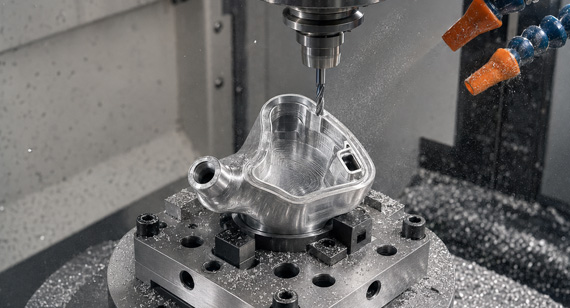
While there are many ways to manufacture earphone shells, such as plastic injection molding or 3D printing, premium earphone projects choose CNC machining primarily for the following five key advantages:
To help you specify components for your product lists, the tables below detail typical materials, tolerances, and surface treatments for key audio hardware categories.
Explore versatile materials and surface treatments to make custom precision in-ear monitor housings.
Production IEM Shells
This category covers the main shell body for premium consumer IEMs — the part most end users see and hold.
| Zone |
Typical Material |
Tolerance |
Typical Finish |
| Main shell body | 7075-T6 or 6061-T6 aluminum | ±0.05 mm | Anodized, matte, brand color, or sandblast |
| Faceplate | 7075-T6 aluminum, Ti-6Al-4V, brass C360, stainless 304 | ±0.03 mm | Anodized, mirror polish, hairline brush, or PVD |
| Driver mounting pocket | 7075-T6 aluminum machined directly in shell | ±0.03 mm | As-machined, hidden, no finish |
| Sound nozzle | 7075-T6 aluminum or stainless 303 | ±0.02 mm | Mirror polished internal bore |
| Cable connector retention | 7075 aluminum or stainless 303 | ±0.05 mm | As-machined |
| Brand logo zone | Same as faceplate | — | Laser engraved, anodized-then-lasered, or inlaid |
Driver fit and acoustic pocket geometry are the tolerance hotspots. Everything else can run standard ±0.05 mm.
Custom-Fit IEM Shells (CIEM)
Hybrid builds use 3D-printed bodies and CNC metal faceplates.
| Zone |
Typical Material |
Tolerance |
Engineering Notes |
| Faceplate | 7075-T6 Aluminum, Ti-6Al-4V, Brass C360, Stainless 304 | ±0.05 mm | CNC metal faceplate mated to 3D-printed resin shell |
| Engraved customization | Same as faceplate | — | Laser engraving for signatures, serial numbers, and artwork |
| Resin connector insert | Stainless 303 | ±0.05 mm | Press-fit into resin body |
| Alignment pins | Stainless 303 | ±0.02 mm | Multi-pin array aligning faceplate to resin shell |
True Wireless Earbud Shells (TWS)
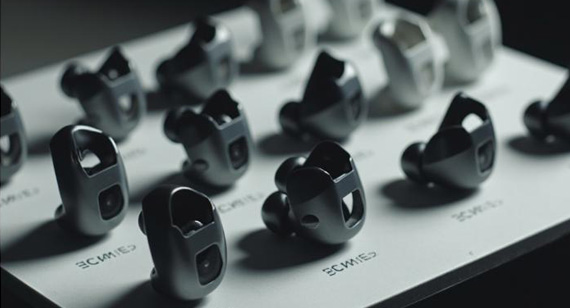
Compact metal housings are designed for high-density electronic assemblies.
| Zone |
Typical Material |
Tolerance |
Engineering Notes |
| Main shell body | 6061-T6 Aluminum | ±0.05 mm | Requires non-metallic RF window for Bluetooth transmission |
| Driver mounting pocket | 7075-T6 Aluminum | ±0.03 mm | Critical acoustic pocket |
| Charging contacts | C360 Brass | ±0.05 mm | Hard gold over nickel plating for reliability |
| Touch control surface | Same as shell body | — | Laser-etched pattern, optional resin inlay |
| IP sealing surface | Aluminum-resin or aluminum-ceramic interface | ±0.05 mm | Tight flatness for IPX4–IPX7 gasket sealing |
RF Transparency Note: Full metal enclosures block Bluetooth signals. TWS designs require an integrated resin or ceramic window directly above the antenna array, sealed to maintain IP ratings.
Pro Audio / Stage IEM Shells
Durable shells are engineered to withstand touring environments.
| Zone |
Typical Material |
Tolerance |
Engineering Notes |
| Main shell body | 7075-T6 Aluminum or Stainless 303 | ±0.05 mm | High impact resistance |
| Cable connector socket | Stainless 303 | ±0.05 mm | Reinforced for frequent mating cycles |
| L/R channel identifiers | Same as shell body | — | Color-coded anodizing or permanent laser mark |
| Cable strain relief pocket | 7075 Aluminum or Stainless 303 | ±0.05 mm | Mechanical load point |
Headphone / Headset Earcups
These parts use scalable manufacturing methods for full-size over-ear audio components.
| Zone |
Typical Material |
Tolerance |
Typical Finish |
| Earcup housing | 6061-T6 Aluminum | ±0.10 mm | Anodized or bead-blasted |
| Yoke pivot mechanism | 7075-T6 Aluminum or Stainless 303 | ±0.05 mm | Anodized |
| Trim ring | 7075-T6 Aluminum or Brass C360 | ±0.05 mm | Mirror polish, PVD, or anodized accent |
Material selection serves as both a structural requirement and a fine-tuning mechanism for acoustic voicing.
| Material |
Grades |
Acoustic Profile |
Aesthetic |
Compatible Finishes |
Typical Application |
| Aluminum | 6061-T6, 7075-T6 | Mass loading shifts mid-band modes by about ±1 dB; generally balanced low end | Modern, versatile | Anodize, polish, brush, bead blast, PVD, laser | Universal IEMs, TWS, earcups, default choice |
| Titanium | Ti-6Al-4V, Grade 5 | High stiffness pushes secondary modes above audible range; crisp, extended high end | Technical, luxury | Bead blast, mirror polish, hairline brush, PVD | Flagship or limited editions |
| Brass | C360, free-machining | High density adds midrange weight and subtle warmth via resonance shifting | Classic, premium weight | Polish, brush, nickel/gold plate, patina | CIEM faceplates, luxury flagships |
| Stainless Steel | 303, 304 | High density damps structural vibrations; tightens bass response | Industrial, heavy | Mirror polish, hairline brush, bead blast, PVD | Pro-audio IEMs, heavy flagships |
| Magnesium | AZ31, AZ91 | Exceptional structural damping; minimal metallic resonance coloration | Ultra-lightweight | Chemical conversion + powder coat / ceramic | Lightweight universal IEMs |
| PEEK | Unfilled, carbon-filled | High polymer damping; eliminates metal ringing entirely | Technical polymer | As-machined, tan or black | Reference or medical audio gear |
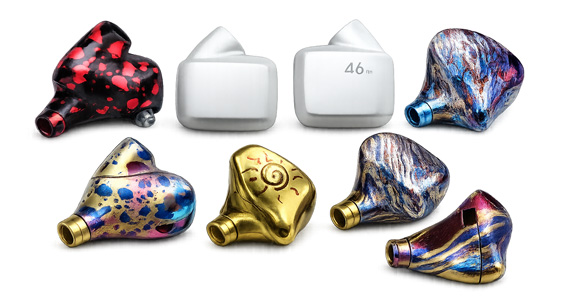
A premium IEM shell can ship with any of the finishing families below — sometimes layered, such as a bead-blasted body with a mirror-polished faceplate. The table covers what each finish does and where it fits.
| Finish Family |
Visual Appearance |
Tactile Feel |
Compatible Substrates |
Primary Application |
| Anodizing (Color / Clear) | Matte to semi-gloss | Smooth | Aluminum, magnesium | Default finish; custom colors |
| Mirror Polish | High reflectivity | Glass-smooth | Titanium, brass, stainless, aluminum | Flagship trims, accent faceplates |
| Hairline Brush | Linear directional grain | Fine tactile texture | Aluminum, titanium, stainless | Premium aesthetic |
| Bead Blast | Uniform matte | Fine satin texture | Aluminum, titanium, stainless, brass | Anti-fingerprint matte finishes |
| PVD Coating | Vapor-deposited metallic | Smooth, scratch-resistant | Titanium, stainless, brass | High-wear luxury accents, gold, gunmetal |
| Laser Engraving | Crisp recessed marking | Smooth or slight relief | All metals | Logos, serial numbers, custom art |
| Ceramic Coating | Hard matte oxide | Ultra-smooth | Aluminum, titanium | Scratch-resistant, hypoallergenic surfaces |
| DLC | Matte dark charcoal or black | Hard, low-friction | Titanium, stainless | Premium scratch resistance |
| Patina / Antique | Weathered metal look | Textured | Brass, copper | Heritage or limited edition runs |
IEM shells are small parts — typically 15 to 30 mm on the longest axis. That changes the cost math compared to larger CNC workpieces: machine time per part is short, but finishing and inspection often dominate the per-unit cost.
Cost Composition for a Typical 7075-T6 Universal IEM Shell at 500 Units:
| Component |
Share |
Notes |
| Material | 15–25% | 7075-T6 small billet; titanium and brass significantly higher |
| CNC machining | 30–40% | 5-axis cycle time around 8–14 minutes per shell |
| Surface finish | 20–35% | Anodize is low-cost; mirror polish and PVD are labor-intensive |
| Inspection and verification | 10–20% | CMM acoustic-chamber check and color sample approval |
Three Things Drive the Per-Unit Price on Premium IEM Shells:
Other Factors That Move Price:
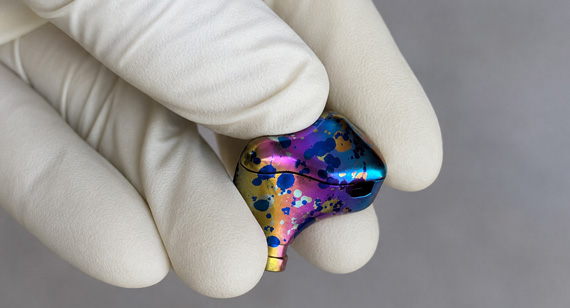
A high-end audio project developed a flagship titanium edition based on an established aluminum shell geometry. The goal was to elevate both acoustic profile and tactile quality without altering the proven driver setup.
Engineering Challenges
Execution Strategy by Our Engineering Team
Production Results
This guide has introduced the material properties, acoustic tolerances, surface finish options, and manufacturing strategies for custom CNC machined in-ear monitor shells across various audio product lines. To achieve the precise acoustic signature and premium build quality your project demands, you should evaluate your driver configuration, target back-volume tolerances, and shell finishing specifications early in the development phase.
Confused about the cost for batch volume, material grade selection, tolerance per zone, and finishes for your new products? Welcome to contact our engineering team to gain a free consultation and competitive quotation. [2D Drawings (PDF files), 3D Drawings (IGS/STP/STEP files)]
Send your drawings, requirements, and target quantity. VMT will review your project and provide a machining solution and quote.
All information and uploaded files are secure and confidential.
1 Tell us what you need
2 Get solution & quote
3 Approve production
Email: inquiry@vimetal.com.cn
1. Should CIEM shells be CNC machined or 3D printed?
Traditional CIEM shells are 3D printed in photopolymer resin because SLA printing easily adapts to unique 3D ear canal scans at low volumes of 1–20 units. However, modern premium CIEMs frequently use a hybrid construction: a 3D-printed resin body for comfort, paired with a precision CNC-machined metal faceplate for aesthetics and structural rigidity. Fully CNC-machined metal CIEM bodies are rare due to the complexity of machining unique internal ear geometry.
2. What material is most common for premium IEM shells?
7075-T6 aluminum is the standard choice for premium universal shells, offering an excellent balance of strength, machinability, anodizing quality, and weight. 6061-T6 aluminum is used for cost-sensitive models. Titanium Ti-6Al-4V is selected for flagships due to its strength, unique acoustic properties, and high-end feel. Brass C360 is widely used for CIEM faceplates, while 303/304 stainless steel is preferred for pro-audio applications requiring extra durability.
3. How much does shell material actually affect IEM sound?
While driver selection and acoustic cavity geometry dictate the primary frequency response, shell materials introduce secondary acoustic characteristics through mass loading and structural damping, typically within a ±1 dB range across mid frequencies. High-density metals like brass add subtle warmth, aluminum provides a neutral baseline, titanium increases high-frequency clarity, stainless steel tightens bass through added mass, and magnesium dampens unwanted mechanical resonance.
4. When is anodized color the right finish vs PVD coating?
Anodizing is an electrochemical process that converts the aluminum surface itself, creating an integrated, scratch-resistant, colored oxide layer. It is the ideal, cost-effective standard for aluminum parts. PVD deposits a thin layer of metal vapor onto the surface, making it suitable for exotic finishes like mirror gold, gunmetal, or rainbow on substrates such as titanium, stainless steel, and brass.
5. When is 5-axis CNC machining required for IEM shells?
5-axis machining is necessary for single-piece shells featuring organic, continuous-curvature acoustic cavities, angled sound nozzles, or complex ergonomics. 3-axis or 4-axis milling can leave visible facets on organic curves that require labor-intensive hand finishing. For multi-piece modular designs where the driver housing and faceplate are separate parts, 3-axis or 4-axis machining is often sufficient.
6. What is a realistic lead time for a 500-unit IEM CNC shell run?
A standard production run of 500 anodized aluminum shells typically requires 3 to 5 weeks from drawing sign-off. Choosing titanium or brass adds 1 to 2 weeks due to reduced cutting speeds and tool management. Specialized post-processing like PVD or ceramic coatings adds another 1 to 2 weeks.
The technical information and manufacturing advice shared on the VMT website are for general guidance only. While we strive for accuracy, VMT does not guarantee that the processes, tolerances, or material properties mentioned are applicable to every specific project. Any reliance you place on such information is strictly at your own risk. It is the buyer's responsibility to provide definitive engineering specifications for any production orders. Final specifications and service terms shall be subject to the formal contract or quotation confirmed by both parties.


 +86 15099911516




 Read more