16 years one-stop China custom CNC machining parts factory

Hey there I’m VMT Sam!
With 25 years of CNC machining experience we are committed to helping clients overcome 10000 complex part-processing challenges all to contribute to a better life through intelligent manufacturing. Contact us now
 398 |
Published by VMT at Aug 15 2026 | Reading Time:About 6 minutes
398 |
Published by VMT at Aug 15 2026 | Reading Time:About 6 minutes


Thanks to its unique advantages of speed, high weld strength, and clean, precise execution, laser welding is highly popular for thin-walled, high-precision components—especially those requiring minimal thermal distortion, high aspect ratios, or superior hermetic sealing.
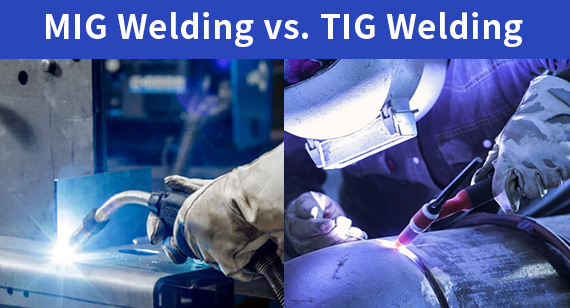
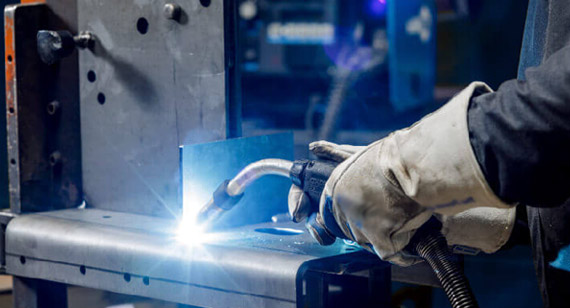
Unlike traditional welding methods (such as MIG and TIG), which often suffer from excessive heat input, material deformation, and the need for extensive post-processing, laser welding uses a high-intensity light beam to avoid these limitations. This makes it the preferred joining method for high-end aerospace, medical, and automotive manufacturing applications.
Now, let’s explore laser welding processes, compatible materials, critical considerations, key advantages, and applications in CNC machined parts. At the end, you’ll also discover a case study on how our factory helped a client with automotive transmission component manufacturing and the precision welding of a ring gear to a wheel hub.
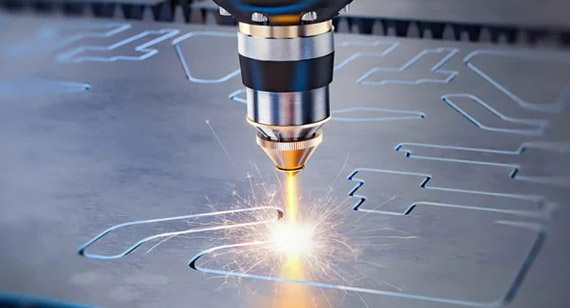
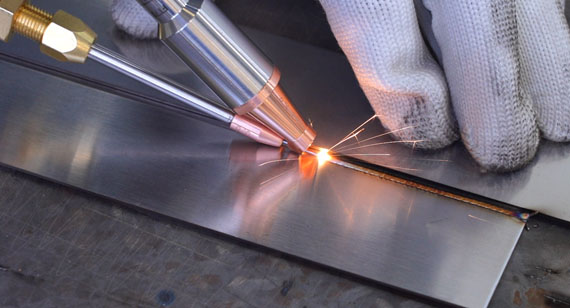
Laser welding ( laser beam welding, laser svetsning ) is a high-precision joining process that uses a high-intensity light beam to melt and fuse materials together. Unlike traditional welding methods that require an electrode or filler material, laser welding relies on intense heat concentration to create a clean and strong bond.
How Does Laser Welding Work?
This method is known for its high precision, minimal heat-affected zones, and ability to weld delicate or complex components.
How Strong Is Laser Welding?
In addition, the laser welds are remarkably reliable, and the laser welding strength can achieve 80% to 90% of the base material's strength. The process and strength also works well for joining identical metals as well as dissimilar metals (such as copper to steel), though welding different metals may form intermetallic compounds that slightly reduce joint strength. Beyond metals, laser welding also applies to plastics, but only the chemically compatible plastics .
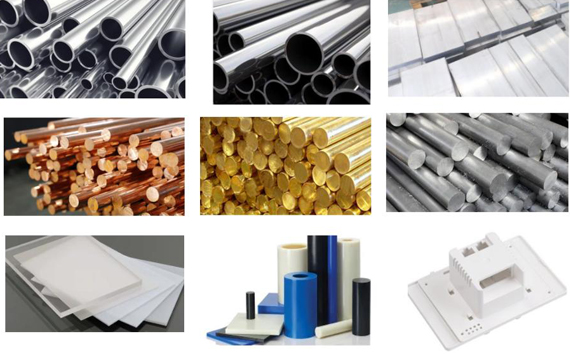
Not all materials respond the same way to laser welding. Factors such as reflectivity, thermal conductivity, and absorption rate influence how well a material can be welded. Below is a comprehensive table showcasing common metal and plastics for laser welding technology:
| Type | Material | Weldability(metal)/Absorption(plastic) | Key Advantages | Key Challenges | Key Considerations | Typical Applications |
| Metal | Carbon Steel | High (Easy to weld) | Excellent laser absorption; enables fast welding speeds and deep penetration at lower operational costs. | High-carbon variants (>0.3%) can become brittle or crack upon rapid cooling. | Keep carbon content low; use appropriate shielding gas to ensure joint toughness. | Automotive structural frames, heavy machinery, structural tubing, industrial hardware |
| Stainless Steel | High (Easy to weld) | Exceptional corrosion resistance; creates clean, strong joints with minimal heat-affected zone (HAZ). | Excessive heat input can cause loss of corrosion resistance (carbide precipitation) or slight warping. | Control laser power and travel speed to preserve corrosion resistance (especially in 300-series). | Medical devices, food processing equipment, high-end automotive parts, pressure enclosures | |
| Aluminum | Low to Moderate | Lightweight with an excellent strength-to-weight ratio. | High surface reflectivity and rapid thermal dissipation make deep penetration difficult. | Use fiber or green lasers for higher absorption; preheating helps prevent thermal shock defects. | Aerospace components, heat exchangers, automotive body panels | |
| Copper | Low | Outstanding electrical and thermal conductivity. | Extremely high optical reflectivity and rapid heat loss during welding. | Utilize blue or green wavelength lasers; apply pulsed welding to control heat input. | Battery components, electrical connectors, busbars, medical equipment | |
| Brass | Low to Moderate | Good corrosion resistance and aesthetic appearance. | High reflectivity; volatile zinc content can vaporize, causing severe porosity or cracks. | Optimize laser power and pulse duration; use controlled shielding gas to stabilize the keyhole. | Precision CNC parts, musical instruments, decorative items | |
| Titanium | High | Outstanding strength-to-weight ratio and superior biocompatibility. | Extremely reactive with oxygen and nitrogen at elevated temperatures, leading to severe embrittlement. | Must maintain full inert gas shielding (argon or helium) around the weld zone until cooled. | Aerospace structures, medical implants, high-performance automotive | |
| Nickel Alloys | High | Maintains structural integrity and high strength in extreme thermal and corrosive environments. | Susceptible to hot cracking if thermal input is not tightly controlled. | Tightly regulate thermal input and cooling rates to preserve superalloy mechanical properties. | Turbine engines, aerospace & marine parts, chemical processing equipment | |
| Plastics (Only Thermoplastics) | Polycarbonate (PC) | High | Exceptional impact resistance and crystal-clear optical transparency. | Requires precise laser transmission parameters to prevent surface burning. | Requires a transmission welding setup (top layer laser-transparent, bottom layer laser-absorbent). | Optical lenses, medical device housings, automotive light covers |
| Nylon (PA) | High | High mechanical strength, flexibility, and excellent chemical resistance. | Moisture absorption in nylon can cause void formation or bubbling during welding. | Pre-dry materials if necessary; ensure both upper and lower plastics are chemically compatible. | Automotive under-hood parts, electrical housings, industrial fasteners | |
| ABS | High | Lightweight, durable, impact-resistant, and cost-effective for high-volume production. | Overheating can release fumes and cause aesthetic surface degradation. | Ideal for clean, glue-free housing seals; optimize beam intensity to protect surface finish. | Electronics enclosures, consumer appliance housings, medical equipment |
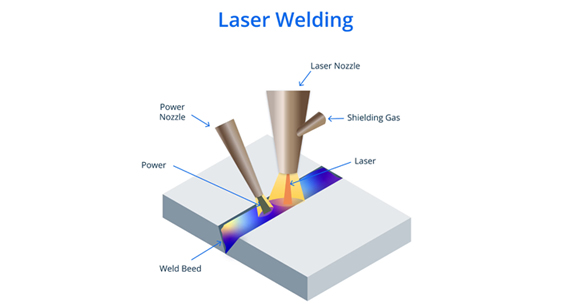
Achieving a defect-free laser weld requires careful preparation, correct beam adjustments, and post-weld cooling. By following a strict step-by-step approach, strong welds with integrity and repeatability can be achieved:
| Step | Core Phase | Operation | Primary Purpose | Key Tips |
| 1 | Surface Cleaning | Degrease, de-rust, and remove surface contaminants | Prevent laser energy reflection and weld porosity | Use acetone/alcohol, wire brushing, or ultrasonic cleaning for precision micro parts. |
| 2 | Precision Fixturing | Clamp and align workpieces tightly together | Prevent joint gaps and maintain structural alignment | Use manual jigs for prototypes; deploy automated CNC/pneumatic clamps for mass production. |
| 3 | Beam Focusing | Adjust the laser optical focus to the weld depth | Ensure maximum energy concentration at the joint | Set the focal point slightly below the material surface for deep penetration welding. |
| 4 | Power Optimization | Calibrate laser power based on metal type and thickness | Balance deep weld penetration with minimal thermal distortion | Increase power for reflective metals (copper/aluminum) or thicker material stock. |
| 5 | Target Alignment | Position the laser beam at the exact joint starting point | Ensure a continuous, straight, and uniform weld bead | Utilize red-light laser pointers or multi-axis CNC positioning systems. |
| 6 | Controlled Cooling | Allow the welded part to cool safely post-weld | Prevent rapid thermal shock, micro-cracking, and warping | Cool naturally at room temperature, or use argon shielding gas flow for reactive metals like titanium. |
Laser welding surpasses traditional methods (MIG, TIG) by delivering high-speed, precision welds with minimal heat distortion, making it ideal for advanced manufacturing.
Let’s explore the key pros of laser welding and how it has transformed modern manufacturing.
1. High Precision and High Repeatability
2. Fast Welding Speed
3. Low Heat Input and Minimal Distortion
4. High Welding Quality
5. Less Maintenance Required
6. Easy to Automate
Early Development of Laser Technology
The concept of laser welding can be traced back to the 1960s, following the invention of the first functional laser by Theodore Maiman in 1960. As scientists explored industrial applications for lasers, they discovered that high-intensity laser beams could melt and fuse materials together.
Key Milestones in Laser Welding Technology
1. 1960s – Early Laser Research
2. 1970s – Laser Welding for Aerospace and Automotive
3. 1980s – Advancements in CO₂ and Fiber Lasers
4. 1990s – Adoption of Automated Laser Welding
5. 2000s–2020s – Modern Fiber Laser Welding
The success of laser welding depends on multiple factors, including material properties, heat management, and operator expertise.Understanding these factors is essential for optimizing weld quality, preventing defects, and ensuring a reliable, long-lasting joint.
Factor 1: Key Material Properties Impacting Laser Weldability
Melting Temperature: High-melting-point metals (e.g., titanium, tungsten) require higher laser power, while low-melting materials (plastics, aluminum) need controlled lower energy to prevent burn-through or severe porosity.
Reflectivity (Albedo): Highly reflective metals (copper, aluminum, brass) bounce away standard laser energy. Using fiber, green, or blue lasers, along with adjusted beam angles or surface pre-treatments, ensures proper energy absorption.
Thermal Conductivity: Metals with high thermal conductivity (copper, aluminum) dissipate heat rapidly, requiring higher power density or preheating to maintain stable weld penetration. Conversely, low-conductivity metals (stainless steel, titanium) retain heat easily, simplifying the process.
Factor 2: Process Control & Precision Setup
Achieving defect-free, repeatable welds relies heavily on tight process control and engineering precision:
Parameter Calibration:
Shielding Gas Selection:
Factor 3: Welding Equipment: Essential Tools for Laser Welding Success
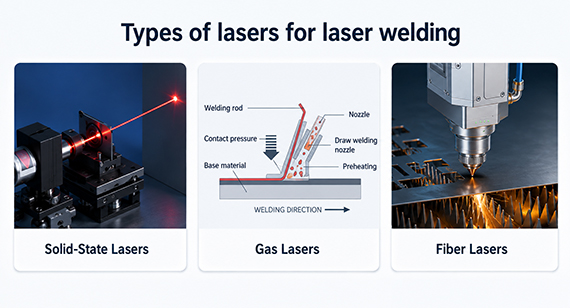
| Laser Type | Best Suited For | Advantages |
| Fiber Lasers (Industry Standard) | Reflective metals (copper, brass, aluminum), stainless steel, carbon steel | High wall-plug efficiency, superior beam quality, minimal maintenance, and seamless multi-axis CNC integration. |
| Solid-State Lasers (Nd:YAG / Disk) | Deep-penetration welds, titanium, specialty alloys | Delivers ultra-high peak energy density, ideal for delicate micro-components and medical devices. |
| CO₂ Gas Lasers | Thick structural steel, non-metallic materials | Effective for heavy-plate cutting/welding, though less energy-efficient and highly sensitive to reflective metals. |
High-intensity laser systems demand strict environmental and operational safety protocols to guarantee uninterrupted production and zero workplace hazards.
While laser welding is widely applicable, it is particularly essential for precision CNC machined components that demand thin-wall lightweighting, tight tolerances, minimal thermal distortion, deep-and-narrow weld profiles (high aspect ratios), or high-pressure hermetic sealing.
Here are key examples of CNC parts where laser welding is the optimal choice:
1. Automotive: Transmission Gears & Clutch Components
2. EV Electric: Battery Trays & Module Side Plates
3. EV Electric: Motor Rotors & Gear Shaft Assemblies
4. Aerospace: Tubing, Ducts & Fluid Connectors
5. Medical: Endoscopes & Surgical Instrument Shafts
6. Electronics: Pressure & Temperature Sensor Enclosures
Laser welding typically incurs a higher upfront unit price than traditional MIG or TIG welding due to advanced optical machinery and precision setup requirements. However, looking solely at initial unit quotes can be deceiving.
For high-volume production runs, cosmetic-grade components, or precision thin-walled parts, laser welding is often significantly more cost-effective overall. Its ultra-fast processing speeds shorten cycle times, while its clean, low-distortion finish virtually eliminates costly manual post-grinding, straightening, and rework. When factoring in reduced labor hours and near-zero scrap rates, laser welding yields a much lower total cost per part for demanding CNC projects.
Precision Laser Welding for an Automotive Transmission Assembly
An automotive client approached our factory with a demanding project: producing high-precision automotive transmission components made of 20CrMnTi Alloy Steel, requiring a strict +/- 0.005 mm tolerance and a smooth Ra 0.4 um surface finish. A critical part of the project was joining the internal ring gear to the wheel hub, which required a strong, high-torque joint that was also visually clean, seamless, and free from thermal distortion.
To achieve this, our engineering team first performed high-precision CNC machining (turning and gear hobbing) to craft the individual ring gear and wheel hub to exact specifications. Next, we applied a specialized two-stage laser joining process: using laser spot welding (tack welding) to fix the ring gear and hub in perfect concentric alignment, followed by continuous laser seam welding. Customized automated fixtures held zero joint gap throughout the spot-welding and final fusion sequence.
The final outcome delivered exceptional mechanical strength and cosmetic quality. The laser spot-and-seam process produced a clean, spatter-free weld bead that met the client's strict aesthetic standards without requiring post-weld grinding. Thermal distortion was kept well within limits, preserving the critical Ra 0.4 um surface finish and gear tooth accuracy. The assembly successfully passed all high-torque testing, resulting in a lightweight, durable, and visually flawless transmission component ready for mass production.
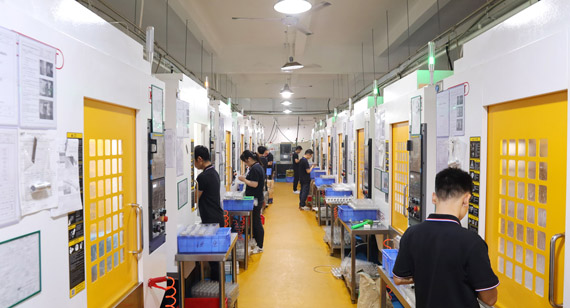
Laser welding has emerged as a game-changing technology across industries, offering unmatched precision, speed, and efficiency. Unlike traditional welding methods, which can introduce excessive heat, distortion, and inconsistencies, laser welding provides clean, strong, and defect-free welds with minimal thermal impact.
Key Takeaways from Laser Welding
Seamless Integration with CNC Machining – Laser welding can be fully automated and integrated into CNC machining systems, further enhancing repeatability and efficiency.
The Future of Laser Welding
As manufacturers continue to prioritize automation, lightweight materials, and high-precision fabrication, laser welding will play an even bigger role in next-generation industries. From electric vehicles and renewable energy to advanced robotics and aerospace exploration, laser welding is paving the way for smarter, faster, and more sustainable production methods.
Whether in aerospace, medical, automotive, or industrial CNC machining, laser welding is the future of high-quality manufacturing.
Looking for expert CNC machining and laser welding solutions? Contact us today for custom precision manufacturing! [ Upload your drawings: 2D Drawings (PDF files), 3D Drawings (IGS/STP/STEP files)].
Send your 2D drawings, 3D CAD models, material, quantity, tolerances, weld requirements, surface finish and inspection requirements. VMT will review the machining and laser welding process and provide DFM feedback and a custom quote.
All information and uploaded files are secure and confidential.
1 Tell us what you need
2 Get DFM & quote
3 Approve production
Email: inquiry@vimetal.com.cn
Why choose spot laser welding?
It provides precise, localized strength to lock parts in alignment quickly without damaging surrounding areas or warping thin metals.
Are laser brazing and laser soldering the same as laser welding?
No; laser welding directly melts and fuses the base metals together, whereas laser brazing and soldering use lower heat to melt a separate filler metal without melting the base materials.
Is laser welding as strong as MIG?
Yes, laser welding can be as strong or even stronger than MIG (Metal Inert Gas) welding in many applications. Laser welding creates deep penetration welds with minimal heat distortion, making it ideal for thin materials, precision components, and high-strength joints. However, MIG welding is better suited for thicker materials and structural applications.For thin materials and precision welding, laser welding offers superior strength and accuracy.
Does laser welding really work?
Yes! Laser welding is widely used across industries, including aerospace, automotive, electronics, and medical devices. The process produces high-strength, defect-free welds with minimal heat input, reducing warping and improving product longevity. Laser welding is a proven, reliable, and efficient method for high-precision metal and plastic joining.
Are laser welds stronger than stick welds?
Yes, in many cases, laser welds can be stronger than traditional stick welding (SMAW – Shielded Metal Arc Welding). Laser welding:
For precision applications, laser welding can offer stronger and cleaner welds than stick welding.
Will laser welding replace TIG welding?
Not entirely. TIG (Tungsten Inert Gas) welding is still preferred for manual welding of thin metals, but laser welding is increasingly replacing TIG welding in automated and precision applications.
Laser welding is becoming the preferred choice for high-precision manufacturing, but TIG welding remains useful for manual and artistic applications.
What are the cons with laser welding?
While laser welding offers many benefits, it also has challenges:
Despite these challenges, laser welding is the best option for high-precision, automated manufacturing.
How thick steel can a laser welder weld?
Laser welding works best on thin to medium-thickness metals (up to 10mm).
What is the most advanced type of welding?
The most advanced welding methods include:
The technical information and manufacturing advice shared on the VMT website are for general guidance only. While we strive for accuracy, VMT does not guarantee that the processes, tolerances, or material properties mentioned are applicable to every specific project. Any reliance you place on such information is strictly at your own risk. It is the buyer's responsibility to provide definitive engineering specifications for any production orders. Final specifications and service terms shall be subject to the formal contract or quotation confirmed by both parties.


 +86 15099911516




 Read more