Free cookie consent management tool by TermsFeed Cookies

Home / Resources / Blog /

Winter Sports CNC Machined Parts Guide: Precision, Safety, Materials, and Custom Colorways

0   |   Published by VMT at Jul 22 2026   |   Reading Time:About 3 minutes

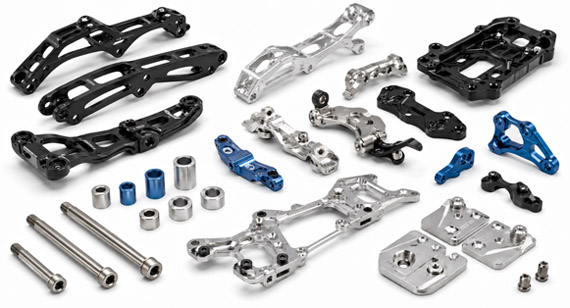
Custom CNC Machined Winter Sports Parts


Get Winter Sports CNC Parts Quote


Skiing bindings release under extreme loads, where adjusting a toe-lug position by even a tenth of a millimeter can push its release mechanism outside the DIN-certified window—the exact margin that must be defended in every warranty review and safety audit. Across ski bindings, splitboard hardware, snowmobile performance components, and ice-sports equipment, custom CNC machining delivers the tight tolerances safety-critical components demand, the low minimum order quantities (MOQs) seasonal launches rely on, and the exact color consistency (Pantone-matched anodizing) required for brand identity—all without the very high tooling investments of injection molding or die casting. At the end, we will share a case study of how we solved an urgent ski binding project with issues regarding color consistency and accuracy preservation for a European client.


What Are Winter Sports CNC Machined Parts?


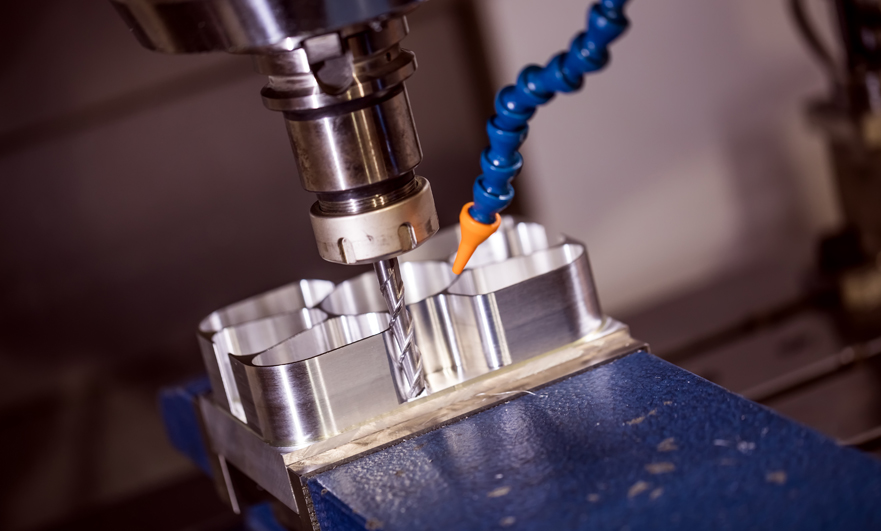
Ski Binding Part CNC Machining Manufacturing


Get an Instant Quote


A premium ski binding is an assembly of micro-precision components. The same holds true for a splitboard touring system, a snowmobile ski spindle assembly, or an ice-skate runner holder. Walk through any high-end winter sports product lists, and CNC machined parts sit right at the core. Most of these components share these critical characteristics because of precision CNC machining:


  • Safety-Critical Geometry: Tech bindings release under load, and bobsled runner mounts must withstand intense g-forces. Here, tight tolerance isn't just a quality metric—it is the line between safety certification and a product recall.
  • Low- to Mid-Volume Batches: Launching a new seasonal colorway rarely requires 50,000 units up front. Instead, projects usually need 200 to 800 units per colorway, distributed across multiple part variants per season.
  • Frequent Design Iteration: Colorways change annually, fillet radii shift during pre-production, and a heel lug engineered for two seasons of use may undergo two months of rapid field-testing tweaks.
  • Material and Surface Flexibility: A binding heelcup requires 7075 aluminum with vibrant anodizing; a bobsled runner mount demands hardened stainless or maraging steel; a ski brake retainer relies on Delrin for silent, resilient flex. CNC machining handles all three effortlessly.


Because toolpaths exist as digital files, adjusting a part's geometry requires a quick CAM edit rather than a costly tool rebuild. Stock materials can be swapped instantly, and surface finishes adjusted on the fly. This adaptability makes CNC machining the default manufacturing process for premium winter sports hardware. (Note: This guide focuses on precision CNC machined metal and engineering plastic hardware used in winter sports. It does not cover soft goods (boots, gloves, outerwear), large polymer shells, or textile laminates.)


Why Choose Custom CNC Machining for Winter Sports Hardware?


When traditional manufacturing methods fall short, custom CNC machining solves five primary manufacturing challenges:


  • Strict Tolerance Control: Components like toe lugs, heel lugs, and brake retainers demand tolerances of ±0.05 mm or tighter(±0.01 mm) to pass safety certifications.
  • Low Minimum Order Quantities: Seasonal rollouts featuring 8 to 12 colorways are feasible in 200–800 unit batches, avoiding the 5,000+ unit commitment mandated by injection molding.
  • Unmatched Material Versatility: Machining seamlessly transitions across materials—from aluminum and titanium to engineering plastics like PEEK and POM—using identical digital workflows.
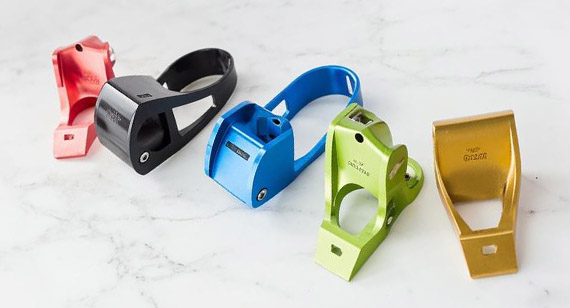
  • Custom Color Matching: Anodized aluminum supports Pantone-matched dye runs, enabling precise brand-color launches across production batches.
  • Agile Iteration: Geometry adjustments made mid-launch can be re-cut within 48 hours, compared to the 6-week turnaround required for mold modifications.


Traditional processes struggle to balance these factors. Injection molding locks designs into expensive steel molds ($30,000 to $80,000+) that require high volumes to amortize. Die casting yields looser tolerances (±0.1 mm or wider), making it unsuitable for precision release hardware. Sheet-metal stamping cannot form complex 3D contours like heelcups or splitboard crampons. CNC machining bypasses these barriers entirely, delivering precision controlled per machining operation.


Precision Applications Across Winter Sports


1. Skiing Hardware and Tuning Tools


Color Flexibility for CNC Machined Winter Sports Parts


Get Winter Sports CNC Parts Quote


These safety-critical components power alpine/touring ski bindings and professional shop tuning equipment that must be CNC machined for their strict requirements:


  • Tech Binding Housings (7075-T6 Aluminum): Features ±0.02 mm tolerances with hard anodizing and laser-marked details for core safety mechanisms.
  • CNC Aluminum Heelcups (7075-T6 Aluminum): Machined to ±0.05 mm tolerances, finished with hard anodizing in custom colorways.
  • Ski Binding Riser Plates & Elevators (6061-T6 Aluminum): Holds ±0.05 mm tolerances with vibrant anodized finishes.
  • Binding Discs & Mounting Plates (6061-T6 / 7075-T6): Holds ±0.05 mm tolerances for robust board-to-binding integration.
  • Ski Brake Retainers (Delrin / POM): Machined to ±0.05 mm tolerances for flexible, smooth mechanical operation.
  • Base Edge Guides & Bevel Tools (Hardened Steel / POM): Features ±0.01 mm precision on steel reference surfaces with mirror polishing for tuning accuracy.
  • Ski Tuning Vises & Clamps (6061-T6 / POM Jaws): Built with ±0.05 mm precision on aluminum frames and soft-clamping jaws.


2. Snowboard and Splitboard Components
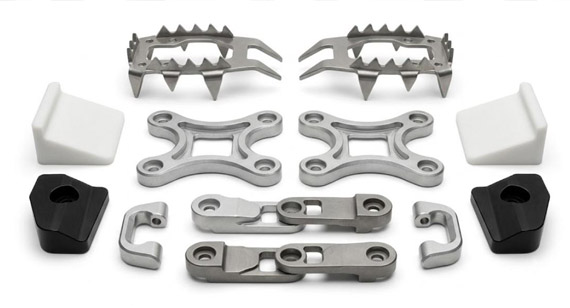
 

Custom CNC Machined Splitboard Components


Get Winter Sports CNC Parts Quote


Splitboard hardware overlaps significantly with ski binding engineering, frequently utilizing shared manufacturing pipelines:


  • Splitboard Touring Brackets (7075 Aluminum): Machined to ±0.02 mm to carry full rider weight during climb mode.
  • Splitboard Crampons (17-4PH Stainless Steel): Built with hardened, ground teeth (~44 HRC) for penetration into hardpack ice.
  • Board Hooks & Interface Clips (7075Al / Grade 5 Titanium): Precision-machined to ±0.05 mm; titanium options deliver maximum weight savings.
  • Toe Ramps & Canting Wedges (POM / 6061 Aluminum): Combines lightweight, as-machined POM ramps with black anodized aluminum wedges (±0.02 mm to ±0.05 mm).


3. Snowmobile Performance Parts


The snowmobile sector demands high-strength aluminum and stainless components built for extreme impact:
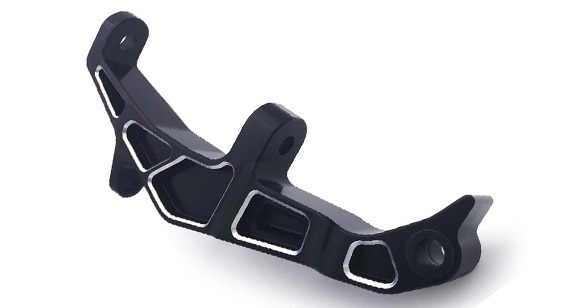
 

  • CNC Ski Spindles (7075-T6 / 6061-T6 Aluminum): Replaces heavy castings with high-strength suspension geometry (±0.05 mm).

Custom CNC Machined Ski Spindles


Get Winter Sports CNC Parts Quote


  • Suspension Control Arms / A-Arms (6061-T6 Aluminum): Lightweight, high-strength upgrades over stock steel assemblies.
  • Traction Pins & Board Cleats (Hardened 17-4PH Stainless): Passivated stainless steel featuring ground contact surfaces for superior boot grip.
  • Brake Levers & Reservoir Caps (6061-T6 Aluminum): Custom anodized to match vehicle graphics.
  • Handlebar Risers & Bumper Mounts (6061-T6 Aluminum): Durable, impact-absorbing structures machined to structural tolerances (±0.10 mm).


4. Ice Sports and Sledging Equipment


High-stakes ice sports require tight geometry to maximize energy transfer and maintain structural integrity under extreme force:
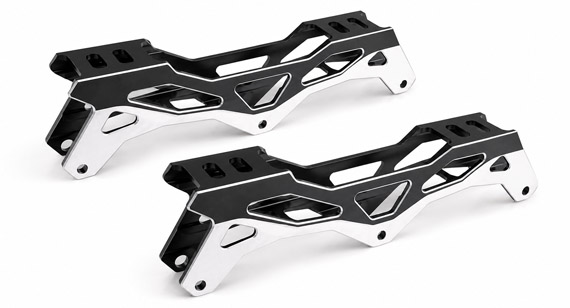
 

  • Ice Skate Runner Holders (7075-T6 / Grade 5 Titanium): Ultra-precise (±0.02 mm) interface connecting the blade runner securely to the boot.
  • Sled Hockey Frame Brackets & Chassis (6061-T6 / 7075-T6): Precision-machined joint brackets ensuring tight alignment across welded sled structures.

Custom CNC Machined Skate Frames


Get Winter Sports CNC Parts Quote


  • Bobsled & Skeleton Runner Mounts (17-4PH / Maraging Steel): Rated for high g-forces and machined to ±0.02 mm tolerances via 5-axis milling.
  • Ice Blade Sharpening Jigs (Hardened Steel / POM): Machined to ±0.01 mm reference limits to maintain consistent sharpening angles.
  • Curling Broom Pivot Joints (6061 Aluminum / Delrin Bushings): Wear-tested, press-fit pivot assemblies engineered for smooth operational sweeping.


Cost Factors: MOQs, Lead Times, and Price Drivers


When evaluating custom CNC parts for your project, three primary factors come into play: batch size, lead time, and unit economics.


Minimum Order Quantities (MOQs)


Most CNC shops quote 50 to 100 units per design for machined aluminum parts, and 25 to 50 units per design for machined stainless or titanium. This sits well below the 1,000 to 5,000 units for injection molding and below the 500-unit floor for die casting.


Lead Times


  • Prototypes & Samples: Shipped in 5 to 10 business days.
  • Production Batches (200–1,000 units): Shipped in 3 to 5 weeks, depending on surface finishing and raw material lead times.


Key Price Drivers


  • Material Selection: 7075 aluminum carries a premium over 6061. Aerospace-grade Ti-6Al-4V titanium costs roughly 8 times more than standard 6061 stock, while engineering plastics like PEEK sit in between.
  • Tolerance Tightness: Standard ±0.05 mm tolerances keep costs baseline. Tightening to ±0.02 mm or ±0.01 mm requires secondary finishing passes, CMM metrology, and slower cutting cycles.
  • Surface Finishing: Standard clear or color anodizing is highly cost-effective. Secondary operations like powder coating, PVD coating, or mirror polishing add processing time and cost.
  • Batch Scaling: Unit prices for a 50-unit prototype run are typically 2 to 3 times higher than a 500-unit production run, with cost efficiencies stabilizing around 200 units.


Strategic Advantages for Your Product Line


Partnering with a specialized CNC supplier gives your project four distinct operational advantages:
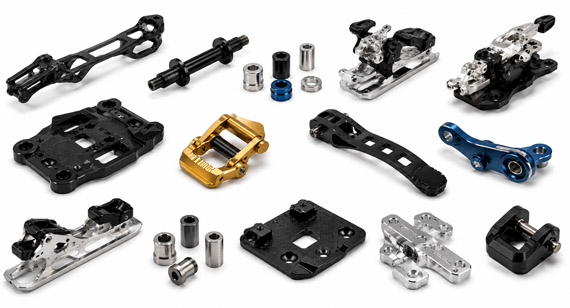
 

  • Eliminate Unsold Inventory Risk: Producing 200-unit batches across 8 product variants (1,600 units total) allows your brand to test market demand without sinking capital into thousands of unproven SKUs.
  • Seamless Mid-Season Iterations: Design updates like altering a fillet radius take hours in CAM code rather than weeks of costly steel mold rework.
  • Precise Anodizing & Branding: Strict Delta-E color controls ensure matching hues across accessories, while secondary laser-etching handles certification marks and serial numbers seamlessly.
  • Consistent Product Safety: Holding ±0.05 mm or tighter tolerances across production lots maintains reliable safety release forces, protecting product reputation and lowering warranty claims.


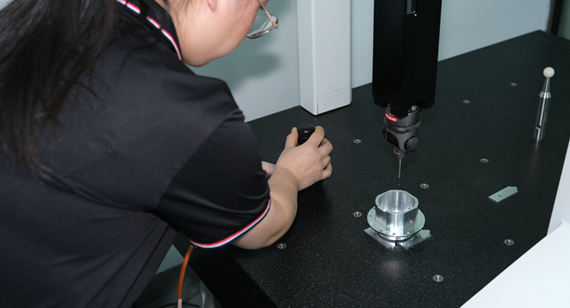
3D Inspection of CNC-Machined Parts


Get an Instant Quote


VMT CNC Machining Factory Case Study: Executing a 4-Color Binding Launch Under Deadline


Custom Winter Sports CNC Machined Parts


Get Winter Sports CNC Parts Quote


A European ski binding project needed to launch a limited capsule campaign across four specific colorways. First articles were required in 9 business days, with full delivery of 800 units required within 8 weeks. The project presented three primary engineering risks:


  • Color Matching Across Dye Batches: Anodized colors can drift between production runs. The project's signature red hue had drifted in previous vendor runs, requiring strict color-consistency controls.
  • Tight Tolerance Holding: The 7075-T6 heelcups required a strict ±0.05 mm limit across all 800 units to avoid compromising the release-force window.
  • Mid-Production Design Adjustment: Four weeks into the cycle, the engineering team updated the toe-lug fillet radius from R2 to R3 based on field-test feedback.


What have we done ?


  • Production Setup: Utilized 4-axis machining centers to run the critical lug bores, achieving a streamlined cycle time of 14 minutes per heelcup.
  • Color Control Protocol: Implemented a pre-production sample run per colorway validated using strict Delta-E tolerance targets (Delta-E <= 2.0) rather than subjective visual comparisons.
  • Agile Program Changes: Activated a 48-hour CAM editing window for the R2 to R3 geometry update. Re-machined parts shipped in 72 hours, completing the batch transition within 9 days without delaying the launch schedule.


Results


  • 99.2% First-Article Pass Rate holding the ±0.05 mm tolerance limit.
  • 1.5% Rework Rate, limited strictly to raw material inclusions detected during initial roughing passes.
  • On-Time Delivery: All 800 units shipped within 7.5 weeks.
  • Zero Color Drift: All four colorways passed inspection within certified Delta-E limits.


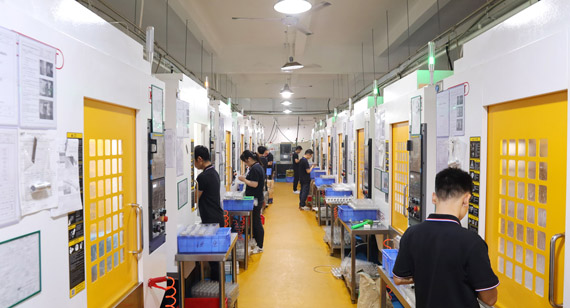
China CNC Machining Parts Factory


Get an Instant Quote


Final Thoughts


Custom CNC machining wins on winter sports parts because three forces converge in this market: tolerance is safety-critical, production runs are seasonal rather than massive, and brand identity relies on vibrant, reliable colors. No traditional process—injection molding, die casting, or stamping—handles all three at once. Whether for ski binding parts, splitboard touring brackets, snowmobile ski spindles, or ice-skate runner holders, the direct-cut digital workflow delivers direct results with minimal risk. Ready to accelerate your seasonal hardware launch with uncompromised precision? Send over your CAD files and specs today for an instant quote and free DFM review.[2D Drawings (PDF files), 3D Drawings (IGS/STP/STEP files)].


Get Your CNC Machining Parts Into Production Today


Send your drawings, requirements, and target quantity. VMT will review your project and provide a machining solution and quote.

All information and uploaded files are secure and confidential.

1 Tell us what you need

2 Get solution & quote

3 Approve production

Get Free Quote

Email: inquiry@vimetal.com.cn


FAQs


Which certification applies to ski binding release force testing?


ISO 11088 covers the assembled ski binding system—release force testing, pre-release behavior, and retention under load. It applies to the binding as a whole, not to the individual machined components a machine shop supplies. Some markets accept equivalent national standards; confirm with your engineering team whether ISO 11088 or a regional variant applies to your launch.


What material grade is industry standard for ski binding housings?


7075-T6 aluminum is the industry workhorse for tech binding housings and heelcups. It balances strength-to-weight ratio, anodizing response, and fatigue life. 6061-T6 is used where cost dominates and slightly lower strength is acceptable. Titanium Ti-6Al-4V appears in premium touring bindings where weight savings justify the higher unit cost.


When is CNC machining the better choice versus injection molding for winter sports parts?


Three triggers favor CNC machining: (1) annual volume under roughly 5,000 units, where tooling amortization does not favor injection molding; (2) safety-critical tolerance targets under ±0.05 mm that injection molding cannot consistently hit; (3) frequent design iteration, where a $30,000 to $80,000 re-tool is unacceptable. Outside these triggers, injection molding can win on per-unit cost at high volumes.


What tolerance range should you specify for a toe lug?


For a tech binding toe lug holding release force certification, specify ±0.02 mm to ±0.05 mm depending on lug geometry and certification regime. Tighter than ±0.02 mm adds inspection cost without meaningful safety margin. Looser than ±0.05 mm risks release-force drift between production runs. Always specify the inspection method (CMM, optical, or pin-gauge) alongside the tolerance.


How does anodized color matching actually work across batches?


Anodizing is an electrochemical process where color comes from dye absorbed into the porous oxide layer and then sealed. Batch-to-batch variation depends on dye concentration, seal temperature, and ramp time. Specify color via Delta-E tolerance (typically Delta-E <= 2.0) rather than Pantone numbers or visual matching alone. Most reputable shops will run a pre-production sample for sign-off before committing the full batch.


What is a realistic lead time expectation for a 500-unit winter sports CNC run?


Expect 3 to 5 weeks for a 500-unit production batch of machined aluminum parts with an anodized finish. Prototypes ship in 5 to 10 business days. Two caveats: tight tolerances (±0.02 mm or below) and exotic materials (titanium, PEEK) push lead time toward the upper end of that range. Always build in a 1-week buffer for first-article inspection and design clarification.


Disclaimer


The technical information and manufacturing advice shared on the VMT website are for general guidance only. While we strive for accuracy, VMT does not guarantee that the processes, tolerances, or material properties mentioned are applicable to every specific project. Any reliance you place on such information is strictly at your own risk. It is the buyer's responsibility to provide definitive engineering specifications for any production orders. Final specifications and service terms shall be subject to the formal contract or quotation confirmed by both parties.


<

Latest posts

Upload 2D/3D drawings

Upload Your Files or Contact inquiry@vimetal.com.cn to Get Instant Quote (Please attach 2D CAD drawings and 3D CAD models in any format including STEP, IGES, DWG, PDF, STL, ZIP, etc.).

Upload files ( Max file size: 20MB )
+86 15099911516
loading