16 years one-stop China custom CNC machining parts factory

Hey there I’m VMT Sam!
With 25 years of CNC machining experience we are committed to helping clients overcome 10000 complex part-processing challenges all to contribute to a better life through intelligent manufacturing. Contact us now
 49 |
Published by VMT at Jul 20 2026 | Reading Time:About 3 minutes
49 |
Published by VMT at Jul 20 2026 | Reading Time:About 3 minutes


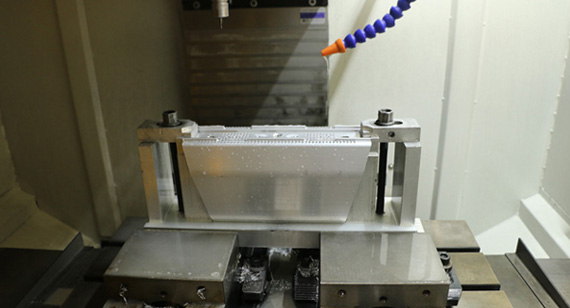
An aluminum extrusion leaves the press as a continuous length of profile with a fixed cross-section. To convert these raw profiles into functional finished components—including structural brackets, battery tray cross-members, heat sinks and other industrial parts—precision secondary CNC machining is essential for final surface finish, precision, etc. For these CNC aluminum extrusion parts, the selection of aluminum alloy grades will affect the subsequent production process, covering machining parameters, weld performance, surface finishing effects, production costs and profile delivery cycles.
This article systematically analyzes four popular aluminum extrusion alloys for CNC machining applications: 6061, 7075, 6005 and 6063. It elaborates on their full-process adaptability, tolerance control standards, surface treatment options and selection to support reasonable material selection for your project. At the end, we will also share a case study on how our factory solved the deformation and precision deviation problems for one of our clients in EV battery industry.
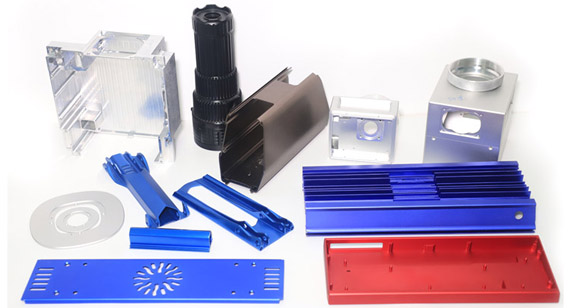
Aluminum extrusion CNC machining is a precision processing process that upgrades low-tolerance raw extruded profiles to finished parts with machining accuracy up to ±0.1 mm. The standard complete processing workflow follows six standardized steps to ensure consistent part quality and dimensional stability:
For machined features of aluminum extrusion parts, the common tolerance is ±0.1 mm. But with precise fixture positioning, the accuracy of key functional features can be stably controlled within ±0.05 mm. And the flatness and parallelism of machined surfaces can reach 0.05–0.1 mm per 100 mm length.
Because the dimensional tolerance of original extruded profiles is relatively loose (implemented in accordance with the EN 755-9 standard or equivalent AA industry specifications), secondary CNC machining is essential to solve accuracy gap between raw profiles and precision machined features .
CNC machining adds core value to aluminum extrusion processing in three key aspects:
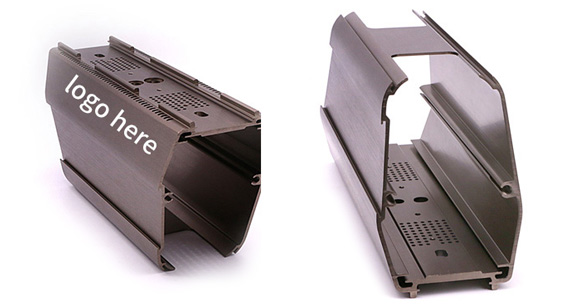
6061 is the safe default — it covers roughly 80% of general CNC machined aluminum extrusion parts and is the economical choice for qualified structural components.
6061 alloy belongs to the Al-Mg-Si series, with magnesium content of 0.8–1.2% and silicon content of 0.4–0.8%, and is the most widely used customized extrusion alloy in the industry. Extruded blanks are mostly supplied in T6 (solution heat treatment + artificial aging) or T6511 (press stretching stress relief) temper states, with stable mechanical properties and excellent comprehensive processability.
The mechanical performance parameters of 6061-T6 are stable and reliable:
Practical Machining Characteristics & Application Scenarios
6061 has the best balance of machinability and cost among the four mainstream alloys.
Thanks to its mature process, sufficient stock of standard profiles, short delivery cycle and low cost, 6061 is the preferred material for most conventional structural parts.
Common applications include
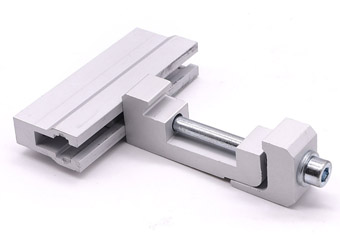
7075 is the right pick only when 6061 fails the strength bar. The cost premium is real — 2–3× per kg — and welding is essentially off the table.
Performance Trade-offs & Machining Specifications
The biggest limitation of 7075 alloy is poor fusion welding performance, as it is prone to hot cracking during welding. Therefore, all welded structural assemblies usually adopt 6061 instead. For 7075 component connection, mechanical fastening processes such as riveting and thread embedding or friction stir welding are the only feasible solutions.
In terms of machining, the zinc-containing matrix of 7075 accelerates tool wear, so TiAlN and other coated carbide tools are required. The cutting speed needs to be reduced to 60–70% of that for 6061 processing to control cutting heat. Its sharp edges and thin-walled structures are more prone to chipping, so a 0.2–0.5 mm edge chamfer is recommended for conventional machined features. In terms of surface treatment, 7075 is suitable for chromate conversion treatment and Type III hard anodizing for functional protection; the effect of decorative colored anodizing is unstable and not recommended.
The unit cost of 7075 alloy is 2–3 times that of 6061, so it is only suitable for high-strength demand scenarios. Typical applications include aerospace structural fittings, high-performance robot parts, high-stress brackets, drone frames, high-end sports equipment and precision defense components.
This is the choice for complex thin-wall extrusions in transportation and EV applications where 6061 struggles to draw the profile cleanly.
Practical Machining Characteristics & Application Scenarios
6005 alloy adopts processing parameters similar to 6061, with standard carbide tools and conventional cooling schemes applicable. For thin-wall complex profiles, climb milling is preferred to effectively avoid tool built-up edge and ensure consistent processing accuracy of long-size workpieces. Its anodizing performance is stable, with surface treatment quality comparable to 6061.
This alloy is mainly used for lightweight and complex structural parts in the transportation and new energy industries,
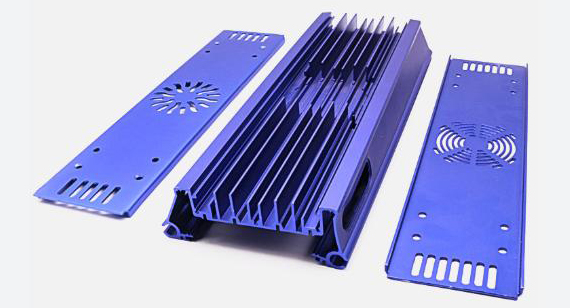
This is the right pick when appearance or thermal performance is the priority — not raw strength. The cleanest anodized finish of the four alloys, the worst machinability rating, the lowest mechanical numbers.
Practical Machining Characteristics & Application Scenarios
This alloy is mainly applied to scenarios prioritizing surface appearance and thermal conductivity rather than structural strength, including LED heat dissipation parts, architectural decorative profiles, equipment frame ornaments, electronic product casings and lighting fixtures.
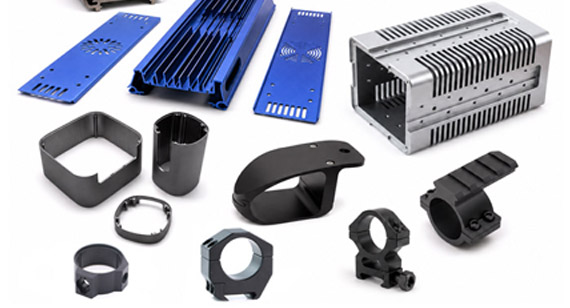
The selection of aluminum extrusion alloys focuses on several dimensions: structural strength requirements, welding process demand, surface finishing standards and profile structural complexity. Clear matching rules can be formed according to different project requirements:
| Selection Dimension |
6061 |
7075 |
6005 |
6063 |
| Structural Strength | Medium-High | Highest | Medium | Low-Medium |
| Weldability | Excellent | Poor (Not Recommended) | Excellent | Excellent |
| Profile Complexity | Conventional Structure | Conventional Structure | Complex Thin-Wall | Ultra-Complex Thin-Wall |
| Surface Finishing | Good Comprehensive Performance | Functional Protection Only | Good Comprehensive Performance | Best Decorative Effect |
| Cost Level | Benchmark (Lowest) | 2–3× Benchmark | ~1.1× Benchmark | Benchmark |
Simplified Selection Rules
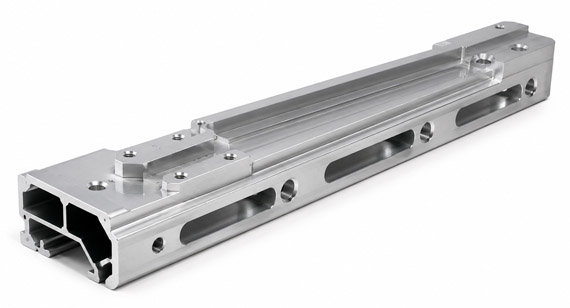
A European new energy vehicle startup needed customized prototype battery tray cross-members, requiring 6005-T5 aluminum extrusion as the base material. The project had strict precision standards: part length 380 mm, overall flange flatness controlled within 0.08 mm, six M6 drilling and tapping holes on both sides with a positional tolerance of ±0.05 mm based on a unified datum, and surface treatment required matte black Type II anodizing.
The Analysis
The client's previous manufacturing vendor attempted to process the parts by securing the raw extrusion cut faces directly into standard soft-jaw fixtures. However, because the raw profile possessed an inherent 0.12 mm bow from the extrusion mill, the internal stresses caused the parts to flex under clamping pressure. Once released, the material sprang back, causing the outer M6 hole coordinates to drift out of tolerance by 0.08 mm.
The Solution
Aiming at the deformation and precision deviation problems, we reconstructed the full processing flow instead of simply adjusting the fixture:
The Result
The modified production sequence achieved a machined flatness of 0.06 mm typical and held hole positions to ±0.04 mm under full CMM verification. And the complete run of 18 prototype parts was delivered within 9 working days, finished with a certified Type II matte-black anodize.
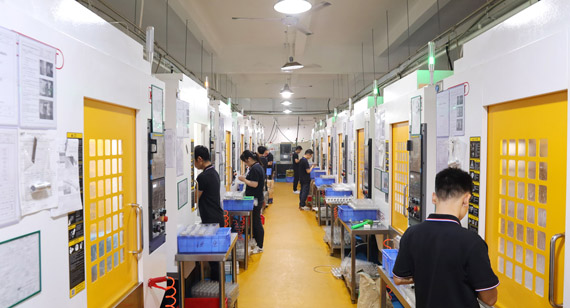
From this article, you may have learnt the clear performance differences: 6061 undertakes most conventional structural processing demands, 7075 covers extreme high-strength scenarios, 6005 is dedicated to lightweight complex profiles for new energy and transportation, and 6063 focuses on high-appearance decorative and heat dissipation parts. Looking for full-chain one-stop processing services for aluminum extrusions( fixed-length cutting, 3/5-axis CNC milling, drilling, tapping, deburring, anodizing, powder coating and CMM precision inspection) now? Welcome to send your drawings and contact our engineering team for free DFM optimization evaluation and quotation for customized aluminum extrusion CNC machined parts. [2D Drawings (PDF files), 3D Drawings (IGS/STP/STEP files)]
Send your drawings, requirements, and target quantity. VMT will review your project and provide a machining solution and quote.
All information and uploaded files are secure and confidential.
1 Tell us what you need
2 Get solution & quote
3 Approve production
Email: inquiry@vimetal.com.cn
1. What kind of equipment is suitable for processing aluminum extrusion for CNC projects?
Professional cnc router aluminum extrusions equipment is widely adopted for light-to-medium machining of standard and custom aluminum extruded profiles. Compared with general CNC machines, it delivers more stable cutting performance for long-strip extruded aluminum and aluminium extrusions workpieces, making it ideal for batch processing of common aluminum extrusion trailer parts, frame profiles and daily aluminum extrusion parts. All machined aluminum extrusion parts are made by standardized cutting, milling, drilling and surface finishing procedures from qualified extruded aluminum profiles.
2. How to choose a reliable aluminum extrusion parts supplier for customized CNC projects?
A professional aluminum extrusion parts supplier should own full-process CNC machining capacity and rich experience in manufacturing advantages of precision aluminum extrusion machining parts. Reliable suppliers can provide one-stop customization for various specification products, including common architectural 6005 aluminum extrusions, transportation-grade profiles and decorative aluminum extrusion components.
3. Can CNC router aluminum extrusions process all types of aluminum extrusion profiles?
CNC router equipment is highly compatible with most conventional aluminum extrusions. It works perfectly for routine machining of 6061, 6063, 6005 and 7075 series profiles, especially suitable for cutting and grooving of architectural and structural extruded aluminum profiles, while high-precision ultra-thin wall and high-strength structural parts adopt dedicated precision CNC machining solutions.
4. What are the core advantages of customized CNC aluminum extrusion machining?
The advantages of precision aluminum extrusion machining parts lie in high dimensional accuracy, flexible personalized customization and excellent consistency. Whether it is standard aluminum extrusion framing components or special-shaped aluminum extrusion components, CNC processing can eliminate the dimensional errors of raw extruded profiles and meet the assembly and appearance requirements of various industrial scenarios.
5. Are 6005 series architectural aluminum extrusions suitable for CNC mass production?
Architectural 6005 aluminum extrusions feature stable extrusion performance and good machinability, fully adapting to CNC batch processing. They are commonly customized into building decorative frames and lightweight structural parts, balancing structural strength and profile forming accuracy perfectly.
6. What application scenarios do aluminum extrusion trailer parts apply to?
High-precision CNC-machined aluminum extrusion trailer parts are mostly made from durable 6061 and 6005 aluminum extrusions. These lightweight and high-strength parts are widely used in trailer support frames.
The technical information and manufacturing advice shared on the VMT website are for general guidance only. While we strive for accuracy, VMT does not guarantee that the processes, tolerances, or material properties mentioned are applicable to every specific project. Any reliance you place on such information is strictly at your own risk. It is the buyer's responsibility to provide definitive engineering specifications for any production orders. Final specifications and service terms shall be subject to the formal contract or quotation confirmed by both parties.


 +86 15099911516




 Read more