16 years one-stop China custom CNC machining parts factory

Hey there I’m VMT Sam!
With 25 years of CNC machining experience we are committed to helping clients overcome 10000 complex part-processing challenges all to contribute to a better life through intelligent manufacturing. Contact us now
 305 |
Published by VMT at Jan 14 2026 | Reading Time:About 2 minutes
305 |
Published by VMT at Jan 14 2026 | Reading Time:About 2 minutes


In areas like packaging, heat sinks, construction, and electronic components, one aluminum alloy you’ll often come across is 8011 aluminum. Its excellent formability, machinability, corrosion resistance, as well as good thermal and electrical conductivity—combined with reasonable cost—make 8011 aluminum a popular choice. At the same time, its softness and good ductility make it perfect for batch production of complex parts. When it comes to machining, stamping and rolling, welding, or surface treatment, there are certain points to watch out for, and the process needs to be adjusted according to the material’s characteristics.
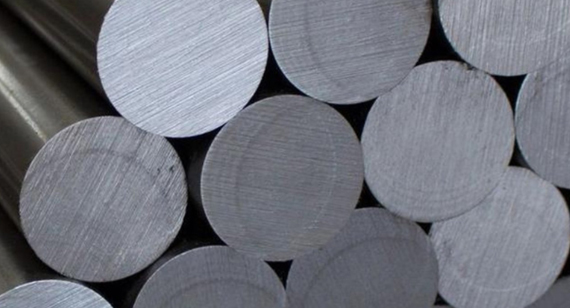
This article will take you through its chemical composition, mechanical and physical properties, processing recommendations, main applications, and a comparison with common aluminum alloys, giving you a comprehensive look at 8011 aluminum and helping you quickly grasp its core performance and practical uses.
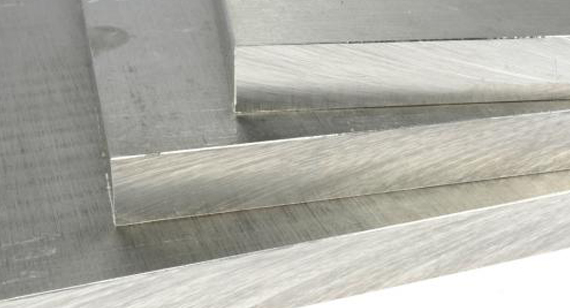
8011 aluminum belongs to the 8xxx series, which is a wrought alloy with iron (Fe) and silicon (Si) as its primary alloying elements. It is a non-heat-treatable alloy, which means its strength is mainly enhanced through cold working. But for its strength, it is moderate, and not a structural alloy that has higher strength like 5052 or 6xxx/7xxx series. Its engineering value lies in the combination of excellent formability, corrosion resistance, thermal performance, and processing efficiency.
From a manufacturing perspective, 8011 aluminum is well suited for rolling, stamping, and deep drawing, making it ideal for thin-walled components such as heat exchanger fins, lightweight covers, and housings. It also provides good thermal and electrical conductivity, along with reliable corrosion resistance and competitive cost, which explains its wide use across packaging, electronics, and building-related applications. When processed into foil or thin sheet, it additionally offers effective barrier properties against light, moisture, and contaminants.
The typical chemical composition of 8011 aluminum alloy is shown in the table below:
Table 1: Chemical Composition of Aluminum Alloy 8011
| Element |
Content Range |
| Aluminum (Al) |
Balance |
| Iron (Fe) |
0.6–1.2% |
| Silicon (Si) |
0.3–0.9% |
| Copper (Cu) |
0.05–0.20% |
| Manganese (Mn) |
≤0.05% |
| Zinc (Zn) |
≤0.10% |
| Titanium (Ti) |
≤0.10% |
8011 aluminum‘s primary alloying elements are aluminum(Al), iron (Fe) and silicon (Si). For 8011 aluminum‘s alloying elements:
The typical properties of 8011 aluminum in H14 half-hard temper are listed below:
Table 2: Physical and Mechanical Properties of 8011-H14 Aluminum
| Type |
Property |
Value |
| Physical |
Density | 2.70 g/cm³ |
| Thermal Conductivity | 160–170 W/m·K | |
| Electrical Conductivity | 35–40% IACS | |
| Mechanical |
Tensile Strength | 110–145 MPa |
| Yield Strength | 75–115 MPa | |
| Elongation | 8–18% | |
| Hardness (Brinell) | 45–55 HB |
H14 is a commonly used half-hard temper for 8011 aluminum, achieved through cold working. It reflects the mechanical behavior of the material in a condition frequently encountered in manufacturing practice, and provides a realistic reference for CNC machining, stamping, and rolling applications. For more of 8011 aluminum temper, you can find in the section"8011 Aluminum Under O, H14, H18". Key properties of 8011 aluminum can be summarized as:
8011 Aluminum Under O, H14, H18
In custom part manufacturing, the selection of 8011 aluminum temper is usually driven by forming complexity rather than strength requirements. O temper is preferred for highly formed components, while H14 is commonly used when a balance between strength and machinability is required. Below is the 8011 aluminum comparison under O, H14, H18.
Table 3: 8011 Aluminum Under O, H14, H18
| Temper |
Mechanical Characteristics |
Processing Suitability |
Typical Applications |
| O (Annealed) |
Very soft, maximum ductility, low strength | Deep drawing, complex stamping, rolling, bending | Packaging foil, deep-drawn containers, complex thin-wall parts |
| H14 (Half-hard) |
Moderate strength, reduced ductility | Light bending, stretching, CNC machining with burr control | Heat sinks, architectural trims, electronic housings |
| H18 (Full-hard) |
High hardness, limited formability | Minimal forming, shearing, simple cutting | Rigid packaging, caps, lids, applications requiring stiffness |
Because it is lightweight, corrosion-resistant, easy to form, and non-toxic, 8011 aluminum is a versatile alloy used across many industries. Its primary applications include packaging, electronic components, and decorative uses, with common examples outlined below:
Food and Beverage Packaging
Due to its excellent barrier properties and non-toxic characteristics, 8011 aluminum is commonly used for aluminum foil, food wraps, and beverage-related packaging.
Pharmaceutical Industry
It is widely applied in blister packaging and strip packaging, helping protect pharmaceutical products from light and moisture exposure.
Thermal Management and Electronic Components
Typical applications include heat exchanger fins, heat shields, and electronic housings, taking advantage of its good thermal conductivity and corrosion resistance.
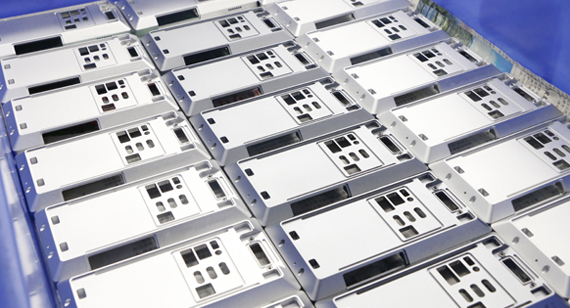
Architectural and Decorative Applications
It is used in curtain wall panels, ceiling panels, and other interior and exterior decorative components, where corrosion resistance and formability are required.
HVAC and Heat Exchanger Components
8011 aluminum is commonly used for air-conditioning condenser fins, evaporator fins, and other thin-walled heat transfer components.
It is applied in non-structural lightweight parts, such as covers, shields, and heat-dissipation housings, where formability and corrosion resistance are more critical than structural strength.
Custom CNC Machining and Fabricated Parts
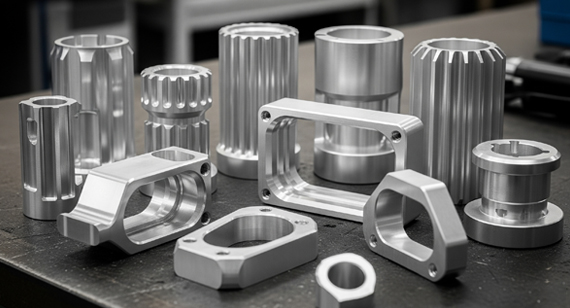
For custom CNC machining and fabricated parts, the processing flexibility and surface treatability of 8011 aluminum make it a practical choice for batch production and prototype components, especially for thin-walled and formed parts.
As all non-heat-treated aluminum alloys, 8011,3003 and 1100 aluminum are often compared to each other in non-structural uses such as thin plate, aluminum foil, heat exchanger, etc. While they share similarities like being lightweight and non-toxic, they differ in terms of strength, formability, and typical applications. The table below compares aluminum alloys 8011 vs 3003 vs 1100:
Table 3: Aluminum Alloy 8011 vs 3003 vs 1100
| Property |
8011 Aluminum |
3003 Aluminum |
1100 Aluminum |
| Tensile Strength |
110–145 MPa | 130–200 MPa | 90–120 MPa |
| Yield Strength |
75–115 MPa | 35–55 MPa | 30–40 MPa |
| Formability |
Very good | Good | Excellent |
| Corrosion Resistance |
Very good | Good | Excellent |
| Weldability |
Good | Good | Excellent |
| Key Advantages |
Balanced formability, stable thin-gauge processing, good thermal performance, cost-effective | Moderate strength with good workability, versatile for general sheet metal | Highest purity, best ductility, corrosion resistance, and electrical conductivity |
| Typical Applications |
Packaging foil, heat exchanger fins, electronic housings, thin-walled formed parts | Containers, enclosures, general industrial sheet parts | Electrical conductors, decorative panels, highly formed components |
Strength Differences of Aluminum 8011 vs 3003 vs 1100
Formability of Aluminum 8011 vs 3003 vs 1100
Corrosion Resistance of Aluminum 8011 vs 3003 vs 1100
Weldability of Aluminum 8011 vs 3003 vs 1100
1. Forming and Cold Working
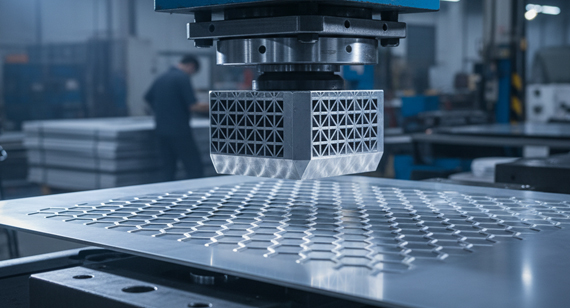
Forming and cold working are the primary processing strengths of 8011 aluminum, that is, easily forming with cold-working such as stamp, roll is its biggest advantage among all the processing ways.
2. Machining (Cutting Operations)
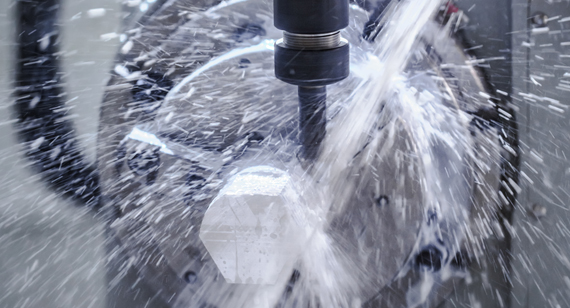
Machining refers to cutting, drilling, milling the material, and machinability is used to evaluate the machining is easy or not. 8011 aluminum offers good machinability due to its relatively soft matrix, but its high ductility requires careful cutting control.
3. Welding and Mechanical Joining
8011 aluminum can be reliably joined using common welding and mechanical fastening methods.
8011 aluminum responds well to surface finishing processes.
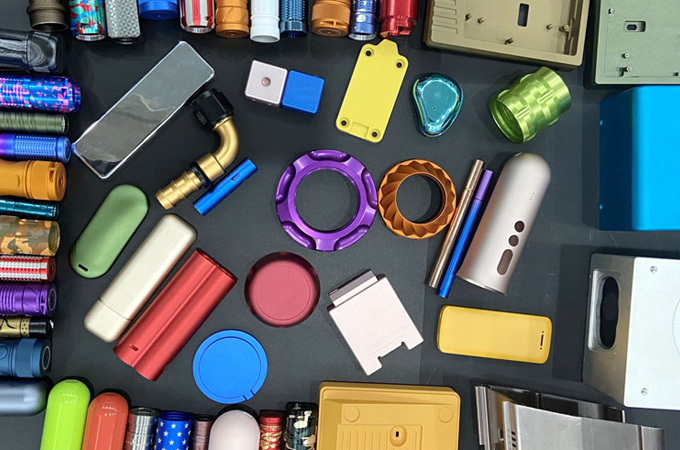
In summary, 8011 aluminum offers excellent formability, corrosion resistance, barrier performance, and overall processability, making it widely used in packaging, heat sinks, construction, and non-structural automotive components. If you have custom part requirements or questions about machining 8011 aluminum, feel free to contact us for professional advice and tailored manufacturing solutions.

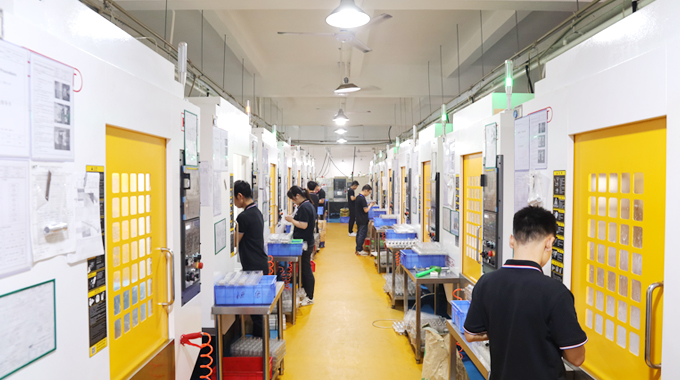
A manufacturer of electronic heat sinks required custom 8011 aluminum thin-wall heat sink components. Due to the high ductility of 8011, thin-wall machining posed challenges such as deformation, warping, burr formation, and dimensional inconsistency caused by thermal expansion, making high-precision CNC machining difficult. To address these challenges,
VMT CNC Machining Factory Implemented the Following Strategies:
1. Optimized Cutting Tools and Parameters
Based on the material’s ductility and machining characteristics, coated carbide tools with larger rake angles were selected, and turning/milling feed rates and cutting speeds were carefully adjusted, effectively reducing material adhesion and burr formation.
2. Custom Fixtures and Thermal Control
To minimize thin-wall deformation, VMT designed flexible fixtures for the components and employed interrupted cutting with controlled cooling cycles to reduce heat buildup and maintain stability during machining.
3. Stepwise Machining and Process Sequencing
Rough machining was performed first, followed by gradual transition to finishing cuts to control accumulated cutting forces and heat, combined with temperature control strategies to ensure dimensional consistency during precision finishing.
After implementing these measures, VMT successfully completed the batch of 8011 aluminum heat sink components. The dimensional qualification rate of this batch of parts reached 99.8%, the surface roughness was significantly better than the industry standard (Ra < 1.6 μm), and the process capability index (Cpk > 1.33) was excellent. All assembly and functional tests of the final products were passed. With its high-precision quality control and rapid response, VMT earned high recognition from the customer and successfully secured continuous orders for subsequent projects.

Q1: Can 8011 aluminum be used for deep drawing parts?
A: Yes, especially in the O temper, which is well suited for deep drawing and complex stretched components.
Q2: Should I choose 8011 or 3003 aluminum?
A: If the main application is thin-gauge sheet rolling or heat exchanger fins, 8011 is more suitable. For lightweight structural parts, 3003 can be considered.
Q3: Is 8011 aluminum suitable for high-precision CNC machining?
A: Absolutely. You just need to adjust cutting parameters according to the temper and control tool wear and burr formation.
Q4: Is 8011 aluminum recyclable?
A: Yes, like most aluminum alloys, 8011 is fully recyclable without losing its properties, making it environmentally friendly.
Q5: What is the price of aluminum 8011?
A: The price varies depending on form, temper, thickness, and market conditions. Typically, it is moderately priced among corrosion-resistant non-heat-treatable aluminum alloys. For accurate pricing, please contact suppliers.
Q6: What is 8011 grade aluminum?
A: 8011 is a non-heat-treatable aluminum alloy in the 8xxx series, primarily alloyed with iron (Fe) and silicon (Si). It is known for good formability, corrosion resistance, thermal and electrical conductivity, and excellent barrier properties, especially when used in foil and thin-gauge applications.


 +86 15099911516




 Read more